

Book
Corrie ten Boom (For Teens)
- 13 chapters
- 44 min read
- Accessible Reading difficulty
Free to read·No account needed
A House of Clocks
Taking books where there’s no signal? See Ochorus for missionaries or chaplains
Grow with the story

About this book
At fifty-one, a Dutch watchmaker named Corrie ten Boom watched six people vanish behind a false wall in her bedroom as the secret police came up the stairs. Her family had hidden Jews from the Nazis; her father died nine days after their arrest, and her sister Betsie died in Ravensbrück. Corrie walked out alive and spent forty years telling the world that God's love is deeper than any pit. This teen edition tells the true story straight: the hiding place and who did not survive it, the camps, the famous scenes checked against the records, and the hard, costly work of forgiveness.
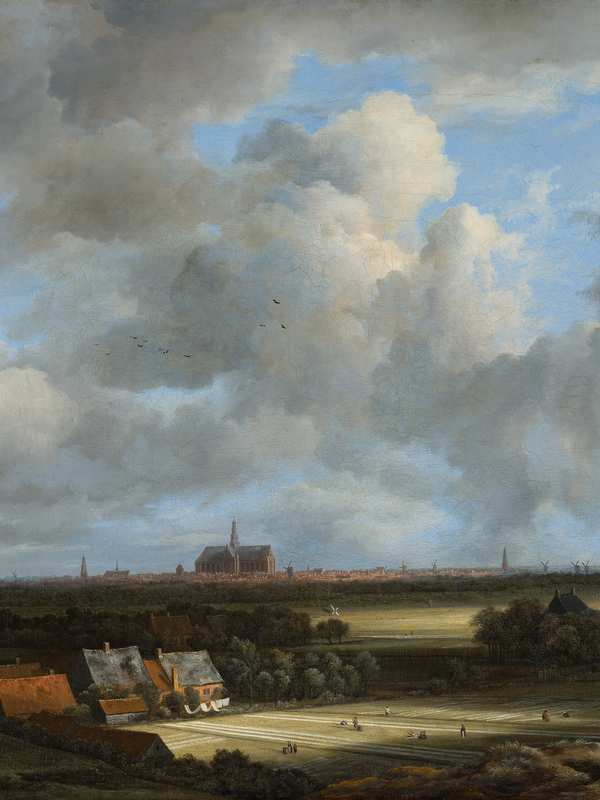
In the old centre of Haarlem, a city in the Netherlands, a few steps from the market square and the huge church of St. Bavo, there is a narrow house at Barteljorisstraat 19. From the street it is only one room wide. Behind the shop it climbs and twists: steep stairs, half-landings, rooms at odd levels.
Contents
- 1 A House of Clocks 3 min
- 2 Love with Nowhere to Go 3 min
- 3 A Child at Bedtime 3 min
- 4 The Next Person at the Door 3 min
- 5 Seventy Seconds 3 min
- 6 Jesus Is Victor 3 min
- 7 Father Was Released 3 min
- 8 The Back of the Embroidery 4 min
- 9 Barracks 28 4 min
- 10 Remember Now, Both of Us 4 min
- 11 Eight Hours 4 min
- 12 A Letter in June 4 min
- 13 The Hand Held Out 4 min
Questions and Answers
Who was Corrie ten Boom?
A Dutch watchmaker, born in Amsterdam in 1892, whose family hid Jews and resistance workers in their house in Haarlem during the Nazi occupation. After a raid in 1944 she was sent to prison and to Ravensbrück concentration camp, where her sister Betsie died. She spent the rest of her life speaking about God's faithfulness and forgiveness in more than sixty countries, and died in California in 1983.
Is the book honest about the hard parts?
Yes. It tells how her father died nine days after his arrest, how prisoners were shot and beaten at Vught and Ravensbrück, and how Betsie died. It also says plainly that not everyone in the hiding place survived the war, and that Corrie admitted her own fear, selfishness and struggle to forgive.
What does “Jesus is Victor” mean?
It was the motto on a wooden plaque over the fireplace at the Beje on the day of the raid, and Corrie's motto all her life. It looked as if the secret police had won. Her family believed that even then Jesus was the conqueror over every evil power, and she ended her talks with it for decades.
Did everyone in the hiding place survive?
No. Six people hid behind the false wall during the raid and were let out two days later. But Mary van Itallie was arrested again within days and murdered at Auschwitz, and the sources disagree about some of the others. Eusie, the cantor, survived the war.
How did she treat people who had hurt her?
She worked hard at forgiving them, and said it was hard. She wrote to the man believed to have betrayed her family to tell him she forgave him, pitied women being humiliated by crowds after the war, opened a home for refugees in Germany, and preached to former camp guards. She admitted that small wrongs from friends were sometimes harder to forgive.
Was her release really a clerical error?
Nobody knows. She was told years later that it was a mistake, and she believed it. But no document shows an error, her first book written in 1945 never calls it one, and the gas chamber at Ravensbrück began a month after she left, not a week. The danger she escaped was real either way.
Where do the stories come from?
From the full-length biography of Corrie ten Boom, which compares her first account written in 1945 with her later books and checks both against independent records such as Dutch war-graves files, the Jewish memorial registers and Yad Vashem. Where a famous scene appears only in her later books, this edition says so.
What can a teenager today take from her story?
That courage is built in ordinary habits long before it is needed; that you can open the door to the next person who needs help without seeing the whole road; that God can be near in loneliness and grief; and that forgiveness can start as a decision before the feelings come.
Read in your language
People in this book
More like this






Cite this book
Copy a citation in the style you need.
- MLA
- Ochorus Originals. Corrie ten Boom (For Teens). Ochorus, https://ochorus.com/books/corrie-ten-boom-a-life-teens/.
- Chicago
- Ochorus Originals. Corrie ten Boom (For Teens). Ochorus. https://ochorus.com/books/corrie-ten-boom-a-life-teens/.
- Chicago footnote
- Ochorus Originals, Corrie ten Boom (For Teens) (Ochorus), https://ochorus.com/books/corrie-ten-boom-a-life-teens/.
- BibTeX
- @book{ochorusoriginalscorrie, author = {{Ochorus Originals}}, title = {{Corrie ten Boom (For Teens)}}, publisher = {Ochorus}, url = {https://ochorus.com/books/corrie-ten-boom-a-life-teens/} }