

Book
C. T. Studd (For Teens)
- 13 chapters
- 46 min read
- Accessible Reading difficulty
Free to read·No account needed
The Squire Who Sold His Horses
Taking books where there’s no signal? See Ochorus for missionaries or chaplains
Grow with the story


About this book
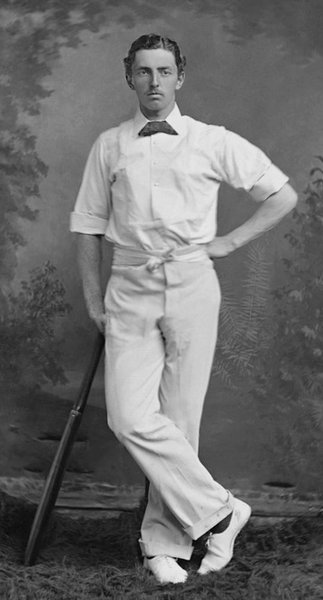
At twenty-one C. T. Studd was playing cricket for England in the match that gave the world the Ashes. At twenty-four he sailed for China and put on a Chinese gown, and at twenty-six he gave away a fortune. At fifty-two, asthmatic and against medical advice, he went to the north-east of the Belgian Congo, where he spent most of his last eighteen years. This teen edition tells his story straight: the courage and the joy, the money made from Indian labour, the Chinese and Congolese believers who really built the churches, the quarrels, the morphine, the twelve years apart from his wife, and the split in the year he died.
Charles Thomas Studd was born on 2 December 1860 at Spratton, a village near Northampton in England, the third son of Edward and Dora Studd. His family and friends called him Charlie. The world came to know him by his initials: C. T.
Contents
- 1 The Squire Who Sold His Horses 4 min
- 2 Mr Studd at the Oval 3 min
- 3 At George’s Bedside 3 min
- 4 Seven Young Men 3 min
- 5 In Chinese Dress 4 min
- 6 Treasure in a Field 4 min
- 7 Scilla 4 min
- 8 Why Not Go Himself? 4 min
- 9 Bwana at Niangara 3 min
- 10 The Chocolate Soldier 4 min
- 11 The Church in the Forest 4 min
- 12 A Sharp Contention 4 min
- 13 Hallelujah 4 min
Questions and Answers
Who was C. T. Studd?
An English cricketer, born in 1860, who played for England at the Oval in 1882, went to China in 1885 as one of the Cambridge Seven, and gave away his inheritance. After years in China, America and India he went to the north-eastern Belgian Congo in 1913, founded the mission that became WEC International, and died at Ibambi in 1931.
Is the book honest about the hard parts?
Yes. It names the indigo money his family made from Indian labour, the two baby sons who died, his harshness with colleagues, his dismissal of his son-in-law Alfred Buxton, the twelve years he and his wife spent apart, his regular use of morphine for pain, and the split of 1931. It also gives the other side: his real pain, the committee’s real reasons, and the love of the Congolese Christians who buried him.
What did he mean by “If Jesus Christ be God and died for me”?
It is the saying traditionally attributed to him: “If Jesus Christ be God and died for me, then no sacrifice can be too great for me to make for Him.” Nobody has traced it to anything he published, but it sums up how he lived. He meant that if Christ had given everything for him, nothing he could give back would be too much.
Did C. T. Studd write “Only one life, ’twill soon be past”?
Probably not. He loved the lines and is recorded as sending them to his grandchildren in his last year, but the longer poem built around them says its author first heard them from someone else. This edition treats them as words he loved and lived by, not as his own.
How did he treat the people he lived among?
In China he wore Chinese clothes and joined a church Chinese Christians were already leading. In Congo he lived in a local-style house on local food and insisted the Congolese church support its own evangelists. He also called himself Bwana, meaning master, was slow to learn the language, and could be severe with Africans as well as Europeans. Congolese evangelists did most of the preaching that spread the church.
Where do the stories come from?
From the full-length biography of C. T. Studd, which checks the family accounts against cricket records, the record of the Cambridge Seven, an American’s diary from Niangara in 1914 and modern reference works. Where a story rests only on family tradition, like his last word, this edition says so. There is also a children’s edition for younger readers.
What can a teenager today take from his story?
That it is worth giving your whole life to Christ, gladly; that a faith which costs nothing is in danger; that courage without love can wound people; and that you need people who can tell you when you are wrong, and the humility to listen.
Why did he and his wife live apart for so long?
From 1916 he led the work in the Congo and Priscilla, whose heart condition kept her from living there, led the mission at home. They loved each other and wrote constantly, but they met only once more, for a short visit in 1928. She died in Spain in January 1929, and he was not with her.
Read in your language
People in this book
More like this


Cite this book
Copy a citation in the style you need.
- MLA
- Ochorus Originals. C. T. Studd (For Teens). Ochorus, https://ochorus.com/books/c-t-studd-a-life-teens/.
- Chicago
- Ochorus Originals. C. T. Studd (For Teens). Ochorus. https://ochorus.com/books/c-t-studd-a-life-teens/.
- Chicago footnote
- Ochorus Originals, C. T. Studd (For Teens) (Ochorus), https://ochorus.com/books/c-t-studd-a-life-teens/.
- BibTeX
- @book{ochorusoriginalsstudd, author = {{Ochorus Originals}}, title = {{C. T. Studd (For Teens)}}, publisher = {Ochorus}, url = {https://ochorus.com/books/c-t-studd-a-life-teens/} }