New to Jeanne Guyon? Start with
A Short and Easy Method of Prayer
All works · 1 hr 19 min read
Biography
- 1648 Born
- 1664 Married
- 1668 Awakening
- 1676 Widowed
- 1685 Prayer book
- 1717 Died
The only way to Heaven is prayer; a prayer of the heart, which every one is capable of, and not of reasonings which are the fruits of study. Let the poor come, let the ignorant and carnal come; let the children withou…
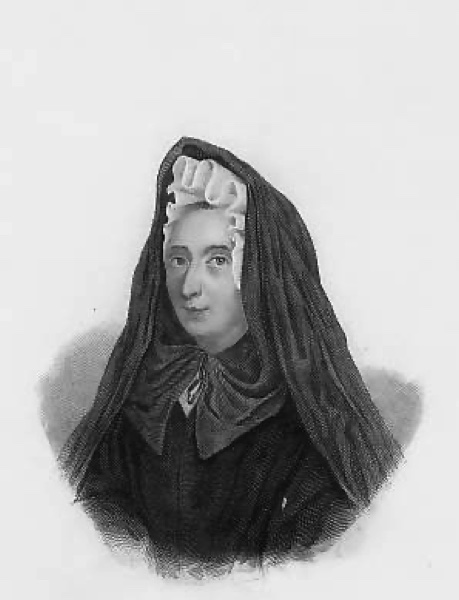
Jeanne-Marie Bouvier de la Motte Guyon was born on the 13th of April, 1648, in the town of Montargis, south of Paris, into a prosperous and devout bourgeois family. Her father, Claude Bouvier, was a respected magistrate and court official; her mother, a deeply pious woman, noticed early the unusual seriousness of her daughter — a sensitive, quiet, inward child who preferred stillness to games and contemplation to chatter — and placed her in the care of the nuns. Educated in turn by the Ursuline and Benedictine sisters, Jeanne was drawn toward God from her earliest years; she would later recall that at only seven years old she felt an inclination toward the cloister, longing to give her whole existence to His service. Yet she was also drawn, by her own frank account, toward vanity and the flattering attentions of a world that prized her beauty and wit. She was a girl of tender conscience and restless longing, alternately reaching for holiness and slipping back into the pride of a comfortable life. She would later look on these years without illusion, naming her own frivolity as plainly as her piety.
At fifteen, in 1664, her mother gave her in marriage to Jacques Guyon, a wealthy man twenty-two years her senior. The match was arranged for security and position, and made without regard for the girl's own longing; she had wished for the convent, and would later beg her husband — in vain — to let her enter one. It was not a happy union. The household was ruled by a domineering mother-in-law, and Jeanne, young and sensitive, found her home a place of daily mortification — "a house of affliction," she called it. In October of 1670 smallpox nearly took her life and left lasting scars on the face the world had so admired; she did not mourn the loss long, for the illness taught her how fleeting life is and how little worldly beauty matters, and it deepened the detachment quietly forming in her soul. Of the children she bore, several died young; grief became an early and familiar companion. Yet she came to read even these losses through the eyes of faith. "The death of my children," she wrote, "was to me the death of self-love. God took from me the idols of my heart that He alone might reign there." In those troubled years books became her truest friends: she fed on St. Francis de Sales, whose gentle counsel of inward devotion spoke straight to her condition; on the example of Madame de Chantal, a godly woman living a devout life in the midst of the world; and on Thomas à Kempis's Imitation of Christ, which fixed her resolve to cast off vanity and seek God's will alone. It was precisely in this narrow, sorrowful house that God began His deeper work in her, teaching her by disappointment to seek a joy the world could not give.
The Word That Opened Her Heart
For years Jeanne had labored at prayer as at a task, straining after devotion and finding only dryness. She confessed often, sometimes daily, and walked away still anxious. "I could find no rest," she would remember, "for I sought God without, while He was within." The turning point came in 1668, when a Franciscan friar, himself lately returned from a long retreat, gave her a single sentence of counsel that she would carry the rest of her life. Her efforts had failed, he told her, because she sought outside herself what she already possessed within; let her accustom herself to seek God in her own heart, and she would find Him there. From that moment, she wrote, her heart was wholly changed. The prayer she had chased fruitlessly for so long was suddenly given — not as an achievement, but as a discovery of what had been there all along, waiting to be known.
The death of her husband in 1676 left Jeanne a widow of twenty-eight, wealthy and free. She might have chosen ease. Instead she turned decisively toward God, and toward a life that would cost her nearly everything. Under the direction of the Barnabite priest François La Combe, she left her settled world and traveled through Savoy and Switzerland — to Geneva, Annecy, Grenoble, Turin — teaching her method of inward prayer to convents and to ordinary lay people alike. She poured out her fortune in charity and her strength in ministry, convinced that the simplest soul, unlettered and poor, could pray as truly as any scholar.
The only way to Heaven is prayer; a prayer of the heart, which every one is capable of, and not of reasonings which are the fruits of study. Let the poor come, let the ignorant and carnal come; let the children without reason or knowledge come, and they shall become wise.
— Jeanne Guyon
A Ministry Under Suspicion
Already in 1681, at the urging of a priest, she had begun to set down the story of her own life — the candid record later published as The Life of Madame Guyon. In 1685 she published A Short and Easy Method of Prayer, a small book that would outlive every controversy that swirled around her. In it she urged that all believers, without exception, are called and enabled to pray — that God is not the private possession of the cloister but the near and living portion of the plowman and the child. The same year she completed a commentary on the Song of Songs; to these she would add Spiritual Torrents, in which she pictured the soul's journey as a river running toward the sea — swift, noisy, and troubled near its source, but ever calmer and deeper as it nears the ocean in which it will lose itself.
True prayer is nothing but the love of God; it is to lose the will in His, as a drop is lost in the ocean.
— Jeanne Guyon
Her writings spread quickly, and with them both her influence and the alarm of the guardians of orthodoxy. In 1688 she was arrested and confined at the Convent of the Visitation in Paris, where examiners questioned her for weeks about her beliefs on grace, prayer, and divine union; her answers, calmly and respectfully given, showed no trace of rebellion or fear. After her release she withdrew for a time from public view, yet her books passed quietly from hand to hand, and her influence only grew. That same year she met François Fénelon, the future archbishop of Cambrai, and their spiritual friendship became one of the most consequential in the history of French religion. For a season she was welcomed at court, befriended by Madame de Maintenon, and honored as a woman of rare devotion.
The alarm, however, did not subside. Her language of self-abandonment, of pure and disinterested love, of passive receptivity to God, sounded to her critics dangerously close to the condemned Quietism of Miguel de Molinos. She herself always rejected such extremes, insisting that true union with God produces not indifference but holiness, not idleness but a deeper love expressed in action. Chief among her opponents rose Jacques-Bénigne Bossuet, the formidable Bishop of Meaux, who saw in her doctrine a recipe for spiritual sloth and moral indifference. What had been admiration curdled into suspicion. The conferences at Issy in 1694 and 1695 examined her teaching, and though they did not name her, they closed the door on her public standing.
The Prisons
The years that followed were years of imprisonment. La Combe had already been shut away in 1687, never to be freed, his mind failing under the long confinement. Guyon herself, after interrogations at Meaux, was arrested in December 1695 and held at Vincennes, then Vaugirard, and at last, in 1698, in the Bastille. Forged letters were produced against her; she was denied the sacraments, subjected to abuse and squalor, and at times feared poisoning. She would not be released until March 1703 — some four years in the great fortress-prison, and near eight in confinement altogether.
What is remarkable is not that she suffered, but how she suffered. She wrote that the very stones of her prison shone in her eyes like rubies, so filled was she with the presence of God. She sang in her cell. In verses later translated into English by the poet William Cowper, she likened herself to a caged bird that sits and sings to the One who placed it there — content, if it were His will, to spend the remainder of her life behind those walls. This was the harvest of that long-cultivated prayer of the heart: a soul so anchored in God that four walls could not narrow it.
The theological storm reached its height around Fénelon, whose defense of pure love in his Maxims of the Saints was condemned by Pope Innocent XII in 1699. Fénelon submitted at once and in humility — though he never withdrew his personal reverence for his friend. "Madame Guyon," he once wrote, "has been led by paths that few understand, yet her heart is wholly God's." Rome, notably, never formally censured Guyon herself; but in France her name became almost a synonym for suspected error, and much of her work was cast onto the Index of forbidden books. She had become, in the eyes of her church, a danger — this woman whose only weapons had ever been prayer and the pen.
Death and Legacy
Released at last, on the condition that she retire from public view and teach no more, Guyon lived out her final years under restriction at Blois, near her daughter. She kept the letter of her silence, yet her house became a quiet refuge: disciples journeyed from far and near to seek her counsel, and she received them kindly, avoiding controversy but radiating a peace that visitors found almost luminous. She continued to write and to correspond with a wide circle, many of them now Protestants who found in her the very interior religion their own traditions prized. She bore her constraint as she had borne her cell — quietly, and without bitterness. In one of her last letters she could still say, "There is nothing left in me that is not God's. I live because He lives in me." She died at Blois on the 9th of June, 1717, at the age of sixty-nine, having asked pardon of the church she had never meant to wound and commending her soul to the God she had sought within her heart for half a century. Her final words were as simple as her faith: "I love my God, and my God loves me — that is all." She was buried quietly at Blois, without ceremony or monument.
A little bird I am, shut from the fields of air; and in my cage I sit and sing to Him who placed me there.
— Jeanne Guyon
Condemned in Catholic France, she was received with open arms elsewhere. The Dutch editor Pierre Poiret gathered and published her works; the German Pietist Gerhard Tersteegen carried her poetry into the Protestant heart of Europe. John Wesley abridged her autobiography, commending her devotion while warning against her excesses. Quakers drew on her for their manuals of silent prayer; the Holiness and Higher Life movements of the nineteenth century, and later writers such as A. W. Tozer and the Chinese teacher Watchman Nee, pressed her little books into the hands of new generations hungry for the depths of God.
Her story is not one to romanticize. She held convictions that her own church judged mistaken, and honest readers have long weighed her teaching with care. Yet across three centuries and every dividing wall of tradition, the substance of her witness has endured — that God is nearer than we know, that the humblest soul may seek and find Him in the heart, and that a life given wholly to prayer can sing in a prison and call its stones rubies. That witness, tried in the fire of real suffering, is why her small books outlived the great men who silenced her.
Books by Jeanne Guyon (1)
Books about Jeanne Guyon (1)
Also appears in
Articles about Jeanne Guyon (1)
Questions and Answers
Where did Jeanne Guyon come from?
She was born Jeanne-Marie Bouvier de la Motte Guyon on 13 April 1648 in Montargis, south of Paris, into a prosperous and devout bourgeois family; her father, Claude Bouvier, was a respected magistrate. A sensitive, inward child who preferred stillness to games, she was placed in the care of the Ursuline and Benedictine sisters, and at only seven felt an inclination toward the cloister — though she was drawn too, by her own frank account, toward vanity and the flattery of a world that prized her beauty and wit.
What was her marriage like?
At fifteen, in 1664, she was given in marriage to Jacques Guyon, a wealthy man twenty-two years her senior, a match arranged for security without regard for her own longing for the convent. It was not a happy union: the household was ruled by a domineering mother-in-law, and she called her home "a house of affliction." Smallpox in 1670 scarred the face the world had admired, and several of her children died young — "The death of my children," she wrote, "was to me the death of self-love."
What was the word that opened her heart?
For years she had laboured at prayer as at a task, straining after devotion and finding only dryness — "I sought God without, while He was within." The turning point came in 1668, when a Franciscan friar told her that her efforts had failed because she sought outside herself what she already possessed within; let her seek God in her own heart, and she would find Him there. From that moment, she wrote, her heart was wholly changed — the prayer she had chased was given, not as an achievement but as a discovery.
What was her "prayer of the heart"?
After her husband's death she gave herself to a simple, silent, continual turning of the soul toward God, practised not merely at set hours but through the ordinary business of her day. She taught that prayer was less a labour of the mind than an application of the heart: "The only way to Heaven is prayer; a prayer of the heart, which every one is capable of, and not of reasonings which are the fruits of study. Let the poor come, let the ignorant and carnal come... and they shall become wise."
What did she do after she was widowed?
The death of her husband in 1676 left her a widow of twenty-eight, wealthy and free to choose ease. Instead she turned decisively toward God, and under the direction of the Barnabite priest François La Combe travelled through Savoy and Switzerland — Geneva, Annecy, Grenoble, Turin — teaching her method of inward prayer to convents and ordinary lay people alike. She poured out her fortune in charity, convinced that the simplest soul, unlettered and poor, could pray as truly as any scholar.
What did she write?
She set down the candid record later published as "The Life of Madame Guyon," and in 1685 published "A Short and Easy Method of Prayer," a small book that would outlive every controversy around her, urging that all believers without exception are called and enabled to pray. To these she added a commentary on the Song of Songs and "Spiritual Torrents," which pictured the soul as a river losing itself in the ocean: "True prayer is nothing but the love of God; it is to lose the will in His, as a drop is lost in the ocean."
Why did her teaching fall under suspicion?
Her language of self-abandonment, of pure and disinterested love and passive receptivity to God, sounded to her critics dangerously close to the condemned Quietism of Miguel de Molinos. She always rejected such extremes, insisting that true union with God produces not indifference but holiness. Chief among her opponents rose Jacques-Bénigne Bossuet, the formidable Bishop of Meaux; the conferences at Issy in 1694 and 1695 examined her teaching and closed the door on her public standing.
How did she endure her imprisonment?
Arrested repeatedly, she was held at Vincennes, Vaugirard and at last, in 1698, the Bastille — near eight years in confinement altogether, denied the sacraments and at times fearing poison. What is remarkable is how she suffered: she wrote that the very stones of her prison shone in her eyes like rubies, so filled was she with God's presence, and she sang in her cell — "A little bird I am, shut from the fields of air; and in my cage I sit and sing to Him who placed me there."
What was her spiritual friendship with Fénelon?
In 1688 she met François Fénelon, the future archbishop of Cambrai, and their friendship became one of the most consequential in the history of French religion. When the theological storm reached its height, Fénelon's defence of pure love in his "Maxims of the Saints" was condemned in 1699, and he submitted at once in humility — yet he never withdrew his reverence for his friend: "Madame Guyon has been led by paths that few understand, yet her heart is wholly God's."
How did she die, and what is her legacy?
Released on condition that she retire and teach no more, she lived out her last years under restriction at Blois, where disciples still sought her counsel. She died there on 9 June 1717, aged sixty-nine; her final words were as simple as her faith: "I love my God, and my God loves me — that is all." Condemned in Catholic France, she was received elsewhere: Pierre Poiret published her works, Gerhard Tersteegen carried her poetry into Protestant Europe, John Wesley abridged her autobiography, and later writers such as A. W. Tozer and Watchman Nee pressed her little books on new generations.