Biographies

Christian writers from Uganda 1897–1988

6 authors

Leaders of the East African Revival and of the Church of Uganda: an evangelist who travelled the world, the first African archbishop of Uganda, and an archbishop martyred under Idi Amin. Their lives tell the story of a church tested and renewed.

The writers

SN

Simeon Nsibambi 1897–1978

Read full biography

Simeon Nsibambi (1897–1978) was an educated, prosperous Muganda health officer in Kampala whose spiritual hunger drove a pivotal September 1929 meeting with the missionary doctor Joe Church at Namirembe. Their weekend of Bible study and prayer over the fullness of the Spirit helped ignite the East African Revival (the Balokole, “saved ones”).
ES

Erica Sabiti 1903–1988

Read full biography

Erica Sabiti (1903–1988) was the first African Archbishop of the Church of Uganda. Ordained in 1933, he met the balokole of the East African Revival in 1939 while travelling with his bishop in Rwanda and Burundi, and became one of the movement's leaders. His election as archbishop in 1966 was opposed on ethnic grounds and the division was healed only when the province's nine diocesan bishops confessed their own part in it and united behind him.

BK

Blasio Kigozi 1909–1936

Read full biography

Blasio Kigozi (c.1909–1936) was a Ugandan schoolmaster and evangelist, younger brother of the revival co-founder Simeoni Nsibambi, who preached repentance across the villages around Gahini and died of tick fever in January 1936 while carrying his “Zukuka” (“Awake”) call to the Church of Uganda synod. Remembered as the “John the Baptist of the East African Revival,” he was buried at Namirembe beneath a tombstone bearing the single word “Zukuka.”

WN

William Nagenda 1912–1973

Read full biography

William Nagenda (c.1912–1973) was a Ugandan lay evangelist and the most prominent preacher of the East African Revival. Expelled from theological college in 1941, he chose lifelong lay evangelism over ordination, carrying the revival’s message of brokenness at the Cross across Europe, the Americas, India and East Africa.

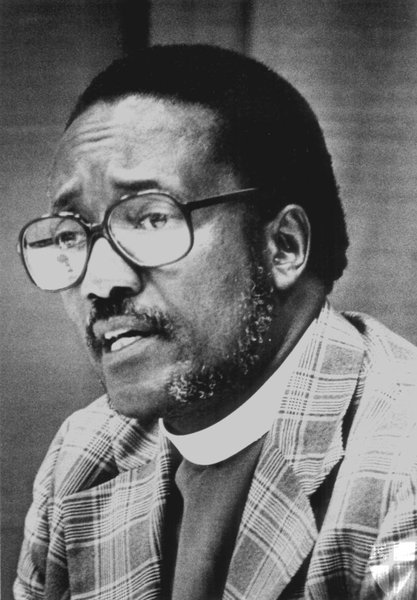
Portrait of Festo Kivengere

Festo Kivengere 1919–1988

Read full biography

Festo Kivengere (1919–1988) was a Ugandan Anglican bishop and evangelist of the East African Revival, often called “the Billy Graham of Africa.” Converted from nominal faith during the 1941 revival, he became Bishop of Kigezi in 1972 and a leader of African Evangelistic Enterprise. After Archbishop Janani Luwum's murder in 1977 he fled Amin's Uganda over the mountains into Rwanda, then wrote the celebrated book I Love Idi Amin, a testimony to forgiving the tyrant who had driven him into exile.

JL

Janani Luwum 1922–1977

Read full biography

Janani Luwum (c.1922–1977) rose from a herdsboy in northern Uganda to Archbishop of the Church of Uganda, Rwanda, Burundi and Boga-Zaire. Converted in the East African Revival in 1948, he preached fearlessly and, after leading the bishops’ protest against Idi Amin’s killings, was murdered on 17 February 1977. He is honoured as one of the ten twentieth-century martyrs whose statues stand over the Great West Door of Westminster Abbey.

Questions and Answers

Who was Festo Kivengere?

Festo Kivengere was a Ugandan Anglican bishop and evangelist of the East African Revival, known around the world for his preaching of forgiveness after he fled Idi Amin's regime.

Who was the first African Archbishop of Uganda?

Erica Sabiti became the first African Archbishop of the Church of Uganda in 1966.

How did Christianity come to Uganda?

Anglican and Catholic missionaries arrived in Buganda in the late 1870s. The young church faced persecution, including the martyrdom of Ugandan converts in 1885–1887, and grew rapidly in the decades that followed.