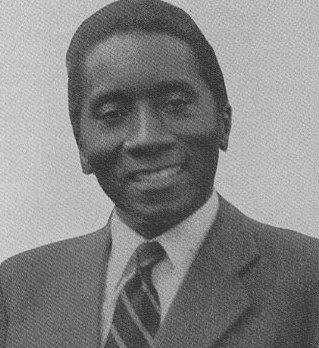
Biography
- 1912 Born
- 1936 Converted
- 1941 Expelled
- 1946 Evangelist
- 1973 Died
Tukutendereza Yesu — we praise you, Jesus; Jesus, Lamb of God, your blood cleanses me; I thank you, Saviour.
The East African Revival threw up its share of bishops and archbishops, men who carried the fire into the highest offices their church could give. William Nagenda went the other way. He was training for ordination, and within a few years of the fire reaching him he was thrown out of the college that would have ordained him — and he decided that this was exactly right, that God was calling him and his friends not to holy orders but to the road. He never took a title, never held a parish, never wore a collar. He remained a layman to the end. And for a generation he was, by the reckoning of nearly everyone who watched the movement, its most prominent and dynamic preacher — the man of whom it was simply said, in convention after convention, that William was the leader.
A chief’s son on Namirembe hill
He was born around 1912 — the year is approximate; no one recorded the day — into a high-status Ganda family. His father, Festo Manyangenda, was a respected Muganda chief on Namirembe hill in Kampala, the very hill where the church’s power sat. It was a large family and a comfortable one, near the centre of things.
He was educated the way a chief’s son was: primary school in Kampala, then King’s College, Budo — the school that trained a generation of Uganda’s leadership — and a diploma at Makerere. He went into government clerical work. On paper he was a young man of Christian upbringing and secure prospects, well-schooled, well-connected, moving up.
And underneath the paper, something was wrong. He came through a genuine moral crisis in these years — a collapse serious enough that he lost his footing, and knew, when he was honest, that the religion he had been raised in was hollow in him. He had learned a great deal about Christ. Christ was not real to him. That is a harder thing to admit than open unbelief, because it comes dressed in respectability, and Nagenda later did not pretend it had been otherwise.
The reality behind the religion
The turn came around 1936, and it came through Simeoni Nsibambi — the Kampala layman whose insistence on the plain claims of the gospel was, more than any single thing, the human spark of the whole revival. Under Nsibambi’s influence the Christ Nagenda had studied so thoroughly stopped being a subject and became a person. The one about whom he had learned so much became, at last, real to him.
The change was total, and it drew him at once into the family and the fellowship of the movement. He married Sala, a daughter of Erasto Bakaluba of the Budo staff; the marriage tied him by blood into the revival’s inner circle, for he became the brother-in-law both of Nsibambi and of the late Blasio Kigozi, the young evangelist whose death in 1936 had shaken the church awake. Nagenda went to Gahini, the mission station just over the border in Rwanda where Joe and Decie Church, Yosiya and Dorokasi Kinuka worked, and where the fire had been burning for several years. He had been a teacher there, and when Kigozi died he was reckoned to have inherited his brother-in-law’s mantle as leader of the revival at Gahini. He and Sala joined the team.
The morning that made the movement
What held that team together was not organisation. It was a habit, and the habit was prayer at dawn. At Gahini the team met early in the mornings for prayer and fellowship, and Nagenda carried that rhythm with him for the rest of his life. It was the engine under everything else he did — the ordinary, unglamorous means by which the fire was kept and passed on.
Out of those meetings came the sound that every reader of the revival’s story eventually hears — the Luganda hymn sung at the opening and close of every gathering, the anthem of the balokole, the saved ones.
Tukutendereza Yesu — we praise you, Jesus; Jesus, Lamb of God, your blood cleanses me; I thank you, Saviour.
— “Tukutendereza Yesu,” the song of the East African Revival
Mukono, 1941
Around 1940 Nagenda entered Mukono — Bishop Tucker Theological College — to train for ordination. If the story had run the ordinary way, he would have come out a priest, as so many of the revival’s leaders did.
It did not run the ordinary way. At Mukono he again gathered a company for the dawn — a group of some forty students who met early in the mornings for prayer and fellowship, as he had at Gahini. Their revival zeal made the staff uneasy. Nagenda insisted, in a colonial church, on the plain racial equality of every soul before the Cross, which was heard as insolence. He and the others criticised what they saw as the missionaries’ liberal theology. And in 1941 the reckoning came: Nagenda and some twenty-eight of his fellow students were expelled.
It would have been natural to read that as a disaster — the door to ministry slammed on the movement’s most gifted young preacher. Nagenda read it as a calling. He became convinced that God was directing his group not toward ordained ministry at all, but toward lay evangelism — that the road, not the pulpit, was their appointment. He did not spend the rest of his life resenting the collar he never wore. He chose against it, deliberately, and stayed a layman for good.
A Christian tea-planter named Lea Wilson gave the expelled students refuge at Namutamba, and the plantation there became Nagenda’s base for the rest of his life — the home ground of a free evangelist. From that ordinary place, with no office and no title, he went out.
A free evangelist to three continents
What followed is one of the more remarkable itineraries in the century’s Christian history, and a layman ran it. In 1946 and 1947 Nagenda was invited to Britain, and to Switzerland, together with the Reverend Yosiya Kinuka and Dr Joe Church — among the very first East Africans to travel to the United Kingdom to bring the gospel rather than receive it. It did not stop there. For some eighteen years, most often in Joe Church’s company, he carried the same message across an astonishing spread of countries — Switzerland, France and Germany; Malawi; Angola and India; the United States and Israel; Brazil. The chief’s son from Namirembe hill preached on three continents.
Those who heard him tried to describe the effect and reached, oddly, for opposite words. There was great energy in him, and yet a quiet sincerity; a penetrating, almost surgical spiritual analysis that could lay a listener bare, delivered in preaching that was gentle. He did not storm. He saw through people, kindly, and told them what he saw. The friend who knew him best summed the whole man up in the title of a small book he wrote about him.
A Great Lover of Jesus.
— J. E. Church, of William Nagenda
The Cross, again and again
Nagenda’s preaching carried a definite theology, and part of its importance is a thing he refused. From about 1944 he decisively rejected the “second blessing” teaching — the idea of a single later crisis that lifts a believer onto a higher, settled plane. He would not have it. What he preached instead was a continual return to the Cross: salvation in the blood of Jesus, a strict moral discipline, and above all brokenness — the daily walking in the light through the constant confession of sin, one believer honest with another.
He set this squarely against okufuba, the striving after holiness by effort and rule-keeping. The Christian life, as he preached it, was not a ladder you climbed and a height you held; it was a place you kept coming back to, low and in company, at the foot of the Cross where the blood still cleansed. It is why the dawn fellowship mattered so much to him. Walking in the light was not a private transaction. It was something you did with other people, out loud, in the morning, before the day could make liars of you.
What he leaves
From about 1964 the signs of illness came — by one account Parkinson’s, though the record here is thin — and his last years were spent partly in Oxford. He died in 1973, some sixty years old, a layman still.
He left few of his own words; no famous saying can be safely put in his mouth. What he left is the shape of a life, and it argues two things the church is slow to learn. The first is that the door being shut is not the same as the call being cancelled. Nagenda was thrown out of the college that would have made him a minister, and treated the expulsion as the moment his real appointment became clear. He did not need the office. He needed the road, and he took it.
The second is that a layman with no title, working from a tea plantation, can carry more weight in a church than most of its officers. For a generation William Nagenda was the leading preacher of the largest spiritual awakening East Africa has known, and he did it all without ordination, standing every morning where he told everyone else to stand — broken, in the light, at the foot of the Cross, singing that the blood of Jesus cleanses. He was not a bishop and not a martyr. He was a great lover of Jesus, and he spent himself getting other people to love him too.
Also appears in

Questions and Answers
Who was William Nagenda?
William Nagenda (c.1912–1973) was a Ugandan lay evangelist and, by the reckoning of nearly everyone who watched the movement, the most prominent and dynamic preacher of the East African Revival. Expelled from theological college in 1941, he chose lifelong lay evangelism over ordination — never taking a title, holding a parish, or wearing a collar — and carried the revival's message of brokenness at the Cross across Europe, the Americas, India and East Africa.
What was his background?
He was born around 1912 into a high-status Ganda family; his father was a respected Muganda chief on Namirembe hill in Kampala. Educated as a chief's son — primary school in Kampala, then King's College, Budo, and a diploma at Makerere — he went into government clerical work, a young man of Christian upbringing and secure prospects. And underneath the paper, something was wrong: he came through a genuine moral crisis, and knew, when honest, that the religion he had been raised in was hollow in him.
How did he come to a real faith?
The turn came around 1936 through Simeoni Nsibambi, whose insistence on the plain claims of the gospel was, more than any single thing, the human spark of the whole revival. Under Nsibambi's influence the Christ Nagenda had studied so thoroughly stopped being a subject and became a person — real to him at last. He married Sala, tying him by blood into the revival's inner circle as brother-in-law both of Nsibambi and of the late Blasio Kigozi, and joined the team at Gahini.
What held the Gahini team together?
Not organisation, but a habit — prayer at dawn. At Gahini the team met early in the mornings for prayer and fellowship, confessing to one another whatever the light had shown them, and Nagenda carried that rhythm for the rest of his life. It was the engine under everything else: not a technique or a programme, but the same few people meeting again at dawn to bring themselves, out loud and in company, back to the Cross.
Why was he expelled from Mukono in 1941?
Around 1940 he entered Bishop Tucker Theological College at Mukono to train for ordination, and again gathered a company of some forty students for dawn prayer and fellowship. Their revival zeal made the staff uneasy; he insisted, in a colonial church, on the plain racial equality of every soul before the Cross, which was heard as insolence, and criticised what they saw as the missionaries' liberal theology. In 1941 he and some twenty-eight fellow students were expelled.
How did he respond to the expulsion?
He read it not as a disaster but as a calling. He became convinced that God was directing his group not toward ordained ministry at all but toward lay evangelism — that the road, not the pulpit, was their appointment — and he chose against the collar deliberately, staying a layman for good. A Christian tea-planter gave the expelled students refuge at Namutamba, and the plantation there became Nagenda's base for the rest of his life, the home ground of a free evangelist.
What was his ministry abroad?
One of the more remarkable itineraries in the century's Christian history, run by a layman. In 1946 and 1947 he was invited to Britain and Switzerland with Yosiya Kinuka and Joe Church — among the very first East Africans to travel to the UK to bring the gospel rather than receive it. For some eighteen years, most often in Church's company, he carried the same message across Switzerland, France and Germany, Malawi, Angola and India, the United States and Israel, and Brazil.
What did people say of his preaching?
Those who heard him reached for opposite words: great energy, and yet a quiet sincerity; a penetrating, almost surgical spiritual analysis that could lay a listener bare, delivered in preaching that was gentle. He did not storm — he saw through people, kindly, and told them what he saw. The friend who knew him best, Joe Church, summed the whole man up in the title of a small book about him: "A Great Lover of Jesus."
What did he preach, and what did he refuse?
From about 1944 he decisively rejected the "second blessing" teaching — the idea of a single later crisis that lifts a believer onto a higher, settled plane. What he preached instead was a continual return to the Cross: salvation in the blood of Jesus, a strict moral discipline, and above all brokenness — daily walking in the light through the constant confession of sin, one believer honest with another, set against okufuba, the striving after holiness by effort and rule-keeping.
What does his life argue?
Two things the church is slow to learn. The first is that the door being shut is not the same as the call being cancelled: thrown out of the college that would have made him a minister, he treated the expulsion as the moment his real appointment became clear. The second is that a layman with no title, working from a tea plantation, can carry more weight in a church than most of its officers. He died in 1973, a layman still — a great lover of Jesus who spent himself getting other people to love him too.
Portrait: From H. H. Osborn, Pioneers in the East African Revival, via Beautiful Feet