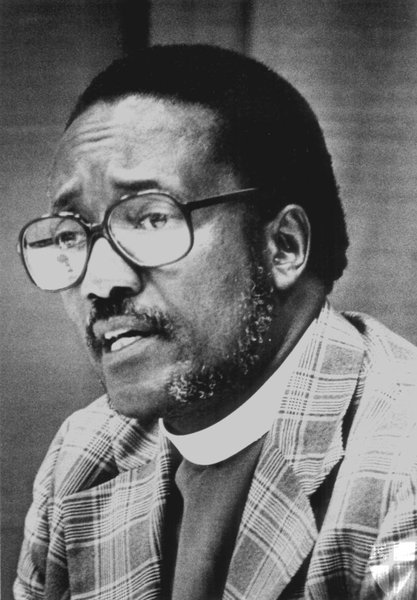
Biography
- 1919 Born
- 1941 Converted
- 1972 Bishop
- 1977 Fled Uganda
- 1988 Died
The Holy Spirit showed me that I was getting hard in my spirit, and that my hardness and bitterness toward those who were persecuting us could only bring spiritual loss… So I had to ask for forgiveness from the Lord,…
Before he was a bishop, before the crowds and the cathedrals and the title the world would fasten on him — the Billy Graham of Africa — Festo Kivengere was a small boy in the high green hills of Kigezi, in the far south-west corner of Uganda, walking behind cattle. He was born in 1919 into a proud, traditional ruling family among the semi-nomadic herders of that country, and his earliest world was one of long grass, mist on the mountains, and the slow patience of the herd. As a boy tending the calves he sometimes turned the pages of little mission picture-books that told the story of a man named Jesus. He could not have guessed that the figure in those pages would one day become the whole meaning of his life — nor how costly that meaning would prove to be.
At about ten he was taken into a mission school newly planted in his village, and because he was quick and bright he was sent away for more education. He learned to read and to reason; he learned the Christian catechism; he was, on paper, a Christian. But it was the faith of a name only. In his teens he drifted from it altogether. At high school he fell in with a crowd untouched by the revival stirring around them, slipped off after dark to the shops, and took up drinking and smoking with a will. By the time he had qualified and returned home as a young schoolteacher, expected by his missionary employers to teach the Bible to children, he taught it with a sneer, unable to resist a sarcastic remark at the sacred text he did not believe.
A flood of light
All this while, the great East African Revival — the movement of the Balokole, the "saved ones" — was moving across the region like wind through the tall grass. It reached Festo not through an argument but through a friend. One day another young man named Festo Rwamunahe came to him, changed past recognition, and said simply, "Three hours ago Jesus became a living reality to me. I know my sins are forgiven." Then he asked Festo's forgiveness for the life they had led together, and promised he would never live that way again. Kivengere had no answer for a joy he could not explain away.
What he did not know was that two small girls had been praying for him by name.
The conversion was total, and it never wore off. The mocking schoolteacher became one of the youngest and most radiant voices of the revival that was sweeping Uganda, Rwanda, Kenya, and Tanzania. The Balokole lived by open confession, joyful singing — their great song was Tukutendereza Yesu, "We praise You, Jesus" — and a fierce insistence that a Christian must walk continually in the light of the cross, keeping short accounts with God and with every neighbour. Festo drank this in, and it became the marrow of his preaching for the rest of his days.
Called to the whole world
He taught, and he evangelised, and his gift for making the gospel vivid and personal carried him further and further afield. He would eventually serve as an interpreter for Billy Graham when Graham preached in Africa — turning the American's English into words that struck home in Luganda and beyond, and learning the crusade platform from the inside. In 1971 he joined the South African evangelist Michael Cassidy in launching African Evangelistic Enterprise in East Africa, a team of African evangelists carrying the good news into the cities of the continent. He turned down invitations to more comfortable and prominent work — including one from Billy Graham himself — to give his strength to Africa. Ordained a priest, he grew into one of the most beloved evangelists his continent had produced, and in 1972 he was consecrated Bishop of Kigezi, shepherd of the very hills where he had once herded cattle.
He came to the office at the worst possible hour. Idi Amin had seized power, and Uganda was descending into terror.
The years of the beast
Under Amin the disappearances began — the road-blocks, the arrests in the night, the bodies in the forests and the rivers. The church would not stay silent. In February 1977 the Anglican bishops, led by Archbishop Janani Luwum, delivered a protest against the regime's murders. The answer was swift. Luwum was seized, and on 16 February 1977 he was killed. Festo Kivengere was among those closest to him and one of the last to see him alive; he waited outside the building where the archbishop was held until soldiers forced him away at gunpoint. Luwum had already told him, quietly, "They are going to kill me. I am not afraid."
Now the danger closed around Festo. He was a marked man, a bishop who had signed the protest and whose voice carried across the world. On the night after Luwum's murder he and his wife Mera fled. They drove as far as the road would take them, and then, guided by church people who knew the country, they climbed on foot through forest and up the flank of the mountains that divide Uganda from Rwanda, walking through the dark toward the border. He crossed carrying almost nothing but his Bible.
"I love Idi Amin"
Safe in exile, Festo could have become a prophet of denunciation. Instead he found a harder road. He discovered bitterness rising in his own heart — the natural, justified hatred of a man who had killed his archbishop and driven his people into terror — and he knew it was poisoning him. In the very year of the terror, as Uganda marked the centenary of the gospel's arrival in the land, he watched imprisoned Christians singing in their cells and men and women streaming to Christ, and he could not carry hatred into that light.
The Holy Spirit showed me that I was getting hard in my spirit, and that my hardness and bitterness toward those who were persecuting us could only bring spiritual loss… So I had to ask for forgiveness from the Lord, and for grace to love President Amin more.
— Festo Kivengere
The turning point came as he contemplated Christ on the cross, praying, "Father, forgive them, for they know not what they do." He saw that the prayer left no one out — not even the tyrant of his own country. He knelt and forgave Amin by name, and peace flooded back into his soul as it had on that October morning long before. Out of that struggle came a small, astonishing book, published in 1977, with a title that scandalised many who saw it: I Love Idi Amin. It was not a book excusing evil. It was a testimony that the love which had saved Festo was strong enough to reach even the man who had tried to destroy him.
On the cross, Jesus said, "Father, forgive them, because they know not what they do." As evil as Idi Amin is, how can I do less toward him?
— Festo Kivengere
Homeward, and home
When Amin fell in 1979, Festo went back. He returned to a broken diocese and a wounded nation and set himself to rebuild — restoring churches, caring for orphans and refugees, pouring himself into relief and reconciliation as readily as into preaching. And preach he did, all over the world: in packed African stadiums and in Western cathedrals and university halls, always with the same message he had learned as a young teacher on his knees — that the love of God is real, that it meets us at the cross, and that it is powerful enough to change not only individuals but the bitter history between peoples. He never lost the note of costliness in his gospel.
Peace is not automatic. It's a gift by the grace of God. It comes when hearts are exposed to the love of Christ. But this always costs something. For the love of Christ was demonstrated through suffering, and those who experience that love can never put it into practice without some cost.
— Festo Kivengere
The cost caught up with his body at last. Festo Kivengere died of leukemia on 18 May 1988, still preaching until near the end, still speaking of the Christ who had flooded his soul with light. He was not yet seventy. He left behind a healed man's testimony — that a cattle-herder from Kigezi, once a scoffing schoolteacher, could be so mastered by grace that he would climb a mountain in the dark rather than nurse revenge, and write a tyrant's name in a book about love. His life remains one of the clearest windows the modern church has onto the plain, staggering proposition at the centre of the faith: that on the cross, no one is beyond forgiveness, and that those who have been forgiven much are set free to forgive at any cost.
Also appears in


Articles about Festo Kivengere (1)
Questions and Answers
Where did Festo Kivengere come from?
He was born in 1919 in the high green hills of Kigezi, in the far south-west corner of Uganda, into a proud, traditional ruling family among the semi-nomadic herders of that country. His earliest world was one of long grass, mist on the mountains and the slow patience of the herd, and as a boy tending the calves he sometimes turned the pages of little mission picture-books that told the story of a man named Jesus — never guessing that the figure in those pages would one day become the whole meaning of his life, nor how costly that meaning would prove to be.
What was his faith like before his conversion?
At about ten he was taken into a newly planted mission school and, being quick and bright, was sent away for more education; he learned the Christian catechism and was, on paper, a Christian. But it was the faith of a name only, and in his teens he drifted from it altogether, taking up drinking and smoking at high school. By the time he returned home as a young schoolteacher, expected to teach the Bible to children, he taught it with a sneer, unable to resist a sarcastic remark at the sacred text he did not believe.
How was he converted in 1941?
The East African Revival — the movement of the Balokole, the "saved ones" — was moving across the region, and it reached Festo through a friend, Festo Rwamunahe, who came to him changed past recognition and said, "Three hours ago Jesus became a living reality to me. I know my sins are forgiven." On a Sunday morning early in October 1941, during an ordinary Anglican prayer-book service, people rose all over the building to confess their sins, and Festo went down on his knees and surrendered everything — as though a flood of light poured into his soul.
What part did two praying children play in his conversion?
What he did not know was that two small girls had been praying for him by name. His fourteen-year-old niece told him that she and a twelve-year-old friend named Eva had been praying for his soul, and that God had told them their prayers would be answered that very weekend. The next day it fell to Festo to walk the schoolboys to church, and there the revival broke upon him. Two children had prayed; heaven had kept the appointment — and the mocking schoolteacher became one of the youngest and most radiant voices of the revival sweeping Uganda, Rwanda, Kenya and Tanzania.
What did the Balokole revival teach him?
The Balokole lived by open confession, joyful singing — their great song was "Tukutendereza Yesu," "We praise You, Jesus" — and a fierce insistence that a Christian must walk continually in the light of the cross, keeping short accounts with God and with every neighbour. Festo drank this in, and it became the marrow of his preaching for the rest of his days. The continual walking in the light, and the readiness to confess and be reconciled at once, would prove to be exactly the discipline that carried him through the terror still to come.
How did he become known as "the Billy Graham of Africa"?
His gift for making the gospel vivid and personal carried him further and further afield, and he served as an interpreter for Billy Graham when Graham preached in Africa, learning the crusade platform from the inside. In 1971 he joined the South African evangelist Michael Cassidy in launching African Evangelistic Enterprise in East Africa. Ordained a priest, he grew into one of the most beloved evangelists his continent had produced, and in 1972 he was consecrated Bishop of Kigezi — shepherd of the very hills where he had once herded cattle — coming to office as Idi Amin seized power.
What happened when Archbishop Luwum was murdered?
In February 1977 the Anglican bishops, led by Archbishop Janani Luwum, delivered a protest against the regime's murders. The answer was swift: Luwum was seized and, on 16 February 1977, killed. Festo was among those closest to him and one of the last to see him alive, waiting outside the building where the archbishop was held until soldiers forced him away at gunpoint. Luwum had already told him quietly, "They are going to kill me. I am not afraid." Now the danger closed around Festo, a marked man who had signed the protest and whose voice carried across the world.
How did he escape Uganda?
On the night after Luwum's murder he and his wife Mera fled. They drove as far as the road would take them, and then, guided by church people who knew the country, climbed on foot through forest and up the flank of the mountains that divide Uganda from Rwanda, walking through the dark toward the border. He crossed carrying almost nothing but his Bible. Somewhere on those mountainsides, in the cold and the fear, a bishop and his wife walked and prayed the prayer of the hunted — not knowing whether the next ridge held safety or a soldier.
What did his book "I Love Idi Amin" mean?
Safe in exile, Festo could have become a prophet of denunciation, but he found bitterness rising in his own heart and knew it was poisoning him. Contemplating Christ on the cross praying "Father, forgive them," he saw that the prayer left no one out, and he knelt and forgave Amin by name. Out of that struggle came a small, astonishing book, published in 1977: "I Love Idi Amin" — not a book excusing evil, but a testimony that the love which had saved him was strong enough to reach even the man who had tried to destroy him.
How did he understand forgiveness and the cost of peace?
Asked how he could love such a man, he did not pretend to feel warmly toward him: "I may not like Idi Amin, but if I am a Christian believer I am obliged to forgive him, love him with Christ's love, and want the highest and best for his life." When Amin fell in 1979 Festo returned to rebuild a broken diocese, caring for orphans and refugees. He taught that "peace is not automatic. It's a gift by the grace of God... but this always costs something." He died of leukemia on 18 May 1988, still preaching of the Christ who had flooded his soul with light.
Portrait: Korirk01, CC BY-SA 4.0, via Wikimedia Commons — adapted (black-and-white)