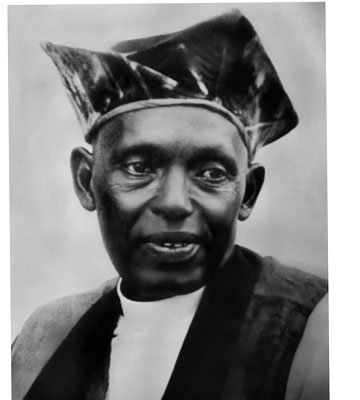
Biography
- 1903 Born
- 1933 Ordained
- 1939 Revival
- 1960 Bishop
- 1966 Archbishop
- 1988 Died
I did all this for you, what have you done for me?
The East African Revival is remembered for its laymen and its martyrs — the health officer who would not settle, the deacon who died with one word on his lips, the archbishop murdered for refusing to be quiet. Erica Sabiti was none of those things. He was a clergyman, ordained and licensed and doing the work, when the fire he is now numbered among reached him almost by accident on somebody else's journey. He was the first African to lead the Church of Uganda, and his path to that office ran through one of the ugliest quarrels in its history — a quarrel settled, in the end, not by negotiation but by nine bishops standing up and confessing their own sin.
A chief's son from Ankole
He was born in 1903 at Rwebishuru, in Ankole in the south-west of Uganda, into a country of hills and cattle a long way from the Buganda kingdom where the church's power sat. His father was a chief, and he died while Erica was still young.
He went to King's College, Budo — the school that trained a generation of Uganda's leadership — and afterwards to Makerere. It was at Budo that the decisive thing happened, and it happened through a window. The chapel carried words of Christ in its glass, and Sabiti later traced the impetus of his whole life to reading them there:
I did all this for you, what have you done for me?
— the words in the Budo chapel window, which Sabiti said gave him his life's impetus
It is worth pausing on how ordinary that is. No crisis, no meeting, no preacher — a boy at school reading a sentence set in glass by somebody he never met, and carrying it for the rest of his life.
He taught in a primary school. He was ordained deacon in 1933 and priest in 1934.
Six years an ordained man, and something still missing
Here the story becomes unusual, and more useful than the usual shape.
Sabiti was not a man waiting to be converted. He was a believing, trained, ordained Anglican clergyman with a parish ministry — by every measure his church used, a finished article. And for six years after his ordination, the thing that would define the rest of his life had not yet touched him.
In 1939 he accompanied the Bishop of Uganda on a visit to churches in Rwanda and Burundi. The East African Revival had been running there for several years by then, out of the mission station at Gahini where Joe Church and Yosiya Kinuka worked. Sabiti met the balokole — the saved ones — on that trip, and his ministry was transformed.
He had not gone looking. He was travelling as somebody's companion, in another country, among people who were not his responsibility. From that year onward he is named in every serious list of the revival's leaders, alongside Simeon Nsibambi, William Nagenda, Yosiya Kinuka and Festo Kivengere.
For any reader who has been a Christian a long time, or who is employed by the church and quietly dry, Sabiti is the more relevant witness of the two great names. Nsibambi was a layman who forced the question. Sabiti was already inside the machine, doing the job well, when the thing arrived sideways.
Twenty-six years, then a mitre
What followed his revival was not a rocket. It was two and a half decades of ordinary ministry.
He was ordained in 1933 and consecrated Bishop of Rwenzori in 1960 — twenty-six years in between, of parish work, teaching, and the unrecorded labour that makes up most of a faithful life. We know almost nothing about those years, which is the honest situation with most of the church's best people. There was no crisis worth writing down. There was a man doing the work.
The office at the end did not make those years worthwhile. They were already the ministry.
The archbishop nobody could agree on
In 1965 Leslie Brown, the expatriate archbishop of the province, retired. Uganda's bishops chose Sabiti to succeed him, and in 1966 he became the first Ugandan — the first African — to hold the office, over a province then covering Uganda, Rwanda, Burundi and Boga-Zaire.
It should have been a moment of pure celebration. It was not.
Sabiti was a Munyankore from the south-west. The archbishop's seat was at Namirembe, in Buganda, and there was bitter opposition from those who would accept only a Muganda in that chair. The dispute was not about doctrine or competence. It was ethnic, it was public, and it dragged on for years, leaving the new archbishop leading a church a substantial part of which would not acknowledge him.
This is the part of his life that most deserves to be remembered, and it is not really about him at all.
The deadlock was eventually broken when the president — Idi Amin, of all people — summoned the province's bishops to Kampala to settle the matter. In that meeting the nine diocesan bishops confessed the sins that had contributed to the division, and then together recognised Erica as their archbishop.
That is not a diplomatic settlement; a diplomatic settlement divides the difference and leaves everyone's dignity intact. It is the method Nsibambi and Kinuka had been practising in small rooms for thirty years, scaled up to the leadership of a national church. The revival's central claim — that specific sin, named out loud in company, is what breaks things open — was tested at the highest level available in that country, and it held.
Sabiti's own conduct through those years is notable for what is absent from it. There is no record of him campaigning for himself, denouncing his opponents, or gathering his supporters to split off. He waited, and let the confession be theirs to make.
The bag with the Bible in it
In early 1972 — the year Amin expelled Uganda's Asian population, and the beginning of the regime's worst period — Sabiti was called to the Command Post at short notice.
He was diabetic and always travelled with a flask of tea. His assistant carried the bag, and the bag also held his Bible. They were received at the Command Post and taken to the president.
Amin threatened him. He repeated the threat. When it came a third time, the archbishop reached into the bag and took out his Bible.
Accounts of what was said vary and this account will not pretend to more than the gesture. The gesture is not ambiguous.
Retirement, and the man who followed him
He became the first Bishop of Kampala in 1972 and served two more years. In 1974 he retired, and the House of Bishops elected Janani Luwum to succeed him.
Three years later Luwum was dead, murdered by Amin's regime after delivering the bishops' protest against the killings. Sabiti outlived his successor by eleven years — an old man in retirement, watching the church he had held together be attacked, and watching the man who took the chair from him pay for it with his life.
He died at Kinoni on 15 May 1988, aged eighty-five.
What he leaves
Sabiti wrote no famous books and left few of his own words. What he left is a demonstration of two things the church keeps forgetting.
The first is that ordination is not the same as being filled. He had every credential his church could issue and was still six years short of what he most needed, and he received it while travelling as somebody's assistant. Nobody is too far in to be given more.
The second is that the revival's method works on institutions. We are used to the idea that personal confession heals marriages and friendships. Sabiti's archbishopric is the evidence that it also heals churches — that a division which negotiation could not settle in years was undone in one meeting by men who stopped defending their positions and named their own part in the wreck.
He is the least dramatic figure the East African Revival produced, and in a way the most encouraging. He was not a martyr and not a founder. He was a clergyman from a small place who was given more than he had, waited twenty-six years, took an office that half the country would not grant him, refused to fight for it, and lived to see it handed on.
I did all this for you, what have you done for me?
— the question he first read at school, and answered for fifty-five years
Also appears in

Questions and Answers
Who was Erica Sabiti?
Erica Sabiti (1903–1988) was the first African Archbishop of the Church of Uganda. Ordained in 1933, he met the balokole of the East African Revival in 1939 while travelling with his bishop in Rwanda and Burundi, and became one of the movement's leaders. His election as archbishop in 1966 was opposed on ethnic grounds, and the division was healed only when the province's nine diocesan bishops confessed their own part in it and united behind him.
Where did he come from, and what shaped him?
He was born in 1903 at Rwebishuru in Ankole, in the south-west of Uganda, into a country of hills and cattle a long way from the Buganda kingdom where the church's power sat; his father was a chief who died while Erica was young. He went to King's College, Budo, and it was there, through a window, that the decisive thing happened: the chapel carried words of Christ in its glass — "I did all this for you, what have you done for me?" — and Sabiti traced the impetus of his whole life to reading them.
Why is his conversion story unusual?
Because he was not a man waiting to be converted. He was a believing, trained, ordained Anglican clergyman with a parish ministry — by every measure his church used, a finished article, ordained deacon in 1933 and priest in 1934. And for six years after his ordination, the thing that would define the rest of his life had not yet touched him.
How did the revival reach him?
In 1939 he accompanied the Bishop of Uganda on a visit to churches in Rwanda and Burundi, where the East African Revival had been running for several years out of the mission station at Gahini. Sabiti met the balokole — the "saved ones" — on that trip, and his ministry was transformed. He had not gone looking; he was travelling as somebody's companion, in another country, among people who were not his responsibility.
Why is he called the more relevant witness?
For any reader who has been a Christian a long time, or who is employed by the church and quietly dry, Sabiti is the more relevant of the revival's two great early names. Simeon Nsibambi was a layman who forced the question; Sabiti was already inside the machine, doing the job well, when the thing arrived sideways. Nobody, his life says, is too far in to be given more.
What were the years before he became a bishop?
Not a rocket, but two and a half decades of ordinary ministry: ordained in 1933, he was not consecrated Bishop of Rwenzori until 1960 — twenty-six years of parish work, teaching, and the unrecorded labour that makes up most of a faithful life. We know almost nothing about those years, which is the honest situation with most of the church's best people. The office at the end did not make those years worthwhile; they were already the ministry.
Why was his election as archbishop opposed?
In 1966 he became the first Ugandan — the first African — to hold the office, over a province then covering Uganda, Rwanda, Burundi and Boga-Zaire. It should have been a moment of pure celebration, but Sabiti was a Munyankore from the south-west, and the archbishop's seat was at Namirembe in Buganda; there was bitter opposition from those who would accept only a Muganda in that chair. The dispute was not about doctrine or competence — it was ethnic, public, and dragged on for years.
How was the division finally healed?
The deadlock was broken when the province's nine diocesan bishops confessed the sins that had contributed to the division, and then together recognised Erica as their archbishop. It was the revival's oldest practice — naming your own sin in company — applied to a bench of bishops in a national crisis. Not a diplomatic settlement that divides the difference, but the method Nsibambi and Kinuka had practised in small rooms for thirty years, scaled up, and it held.
What was the Bible in the bag?
In early 1972, in the worst period of Idi Amin's regime, Sabiti was summoned to the Command Post. He was diabetic and always travelled with a flask of tea; his assistant carried the bag, which also held his Bible. Taken to Amin and threatened three times, the near-seventy-year-old archbishop reached into the bag and took out his Bible — the book he had been carrying since a schoolboy read a sentence in a chapel window. Accounts of the words vary; the gesture is not ambiguous.
What does he leave the church?
He retired in 1974 and was succeeded by Janani Luwum, murdered by Amin's regime three years later; Sabiti outlived his successor by eleven years and died at Kinoni on 15 May 1988. He wrote no famous books, but demonstrates two things the church keeps forgetting: that ordination is not the same as being filled, and that the revival's method of naming one's own sin heals not only marriages and friendships but institutions — a division negotiation could not settle in years, undone in one meeting.
Portrait: Courtesy of the Church of Uganda, via Daily Monitor