
New to Brother Lawrence? Start with
The Practice of the Presence of God
All works · 1 hr 40 min read
Biography
In the noise and clatter of my kitchen, while several persons are at the same time calling for different things, I possess God in as great tranquility as if I were upon my knees at the blessed sacrament.
He was never a priest, never a preacher, never a scholar. He was a lame lay brother who cooked for a Paris monastery and, in his old age, mended its sandals. Yet the few pages gathered after his death — four conversations and a handful of letters — have been read for three centuries by Catholics and Protestants alike, by anyone who has wondered whether God can be known in a kitchen as well as in a chapel. Brother Lawrence’s answer was that he can, and that the whole of the spiritual life comes down to living, hour by hour, in his company.
A peasant’s son from Lorraine
He was born Nicolas Herman in Hériménil, a village near Lunéville in the Duchy of Lorraine, around 1614. The year is uncertain; in a late letter he calls himself “almost eighty,” which would put it a few years earlier. His parents were poor country people, and devout. In his youth the Thirty Years’ War brought soldiers, plague and famine to Lorraine’s villages.
The turning point of his life came in a winter when he was about eighteen. He told the story himself, decades later. Seeing a tree stripped of its leaves, and considering that in a little while the leaves would be renewed, and after them the flowers and the fruit, he received, as he put it, “a high view of the Providence and Power of God,” which never afterwards left him. That bare tree set him loose from the world and kindled in him a love for God so great that, forty years on, he could not tell whether it had grown since.
Soldier and footman
The tree did not send him straight into a cloister; he went for a soldier. According to the accounts of his early life, he was taken prisoner by German troops who suspected him of being a spy and threatened to hang him; he answered them so calmly that they let him go. In 1635, at Rambervillers, not far from home, he was badly wounded in the leg. The injury lamed him for the rest of his life.
After a time of recovery at his parents’ home he went into service as a footman to M. Fieubert, the treasurer. He remembered himself in that post with rueful humour as “a great awkward fellow who broke everything.” He went into religion thinking, he said, that in a monastery he would be made to smart for his awkwardness and his faults, and so would sacrifice to God his life and its pleasures. But God, he added, “had disappointed him”: he met with nothing there but satisfaction.
The Carmelites of the rue de Vaugirard
In 1640, at about the age of twenty-six, he entered the house of the Discalced Carmelites on the rue de Vaugirard in Paris as a lay brother. He received the brown habit in August of that year and took the name by which the world knows him, Brother Lawrence of the Resurrection, making his profession two years later. He would spend the rest of his life in that community, unlearned and largely unnoticed.
His first years there were not peaceful. He was, he said, long troubled by the conviction that he would be damned, and nothing anyone said could persuade him otherwise. For four years the fear lay on him. What carried him through was a resolution:
In a letter he wrote that for his first ten years he suffered much: his past sins were always before him, and all creatures, reason and God himself seemed against him, with faith alone for him. Then, when he had resigned himself to ending his days in that trouble, he found himself “changed all at once,” and his soul, until then in turmoil, felt “a profound inward peace, as if she were in her centre and place of rest.” He came to see that the trouble had arisen from want of faith, and from then on, he said, he passed his life in perfect liberty and continual joy.
The kitchen
For some fifteen years Brother Lawrence was the community’s cook. He had, by his own account, a great natural aversion to the work. He did not escape it; he changed the way he did it, doing everything there for the love of God and praying on every occasion for grace to do it well, until he found it easy.
Those who watched him saw that in the greatest hurry of the kitchen he was never hasty and never loitering. In his own words, the ones he is best remembered by:
In the noise and clatter of my kitchen, while several persons are at the same time calling for different things, I possess God in as great tranquility as if I were upon my knees at the blessed sacrament.
— Brother Lawrence, Fourth Conversation
The monastery sometimes sent him on errands he was badly fitted for. Once he was dispatched to Burgundy to buy the community’s wine, a task he dreaded: he had, he said, no head for business, and he was so lame that he could get about the boat only by rolling himself over the casks. He gave himself no uneasiness, but told God that it was His business he was about, and afterwards found that it had all been very well done.
In later life he was moved from the kitchen to the sandal-maker’s bench, where he repaired the footwear of a large community. He was well pleased with it, he said, and as ready to leave it as the old one, since in every condition he found his pleasure in doing little things for the love of God — even taking up a straw from the ground for His sake.
The practice
What Brother Lawrence called the practice of the presence of God was not a technique, and he distrusted techniques. He had read many books describing different methods of going to God, he said, and found that they puzzled him more than they helped. So he resolved to “give the all for the all”:
I renounced, for the love of Him, everything that was not He; and I began to live as if there was none but He and I in the world.
— Brother Lawrence, First Letter
From then on he kept his mind in God’s presence, and when it wandered he brought it back without fretting. In time it became habitual. It was a great delusion, he said, to think that the times of prayer ought to differ from other times; his prayer was nothing else but a sense of the presence of God.
He was frank that it was hard at first. It did not matter greatly what one did, for God “regards not the greatness of the work, but the love with which it is performed.” Our sanctification, he said, does not depend on changing our works, but in doing for God’s sake what we commonly do for our own. He believed anyone could live this way, and said so plainly:
Were I a preacher, I should, above all other things, preach the practice of the presence of God; and, were I a director, I should advise all the world to do it, so necessary do I think it, and so easy too.
— Brother Lawrence, Fifth Letter
The friend who wrote it down
Brother Lawrence would have left no trace at all but for Joseph de Beaufort, a priest who later served as vicar general to Cardinal Louis-Antoine de Noailles, Archbishop of Paris. De Beaufort first visited him on 3 August 1666 and came back three more times, in September and November of that year and in November 1667, writing down afterwards what the old brother had told him. He asked only sincerity: if de Beaufort truly meant to serve God, he might come as often as he pleased; if not, he ought not to come at all.
Others sought him out by letter. The letters that survive are short and practical, written to a priest, to friends in religion and in the world, and, in the last of them, to a correspondent who was gravely ill. To the sick he did not promise relief; he prayed that God would give them strength to bear their pains as long as He pleased, and told them that God is often nearer to us in sickness than in health. “We have but little time to live,” he wrote to one friend; “you are near sixty-four, and I am almost eighty. Let us live and die with God.”
Death and the little book
His last letter ends with the hope that God would grant him “the favor to see Him within a few days.” The editor’s note beneath it records that he took to his bed two days later and died within the week. He died in the Carmelite house in Paris on 12 February 1691, after half a century in the community. De Beaufort’s account of his death says that when a brother at his bedside asked him what he was doing, he answered that he was doing what he would do for all eternity — blessing God, praising Him, adoring Him and loving Him with all his heart.
De Beaufort gathered what he could. In 1692 he published Brother Lawrence’s spiritual maxims and his letters, with a short eulogy of his life, and in 1694 a second small volume containing an account of his ways and the four conversations. They had the misfortune to appear just as the quarrel over Quietism — the controversy around Madame Guyon and Archbishop Fénelon, who admired Brother Lawrence — was making all talk of simple, wordless prayer suspect in France, and for a long time the lay brother was more honoured outside his own church than within it. It was a Protestant, Pierre Poiret, who reprinted him among the classics of the inner life, and through such editions he passed into English.
So a Roman Catholic lay brother, who never left his order and never wished to, became one of the best-loved devotional writers of the Protestant world. John Wesley included him among the works he published for the early Methodists in his Christian Library. E. M. Bounds set his words at the head of a chapter of Purpose in Prayer; and A. W. Tozer commended him often as one who had learned to make the kitchen as holy as the chapel. Carmelites, for their part, have always counted him one of their own.
He would have been surprised by all of it. He asked his first correspondent to show his letter to nobody. What he left behind is less a method than an invitation, made to everyone: to think often of God, by day, by night, in business and even in diversions — “He is always near you and with you: leave Him not alone.”
Books by Brother Lawrence (3)


Questions and Answers
Who was Brother Lawrence?
Brother Lawrence of the Resurrection, born Nicolas Herman, was a lay brother of the Discalced Carmelites in Paris in the seventeenth century. He was never a priest, a preacher or a scholar: he cooked for his community for some fifteen years and in later life mended its sandals. The four conversations and the letters gathered after his death as The Practice of the Presence of God have been loved by Roman Catholics and Protestants alike for three centuries.
Where and when was Brother Lawrence born?
He was born Nicolas Herman in Hériménil, a village near Lunéville in the Duchy of Lorraine, around 1614. The year is uncertain; in a late letter he calls himself almost eighty, which would put his birth a few years earlier. His parents were poor and devout country people, and in his youth the Thirty Years' War brought soldiers, plague and famine to the villages of Lorraine.
What happened when Brother Lawrence saw a bare tree in winter?
In a winter when he was about eighteen he saw a tree stripped of its leaves and considered that in a little while the leaves would be renewed, and after them the flowers and the fruit. He said that it gave him a high view of the Providence and Power of God which never afterwards left him. The sight set him loose from the world and kindled such a love for God that, forty years on, he could not tell whether it had grown since.
Was Brother Lawrence a soldier?
Yes. Before he entered religion he went for a soldier in the Thirty Years' War. According to the accounts of his early life he was taken prisoner by German troops who suspected him of being a spy and threatened to hang him, and he answered so calmly that they let him go. In 1635, at Rambervillers, not far from his home, he was badly wounded in the leg, and the injury lamed him for the rest of his life.
Why did Brother Lawrence become a Carmelite?
After recovering from his wound he served as a footman to M. Fieubert, the treasurer, and remembered himself in that post as a great awkward fellow who broke everything. He went into religion thinking that in a monastery he would be made to smart for his awkwardness and faults, and so would sacrifice his life and its pleasures to God. But God, he said, had disappointed him: he met with nothing there but satisfaction.
When did he join the Carmelites, and why is he called Brother Lawrence of the Resurrection?
In 1640, at about the age of twenty-six, he entered the house of the Discalced Carmelites on the rue de Vaugirard in Paris as a lay brother. He received the brown habit in August of that year and took the name Brother Lawrence of the Resurrection, making his profession two years later. He spent the rest of his life in that community, unlearned and largely unnoticed.
Did Brother Lawrence struggle in his faith?
Yes. In his first years in the monastery he was long troubled by the conviction that he would be damned, and for four years the fear lay on him. He held on by resolving to act purely for the love of God whether he was lost or saved. In a letter he wrote that for his first ten years he suffered much, until he found himself changed all at once and felt a profound inward peace. From then on, he said, he passed his life in perfect liberty and continual joy.
What did Brother Lawrence mean by the practice of the presence of God?
It was not a technique; he found that books of methods puzzled him more than they helped. He resolved to give the all for the all, renouncing for the love of God everything that was not He, and to live as if there were none but God and himself in the world. He kept his mind in God's presence, brought it back without fretting when it wandered, and held that the times of prayer ought not to differ from other times. His prayer, he said, was nothing else but a sense of the presence of God.
How did Brother Lawrence pray in the kitchen?
He had a great natural aversion to kitchen work, but he did everything there for the love of God and prayed on every occasion for grace to do it well, until he found it easy. When he began his work he asked God for the grace to continue in His presence and to receive all his works. He said that in the noise and clatter of his kitchen, with several people calling for different things, he possessed God in as great tranquility as if he were on his knees at the blessed sacrament.
Who wrote down Brother Lawrence's words, and how did his book spread?
Joseph de Beaufort, a priest who later served as vicar general to Cardinal de Noailles, Archbishop of Paris, visited him four times in 1666 and 1667 and wrote down his conversations. After Brother Lawrence died on 12 February 1691, de Beaufort published his maxims and letters in 1692 and the conversations in 1694. The Quietist controversy made such writing suspect in France, but the Protestant Pierre Poiret reprinted him, John Wesley included him in his Christian Library, and later E. M. Bounds and A. W. Tozer commended him.
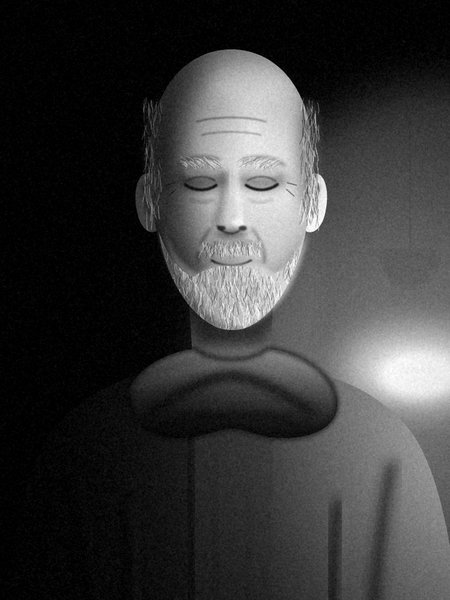
Portrait: Illustration by Ochorus (an imagined likeness)