Purity of Heart is William Booth’s earnest, pastoral appeal for a heart made clean—freed from the reigning power of sin, filled with love, and wholly given to God. If you have come here asking what the book is about, here is the short answer: Booth takes one promise of Jesus, “Blessed are the pure in heart, for they shall see God” (Matthew 5:8), and turns it into a searching, hopeful question addressed to the ordinary believer—can your heart truly be made pure? He answers yes, and then shows the way. You can read the whole of Purity of Heart free on Ochorus; this guide is a companion to help you read it well.
What the book is, and Booth’s aim
William Booth was the founder, with his wife Catherine, of The Salvation Army, and one of the most tireless Christian leaders of the nineteenth century. He wrote not to satisfy curiosity but to move the will. Purity of Heart reads like a series of letters from a general to his soldiers—Booth addresses the reader again and again as “My Dear Comrades”—pressing them past a comfortable, forgiven-but-unchanged religion toward a real inward cleansing.
His aim is heart-holiness. Booth is convinced that the heart, not the outward act, is the true measure of a person, and that God commands His people to be holy: “without holiness no one will see the Lord” (Hebrews 12:14). So the book is a call—definite, urgent, and practical—to seek a clean heart as a real experience of grace, not merely to admire it as an ideal. Booth begins by defining what purity actually is:
When we say that a man is pure, in the religious sense, we mean that he is right and honest and true inside and out; that he not only professes, but practices the things that have to do with his duty to God and man.William Booth
How Purity of Heart is organized
The book moves in ten short chapters, and its order is itself an argument. Booth first asks what purity is (“Purity: What It Is”), then shows that God commands it, that it means real deliverance from sin, and he describes what a pure heart looks like in the life. From there he links purity to love, insists that it is genuinely possible, and then turns to the practical heart of the matter: purity is God’s gift, received by a “purifying faith,” confirmed by the witness of the Spirit, and kept by watchfulness and prayer.
In other words, the structure carries the reader from conviction (this is commanded and needed) through possibility (it can be had) to reception (here is how) and preservation (here is how to keep it). Booth grounds the sequence in Scripture at every turn—he cites the purpose of Christ’s deliverance, “that we… might serve Him without fear, in holiness and righteousness” (Luke 1:74-75), and the fruit of a freed life that leads “to sanctification and its end, eternal life” (Romans 6:22). Because the chapters build on one another, the book rewards being read in order rather than dipped into.
The chapters are short, and each is really a letter written to be read at a sitting and then acted upon. Booth opens most of them with a single verse and lets the whole chapter unfold from it, so the reader always knows where the argument is anchored. This gives the book an unhurried, cumulative feel: a definition here, a command there, a description, an encouragement, a warning, a step of faith. Nothing is left in the abstract for long. By the final chapter, “How to Keep Pure,” Booth has moved from what the pure heart is all the way to the daily habits that guard it, so that the book ends not with a doctrine to admire but with a life to live.
The central themes
Purity of heart itself. For Booth a pure heart is not sinless flawlessness of judgment or memory but a heart cleansed from the love and dominion of sin and filled with love for God. It is the inner spring from which a holy life flows—“just as pure water flows from a clean spring.” He is unashamedly high on his subject: God delights in holiness, heaven and its inhabitants are pure, and even the angels love purity while the very devils know it to be a precious thing. Booth wants the reader to feel that a clean heart is not a grim burden imposed from outside but the most beautiful and desirable thing a soul can possess.
Purity and love. Booth ties cleansing tightly to love and to usefulness. A pure heart is the condition of a Spirit-filled, others-blessing life, because “the Holy Spirit dwells in this full power only in hearts that have been cleansed from sin.” Holiness, for him, is never a private ornament; it is the secret of a life poured out for God and for the lost, which is why he presses it on comrades who longed to save souls.
Entire sanctification. Standing in the Wesleyan holiness tradition, Booth teaches that conversion and cleansing are distinct. He is candid that the believer often still feels pride, anger, and selfishness within, and that this is not the last word:
Although great work is done at conversion, complete deliverance from sin does not happen all at once. God breaks the power of sin over a person, but the removal of sin from the heart and life is not yet complete.William Booth
He is less interested in theological precision than in the reality he names in three plain stages—the soul under sin, the soul over sin, and the soul free from sin—and he presses the reader to ask honestly which stage is theirs.
Consecration and the purifying faith. Booth is careful to say what will not cleanse the heart. Effort, meetings, knowledge, sorrow, and even self-surrender fall short by themselves; the cleansing is God’s to give and ours to receive by faith. He treasures the fact that the power belongs to God—“we have this treasure in jars of clay, to show that the surpassing power belongs to God and not to us” (2 Corinthians 4:7)—and he insists that it comes through the blood of Christ, who “suffered outside the gate in order to sanctify the people through his own blood” (Hebrews 13:12). His warning is blunt:
No person can cleanse your heart—not a preacher, not a leader, not a friend. Only Christ can do that.William Booth
The witness of the Spirit. Booth wants no one resting on a mood or a hope. Just as assurance of forgiveness came by the Spirit’s inward word, so the assurance of a cleansed heart comes the same way. He points to the promise of power for a changed and witnessing life—“you will receive power when the Holy Spirit has come upon you, and you will be my witnesses” (Acts 1:8)—and to God’s indwelling as the goal of the whole work, praying with Paul that Christ would dwell in the heart and fill the believer with all “the fullness of God” (Ephesians 3:17-19). The point, he says, is stunning: God “desires not only to be with you, but to live in you.”
Who should read it
Purity of Heart is for any believer who longs to be free from the power of sin and wholly devoted to God, and who is dissatisfied with a shallow or merely outward Christianity. If you have known conversion but still feel the inner tug of pride, envy, and self-will, Booth writes directly to you. It suits the earnest seeker who wants holiness to be more than a word, the new Salvationist or convert being taught what full salvation means, and the tired believer who has cycled through “sinning and repenting” and wonders whether there is a real cure.
Readers who prefer cautious, heavily qualified theology should know Booth’s aim is to search the conscience and stir the will, not to referee every doctrinal fine point. Read in that spirit, it is bracing rather than harsh—the voice of a man who spent his life urging the lost and the lukewarm toward God.
How to read it today
Read it prayerfully and slowly, one letter at a time, letting Booth’s opening question sit with you: can a heart truly be made pure? Because the chapters build, resist the urge to skip to “How to Keep Pure” before you have let the earlier chapters do their searching work. When Booth quotes hymns—and he quotes many—linger over them; he uses them the way he used the mercy seat, to turn conviction into prayer.
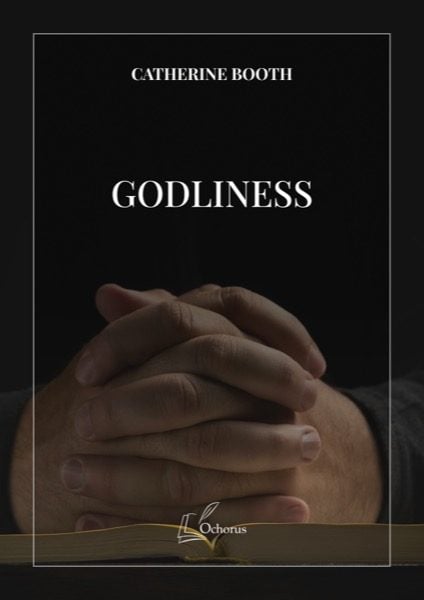
Keep a Bible open beside the text. Booth reasons straight from Scripture, and looking up his verses in their context deepens the reading. Where his nineteenth-century idiom feels distant, translate it into your own life: what, concretely, is the “pride, anger, envy, and selfishness” he names in you? Take his practical counsel seriously—to pray at set times, to profess the cleansing you seek, and to feed on holiness-minded reading—and hold on to his encouragement for the discouraged: “if at first you do not succeed, do not give up. Continue. Seek again. Trust again.” He rests the whole pursuit on the God of peace who is able to “equip you with everything good” to do His will (Hebrews 13:20-21), and he leaves the reader with the steady promise that “when he has stood the test he will receive the crown of life” (James 1:12). A pairing helps too: Catherine Booth’s Godliness covers the same holiness ground with the same Salvationist fire, and you can read more about Booth’s life and writings on the William Booth author page.
For reflection
Use these questions on your own or with a group, letting each one send you back to the text and to prayer:
- Of Booth’s three states—the soul under sin, over sin, and free from sin—which most honestly describes you today, and why?
- Booth says effort, meetings, knowledge, sorrow, and self-surrender cannot by themselves cleanse the heart. Which of these have you been quietly trusting in place of faith in Christ?
- What would it change in your daily life to believe, with Booth, that God wants not merely to visit your heart but to live in it (Ephesians 3:17-19)?
- Where do you feel the “pride, anger, envy, and selfishness” Booth names, and what would it mean to bring these specifically to God for cleansing?
- Booth urges the discouraged to seek again and trust again. What is one concrete practice—set times of prayer, honest confession, holiness-minded reading—you will take up to keep pursuing a clean heart?