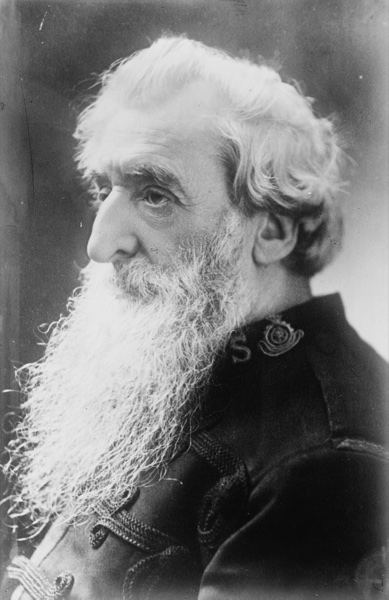

New to William Booth? Start with
Purity of Heart
All works · 2 hr 17 min read
Biography
- 1829 Born
- 1844 Converted
- 1865 Founds Mission
- 1878 Salvation Army
- 1890 Darkest England
- 1912 Died
God shall have all there is of William Booth.
William Booth was born on 10 April 1829 in Sneinton, on the edge of Nottingham, the second child of Samuel Booth, a nailmaker and builder, and Mary Moss. His father had once known modest prosperity, but the trade collapsed around him, and the boy grew up watching a household slide steadily into want. When William was thirteen, his father—unable to keep him in school—apprenticed him to a pawnbroker. Samuel Booth died soon after, in September 1842, and the teenaged William spent his days behind a counter where the poor came to trade the last of what they owned for a few shillings. He learned early, and never forgot, what poverty does to a person. The pawnshop was, in its way, his first mission field.
Conversion and Call
Two years into that apprenticeship, in 1844, Booth was converted. He had been attending Wesley Chapel, and one night, walking home through the Nottingham streets from a meeting, he came to a settled conviction that he could no longer belong half to God and half to himself. By his own account, the turning point was a restitution: he had gained a small dishonest advantage in a boyhood transaction, and he could not rest until he had made it right. Out of that reckoning came a resolve he carried for the rest of his life—that God should have not part of him but the whole.
God shall have all there is of William Booth.
— William Booth, at his conversion, aged fifteen
That single sentence became the seed of everything that followed. Booth was fifteen years old and had almost nothing to give but himself; he gave that entirely. The fire was fanned soon afterward when the American Methodist evangelist James Caughey came to Nottingham. Caughey's revival meetings left a profound mark on the young convert, awakening in him a burden for the salvation of souls that he would later call the great burden of his life. Booth began at once to act on it. With a band of young believers he went through the poor neighbourhoods distributing tracts and inviting people to revival meetings, and he soon began to preach. Largely self-educated—his schooling had ended at thirteen, and he learned his craft through hungry reading, Bible study, and the practical apprenticeship of Methodist meetings rather than any seminary—he became a Methodist local preacher, taking the gospel into the poorest lanes of Nottingham alongside his close friend Will Sansom. The two of them carried the sick and the drunk into chapel, an offence to the respectable pews. Sansom died of consumption in 1849, and Booth, his apprenticeship ended and work scarce, moved to London to find employment. There he chafed against the narrow scope allowed a lay preacher and began preaching in the open air, on Kennington Common and in the streets, to the crowds the churches were not reaching.
In 1852, on his twenty-third birthday, he became a full-time minister. A month later he met Catherine Mumford, and in her he found not only a wife but a fellow labourer of rare conviction. They were engaged within weeks and married on 17 June 1855. Catherine believed a woman might preach as truly as a man—a conviction that would shape the movement they founded—and she matched William's fervour with a steadier theological mind. Eight children were born to them, and the home they made became a seedbed of the work itself: several of the children grew up to be leaders in the movement, and their eldest son, Bramwell, would one day succeed his father at its head. Through his years in the Methodist New Connexion Booth grew increasingly restless with the settled pastorate; he wanted the lost, not the ledger. In 1861 he broke free to become an independent evangelist.
The East End and the Army
The decisive moment came in London's East End in 1865. Preaching in a tent pitched on a Whitechapel burial ground, Booth looked out over the gin palaces and the ragged multitudes and felt he had found his life's work. Where can you go, he seemed to hear, and find such heathen as these, and where is there so great a need for your labours? He founded the Christian Mission, and for thirteen years laboured among the drunkards, the destitute, and the fallen, often coming home haggard and bloodied where a thrown stone had struck. Catherine recorded how he would “stumble home night after night” with his clothes torn. The Mission preached in marketplaces, music halls, and open streets—anywhere the people were—and the work spread from one outpost to many.
In 1878, as Booth dictated a report describing the Mission as a “volunteer army,” the phrase was struck out and another written in its place: the Salvation Army. The change of a single word changed everything. Booth became its General; his workers took military rank as officers and soldiers, put on uniforms, marched behind brass bands, and set Christian words to the tunes of the public house. It was calculated to reach people the respectable church could not, and it worked. By the end of Booth's life the Army was at work in fifty-eight countries.
Nor was the Army only a preaching enterprise. In 1890 Booth published In Darkest England and the Way Out, a bestselling manifesto that laid the foundation for the Army's vast social work: shelters for the homeless, farm colonies where the unemployed could work, rehabilitation for those bound by drink, homes for released prisoners and for women the age called “fallen,” soup kitchens, legal aid, clinics. The book helped shift public attitudes toward poverty itself and left its mark on later movements of social reform. He ran a match factory paying fair wages under the motto “Lights in darkest England.” He refused to divide the saving of souls from the feeding of bodies, and he said so in words the Army never forgot:
You cannot warm the hearts of people with God's love if they have an empty stomach and cold feet.
— William Booth
Trials and Sorrows
The cost of it was real. For much of its early life the Salvation Army was violently opposed. The liquor trade, threatened by Booth's temperance, funded and encouraged the so-called Skeleton Army, which broke up Salvationist marches with fists and stones; in 1882 alone, 662 Salvationists were assaulted, among them 251 women and 23 children. The press mocked Booth as a charlatan, sneering at the uniforms, the brass bands, and the street preaching as vulgar theatrics; others accused the movement of being too emotional, too disruptive. Lord Shaftesbury called him “Anti-Christ.” Some within his own family turned away, and later generations charged him with running the Army like a dynasty. Booth remained steadfast in his conviction that these methods were the only way to reach people who would never enter a church, and he met the assaults the way he had met everything—on his knees, then back on his feet.
The heaviest blow was Catherine's death from cancer in 1890, after thirty-five years of shared labour. He buried her, took up her work, and went on.
Booth's own words survive not only in reported sayings but in the small books he wrote for his people. In Purity of Heart, a series of plain letters urging his soldiers on toward holiness, his pastoral voice is unmistakable—tender, direct, always driving toward the mercy seat.
It is God that purifies the Heart. Will you let Him do the work?
— William Booth, Purity of Heart
The same book ends more than one letter not with argument but with a summons to kneel:
Oh, I beseech you to now kneel here and ask God to make each of you pure, by the Power of the Holy Spirit, through the Blood of the Lamb.
— William Booth, Purity of Heart
The Last Campaign
Old age did not slow him. Blind in one eye and failing in the other, he toured Britain preaching from an open-topped motorcar to crowds in towns and villages. In 1902 he attended Edward VII's coronation; in 1906 Oxford gave him an honorary degree and the City of London made him a freeman—the same man once denounced as a fraud now received by kings. Three months before his death, at the Royal Albert Hall on 9 May 1912, the aged General rose to give his last public address. Those present heard him vow, as he had vowed at fifteen, to hold nothing back: While women weep, as they do now, I'll fight; while children go hungry, as they do now, I'll fight… I'll fight to the very end.
William Booth was “promoted to Glory”—the Army's phrase for the death of a soldier—on 20 August 1912, at Hadley Wood, aged eighty-three. His body lay in state for three days at Clapton Congress Hall, where 150,000 people filed past. Forty thousand attended his funeral, Queen Mary among them, and the procession moved out behind ten thousand uniformed Salvationists and forty brass bands. King George V wrote that “the nation has lost a great organizer and the poor a whole-hearted and sincere friend.” He was buried beside Catherine in Abney Park Cemetery.
His final message to his Army is said to have been a single word—“Others.”—and no word better summarises the life. The Army he left behind still fights on his two fronts at once: homeless shelters and disaster relief, hospitals and clinics, addiction recovery centres, schools and community programmes, all carried forward in the conviction that the gospel must transform both hearts and communities. He had begun with nothing but a boy's whole-hearted resolve that God should have all there was of him. He ended having given it—and having handed on to the poor of the world an army that still fights. His legacy is not chiefly the ranks and the bands and the bonnets, but the stubborn gospel conviction beneath them: that no soul is too far gone for God, and no love of Christ is real that will not stoop to the gutter to prove it.
Books by William Booth (1)
Sermons by William Booth (7)
Articles about William Booth (1)
Questions and Answers
What was William Booth's childhood like, and how did it shape him?
Booth was born in 1829 in Sneinton, on the edge of Nottingham, and grew up watching his family slide from modest comfort into real poverty. At thirteen he was apprenticed to a pawnbroker, spending his days behind a counter where the poor traded away the last of what they owned for a few shillings. That early, unforgettable education in what want does to people became the wellspring of his life's work among the destitute.
How did Booth come to faith, and what did he resolve at his conversion?
He was converted in 1844, at fifteen, after attending Wesley Chapel in Nottingham, and by his own account the turning point was making restitution for a small dishonest advantage he had gained as a boy. Out of that reckoning came a resolve he kept for life: that God should have not part of him but the whole. He put it in a single sentence he never abandoned, "God shall have all there is of William Booth."
Who was Catherine Booth, and why is she called a co-founder of the Salvation Army?
Catherine Mumford met William in 1852 and married him in 1855, and in her he found a fellow labourer of rare conviction rather than merely a wife. She held that a woman might preach as truly as a man, and that belief shaped the movement they built together, where women could preach and hold command. Known as the Mother of the Salvation Army, she matched William's fervour with a steadier theological mind, and their home became a seedbed of the work, with several of their eight children growing up to lead it.
How did the East London mission become the Salvation Army?
In 1865 Booth was preaching in a tent on a Whitechapel burial ground when he felt he had found his life's work among the East End's poor, and he founded what became the Christian Mission. In 1878, while he was dictating a report that described the Mission as a "volunteer army," those words were struck out and "Salvation Army" written in their place. The change of a single word changed everything about how the movement saw itself.
Why did the Salvation Army adopt military ranks, uniforms, and brass bands?
Once the name changed, the structure followed: Booth became its General, and his workers took military rank as officers and soldiers, wore uniforms, and marched behind brass bands. They deliberately set Christian words to the popular tunes of the public house. It was all calculated to reach people the respectable church could not, and by the end of Booth's life the Army was at work in fifty-eight countries.
What did Booth mean by joining social work to preaching?
Booth refused to separate the saving of souls from the feeding of bodies, a commitment often summed up as "soup, soap, and salvation." The Army ran shelters for the homeless, soup kitchens, rehabilitation for those bound by drink, homes for released prisoners, legal aid, and clinics. As he put it, "You cannot warm the hearts of people with God's love if they have an empty stomach and cold feet."
Was the early Salvation Army really attacked in the streets?
It was, often violently. The liquor trade, threatened by Booth's temperance work, encouraged the so-called Skeleton Army, which broke up Salvationist marches with fists and stones, and in 1882 hundreds of Salvationists were assaulted, among them many women and children. Booth met the abuse the way he met everything, on his knees and then back on his feet, convinced these methods were the only way to reach people who would never enter a church.
What is "In Darkest England and the Way Out"?
It is the bestselling manifesto Booth published in 1890, which laid the foundation for the Army's vast social programme of shelters, farm colonies, and rehabilitation. The book argued for tackling the causes of destitution among what the age called the "submerged tenth," and it helped shift public attitudes toward poverty itself. Its influence reached well beyond the Army, marking later movements of social reform.
How was Booth regarded by the time he died in 1912?
The man once denounced as a fraud, and even called "Anti-Christ" by Lord Shaftesbury, ended his life a revered national figure, given an honorary Oxford degree and made a freeman of the City of London. He kept preaching into old age, blind in one eye, and at the Royal Albert Hall in 1912 vowed, "While women weep, as they do now, I'll fight… I'll fight to the very end." When he was, in the Army's phrase, "promoted to Glory" on 20 August 1912, some 150,000 people filed past his coffin, and his last message to his Army is said to have been a single word, "Others."