The Art of Divine Contentment
Book
The Art of Divine Contentment
Thomas Watson · 1620–1686
13 chapters · 3 hr 13 min read · Accessible
Begin reading The Introduction to the Text · 2 min
Free to read · No account needed
About this book
Watson’s treatise on Paul’s words “I have learned, in whatsoever state I am, therewith to be content”: what holy contentment is and is not, why it is so hard to learn, a long array of arguments for it, and practical rules for attaining it.
I begin with the first: The scholar, and his proficiency; “I have learned.” Out of which I shall by the bye, observe two things by way of paraphrase. 1. The apostle doth not say, I have heard, that in every estate I should be content: but, I have learned.
Contents
- 1 The Introduction to the Text 2 min
- 2 The Scholar and His Proficiency 6 min
- 3 The Second Proposition: A Lesson Hardly Learned 5 min
- 4 The Lesson Itself 8 min
- 5 The Resolving of Some Questions 1 min
- 6 Use I: How a Christian May Make His Life Comfortable 2 min
- 7 Use II: A Check to the Discontented Christian 4 min
- 8 Use III: A Suasive to Contentment 45 min
- 9 Divine Motives to Contentment 67 min
- 10 Three Things Inserted by Way of Caution 12 min
- 11 Use IV: How a Christian May Know Whether He Hath Learned This Art 8 min
- 12 Use V: A Christian Directory, or Rules About Contentment 30 min
- 13 Use VI: Of Consolation to the Contented Christian 2 min
More like this
The Ten Commandments
A Body of Practical Divinity
The Ten Commandments
Thomas Watson
A Body of Divinity
Contained in Sermons upon the Westminster Assembly’s Catechism
A Body of Divinity
Thomas Watson
The Beatitudes
The Beatitudes
Thomas Watson
The Pilgrim's Progress
From This World to That Which Is to Come
The Pilgrim's Progress
John Bunyan
Grace Abounding to the Chief of Sinners
The Mercy of God in Christ to His Servant
Grace Abounding to the Chief of Sinners
John Bunyan
About this text
- Source
- Public domain — Thomas Watson, The Art of Divine Contentment (1653). Text from the Christian Classics Ethereal Library. ccel.org
- Cover
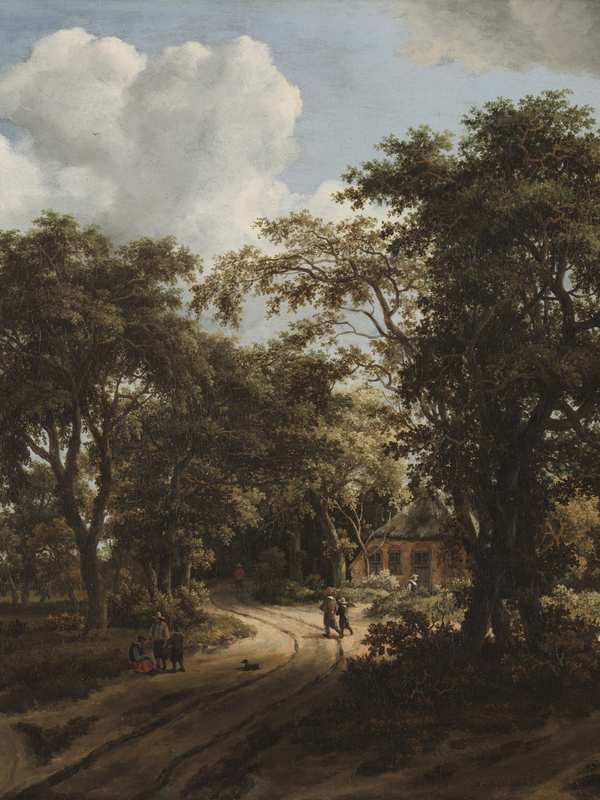
- Meindert Hobbema, “A Cottage in the Woods” (c. 1662). The Cleveland Museum of Art, CC0.
- Last updated
- November 1, 2026
- Rights
- The text is in the public domain. Terms of Use
Cite this book
Copy a citation in the style you need.
- MLA
- Watson, Thomas. The Art of Divine Contentment. 1653. Ochorus, https://ochorus.com/books/the-art-of-divine-contentment/.
- Chicago
- Watson, Thomas. The Art of Divine Contentment. 1653. Reprint, Ochorus. https://ochorus.com/books/the-art-of-divine-contentment/.
- Chicago footnote
- Thomas Watson, The Art of Divine Contentment (1653; repr., Ochorus), https://ochorus.com/books/the-art-of-divine-contentment/.
- BibTeX
- @book{watson1653divine, author = {Watson, Thomas}, title = {{The Art of Divine Contentment}}, year = {1653}, publisher = {Ochorus}, url = {https://ochorus.com/books/the-art-of-divine-contentment/} }