

- 11 chapters
- 22 min read
- Accessible Reading difficulty
Free to read·No account needed
The Man Who Discovered England
Taking books where there’s no signal? See Ochorus for missionaries or chaplains
Grow with the story

About this book
G. K. Chesterton loved a good argument. When critics asked him what he actually believed, he wrote Orthodoxy, the story of how he tried to work out a philosophy of his own and found he had arrived at the old Christian faith. This teen edition retells it in plain words: why over-thinking can trap you, what fairy tales know about life, why God might say “Do it again” to the sun, why rules can be the walls of a playground, how to love a world that isn’t lovable yet, and why joy is the gigantic secret of the Christian. Chesterton’s own sentences are kept where they say it best.
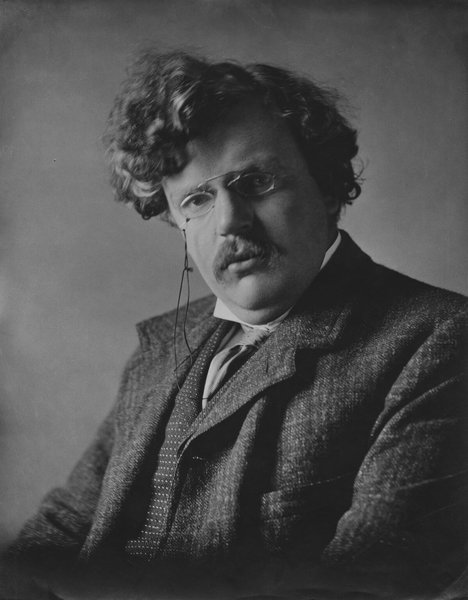
Gilbert Keith Chesterton was born in London in 1874. He grew up to be a huge man, very tall and very wide, who wore a cloak and a big hat and was famous for his jokes. He wrote poems, novels, detective stories and hundreds of newspaper articles, and he loved a good argument.
Contents
- 1 The Man Who Discovered England 2 min
- 2 Thinking in Circles 2 min
- 3 Humble About the Wrong Thing 2 min
- 4 What Fairy Tales Know 2 min
- 5 Do It Again 2 min
- 6 The One Small “If” 2 min
- 7 Loving What Isn’t Lovable Yet 2 min
- 8 The Odd Shape 2 min
- 9 The White Post 2 min
- 10 The Heavenly Chariot 2 min
- 11 The Gigantic Secret 2 min
Questions and Answers
Who was G. K. Chesterton?
Gilbert Keith Chesterton was an English writer, journalist and debater, born in London in 1874. He wrote poems, novels, essays and the Father Brown detective stories, and loved arguing, cheerfully, with famous sceptics of his day. He wrote Orthodoxy in 1908. He later became a Roman Catholic, and died in 1936. His books helped C. S. Lewis come to faith.
What does “orthodoxy” mean?
It means “right belief”. Chesterton uses it for the central Christian faith summed up in the Apostles’ Creed: what Christians everywhere have believed about God, Jesus and the world. He is not talking about one particular church.
Is this book hard to read?
The original is full of jokes, long sentences and references to people from his time, so it can be tricky. This retelling keeps his best pictures and lines, explains the hard bits, and leaves out arguments with writers nobody reads any more.
Chesterton talks about madness. Is he making fun of people with mental illness?
No. He uses the old words of his time to make a point about a kind of thinking that is trapped in a small circle of logic. Mental illness is real and nobody’s fault. If your thoughts often spiral or feel out of control, please talk to a trusted adult or a doctor.
Was Chesterton always a Christian?
No. As a young art student he went through a dark time and drifted from faith. He held on, he said, by a thin thread of thanks for being alive at all. Orthodoxy tells how his thinking gradually led him back to Christianity.
Is this the full text?
No. It is a retelling for teenagers in plain modern words, drawn from across Orthodoxy and keeping Chesterton’s own sentences where they say it best. The full Orthodoxy is also available.
Read in your language
More like this


Cite this book
Copy a citation in the style you need.
- MLA
- Chesterton, G. K. Orthodoxy (For Teens). Ochorus, https://ochorus.com/books/orthodoxy-teens/.
- Chicago
- Chesterton, G. K. Orthodoxy (For Teens). Ochorus. https://ochorus.com/books/orthodoxy-teens/.
- Chicago footnote
- G. K. Chesterton, Orthodoxy (For Teens) (Ochorus), https://ochorus.com/books/orthodoxy-teens/.
- BibTeX
- @book{chestertonorthodoxy, author = {Chesterton, G. K.}, title = {{Orthodoxy (For Teens)}}, publisher = {Ochorus}, url = {https://ochorus.com/books/orthodoxy-teens/} }