

Book
Amy Carmichael (For Teens)
- 13 chapters
- 47 min read
- Accessible Reading difficulty
Free to read·No account needed
Brown Eyes
Taking books where there’s no signal? See Ochorus for missionaries or chaplains
Grow with the story

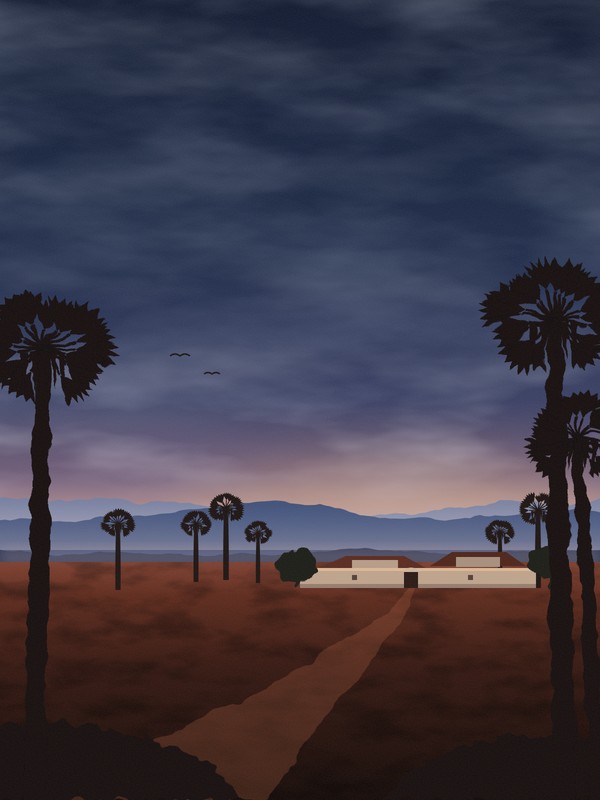
About this book
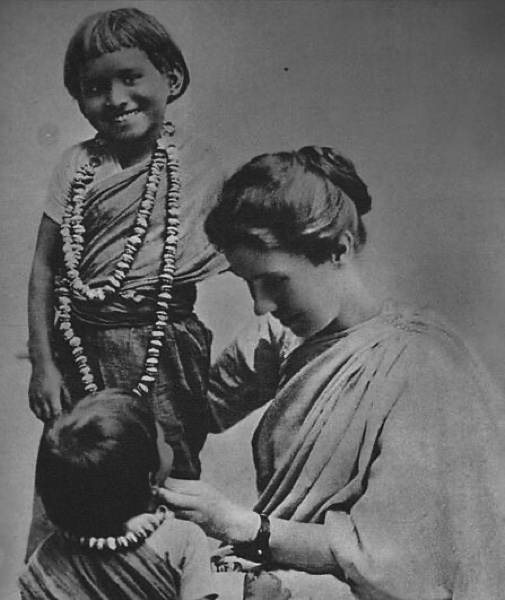
In a Belfast street, a teenage girl carrying a poor woman’s bundle learned that respectability was stubble and love was gold. At twenty-seven Amy Carmichael sailed for India and never came home. In the villages of the far south she found that most days ended exactly as they began, until a seven-year-old girl ran away from a temple household, climbed onto her knee and said, “I have come to stay.” This teen edition tells her story straight: the converts who lost everything, the temple children and the Indian reformers who ended the practice in law, her harsh words and her hard edges, the fall that kept her in one room for twenty years, and the love the children named Amma.
Amy Beatrice Carmichael was born on 16 December 1867 in Millisle, a small village on the coast of County Down, in the north of Ireland. Her father, David, ran flour mills, like the Carmichael men before him. Her mother, Catherine, was a woman of warm, steady faith. Amy was the first of seven children, and the house was full and noisy.
Contents
Questions and Answers
Who was Amy Carmichael?
An Irish missionary, born in Millisle, County Down, in 1867, who went to South India in 1895 with the Church of England Zenana Missionary Society and stayed fifty-five years without going home. After years of travelling the villages with a band of Indian women, she began in 1901 to shelter girls in danger of being dedicated to temples, and later boys too, at Dohnavur, in what became the Dohnavur Fellowship. The children called her Amma, “mother.” She died there in 1951.
Is the book honest about the hard parts?
Yes. It names her father’s early death and her lifelong pain, the converts who lost their families, the two boys who died of cholera, the dedication of small girls to temples and the exploitation that followed for many, the babies who died, and her twenty years of pain after her fall, all plainly but without graphic detail. It also names her faults: she could be severe and imperious, she wrote harshly and sometimes unfairly about Hinduism, and her parting with the young Stephen Neill was bitter.
What did she mean by “it does not say ‘successful’”?
In the villages, most days ended exactly as they began. She held on to the verse “It is required in stewards that a man be found faithful,” and wrote, “Praise God, it does not say ‘successful.’” She meant that God asks his people to be faithful, not impressive, and that there is joy in simply obeying when nothing seems to happen.
Did Amy Carmichael end the dedication of girls to temples?
No, and the book is careful about this. The practice was outlawed in the Madras Presidency by the Madras Devadasis (Prevention of Dedication) Act of October 1947, after a long campaign led by Indian reformers such as Dr. Muthulakshmi Reddy and Moovalur Ramamirtham. What Amy did was shelter children, one at a time, for nearly fifty years; her witness was one of many streams that fed the reform.
How did she treat the people she lived among?
She wore a sari, ate Indian food, spoke Tamil, gave the children Tamil names and raised them as Indian Christians, and she would not allow caste at Dohnavur. She wrote warmly of the courtesy and intelligence of the Hindus she met, and of the grief of families who lost a child to the Christians. But she also wrote about Hinduism in harsh terms common among missionaries of her day, and the book says plainly that a Hindu reader had every reason to object. It also reports historians who argue that reform writing harmed the hereditary temple communities.
Where do the stories come from?
From the full-length biography of Amy Carmichael in the Portraits of Courage series, which quotes chiefly from her own early book Things as They Are (1903) and uses the later biographies only for facts. Stories that rest on later retelling, like the blue eyes, the fur gloves, the cave and the coffee-stained skin, are marked as such. There is also a children’s edition for younger readers.
What can a teenager today take from her story?
That no is also an answer to prayer; that faithfulness matters more than visible success; that you can tell the truth about hard things without despising the people involved; that one person, even one runaway child, matters to God; and that weakness and waiting are not wasted.
Why did she never marry?
She chose a path that would very probably mean she never married, and in Japan, she later told a younger colleague, she went alone to a cave to pray about her fear of loneliness. She took comfort from Psalm 34, as she knew it: “none of them that trust in him shall be desolate.” She was often lonely afterwards, but she said the promise held, and she gathered a family of hundreds who called her Amma.
Read in your language
People in this book
More like this


Cite this book
Copy a citation in the style you need.
- MLA
- Ochorus Originals. Amy Carmichael (For Teens). Ochorus, https://ochorus.com/books/amy-carmichael-a-life-teens/.
- Chicago
- Ochorus Originals. Amy Carmichael (For Teens). Ochorus. https://ochorus.com/books/amy-carmichael-a-life-teens/.
- Chicago footnote
- Ochorus Originals, Amy Carmichael (For Teens) (Ochorus), https://ochorus.com/books/amy-carmichael-a-life-teens/.
- BibTeX
- @book{ochorusoriginalscarmichael, author = {{Ochorus Originals}}, title = {{Amy Carmichael (For Teens)}}, publisher = {Ochorus}, url = {https://ochorus.com/books/amy-carmichael-a-life-teens/} }