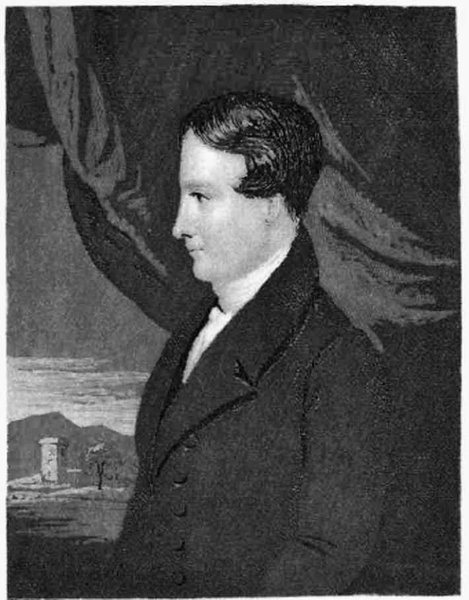
Biography
- 1813 Born
- 1831 Conversion
- 1836 Dundee
- 1839 Revival
- 1843 Died
This day eleven years ago, I lost my loved and loving brother, and began to seek a Brother who cannot die.
Robert Murray M’Cheyne was a minister for barely seven years and dead at twenty-nine, and yet two centuries of Christians have kept his name in a way they have kept few others of his generation. He wrote no great book. He founded no movement, ran no institution, held no high office. He was the pastor of one parish in one Scottish town, and he did that work with such transparent nearness to God that people who never heard him preach have been changed by reading the record of his life. His friend Andrew Bonar gathered his diary and letters after his death into a Memoir that has never gone out of print, and through it a young man who has been in the grave since 1843 still teaches ministers what they most need and cannot manufacture: holiness.
A brother who could not die
He was born on 21 May 1813 in Edinburgh, the youngest child of Adam McCheyne, a Writer to the Signet — a respectable lawyer of the Scottish capital. He was quick, gifted, musical, and by his own later reckoning careless of the things that mattered most. He went to the High School of Edinburgh and, from November 1827, to the University of Edinburgh, a bright student who was not yet a converted one.
The turn of his life came through a death in his own house. His eldest brother David was devout, and had pleaded with Robert about his soul. On 8 July 1831 David died of a fever. That grief did what all the arguments had not: it woke Robert to his need of grace. Bonar, who knew him, dated the first streaks of dawn in his soul to that year. M’Cheyne himself never forgot the debt. Years later, on the anniversary, he wrote a line in his diary that holds the whole of his conversion in a single breath:
This day eleven years ago, I lost my loved and loving brother, and began to seek a Brother who cannot die.
— Robert Murray M’Cheyne, diary (in Bonar’s Memoir)
A brother who cannot die — that was the discovery, and it reordered everything. In the winter of 1831 he entered the Divinity Hall of the University of Edinburgh under Thomas Chalmers, the towering churchman of the age. He was licensed to preach on 1 July 1835, served as an assistant at Larbert and Dunipace, and on 24 November 1836 was ordained minister of St Peter’s, Dundee — a new parish in a crowded, industrial town. He was twenty-three.
A holy minister is an awful weapon
Dundee was a hard field: mills and closes, poverty and drink, thousands of souls in a young man’s charge. M’Cheyne threw himself into it with a tenderness people remembered for the rest of their lives. He visited the sick and the dying. He preached Christ plainly and directly, more concerned to hold up the Saviour than to display himself. But the engine underneath the ministry was hidden, and it was the thing he cared about most: his own walk with God.
He rose early to pray and to read the Scriptures. He kept a diary of self-examination, watching his own heart with a severity he never turned on others. He prepared for the Sabbath with a seriousness that treated the pulpit as a place a man had no right to enter carelessly. He was convinced — and this is the conviction he is most remembered for — that what his people needed from him was not chiefly his cleverness or his eloquence but his personal holiness; that a pastor’s likeness to Christ was the true instrument God used. He put the principle into words that have followed ministers ever since:
It is not great talents God blesses so much as great likeness to Jesus. A holy minister is an awful weapon in the hand of God.
— Robert Murray M’Cheyne (in Bonar’s Memoir)
He did not aim the demand outward. He aimed it at himself, and his prayers show it. Among the petitions his friends recalled from his letters was one that asked for the only holiness a sinner can honestly ask for — not the sinless perfection of one who never fell, but the cleansing given to one already forgiven:
To a correspondent he distilled the same secret into counsel that has outlived every sermon he preached: Live near to God, and so all things will appear to you little in comparison with eternal realities. That was not a phrase he coined for effect. It was the daily practice of his short life reduced to a sentence.
A harvest gathered while he was away
In 1839 the Church of Scotland sent a small party on a mission of inquiry into the condition of the Jews — to Palestine and the lands of the eastern Mediterranean, to see for themselves and report. M’Cheyne was one of the four, travelling with Andrew Bonar, Alexander Black, and Alexander Keith. He was away from his parish from 12 April to 6 November 1839. The journey was arduous, at times dangerous to his fragile health, and the report the party later published helped launch Scotland’s missions to the Jewish people.
But the great thing that happened in 1839 did not happen to M’Cheyne in Palestine. It happened at St Peter’s, in his absence. He had long prayed and laboured for revival among his people, and it had not come. While he was gone, the pulpit was supplied by William Chalmers Burns, and in August 1839 revival broke out and swept through the town. When M’Cheyne came home in November, he returned not to the parish he had left but to a congregation transformed — awakened, weeping, seeking God in numbers he had prayed for and not seen.
There is a lesson in that providence that only a certain kind of man could receive without bitterness. The revival he had begged for arrived under someone else’s preaching while he was hundreds of miles away. He took it as pure gift. A man less near to God would have grieved that it was not his own hand on the harvest; M’Cheyne grieved for nothing and gave thanks.
Daily Bread
One of the most enduring things he ever made was one of the simplest. In 1842 he drew up a calendar for reading through the Bible in a year, and had it printed early in 1843 — only months before he died — for his own congregation. He called it Daily Bread. It set four portions for each day: two for family worship and two for private reading, so that over a year a household would read through the Old Testament once and the Psalms and the New Testament twice.
What he wanted was not merely completeness but company. His aim, he wrote in the preface, was a scheme so that the whole Bible might be read once in the year by his people, and all of them might be feeding in the same portion of the green pasture at the same time. It was pastoral to its core — a shepherd wanting his flock to graze together. The little calendar outlived its maker by nearly two centuries; it is still in wide use today, and has been adapted by later teachers for a new generation of readers.
Two days after the pulpit
His health had never been strong, and Dundee in 1843 was visited by an epidemic of typhus. M’Cheyne would not stay away from the sick. He went on visiting the fever-stricken among his people, and he caught the disease from them. Two days after preaching on 12 March 1843 he was seized with fever. He never recovered. He died on 25 March 1843, weeks short of his thirtieth birthday.
The grief of the town was extraordinary. He was buried on 30 March in the churchyard of St Peter’s, and some seven thousand people came. A minister of one parish, dead before thirty, mourned as though the whole of Dundee had lost a son — which, in a way, it had.
Live near to God, and so all things will appear to you little in comparison with eternal realities.
— Robert Murray M’Cheyne, in a letter (in Bonar’s Memoir)
The life that outlived him
The year after his death, Andrew Bonar published the Memoir and Remains of the Rev. Robert Murray M’Cheyne, weaving together a life-sketch with M’Cheyne’s own diary and letters. It became one of the most influential Christian books of the nineteenth century, printed in well over a hundred English editions and carried across the world. Through it, a ministry of seven years reached lengths it could never have reached had M’Cheyne lived to be old.
That is the strange arithmetic of his story. He accomplished, by the ordinary measures, very little — one parish, a few years, a bundle of letters, a Bible-reading calendar, and an early grave. Yet he is remembered where far busier men are forgotten, because what he offered God was not achievement but himself: a heart kept near, watched, cleansed, and given wholly to the work of loving a town into the presence of Christ. He believed that a holy minister was an awful weapon in the hand of God, and he made his own life the proof of it. The brother he lost sent him seeking a Brother who cannot die; having found him, he spent the little time he had making that Brother known — and then, at twenty-nine, went to be with him.
Sermons by Robert Murray M’Cheyne (7)
Also appears in

Questions and Answers
Who was Robert Murray M'Cheyne?
Robert Murray M'Cheyne (1813–1843) was the minister of St Peter's, Dundee, remembered for his pursuit of personal holiness and tender pastoral care. He was a minister for barely seven years and dead at twenty-nine, yet two centuries of Christians have kept his name: through the Memoir his friend Andrew Bonar gathered from his diary and letters, a young man in the grave since 1843 still teaches ministers what they most need and cannot manufacture — holiness.
How was he converted?
He was born on 21 May 1813 in Edinburgh, the youngest child of a lawyer, and was a quick, gifted, careless young student. The turn of his life came through a death in his own house: his devout eldest brother David, who had pleaded with him about his soul, died of a fever on 8 July 1831, and that grief did what argument had not. On the anniversary he later wrote, "This day eleven years ago, I lost my loved and loving brother, and began to seek a Brother who cannot die."
How did he come to St Peter's, Dundee?
In the winter of 1831 he entered the Divinity Hall of the University of Edinburgh under Thomas Chalmers, the towering churchman of the age. He was licensed to preach on 1 July 1835, served as an assistant at Larbert and Dunipace, and on 24 November 1836 was ordained minister of St Peter's, Dundee — a new parish in a crowded, industrial town of mills and poverty and drink, with thousands of souls in the charge of a man of twenty-three.
What was his conviction about holiness?
The engine underneath his ministry was hidden, and it was the thing he cared about most: his own walk with God. He was convinced that what his people needed from him was not chiefly his cleverness or eloquence but his personal holiness — that a pastor's likeness to Christ was the true instrument God used. He put it in words that have followed ministers ever since: "It is not great talents God blesses so much as great likeness to Jesus. A holy minister is an awful weapon in the hand of God."
How did he pursue that holiness in himself?
He aimed the demand not outward but at himself. He rose early to pray and read the Scriptures, kept a diary of self-examination, watching his own heart with a severity he never turned on others, and prepared for the Sabbath as a man had no right to enter the pulpit carelessly. His prayers show it: "I often pray, Lord, make me as holy as a pardoned sinner can be made" — the prayer of a man who knew exactly what he was, pardoned and nothing more, and wanted every inch of what pardon makes possible.
What happened during his 1839 mission to the Jews?
In 1839 the Church of Scotland sent a small party, M'Cheyne among them with Andrew Bonar, on a mission of inquiry into the condition of the Jews in Palestine and the eastern Mediterranean; he was away from his parish from April to November. The arduous journey helped launch Scotland's missions to the Jewish people — but the great thing of 1839 happened at St Peter's in his absence: under the supply preaching of William Chalmers Burns, revival broke out in August and swept the town.
How did he receive that revival?
He had long prayed and laboured for revival among his people, and it had not come; then it arrived under someone else's preaching while he was hundreds of miles away. When he came home in November he returned not to the parish he had left but to a congregation transformed — awakened, weeping, seeking God in numbers he had prayed for and not seen. A man less near to God would have grieved that it was not his own hand on the harvest; M'Cheyne took it as pure gift and gave thanks.
What was Daily Bread?
One of the most enduring things he made was one of the simplest: in 1842 he drew up a calendar for reading through the Bible in a year, printed early in 1843 for his own congregation and called "Daily Bread." It set four portions a day — two for family worship and two for private reading. What he wanted was not merely completeness but company: that all his people "might be feeding in the same portion of the green pasture at the same time." It is still in wide use today.
How did he die?
His health had never been strong, and Dundee in 1843 was visited by an epidemic of typhus. M'Cheyne would not stay away from the sick; he went on visiting the fever-stricken among his people and caught the disease from them. Two days after preaching on 12 March 1843 he was seized with fever, and he died on 25 March, weeks short of his thirtieth birthday. The grief of the town was extraordinary — some seven thousand people came to his burial in the churchyard of St Peter's.
Why is he remembered where busier men are forgotten?
Because what he offered God was not achievement but himself. By ordinary measures he accomplished little — one parish, a few years, a bundle of letters, a Bible-reading calendar, an early grave — yet the Memoir Bonar published the year after his death became one of the most influential Christian books of the nineteenth century. "Live near to God," he wrote, "and so all things will appear to you little in comparison with eternal realities" — the daily practice of his short life reduced to a sentence.