New to Sadhu Sundar Singh? Start with
At the Master's Feet
All works · 4 hr 47 min read
Biography
I remember that night as my first night in heaven.
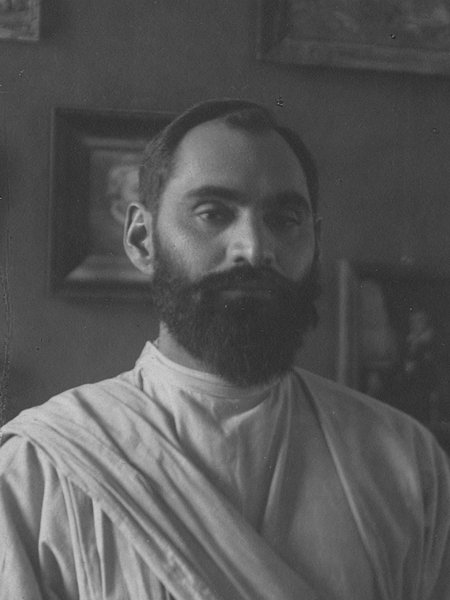
Sundar Singh was born on September 3, 1889, at Rampur, in the Sikh state of Patiala in the Punjab, the youngest son of a wealthy and well-connected family. He grew up in comfort, and all his life he would contrast that soft, uneasy luxury with the hard and happy road of a wandering preacher. His parents were Sikhs, but their home was open to the teachers of Hinduism as well, and the boy was steeped in both. By seven, his biographers were told, he knew most of the Bhagavad Gita by heart. He would say later that he had not been a Sikh but a seeker.
The great influence of his childhood was his mother. She took him to holy men and temples, held before him the ideal of the sadhu — the renouncer who leaves the world to seek God — and told him that one day he must seek the Peace that alone satisfies. Years afterwards, when a minister suggested he might take a course at a theological college, he answered that he had already been to the best one in the world: his mother’s lap. She died when he was fourteen, and her death left him desolate. He went on seeking — through scripture, through ritual, through a sadhu’s instruction in yoga — and found nothing that would quiet his heart.
A Bible in the fire
At the Presbyterian mission school in his village he first met the New Testament, and he hated it. It seemed to him an insult to the faith of his fathers and to the pride of his Sikh blood. He threw stones at Christian preachers and urged others to do the same. Then, in his own words, came the act he would confess for the rest of his life: “In the presence of my father I cut up the Bible and other Christian books and put kerosene oil upon them and burnt them.” He was faithful to every ceremony of his religion, and still he had no peace — so little that he resolved to die.
At half past four, as he told it, the room filled with a great light, and in the light he saw the form of Jesus Christ — “It had such an appearance of glory and love” — and heard a voice in Hindustani: “How long will you persecute me? I have come to save you; you were praying to know the right way. Why do you not take it?” It was the very One he had been insulting. “The thought then came to me, ‘Jesus Christ is not dead but living and it must be He Himself.’ So I fell at His feet and got this wonderful Peace which I could not get anywhere else.”
Driven out, and the first night in heaven
His family tried everything to turn him back: promises of wealth and position, reminders of the shame he would bring on the family name, an appeal from a friendly Raja to his pride of race, and months of humiliation. When none of it moved him he was disowned and sent away — and, as his early biographers recorded it, with food in which poison had been mixed, since it was better he should die than disgrace them. His first night as an outcast was spent in the cold under a tree.
I remember that night as my first night in heaven.
— Sadhu Sundar Singh
“In the midst of luxuries and comfort I could not find peace in my heart,” he said of it. “The presence of the Saviour changed the suffering into peace.” On his sixteenth birthday, September 3, 1905, he was baptized in the Church of England at Simla.
A Christian sadhu
As a young Christian he made the choice that shaped everything after. He put on the saffron robe of a Hindu holy man and took to the roads as a sadhu — but a sadhu of Jesus Christ. He owned a robe, a blanket, and a New Testament. He took no money, ate what was offered, and slept in caves, under trees, or in the houses of anyone who would have him. The robe opened doors closed to a foreign missionary; it also meant that reverence could turn quickly into fury when a village learned whom this holy man preached. He walked through the Punjab, Kashmir, Baluchistan, and Afghanistan, and made a base at Kotgarh, a Himalayan village some fifty miles from Simla.
There he worked for a time alongside Samuel Stokes, a young American who had given away his fortune to live as a friar in India; together they nursed lepers at Sabathu and served in a plague camp near Lahore. Stokes, tending him through a bout of fever, heard him murmur under his breath, “How sweet it is to suffer for His sake.” He studied at St. John’s Divinity College in Lahore and was licensed to preach, but handed the licence back to Bishop Lefroy rather than be ordained, so that he could preach freely among Christians of every name. Sundar never founded an order, never baptized his own converts — he sent them to the local churches — and refused to be anyone’s guru. “How can I make you my disciple,” he once told a would-be follower, “when I myself am only a disciple?”
The record of those years is full of rough handling. One witness, a member of the Arya Samaj, wrote to a Christian weekly describing how he watched a young sadhu sit down on a log in a hill village, wipe his face, and begin to sing of Christ, until a man struck him to the ground. Sundar bound up his bleeding hand with his turban and went on singing, praying for those who had hit him. The man who struck him later asked to be baptized, and was.
Tibet, and stories that were questioned
From 1908 the closed land of Tibet became his chosen field. Few had carried the gospel there, and the cold and danger drew him rather than deterred him. For years he spent the warmer months trying to cross the frontier and the winters preaching in India.
In his twenty-third year, against the advice of friends, he attempted a fast of forty days in the jungle between Hardwar and Dehra Dun, counting the days with a heap of stones until he grew too weak to throw them aside. Woodcutters found him and carried him out in his blanket. He said afterwards that the fast had settled a doubt: as his body failed, his peace grew stronger, and he concluded it was a peace given from heaven and not welling up from himself. He admitted, too, that he was prone to irritation when tired and pressed with questions — “when you write your book you ought to write about my weaknesses also.”
From these years come the stories that made him famous — and that were most disputed. He told of being arrested at a town called Rasar, thrown into a dry well among the bones of earlier victims, and drawn out on the third night by a rope from an unseen deliverer, the lid locked again behind him; the head lama, he said, found the key still on his own girdle. He spoke of a vast secret brotherhood of Christian sannyasis, and of an ancient hermit, the “Maharishi of Kailash,” living in a cave high in the Himalayas. These are what Sundar recounted; no one else witnessed them. In the 1920s the Jesuit scholar H. Hosten and the Swiss pastor Oskar Pfister published sustained attacks arguing that such stories could not be verified or were untrue, and some charged him with imposture. Others, including the German scholar Friedrich Heiler, made inquiries in India and defended his sincerity. The question has never been settled, and readers can hold these accounts with reserve. What is clear is how Sundar himself weighted them: “People have made too much of this incident in my life,” he said of the hermit. “My work is, not to preach the Rishi, but to preach Christ.” Heiler recorded that he bore the attacks calmly and spoke of his opponents only with love.
To the ends of the earth
In 1918 a visit to Madras turned an obscure itinerant into a figure known across the world. Thousands came to hear him in South India and Ceylon, then in Burma, Malaya, China, and Japan. In 1920 he sailed for England and went on to the United States and Australia; in 1922 he travelled through Switzerland, Germany, Sweden, Norway, Denmark, and Holland. He spoke in Luther’s church at Wittenberg and in Uppsala Cathedral, with Archbishop Söderblom as his interpreter. His father, once his fiercest opponent, had by now become a Christian himself and helped pay his passage. When the father asked his son to baptize him, Sundar sent him to the ordinary ministers of the church: his work, he said, was not to baptize but to preach the gospel.
Christ alone is salvation. He who lives in Him becomes dead to sin and enters into eternal life.
— Sadhu Sundar Singh, at Basle, 1922
Fame frightened him more than persecution had. Crowds called him a saint; a former Russian empress asked his blessing, and he refused, saying his hands had torn up the Holy Scriptures. He liked to say that when Jesus rode into Jerusalem it was the donkey that walked on the garments, and it would have been foolish for the donkey to think the honour was for him. The West also disappointed him: he found many in Christian lands living as though Christ were absent, and said so — without laying the blame on Christ.
At the Master’s feet
In the 1920s, between his journeys, he wrote a series of small books in Urdu, quickly translated into English: At the Master’s Feet, Reality and Religion, The Search After Reality, Meditations on Various Aspects of the Spiritual Life, and finally With and Without Christ, signed at Sabathu in August 1928. Full of parables from the hills and rivers he knew, they return again and again to prayer, the cross, and the living presence of Christ. In At the Master’s Feet, written as a conversation between a disciple and his Lord, he insists that prayer “is not a form of begging” but “an effort to lay hold of God Himself.” (A further book, Visions of the Spiritual World, describes ecstatic visions of the life beyond, including conversations with the departed; even admirers have read it with caution, and it is not where his testimony is strongest.)
Christianity is Christ Himself.
— Sadhu Sundar Singh, The Search After Reality
He had long said he expected to die in Tibet, and that he would welcome it. “Do not then think ‘He is dead,’” he told a Swiss audience, “but say: ‘He has entered Heaven and Eternal Life; he is with Christ in the perfect life.’” In April 1929, against the advice of his friends, he set out once more for Tibet. He was last seen at Kalka, below Simla. He never returned, no trace of him was ever found, and after a time the government presumed him dead.
Perhaps that is fitting for a man who would not let anyone build on him. He wanted no order, no disciples of his own, no reputation for wonders. He wanted only to point past himself to the One who had met a desperate boy at dawn and given him a peace that never left — the peace he had found, as he put it, under a tree on the first night in heaven.
Books by Sadhu Sundar Singh (3)
Also appears in

Questions and Answers
Who was Sadhu Sundar Singh?
Sundar Singh was a Sikh-born Indian who met Christ in a vision as a teenager in 1904 and spent the rest of his life as a barefoot Christian sadhu, a holy man in a saffron robe who owned nothing and preached Jesus across India, into Tibet, and around the world. He wrote several small devotional books and disappeared on a final journey toward Tibet in 1929.
What was his childhood like?
He was born on September 3, 1889, at Rampur in the Sikh state of Patiala, the youngest son of a wealthy family. His devout mother took him to holy men and temples and held before him the ideal of the sadhu who renounces the world to seek God. She died when he was fourteen, and he searched the scriptures of several religions without finding peace.
Why did he burn a Bible?
At the mission school in his village he met the New Testament and hated it as an insult to the faith of his fathers. He threw stones at Christian preachers, and in his father's presence he cut up a Bible and other Christian books, poured kerosene on them, and burned them. He confessed that act for the rest of his life.
How was he converted?
Three days later, in December 1904, he rose before dawn and prayed that if there was a God, He would show him the right way, or he would kill himself on the railway line. As he told it, the room filled with light and he saw Jesus Christ, who asked, "How long will you persecute me?" He fell at Christ's feet and received a peace he said never left him.
What happened when he told his family?
His family tried promises, shame, and months of humiliation to turn him back, and finally disowned him; his early biographers record that he was sent away with poisoned food. He spent his first night as an outcast under a tree in the cold, and remembered it as his first night in heaven. He was baptized at Simla on his sixteenth birthday, September 3, 1905.
Why did he become a Christian sadhu?
He put on the saffron robe of a Hindu holy man so that he could present Christ in a form India recognised, owning only a robe, a blanket, and a New Testament. He took no money, slept in caves or under trees, nursed lepers and plague victims, and refused ordination so he could preach among Christians of every church. He never baptized his own converts or let anyone make him their guru.
What about his journeys into Tibet?
From 1908 he spent much of each year trying to preach in Tibet. He told of being thrown into a dry well at Rasar and rescued on the third night, and of meeting an ancient hermit called the Maharishi of Kailash. No one else witnessed these events, and in the 1920s writers such as Father Hosten and Oskar Pfister disputed them, while others like Friedrich Heiler defended his sincerity. Sundar himself said his work was not to preach the hermit but to preach Christ.
How did he become known around the world?
A visit to Madras in 1918 made him famous, and he went on to preach in Ceylon, Burma, Malaya, China, and Japan. In 1920 he travelled to England, the United States, and Australia, and in 1922 across Europe, speaking in Luther's church at Wittenberg and at Uppsala. His father, once his fiercest opponent, had become a Christian and helped pay his passage.
How did he handle fame?
He feared fame more than persecution. When asked to bless people or heal them, he said there was no power in his hands, only in the pierced hands of Christ, and he stopped praying over the sick when people began treating him as a wonder-worker. He compared himself to the donkey that carried Jesus into Jerusalem: the honour on the road was never meant for the donkey.
What did he write, and how did his life end?
In the 1920s he wrote small books in Urdu, including At the Master's Feet, Reality and Religion, The Search After Reality, and With and Without Christ, all centred on prayer, the cross, and the living Christ. In April 1929, against his friends' advice, he set out again for Tibet and was last seen at Kalka, below Simla. He was never found, and the government eventually presumed him dead.