New to Kanzo Uchimura? Start with
How I Became a Christian
All works · 4 hr 36 min read
Biography
Never was the atoning power of Christ more clearly revealed to me than it is to-day. In the crucifixion of the Son of God lies the solution of all the difficulties that buffeted my mind thus far.
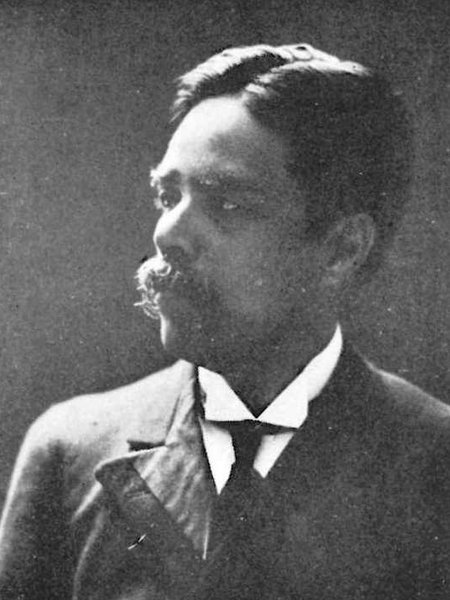
Kanzo Uchimura was born in Edo — the city soon to be renamed Tokyo — in March 1861, into a family of the samurai class. “My family belonged to the warrior class,” he wrote, “so I was born to fight.” His grandfather longed for a battle he never saw; his father was a Confucian scholar who could recite the sayings of the sage almost entirely from memory. From him the boy took the old virtues of loyalty to one’s lord, reverence for parents and teachers, and an honour that would rather starve than bend. He took, too, a crowded and anxious religion. He prayed each morning to the gods of the four points of the compass, kept vows of abstinence for one god after another until eggs and beans were forbidden him, and would walk a longer road to school to pass fewer shrines. “With so many gods to satisfy and appease,” he remembered, “I was naturally a fretful timid child.”
In 1877 he entered the new government Agricultural College at Sapporo, on the northern island of Hokkaido. The American scientist William S. Clark had spent the college’s first year there and had already left, but behind him he left a document he had written out in English — the “Covenant of Believers in Jesus” — signed by every student of the first class. The older boys set about converting the newcomers. Uchimura resisted them as a patriot resists a foreign invader; one afternoon he went to a nearby shrine and prayed, with all the sincerity he had, that the guardian god would extinguish the new enthusiasm and punish its converts. It was no use. Before the year was out the sixteen-year-old had signed the covenant, pressed into it, he admitted, “against my will.”
And yet the forced step opened a door. The covenant taught him there was one God and not eight million, and the discovery set him free. “One God, and not many, was indeed a glad tiding to my little soul,” he wrote. He walked past the temples with his head up and kept talking and laughing all the way to school. On 2 June 1878 he and six classmates were baptized by a visiting Methodist missionary, kneeling and answering “Amen” when asked to own “the name of Him who was crucified for our sins.” He took the Christian name Jonathan, for the love of Jonathan for David, and with his friends began a little church in their dormitory rooms.
Into Christendom
The joy of those student years did not last untroubled. After graduating in 1881 he entered government service, working on the fisheries of his country, and in 1884 he married Take Asada. The marriage ended in sorrow within months, and the young Christian who had thought himself strong found himself crushed by guilt, grief, and a heart he could not master. That November, with little money and less peace, he sailed for the United States, hoping that the Christian lands which had sent him the gospel might give him the peace he could not find.
His first refuge was not a church or a college but an asylum. At Elwyn, Pennsylvania, the superintendent of a training school for children with intellectual disabilities, Dr. Isaac Kerlin, took him on as an attendant, and for some eight months the samurai’s son washed and fed and watched over the least of the children. He went there, he confessed, much as Luther went into his convent — to earn peace by good works. But on his very first night of duty a voice in his heart answered him: “a man is justified by faith without the deeds of the law.” He was learning, slowly, that he could not make himself clean.
Look to the Crucified
In 1885 he made his way to Amherst College in Massachusetts, to meet its president, Julius Seelye, whose writings he had read in Japan. He arrived with seven silver dollars and expected a stern, unapproachable scholar. Instead the door opened on a large man with tear-filled eyes and a warm grip. “From that time on,” Uchimura wrote, “my Christianity has taken an entirely new direction.” Seelye gave him a room in the dormitory and had the janitor find him a bed and a chair. Uchimura settled into the top floor, resolved never to leave it “till the Almighty should show Himself unto me.”
Seelye’s word to him, as Uchimura later remembered it, was simple: stop looking within yourself, and look to Jesus, who paid for your sins on the cross. The lesson took. In the spring of 1886 he wrote in his diary the words that marked the turning of his life:
Never was the atoning power of Christ more clearly revealed to me than it is to-day. In the crucifixion of the Son of God lies the solution of all the difficulties that buffeted my mind thus far.
— Kanzo Uchimura
Months later he put the same discovery another way: “death to sin” comes “not by looking into my sinful heart, but by looking up to Jesus crucified.” He meditated on Christ as he hauled scuttles of coal up the dormitory stairs, and once set them down on the landing to burst into thanksgiving. One September evening, so grateful that he longed to remember the Lord’s death, he pressed juice from wild grapes into a little dish, cut a piece of biscuit, gave thanks, and received them. Through a New England winter without a stove and with his bills unpaid, he called himself “a real optimist.” He would say that he was truly converted at Amherst, some ten years after his baptism.
He graduated from Amherst in 1887 and entered Hartford Theological Seminary that autumn, but he had come on condition that he would never be ordained, and the dry debates of the classroom wearied him. Ill and impatient, he left in early 1888. Fifty days at sea brought him home in May with seventy-five cents in his pocket and, he said, nothing to show his parents but the gospel, “unto the Jews a stumbling-block, and unto the Greeks foolishness.”
The bow he would not make
In 1889 he married again, and in January 1891 he was teaching at the First Higher Middle School in Tokyo when the school held a ceremony for the new Imperial Rescript on Education, which bore the Emperor’s signature. Teachers and students filed forward to bow deeply before it as before a sacred object. When his turn came, Uchimura hesitated, and made at most a slight bow. To his conscience a reverent bow came too near to worship; he would honour the Emperor, but worship God alone. The press called it a national insult. Students, newspapers, and patriots denounced him as a traitor, and he was forced to resign.
The storm broke his health. He fell gravely ill, and his young wife Kazu, who had nursed him and stood between him and the angry crowds, caught the sickness herself and died that spring, only twenty-one months after their wedding. He was left without work, without a wife, and with his name a byword across Japan. In these years of poverty he began to write — and in 1895 published, in English, How I Became a Christian: Out of My Diary, the book from which most of what we know of his conversion comes. With his third wife, Shizu, whom he married at the end of 1892, he went through want so severe that she pawned her wedding kimonos to keep them out of debt.
Two J’s
He never stopped loving the country that rejected him. As a columnist for the Tokyo daily Yorozu Chōhō from 1897 he attacked corruption without fear. When war with Russia loomed in 1903, he declared himself a Christian pacifist and opposed it, almost alone, while even many church leaders cheered it on. He resigned rather than soften his view, and once more lost his living; again he was called a traitor, and there were days when the family went hungry rather than fall into debt. All his life he held two loves together:
I love two J’s and no third; one is Jesus, and the other is Japan.
— Kanzo Uchimura
He likened his faith to an ellipse with two centres. But the order was never in doubt. In the front of his English Bible he had written the four lines he wanted on his grave — himself for Japan, Japan for the world, the world for Christ, “and All for God.”
In 1900 he began a monthly, Seisho no Kenkyū (Biblical Study), which he published until his death, and he gathered readers into Sunday Bible lectures in Tokyo, many of whose hearers were students. From this grew what came to be called Mukyōkai, the “Non-Church” movement. It had no ordained clergy, no denominational structure, and no sacraments administered by a church; its believers met in homes and lecture halls to study the Bible under lay teachers. Uchimura described the ideal as “a fellowship, not an institution,” calling no man bishop or pastor save Jesus Christ. Some missionaries and churches branded him a church-destroyer, and the absence of baptism and the Lord’s Supper as church ordinances is a real departure a careful reader should know. Yet the faith he taught was historic and evangelical: the Bible as the Word of God, salvation through the atoning death of Christ on the cross, His bodily resurrection, and His return. Uchimura did not oppose churches as such — he spoke in them when asked — and he insisted only that no institution could stand between a soul and its Saviour.
A daughter and a hope
His daughter Ruth — Rutsuko — had been his comfort through the years of abuse. In January 1912, at eighteen, she died. At her burial in Tokyo, as the mourners sang “Rock of Ages” and the coffin was lowered, her father took up a handful of earth, lifted it high, and cried “Ruth, banzai!” — a shout of victory. Some thought grief had unhinged him. He meant that she had gone, not to the grave, but to glory. Years later he told a friend that without her death he would never have become the evangelist he was, and that those who had never lost a child might not understand the hope of Christ’s coming, “however many theological books they would read.”
That hope became the burden of his later preaching. For three decades an American businessman, David C. Bell, whom he had met by chance on a Washington tram car in 1885, had been praying for him on exactly this point.
That year he joined the holiness evangelist Jūji Nakada and others in a series of meetings across Japan proclaiming the Lord’s return, which drew large crowds. He would not set dates or speculate about the details, and he drew back after a time from views of his colleagues he could not share. But the hope itself never left him.
All for God
Kanzo Uchimura died of heart disease in Tokyo on 28 March 1930, at sixty-nine. He was buried in Tama Cemetery, and on the stone were carved, as he had asked, the words from the front of his Bible:
I for Japan; Japan for the World; The World for Christ; And All for God.
— Kanzo Uchimura
His disciples became professors, university presidents, and Bible teachers across Japan, and every spring since his death they have gathered near the anniversary to remember him and open the Scriptures. Branded a traitor by his country and a heretic by some of his fellow Christians, he was neither. He was a samurai’s son who had been conquered at last — not by the bigger boys at Sapporo, but by the crucified Son of God — and who spent his life asking his own people to look where Julius Seelye had told him to look.
Books by Kanzo Uchimura (1)
Also appears in

Questions and Answers
Who was Kanzo Uchimura?
Kanzo Uchimura (1861–1930) was a Japanese Christian writer, Bible teacher, and evangelist, the son of a samurai family, who founded the Mukyōkai or "Non-Church" movement. Converted as a student at Sapporo and brought to assurance at Amherst College in America, he spent his life calling Japan to Christ through his Bible magazine and Sunday lectures, and summed up his life's loves as "two J's": Jesus and Japan.
What was his childhood like?
He was born in Edo, soon to be renamed Tokyo, in March 1861, into a family of the samurai class, and was raised by a Confucian scholar father in loyalty, filial piety, and honour. He was also a fearful, devout worshipper of many gods, praying each morning to the gods of the four points of the compass and keeping vows of abstinence until eggs and beans were forbidden him. "With so many gods to satisfy and appease," he remembered, "I was naturally a fretful timid child."
How did he become a Christian at Sapporo?
In 1877 he entered the Sapporo Agricultural College, where William S. Clark had left behind a "Covenant of Believers in Jesus" signed by the first class. Uchimura resisted the older students and even prayed at a shrine for the new faith to be extinguished, but at sixteen he signed the covenant, pressed into it against his will. The discovery that there is one God and not many set him free, and on 2 June 1878 he was baptized with six classmates, taking the name Jonathan.
Why did he go to America?
After graduating he entered government service, and in 1884 he married Take Asada, but the marriage ended in sorrow within months and left him crushed by guilt and grief. In November 1884 he sailed for the United States, hoping the Christian lands that had sent him the gospel might give him peace. His first work there was as an attendant at a training school for children with intellectual disabilities at Elwyn, Pennsylvania, where he learned that he could not make himself clean by good works.
What happened to him at Amherst College?
In 1885 he went to Amherst College to meet its president, Julius Seelye, who welcomed him with tears and gave him a room. Seelye's counsel, as Uchimura remembered it, was to stop looking within himself and look to Jesus, who paid for his sins on the cross. In the spring of 1886 he wrote in his diary that never was the atoning power of Christ more clearly revealed to him, and he later said he was truly converted at Amherst, some ten years after his baptism.
What was the incident of the bow in 1891?
In January 1891, teaching at the First Higher Middle School in Tokyo, he was required to bow deeply before the Imperial Rescript on Education, which bore the Emperor's signature. He hesitated and made at most a slight bow, because to his conscience a reverent bow came too near to worship. The press called it a national insult, he was denounced as a traitor and forced to resign, and his young wife Kazu, who had nursed him through grave illness, died that spring.
Why did he oppose the Russo-Japanese War?
As a columnist for the Tokyo daily Yorozu Chōhō from 1897, he attacked corruption fearlessly, and in 1903 he declared himself a Christian pacifist and opposed the coming war with Russia while even many church leaders supported it. He resigned rather than soften his view, was called a traitor again, and his family went through hunger rather than fall into debt. All his life he held two loves together: "I love two J's and no third; one is Jesus, and the other is Japan."
What was the Non-Church movement?
From 1900 he published a monthly, Seisho no Kenkyū (Biblical Study), and gathered readers into Sunday Bible lectures in Tokyo, from which grew Mukyōkai, the "Non-Church" movement. It had no ordained clergy, no denominational structure, and no sacraments administered by a church; believers met to study the Bible under lay teachers, and he called the ideal "a fellowship, not an institution." That departure is real, but the faith he taught was historic and evangelical: the Bible as God's Word, salvation through Christ's atoning death, His resurrection, and His return.
How did his daughter's death shape his faith?
His daughter Ruth, or Rutsuko, died in January 1912 at eighteen. At her burial, as the mourners sang "Rock of Ages," he lifted a handful of earth and cried "Ruth, banzai!" as a shout of victory, meaning she had gone not to the grave but to glory. He later said that without her death he would not have become the evangelist he was, and that it taught him the hope of Christ's coming.
How did he come to preach the Second Coming, and how did he die?
He wrote in 1918 that his American friend David C. Bell had prayed every day for more than thirty years that he might believe in the Second Coming, and that God had answered those prayers and opened his eyes. That year he joined Jūji Nakada and others in meetings across Japan proclaiming the Lord's return, though he would not set dates. He died in Tokyo on 28 March 1930, and his gravestone bears the words from the front of his Bible: "I for Japan; Japan for the World; The World for Christ; And All for God."