
New to Julian of Norwich? Start with
Revelations of Divine Love
All works · 4 hr 24 min read
Biography
It lasteth, and ever shall [last] for that God loveth it. And so All-thing hath the Being by the love of God.
We do not know her name. She is called Julian because she lived for many years in a cell built against the wall of St Julian’s church in Conisford, a parish of the busy river city of Norwich, and in her own book she calls herself only “a simple creature unlettered.” Yet that book, written in English by a woman who had been shut away from the world, is the first book in the English language known to have been written by a woman — and six centuries later it is still read and prayed over because it insists, against everything its age had seen, that the deepest truth about God is love.
A city of plague
Julian tells us that she was thirty and a half years old in May 1373, so she was born late in 1342 or early in 1343. Norwich was then one of the great towns of England, a city of wool and trade, of cathedral, priories and crowded parish churches. When she was about six the Black Death reached it. The pestilence of 1349 carried off a great part of the city, and it came back again and again through her childhood and youth. A woman of her generation grew up among funerals.
In 1381 the Peasants’ Revolt swept through Norfolk; in her later years the burning of heretics began in England. Julian’s serenity was won in a hard century.
Of her family we know nothing. Some have guessed that she was a widow who had lost a husband and children to the plague, and so learned the mother’s love she later wrote about; others that she was a nun of the Benedictine priory of Carrow, which held the church of St Julian. Neither guess can be proved. She tells us almost nothing of herself, because she wanted her readers to look past her: “Because of the Shewing I am not good but if I love God the better.”
Three gifts
What she does tell us is how she prayed. As a young woman she asked God for three gifts. She wanted to have been with Mary Magdalene and the others at the cross, to see with her own eyes what the Lord suffered; she asked for an illness when she was thirty, so severe that she and everyone around her would believe she was dying; and she asked for three wounds.
May 1373
When she was thirty and a half, she fell ill. For three days and nights she lay sick; on the fourth night she received the last rites, and no one expected her to live till morning. She lingered two more days. By then her body was dead from the waist down, and those who were with her thought she was passing. Her parish priest was sent for. He set a crucifix before her face and said, “I have brought thee the Image of thy Maker and Saviour: look thereupon and comfort thee therewith.” Everything in the room grew dark except the cross, on which she saw “a common light.” Then, suddenly, all her pain was taken away.
Over the next hours she received what she called “shewings.” The first began about four in the morning, and they followed one after another until past nine. She saw the face of the crucified Christ change colour as he died. And in one of the best loved passages in all Christian writing, she saw the whole of creation held in the hand of God.
It lasteth, and ever shall [last] for that God loveth it. And so All-thing hath the Being by the love of God.
— Julian of Norwich, on the little thing, “the quantity of an hazel-nut,” in the palm of her hand
God made it, God loves it, God keeps it — and no soul is at rest till it rests in him. Later that day, when the pain came back, she told a visiting religious that she had been raving — and then was ashamed, because he took her shewings more seriously than she had. That night she dreamed that the Fiend had her by the throat, and woke to a smell of smoke that no one else could smell; she fled to what she had been shown and to the faith of the Church, and peace came. Then came the sixteenth shewing, in which she saw Christ dwelling in the soul as in a city, and heard the words that close the revelations.
He said not: Thou shalt not be tempested, thou shalt not be travailed, thou shalt not be afflicted; but He said: Thou shalt not be overcome.
— Julian of Norwich, Revelations of Divine Love
Twenty years of pondering
Julian wrote down what she had seen; that first account, the Short Text, survives in a single fifteenth-century copy. But she did not stop there. For two decades she turned the visions over, prayed through them, and asked what they meant. She tells us that she desired “oftentimes” to know what the Lord meant, and that the answer came more than fifteen years after the shewings, in her understanding:
Learn it well: Love was His meaning. Who shewed it thee? Love. What shewed He thee? Love. Wherefore shewed it He? For Love.
— Julian of Norwich, Revelations of Divine Love
One vision had baffled her most: a lord who sends his servant on an errand, and the servant who runs off in his eagerness, falls into a ditch, and lies there hurt and unable to rise, unable even to turn his face to his master. The lord does not blame him at all, and means to reward him beyond anything he lost. Twenty years after the shewings, “save three months,” she was taught to see in the servant both Adam and Christ — fallen humanity, and the Son who came down into its fall to lift it. Out of these years of reflection came the much fuller book now called the Long Text, eighty-six chapters in which the visions open out into a theology of God’s love.
The anchoress of St Julian’s
At some point Julian became an anchoress. An anchoress was enclosed for life in a cell joined to a church, with one window onto the altar and another for those who came for counsel. Her days were given to prayer, to the services of the church and to the people who sought her out. The four wills that mention her show that she was known and valued: in 1394 a Norwich rector left twelve shillings to “Julian anakorite”; in 1404 a priest left money to Julian, anchoress at St Julian’s, Conisford, and to Sarah who lived with her; in 1415 a Norwich man remembered the anchoress there with her maid and her former maid Alice; and in 1416 Isabel, Countess of Suffolk, left twenty shillings to “Julian reclus a Norwich.”
The most vivid glimpse of her comes from another woman. In about 1413 Margery Kempe of Lynn, whose tears and visions had made her many enemies, came to Norwich to ask the anchoress whether her experiences were from God. Julian encouraged her to be obedient to God’s will, and told her that the Holy Spirit never moves anyone to anything against charity, for then he would be contrary to himself. Margery remembered “holy dalliance” between them over many days, and wrote it down in her own book.
All shall be well
What Julian saw, and what she spent her life understanding, is that God is love — not as a sentiment, but as the ground of everything. She saw no wrath in God; the wrath, she said, is on our side, and God’s mercy works to bring us peace. She saw the cross as the highest proof of that love: Christ told her that if he could suffer more for her, he would. She wrote boldly of Jesus as our Mother, who bears us to joy and endless life as an earthly mother bears her children to pain and death, and feeds us with himself in the Sacrament. The image was not new — Anselm and Bernard had used it, and Christ himself spoke of gathering Jerusalem as a hen gathers her chickens — but no one has drawn it more tenderly.
And she faced the hardest question of her century head on. If God is love, why was sin not prevented? Why so much sorrow? The answer she was given has become her most famous sentence:
It behoved that there should be sin; but all shall be well, and all shall be well, and all manner of thing shall be well.
— Julian of Norwich, Revelations of Divine Love
She did not take this as a cheap comfort. She saw that there is a great deed the Trinity will do at the last day, hidden now in God, by which he will make well all that is not well. Some modern readers have pressed these words into universalism, the belief that in the end every soul will be saved. Julian herself would not go there. She set beside the promise the teaching of the Church that many shall be condemned, and confessed honestly that she could not see how both could stand. The answer she received was this: “That which is impossible to thee is not impossible to me: I shall save my word in all things and I shall make all things well.” So she held to the faith of the Church in every point, trusted God with what she could not see, and left the tension in his hands.
After her
We do not know when Julian died. She was alive in 1416, and probably did not live many years beyond it. Her Long Text survived because English Benedictine nuns, living in exile at Cambrai and Paris in the seventeenth century, copied the old contemplative writers for their own prayer; one of their chaplains, Serenus Cressy, printed it in 1670. In 1901 Grace Warrack brought out the version from the manuscript in the British Museum that is printed here; with it Julian found a new audience. In 1942 T. S. Eliot gave her words to the closing lines of Little Gidding, and in the same year a German bomb destroyed St Julian’s church. It was rebuilt and reopened in 1953, with a chapel on the site of her cell. She is remembered on 8 May in the calendars of the Church of England and other churches.
She wrote for all her “even-Christians,” her fellow believers, and wanted them to look past her to the Lord who had shown her his love. In her last chapter she says that the book is begun but “not yet performed” — a fitting word from a woman whose whole message was that the love of God is greater than anything we have yet understood of it.
Books by Julian of Norwich (1)
Questions and Answers
Who was Julian of Norwich?
Julian of Norwich was an English anchoress who lived in a cell built against the wall of St Julian’s church in Conisford, Norwich. Born late in 1342 or early in 1343, she received sixteen visions of the love of God in May 1373, when she was thirty and a half and thought to be dying. Her account of them, Revelations of Divine Love, is the first book in the English language known to have been written by a woman. She was still alive in 1416, and the date of her death is not known.
Was Julian of Norwich her real name?
No one knows her real name. She is called Julian after the church of St Julian in Conisford, where she lived as an anchoress, and in her book she calls herself only “a simple creature unlettered.” Of her family nothing is known. Some have guessed that she was a widow who had lost a husband and children to the plague, others that she was a nun of the Benedictine priory of Carrow, which held the church; neither guess can be proved.
What three gifts did Julian of Norwich ask of God?
As a young woman Julian asked God for three gifts. She wanted a sight of the Passion, as if she had stood with Mary Magdalene at the cross; she asked for an illness at thirty so severe that everyone would believe she was dying; and she asked for three wounds: the wound of very contrition, the wound of kind compassion and the wound of steadfast longing toward God. The first two she asked only if they were God’s will, and in time forgot them. The third she asked without any condition.
What happened to Julian of Norwich in May 1373?
When she was thirty and a half she fell so ill that she received the last rites and no one expected her to live. Her parish priest set a crucifix before her face and told her to look on the image of her Maker and Saviour. Suddenly her pain was taken away, and as she gazed on the cross she saw the blood trickle down from under the crown of thorns. Fifteen shewings followed from about four in the morning until past nine, and a sixteenth came the following night. Her forgotten petitions had been answered together.
What is Julian of Norwich’s vision of the hazelnut?
In one of her first shewings Julian saw a little thing, the size of a hazelnut, lying in the palm of her hand, as round as a ball. When she asked what it might be, she was answered that it is all that is made. She wondered how it could last, it was so small, and was told: “It lasteth, and ever shall [last] for that God loveth it.” In it she saw three things: that God made it, that God loves it and that God keeps it.
What is the difference between the Short Text and the Long Text?
Julian first wrote down her visions in a brief account now called the Short Text, which survives in a single fifteenth-century copy. She then spent some twenty years praying over what she had seen. More than fifteen years after the shewings she was taught that love was the Lord’s meaning, and twenty years after them, save three months, she came to understand the vision of the lord and the servant. Out of that reflection came the much fuller Long Text, eighty-six chapters in which the visions open out into a theology of God’s love.
What was an anchoress, and how do we know Julian was one?
An anchoress was a woman enclosed for life in a cell joined to a church, with one window onto the altar and another for those who came for counsel. Four wills record Julian there: a Norwich rector left money to “Julian anakorite” in 1394; a priest remembered Julian, anchoress at St Julian’s, Conisford, and Sarah who lived with her, in 1404; a Norwich man remembered the anchoress and her maids in 1415; and Isabel, Countess of Suffolk, left twenty shillings to Julian, recluse at Norwich, in 1416.
Why did Margery Kempe visit Julian of Norwich?
In about 1413 Margery Kempe of Lynn, whose tears and visions had made her many enemies, came to Norwich to ask the anchoress whether her experiences were from God. Julian encouraged her to be obedient to God’s will, and told her that the Holy Spirit never moves anyone to anything against charity, for then he would be contrary to himself. Margery recalled their holy conversation over many days and wrote it down in her own book.
What did Julian of Norwich mean by “all shall be well”?
Julian had wondered why God did not prevent sin, since without it all would have been well. She was answered: “It behoved that there should be sin; but all shall be well, and all shall be well, and all manner of thing shall be well.” She understood that the Trinity will do a great deed at the last day, hidden now in God, by which he will make well all that is not well. Some modern readers have taken this as universalism, but Julian held to the Church’s teaching that many shall be condemned, confessed that she could not see how both could stand, and left the tension in God’s hands.
Why does Julian of Norwich call Jesus our Mother?
Julian saw that God is love, the ground of everything, and wrote of Jesus as our Mother, who bears us to joy and endless life as an earthly mother bears her children to pain and death, and who feeds us with himself in the Sacrament. The image was not new, for Anselm and Bernard had used it and Christ spoke of gathering Jerusalem as a hen gathers her chickens, but no one has drawn it more tenderly. She also saw no wrath in God, only on our side.
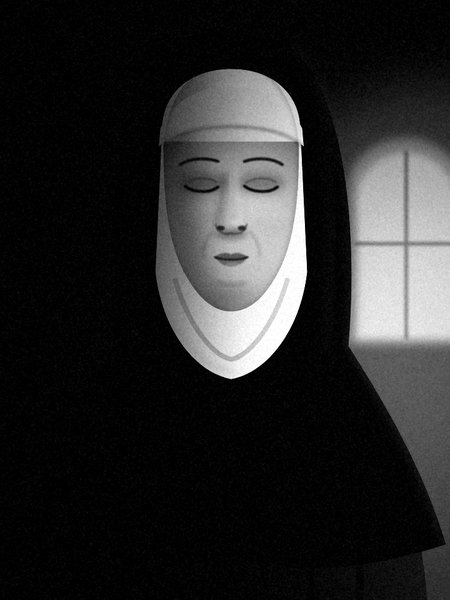
Portrait: Illustration by Ochorus (an imagined likeness)