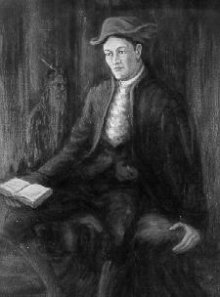
New to David Brainerd? Start with
The Life and Diary of David Brainerd
All works · 9 hr 37 min read
Biography
- 1718 Born
- 1739 Converted
- 1743 To the Indians
- 1745 Crossweeksung
- 1747 Died
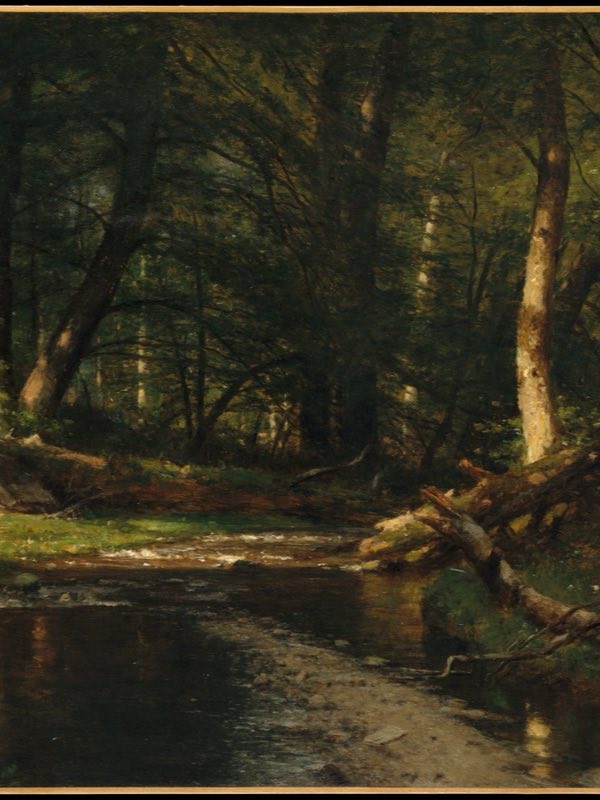
As I was walking in a dark thick grove, unspeakable glory seemed to open to the view and apprehension of my soul… My soul rejoiced with joy unspeakable, to see such a God, such a glorious divine Being.
David Brainerd lived twenty-nine years, spent barely four of them in ministry, saw no great crowds, founded no institution, and died coughing blood in another man's house. By every worldly measure his was a small, failed life. Yet the diary he kept — published after his death by Jonathan Edwards — has sent more men and women to the mission field than the biographies of a hundred famous preachers. He is proof that God measures a life differently than we do.
He was born on a Sabbath day, April 20, 1718, in Haddam, Connecticut, into a devout but sorrow-marked family; both parents were dead before he was fourteen. A serious, melancholy boy, he was much occupied with religion and much troubled by it, keeping fasts and reforming his conduct without finding peace. That came only in his twenty-second year. On July 12, 1739, walking alone at dusk, the weight lifted all at once.
As I was walking in a dark thick grove, unspeakable glory seemed to open to the view and apprehension of my soul… My soul rejoiced with joy unspeakable, to see such a God, such a glorious divine Being.
— David Brainerd, Diary, July 12, 1739
Expelled from Yale
That autumn he entered Yale to train for the ministry, and there his zeal outran his discretion. Caught up in the fervor of the Great Awakening then sweeping New England, the students grew critical of tutors they judged unconverted. Asked in private what he thought of one who had prayed without evident warmth, Brainerd said too much:
He has no more grace than this chair.
— David Brainerd, overheard at Yale, 1742
A freshman overheard and reported it. The rector demanded a public confession; Brainerd, believing the words private and the punishment unjust, refused — and for this, together with his attendance at a forbidden "Separate" meeting, he was expelled in the winter of 1742, in his third year. He never took a degree. The disgrace wounded him deeply and closed the ordinary doors of a New England pulpit to him. It also, providentially, turned him toward the one work for which he is remembered.
To the Indians
Licensed to preach in July 1742, he was taken up by a society for missions to the Native American peoples. In April 1743 he settled at Kaunaumeek, a lonely Housatonic village between Stockbridge and Albany, living in a wigwam and then a rough hut, sleeping on straw, learning the language, eating little, and riding many miles through the wilderness. He was often ill, often cold, and almost always alone. His diary from these years is a long record of physical hardship and spiritual desolation — and of a longing that swallowed every other consideration.
I cared not where or how I lived, or what hardships I went through, so that I could but gain souls to Christ.
— David Brainerd, Diary, July 21, 1744
Ordained by the Presbytery of New York in June 1744, he moved on to the Forks of the Delaware in Pennsylvania, and made hard, fruitless journeys to the Susquehanna. For a long time there was almost nothing to show for it. What sustained him was not results but prayer.
It should be said plainly that Brainerd was not a serene saint. His diary is famous — and to some readers troubling — for its relentless self-searching and gloom. He wrestled all his life with what we would now call depression, recording long seasons of "dejection," calling himself "the vilest creature living," and more than once longing simply to die. Edwards, when he published the diary, worried that its melancholy might mislead the young, and gently cautioned readers to imitate Brainerd's devotion without copying his despondency. Yet that very honesty is part of the book's strange power. Here is holiness not as untroubled triumph but as a sick, sorrowful, self-doubting man clinging to God through the dark — and being carried. It has consoled more discouraged believers than any tale of unbroken victory could.
The wrestling in the woods
Brainerd prayed the way other men work — to exhaustion. He set apart whole days for secret fasting and prayer; he "delighted greatly in sacred retirements," Edwards said, disappearing into the forest to pour out his soul for the people he had come to serve. One evening at the Forks, the night before he faced an idolatrous feast, he prayed until his body gave way.
The wind at Crossweeksung
In June 1745 he came to Crossweeksung, a scattering of Delaware in New Jersey, and here the long, prayed-over drought broke into rain. He preached, not terror, but the free grace and compassion of Christ — and on August 8, 1745, to about sixty-five hearers, the answer came.
The change was not a passing emotion. Drunkenness was abandoned, debts were paid, quarrels were healed; within eleven months thirty-eight had made a public profession of faith, "all of whom appear to have had a work of special grace wrought in their hearts." Brainerd, careful and self-suspicious to a fault, was certain of one thing: he had not manufactured this. It had come as a gift, at the moment his own prospects looked worst, in answer to prayer.
A candle burned out
He had little time to enjoy it. The tuberculosis that had shadowed him for years now closed in; he coughed blood and could no longer ride his circuits. In the spring of 1747 he left the Indians and made his way to the home of Jonathan Edwards in Northampton, Massachusetts. There, nursed through his last nineteen weeks by Edwards's daughter Jerusha, he died at about six in the morning on Friday, October 9, 1747, not yet thirty years old. To the end his one desire was unchanged: "My work is done," he told them; "all my desire is to glorify God."
The little congregation at Crossweeksung was not left orphaned. Brainerd's younger brother John, also a missionary, took up the same work and shepherded the Delaware believers for years afterward, so that the awakening David had prayed into being outlived the man by a generation. What looked, at his deathbed, like a story cut off half-told, God quietly continued.
The diary that would not die
Two years later Edwards published An Account of the Life of the Late Reverend Mr. David Brainerd, built around the diary Brainerd had asked him to weigh. It became one of the most reprinted devotional books in the English language, and its quiet, wasting, faithful obedience lit fires that Brainerd never lived to see. John Wesley abridged and commended it. William Carey carried it to India and pressed it on others as a model. Henry Martyn read it at Cambridge and gave his life to missions in the East. Two centuries on, Jim Elliot filled his own journals in the same spirit before dying young in Ecuador. A short life, poured out among a forgotten people in the woods — and through it, God got to himself a name among the nations, exactly as Brainerd had prayed.
Books by David Brainerd (2)

Also appears in
Articles about David Brainerd (1)
Questions and Answers
Who was David Brainerd?
David Brainerd (1718–1747) was a young missionary to the Native American peoples of colonial New Jersey and Pennsylvania. He lived twenty-nine years, spent barely four of them in ministry, saw no great crowds and founded no institution, and died coughing blood in another man's house. By every worldly measure his was a small life — yet the diary he kept, published after his death by Jonathan Edwards, has sent more people to the mission field than the biographies of a hundred famous preachers.
How was he converted?
Born in Haddam, Connecticut, and orphaned before he was fourteen, he was a serious, melancholy boy much occupied with religion and much troubled by it, keeping fasts and reforming his conduct without finding peace. That came only in his twenty-second year: on 12 July 1739, walking alone at dusk in "a dark thick grove," the weight lifted all at once, and his soul "rejoiced with joy unspeakable, to see such a God, such a glorious divine Being."
Why was he expelled from Yale?
Caught up in the fervor of the Great Awakening, Yale's students grew critical of tutors they judged unconverted. Asked privately what he thought of one who had prayed without evident warmth, Brainerd said too much — "He has no more grace than this chair" — and was overheard. The rector demanded a public confession; believing the words private and the punishment unjust, he refused, and for that, with his attendance at a forbidden "Separate" meeting, he was expelled in 1742 and never took a degree.
What was his work among the Indians like?
Licensed in 1742, he settled first at Kaunaumeek, living in a wigwam and then a rough hut, sleeping on straw, learning the language and riding many miles through the wilderness; later he moved to the Forks of the Delaware and made hard, fruitless journeys to the Susquehanna. He was often ill, often cold, and almost always alone. "I cared not where or how I lived, or what hardships I went through," he wrote, "so that I could but gain souls to Christ."
Did he struggle with depression?
He was no serene saint. His diary is famous — and to some readers troubling — for its relentless self-searching and gloom; he wrestled all his life with what we would now call depression, calling himself "the vilest creature living" and more than once longing to die. Edwards, publishing it, cautioned readers to imitate Brainerd's devotion without copying his despondency. Yet that honesty is part of the book's strange power: holiness here is a sorrowful, self-doubting man clinging to God through the dark and being carried.
What was his life of prayer?
Brainerd prayed the way other men work — to exhaustion. He set apart whole days for secret fasting and prayer and "delighted greatly in sacred retirements," disappearing into the forest to pour out his soul for the people he served. One evening at the Forks, before facing an idolatrous feast, he prayed until his body gave way: "I could scarcely walk straight; my joints were loosed; the sweat ran down my face and body." The next day he withdrew into the woods again and gave himself afresh to God, for life or death.
What happened at Crossweeksung?
In June 1745 he came to Crossweeksung, a scattering of Delaware in New Jersey, and preached not terror but the free grace and compassion of Christ. On 8 August 1745, to about sixty-five hearers, "the power of God seemed to descend upon the assembly 'like a mighty rushing wind'... and bore down all before it." Old men who had been drunkards for years, little children, a conjurer and a murderer were all crying to God for mercy. "I never saw any day like it, in all respects."
Was the awakening lasting?
It was no passing emotion. Drunkenness was abandoned, debts were paid, quarrels were healed, and within eleven months thirty-eight had made a public profession of faith, "all of whom appear to have had a work of special grace wrought in their hearts." Careful and self-suspicious to a fault, Brainerd was certain of one thing: he had not manufactured this. It had come as a gift, at the moment his own prospects looked worst, in answer to prayer.
How did he die?
The tuberculosis that had shadowed him for years closed in; he coughed blood and could no longer ride his circuits. In the spring of 1747 he left the Indians and made his way to the home of Jonathan Edwards in Northampton, where he was nursed through his last nineteen weeks by Edwards's daughter Jerusha. He died at about six in the morning on 9 October 1747, not yet thirty. "My work is done," he told them; "all my desire is to glorify God."
Why has his diary been so influential?
Two years after his death Edwards published "An Account of the Life of the late Reverend Mr. David Brainerd," built around the diary Brainerd had asked him to weigh. It became one of the most reprinted devotional books in the English language, and its quiet, wasting, faithful obedience lit fires he never lived to see: John Wesley abridged it, William Carey carried it to India, Henry Martyn read it at Cambridge and gave his life to missions, and two centuries on Jim Elliot filled his own journals in the same spirit.