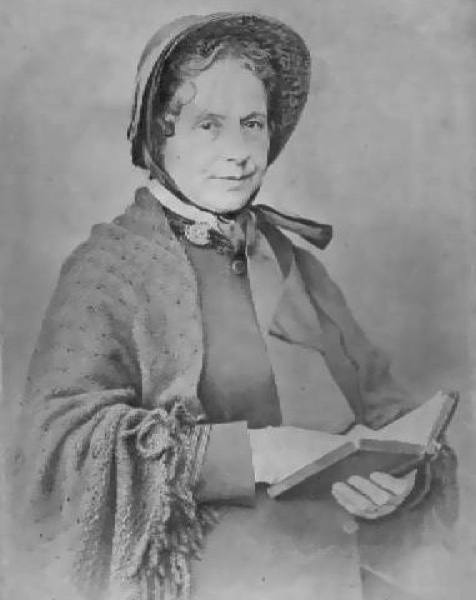
New to Catherine Booth? Start with
Godliness
All works · 8 hr 8 min read
Biography
- 1829 Born
- 1852 Met William
- 1855 Married
- 1860 First sermon
- 1890 Died
"Ah!" I said, "this is just the point. I have never yet been willing to be a fool for Christ. Now I will be one!" Without stopping another moment, I rose up from my seat and walked down the aisle.
Catherine Booth is remembered by two names. The first is the one her parents gave her at Ashbourne, in Derbyshire, on 17 January 1829: Catherine Mumford, a shy and bookish girl who would read her Bible through eight times before she was twelve. The second is the one a movement gave her decades later, when hundreds of thousands across many lands called her simply the Army Mother. Between those two names lies one of the most consequential lives in nineteenth-century Christianity, and, at its centre, a woman who insisted that God still spoke, still saved, and still called whomever He pleased to preach His gospel.
A childhood of conscience and books
Catherine was the only daughter in the Wesleyan Methodist home of John and Sarah Mumford — her father a lay Methodist preacher, her mother a woman of deep devotion and firm moral character — and only one of her four brothers lived to be a man. Her mother taught her early to love the truth and to love Scripture, and both lessons held for life. At four she lay sobbing in her cot until she had confessed a small falsehood; at five she read Bible stories aloud at her mother's side. She was tender to the point of anguish over cruelty, once fleeing home speechless with distress at the sight of a man beating his sheep. By her teenage years that tenderness had sharpened into conviction. She was troubled above all by the drunkenness and poverty that scarred Victorian England, and had already concluded that Christianity worth the name must transform not only personal character but the conditions in which people lived. Those early concerns would one day stand at the centre of her ministry.
She was never robust. A serious spinal complaint sent her home from boarding school for three long years, much of it flat on her back, at one stretch lying on her face for seven months. She turned the confinement into a school of the soul, reading Scripture, theology, and the lives of those who had lived for God, then closing each book to write down what she could remember. No university would open its doors to a woman of her generation, and she never received formal academic training; yet out of that sickroom came a self-taught theologian. She memorised large portions of Scripture, worked her way through the debates of Methodism and the wider Protestant world, and settled her convictions one by one — the holiness of God, the seriousness of sin, the necessity of personal salvation, the Christian's duty to the poor, and the equality of men and women in the service of God. Later she saw the hidden mercy in it. "Being so much alone in my youth," she said, "and so thrown on my own thoughts and on those expressed in books, has been very helpful to me."
Conversion and the assurance she would not live without
Though God's Spirit had striven with her from childhood, Catherine came to a crisis around the age of fifteen. She could not rest without the certain knowledge that she was saved, refusing the comfortable notion that a lifetime of trying to do right was enough. "Lord, I must be converted," she prayed. "I cannot rest till Thou hast changed my whole nature; do for me what Thou dost do for the thieves and drunkards." For six weeks heaven seemed silent. She paced her room until two in the morning, her Bible and hymn-book under her pillow, pleading for assurance.
That assurance was soon tested. A clever cousin pressed her to become engaged to him, and though she loved him she knew he was not given up to God. Praying for light, she read, "Be ye not unequally yoked together with unbelievers," and heard in it the voice of God. She wrote to break the engagement, and never reopened the question. Years afterward she saw that had she followed her feelings instead of obeying, "all her life would have been altered." Obedience, even costly obedience, was becoming the grammar of her faith.
Marriage, and the making of a preacher
In 1852 she met William Booth, a young Methodist minister of fierce evangelistic zeal; they married in 1855. Theirs was a true partnership of conviction — she was his counsellor in matters of theology and strategy from the first, and many have judged that her clarity of mind did as much as his fire to shape the work that followed. Yet on one point they long disagreed. Catherine had come to believe, from Scripture itself, that women had the same right as men to speak for God. When a newspaper controversy erupted over the question, she answered it in 1859 with her pamphlet Female Ministry, taking up one by one the passages traditionally used to silence women and arguing that they had been misread — for if the Holy Spirit so evidently blessed the labours of devoted women, then the prohibition must be a misreading, since "the word and the Spirit cannot contradict each other." She was defending other women's calling while resisting her own.
The reckoning came on Whitsunday, 1860, in the chapel at Gateshead. Sitting in the congregation with her eldest boy, depressed and expecting nothing, she felt the Spirit press upon her the very obedience she had urged on others. Every excuse rose up; then the tempter's last word settled the matter. She recorded it herself.
"Ah!" I said, "this is just the point. I have never yet been willing to be a fool for Christ. Now I will be one!" Without stopping another moment, I rose up from my seat and walked down the aisle.
— Catherine Booth
Her astonished husband could only announce, "My dear wife wishes to speak," and sit down. She stood, she said, hanging on "the arm of Omnipotence," and simply confessed her long disobedience. There was more weeping in the chapel that day than on any occasion before it. "That honest confession," she reflected, "did what twenty years of preaching could not have accomplished." She never drew back again.
Ministry and its fruit
Invitations poured in, for wherever she went souls were saved. She became one of the most remarkable preachers of the age, filling the largest halls in England with hearers of every class. Yet nothing came easily. With four small children, little money, and no leisure, she prepared while she nursed her baby, jotting thoughts in pencil. She refused every affectation; "stiffness," she said, was the great hindrance to divine truth. And she would settle for nothing less than conversion. Of one crowded gallery of men she wrote, "I felt as if it would be a small thing to die there and then, if that would have brought them to Jesus."
God made you responsible, not for delivering the truth, but for GETTING IT IN—getting it home, fixing it in the conscience as a red-hot iron, as a bolt, straight from His throne.
— Catherine Booth
In 1865 William began preaching to the poorest of East London, and the question of how they would live on collections from the destitute pressed hard. Catherine's answer became a hinge of history. Out of that Whitechapel work grew the Christian Mission, and out of the Mission, in 1878, The Salvation Army. She helped shape its doctrine, drafted much of its teaching, and made the equality of women in ministry a settled principle of the movement — women could serve as officers and preachers from its earliest days, a policy revolutionary in its time. Eight children were born to the Booths, and one by one she gave them up to the Army's service; several became prominent leaders in their own right, and their eldest son Bramwell would one day succeed his father at the movement's head. She was, in every sense, its mother.
Her pen waged the same war as her platform. In the sermons published as Aggressive Christianity she pressed believers to abandon a passive, respectable religion for the active work of evangelism and reform. The themes of her teaching never wavered: a gospel for all people regardless of rank, the God-given dignity and calling of women, practical compassion for the poor as inseparable from true faith, and unsparing opposition to the drink trade she believed was destroying families and communities. Strong biblical reasoning joined to a burning concern for the suffering — that combination made her one of the most significant Christian voices of her era.
A life sustained by prayer
The secret of her preaching was not her platform gift but her closet. She measured her results by her intercession, and would not go before a congregation until she had gone before God.
When William, weighing whether they could survive financially among the East London poor, hesitated, her reply carried the same trust: "We have trusted the Lord once for our support, and we can trust Him again." The Army that grew from that day of faith would one day span the earth.
The last fiery trial
In February 1888 Catherine went alone to a specialist, asking, as always, for the truth. It was cancer of the breast, the same disease through which she had nursed her own mother, with two or three years of suffering ahead. She thanked the doctor, drove home, and knelt in the cab to pray. Her first thought, she told William, was grief that she would not be there to nurse him at his end. Her motto for the long ordeal was three words: "The War must go on." Meetings were planned from her sickroom, and much of William's In Darkest England scheme for the outcast was thought out beside her bed.
For the final twelve months she was a prisoner in her room in constant pain, revived by every report of victory for Christ. On 4 October 1890, at Clacton-on-Sea, she came at last to the river. She pointed to the text hung on the wall, "My grace is sufficient for thee," and asked that it be placed at the foot of her bed. "O Emma, let me go, darling," she whispered, and then, "Now! Yes, Lord, come, Oh, come!" She was sixty-one. Her funeral in London drew enormous crowds — testimony, from rich and poor alike, of what her life had meant to a nation.
At her graveside William Booth gathered forty years of marriage into a single sentence: she had been the light of his eyes and the inspiration of his soul, and what other men lost in many people he had lost in one. She left the movement a dying charge she had lived by: "The great consolation for a Salvationist on his dying bed is to feel that he has been a soul-winner." Her legacy is not chiefly the millions the Salvation Army still serves around the world through its shelters, hospitals, and relief work, nor even the doors her advocacy opened for women's leadership far beyond her own movement, though it is those things too. It is the settled conviction, won through timidity and cancer and long obedience, that God still calls whom He wills, and still answers the prayers of those willing to be fools for Christ.
Books by Catherine Booth (1)
Sermons by Catherine Booth (10)
Books about Catherine Booth (1)

Also appears in
Articles about Catherine Booth (1)
Questions and Answers
What was Catherine Booth's childhood like?
Born Catherine Mumford at Ashbourne, Derbyshire, on 17 January 1829, she was a shy, bookish, tender-hearted girl raised in a devout Wesleyan Methodist home, and she is said to have read the Bible through eight times before she was twelve. She was never robust: a serious spinal complaint sent her home from school for three years, much of it spent lying on her back. Rather than waste the confinement, she filled it with Scripture, theology, and the lives of the godly, turning her sickroom into the making of a largely self-taught theologian.
Did Catherine Booth really believe women had the right to preach?
She did, and she reached the conviction from Scripture itself, long before she dared act on it. When a newspaper controversy erupted over the question, she answered it in 1859 with a pamphlet, "Female Ministry: Woman's Right to Preach the Gospel," taking up one by one the passages used to silence women and arguing they had been misread. Her reasoning rested on a simple principle: since the Holy Spirit so plainly blessed the labours of devoted women, the prohibition against them could not be right, for "the word and the Spirit cannot contradict each other."
How did Catherine Booth herself begin to preach?
For years she defended other women's calling while resisting her own, until Whitsunday 1860 in the chapel at Gateshead. Sitting in the congregation, depressed and expecting nothing, she felt the Spirit press on her the very obedience she had urged on others; she rose, walked down the aisle, and her startled husband could only say, "My dear wife wishes to speak," and sit down. She confessed her long reluctance to be, as she put it, "a fool for Christ," and never drew back again. "That honest confession," she later reflected, "did what twenty years of preaching could not have accomplished."
What was her marriage to William Booth like?
Catherine met William Booth, a young Methodist minister of fierce evangelistic zeal, in 1852, and they married in 1855. Theirs was a genuine partnership of conviction, with Catherine serving as his counsellor in theology and strategy from the first, and many have judged that her clarity of mind did as much as his fire to shape the work that followed. They did not always agree at once, notably over women's ministry, but on the great aims of their life they were wholly one.
Why is Catherine Booth called the "Mother of the Salvation Army"?
With William she helped build the East London work that became the Christian Mission and then, in 1878, The Salvation Army, and hundreds of thousands came to call her simply "the Army Mother." She helped shape its doctrine, drafted much of its teaching, and made the equality of women in ministry a settled principle, so that women could serve as officers and preachers from its earliest days, a policy revolutionary in its time. She was, in every sense, its mother, in its beliefs as much as its birth.
What kind of preacher was Catherine Booth?
She became one of the most remarkable preachers of the age, filling the largest halls in England and drawing hearers of every rank, from the poor of the East End to fashionable audiences in the West End. Nothing came easily; with small children and little money she prepared while nursing her baby, jotting thoughts in pencil, and she refused every affectation, calling "stiffness" the great hindrance to divine truth. She measured her results by her prayer beforehand, once writing, "I always find an exact proportion in the results to the spirit of intercession I have had beforehand."
Did Catherine Booth take up social causes as well as preaching?
Yes, for she had believed since girlhood that a Christianity worth the name must transform not only character but the conditions people lived in. She lent her voice to the 1885 purity crusade, alongside Josephine Butler and W. T. Stead, that helped raise the age of consent for girls from thirteen to sixteen, and she campaigned against the sweated labour of match-factory women who were poisoned by yellow phosphorus, a disease known as "phossy jaw." The year after her death, The Salvation Army opened its own match factory using safe red phosphorus and paying fairer wages, a direct fruit of that concern.
What happened to the Booths' children?
Eight children were born to William and Catherine, and one by one she gave them up to the Army's service; several became prominent leaders in their own right. Their eldest son, Bramwell Booth, would one day succeed his father at the head of the movement. Raising a family that would go on to lead the work worldwide was, for her, part of the same devotion that put her in the pulpit.
What did Catherine Booth write?
Beyond her 1859 pamphlet on women's ministry, her preaching was gathered into books such as "Aggressive Christianity," in which she pressed believers to abandon a passive, respectable religion for the active work of evangelism and reform. Her themes never wavered: a gospel for all people regardless of rank, the God-given calling of women, practical compassion for the poor as inseparable from true faith, and unsparing opposition to the drink trade. Strong biblical reasoning joined to a burning concern for the suffering made her one of the most significant Christian voices of her era.
How did Catherine Booth face her death?
In February 1888 she went alone to a specialist and asked for the truth; it was breast cancer, the same disease through which she had nursed her own mother, with years of suffering ahead. She thanked the doctor, drove home, and knelt in the cab to commit her body, her family, and her work to God, taking as her motto three words for the long ordeal: "The War must go on." She died on 4 October 1890 at Clacton-on-Sea, aged sixty-one, having pointed to the text "My grace is sufficient for thee" and whispered, "Now! Yes, Lord, come, Oh, come!" Her funeral drew enormous crowds of rich and poor alike, testimony to what her life had meant to a nation.