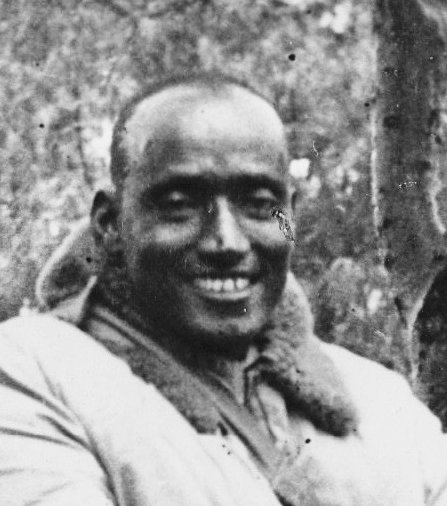
Biography
- 1905 Born
- 1931 Converted
- 1981 Died
He has come back an absolutely changed life.
The East African Revival is usually told through its preachers and its martyrs — the men who stood in pulpits or died for what they said. Yosiya Kinuka was neither, at least not at first. He was a hospital assistant: a skilled anaesthetist, the senior African on the medical staff of a mission hospital, and for a while the ringleader of the staff's resistance to the very doctor whose name is now bound up with his. He is one of the earliest African leaders of the Revival, and he stands almost exactly at the point where it caught fire. But he came to that place not as a seeker but as an obstacle, and the story of how the obstacle became a hearth is the most useful thing about him.
A chief's son among the cattle-keepers
He was born around 1905 — the date comes from later summaries rather than any register, so it is best held loosely — into the Bahima, the cattle-keeping people of Ankole in western Uganda. He was a Muhima, the son of an Ankole chief, and by every account proud of that ancestry. It was a proud, self-possessed inheritance, not an obviously promising soil for a religion of brokenness and confession.
In 1928 he married Dorokasi, a woman from the Bufumbira country of Kigezi. Their marriage would outlast every upheaval that followed and their home would later be spoken of as a centre of witness — a model Christian household — but that lay years ahead, on the far side of a change neither of them yet knew was coming.
He was persuaded to join the medical team that Dr Joe Church — J. E. Church of the Ruanda Mission — was assembling for a new hospital at Gahini, across the border in Rwanda. Kinuka proved notably capable; he rose to be chief medical assistant, trusted above all with the delicate work of the anaesthetist, holding a patient's life steady on the table. He was said to have arrived unable to read or write and to have learned quickly, though that detail rests on a single telling and is better offered as something remembered than as fact. What is not in doubt is that he was good at the work, and that when he began he was neither a Christian nor interested in becoming one.
The doctor and the resister
Church wanted more from his staff than medicine. He insisted that the hospital's workers combine their medical duties with evangelism in the villages, and that they be paid on the same scale as the village evangelists rather than as salaried medical men. To a proud and able senior assistant this was both an insult and an imposition, and Kinuka led the staff's resistance to it. The relationship between the two men — employer and chief resister — soured into something close to a standoff.
It is worth staying with this, because it is the opposite of the shape we expect from a revival story. There is no earnest young man asking how to be saved. There is a competent professional digging in against his employer, and a missionary doctor at the end of his ideas about how to reach him. What broke the deadlock was not persuasion. Church, by his own later account, tried persuasion and failed.
Sent to Nsibambi, 1931
In January 1931, as he put it, "as a last resort," Church sent Kinuka up to Kampala to see Simeoni Nsibambi — the Muganda layman whose own hunger for holiness was already a quiet engine of the coming movement. It was not a soft errand, and Nsibambi did not make it one. He offered Kinuka no sympathy and took no side in the quarrel with the doctor. He told him, plainly, that the fault lay not with Church but with Kinuka's own unrepentant heart.
Kinuka's own words about that meeting survive only faintly, in a line remembered rather than recorded: that he had never before seen such a fervent Christian, and that they kept returning to the one subject — of being born again. It is a thin remnant, and it should be held as a memory of what he said rather than a transcript. But it points true. He went up a man defending his grievance and came down a man undone by it.
He returned to Gahini changed. The clearest testimony to it is not his own but the doctor's. Writing home on 5 May 1931, Church summed up in one sentence what had happened to the assistant he had all but given up on:
He has come back an absolutely changed life.
— J. E. Church, of Yosiya Kinuka, 5 May 1931
The tension between the two men turned to reconciliation. Exactly how that healing was enacted between them has grown, in some retellings, into a dramatic scene of mutual kneeling and confession; that scene is not independently verified, and it is enough to say what is certain — that a relationship which had been a standoff became a partnership, and that the mending of it was one of the first sparks of the Revival. What followed makes the outline unmistakable even where the detail is not.
Church, characteristically, put the change to work at once. He took to teaching the Bible by having Kinuka translate and explain what he was trying to say — and in the act of turning the doctor's words into his own language, Kinuka was first challenged and then converted more deeply still. The resister had become the interpreter.
His conversion did not come out of nowhere. Church and Blasio Kigozi had been praying for the African workers for a couple of years, asking for exactly what they could not manufacture. When it came, it came through the hardest man on the staff.
The Gahini hearth
From that point Kinuka is at the centre of things. With Blasio Kigozi he formed the first Bible and evangelistic team around Gahini, and the mission station became a hearth from which the fire spread. He is named, from then on, in the same breath as the movement's best-known figures — William Nagenda, Festo Kivengere, Erica Sabiti, Simeoni Nsibambi, Kigozi himself.
At Christmastime in 1933, a convention at Gahini became the moment many later pointed to and said, simply, that the Revival had started. Confession broke out; men and women named their sins aloud and in company; forgiveness was asked and given; broken relationships were restored. The scene was corporate, not any one man's, and Kinuka should not be made its hero — but he was at the heart of the community in which it happened, one of the African leaders who had prepared the ground and who now stood inside the breaking-open.
Beyond Gahini
The Revival did not stay in the hills of Rwanda. In the mid-1940s Kinuka travelled with William Nagenda and Joe Church to Switzerland and Britain — the first of the movement's overseas tours, an African-led witness carried back into the churches that had sent the missionaries out. That the anaesthetist from Ankole should be standing before European congregations was itself a kind of sermon about who the gospel belongs to.
After the political upheaval that convulsed Rwanda in 1959, Kinuka and Dorokasi moved to Uganda, where he took charge of a camp for Rwandan refugees. He is widely described as having become a church leader in his later years; the specific clerical rank sometimes attached to his name is not confirmed, and it is honest to leave it simply at that — a leader among the saved, spending himself on the displaced. He died around 1981. The circumstances of his last years are sparsely recorded, and it is better to admit the silence than to fill it.
What he leaves
Kinuka left almost no words of his own — one shaky sentence, remembered secondhand, is very nearly the whole of it. What he leaves instead is a demonstration, acted out in his own life before he ever carried it to anyone else.
He is proof that the message of the Revival works on exactly the person least disposed to receive it. He did not come to Gahini hungry; he came proud, capable, and in open opposition to the man God would use to reach him. He was not talked round. He was sent, as a last resort, to be told the plain truth about his own heart — and the truth did what argument could not. The doctor's prayer was answered in the resister; the resister became the interpreter; and the interpreter stood at the hearth when the fire caught. For a movement that would insist, for decades, that the way forward is to name your own sin out loud and let it be forgiven, there could hardly be a truer first witness than the man who had to be broken of his objection before he could be entrusted with the message.
Also appears in

Questions and Answers
Who was Yosiya Kinuka?
Yosiya Kinuka (c.1905–1981) was a hospital anaesthetist at Gahini in Rwanda who first led the medical staff's resistance to Dr Joe Church, then — sent to Simeoni Nsibambi in 1931 — returned "an absolutely changed life" and became one of the earliest African leaders of the East African Revival. With Blasio Kigozi he formed the first Bible team around Gahini and stood at the heart of the 1933 convention often named as the Revival's beginning.
What was his background?
He was born around 1905 into the Bahima, the cattle-keeping people of Ankole in western Uganda — a Muhima, the son of an Ankole chief, and proud of that ancestry, which was not obviously promising soil for a religion of brokenness and confession. In 1928 he married Dorokasi, a woman from the Bufumbira country of Kigezi; their marriage would outlast every upheaval, and their home would later be spoken of as a model Christian household.
How did he come to work at Gahini?
He was persuaded to join the medical team Dr Joe Church was assembling for a new hospital at Gahini, across the border in Rwanda, and proved notably capable, rising to chief medical assistant, trusted with the delicate work of the anaesthetist — holding a patient's life steady on the table. When he began he was neither a Christian nor interested in becoming one; he was good at the work, and that was all.
Why did he resist Joe Church?
Church wanted more from his staff than medicine: he insisted the hospital's workers combine their medical duties with evangelism in the villages, and be paid on the same scale as village evangelists rather than as salaried medical men. To a proud and able senior assistant this was both insult and imposition, and Kinuka led the staff's resistance. The relationship soured into something close to a standoff — the opposite of the shape we expect from a revival story.
What happened when he was sent to Nsibambi in 1931?
In January 1931, as a last resort, Church sent Kinuka to Kampala to see Simeoni Nsibambi, whose own hunger for holiness was already a quiet engine of the coming movement. Nsibambi offered no sympathy and took no side in the quarrel with the doctor; he told Kinuka plainly that the fault lay not with Church but with his own unrepentant heart. He went up a man defending his grievance and came down a man undone by it.
How did Joe Church describe the change?
The clearest testimony is not Kinuka's own but the doctor's. Writing home on 5 May 1931, Church summed up in one sentence what had happened to the assistant he had all but given up on: "He has come back an absolutely changed life." The tension between the two men turned to reconciliation, and a relationship that had been a standoff became a partnership — one of the first sparks of the Revival.
How did the resister become the interpreter?
Church put the change to work at once, teaching the Bible by having Kinuka translate and explain what he was trying to say — and in the act of turning the doctor's words into his own language, Kinuka was challenged and converted more deeply still. His conversion had not come out of nowhere: Church and Blasio Kigozi had been praying for the African workers for a couple of years, and the answer came through the hardest man on the staff.
What was his part in the 1933 convention at Gahini?
With Blasio Kigozi he formed the first Bible and evangelistic team around Gahini, and the mission station became a hearth from which the fire spread. At Christmastime in 1933 a convention at Gahini became the moment many later pointed to and called the beginning of the Revival: confession broke out, men and women named their sins aloud and in company, forgiveness was asked and given, broken relationships restored. The medicine that had cured Kinuka in a room in Kampala was now curing a whole convention at once.
Did his witness reach beyond Gahini?
Yes. In the mid-1940s Kinuka travelled with William Nagenda and Joe Church to Switzerland and Britain — the first of the movement's overseas tours, an African-led witness carried back into the churches that had sent the missionaries out. That the anaesthetist from Ankole should stand before European congregations was itself a kind of sermon about who the gospel belongs to. After the upheaval of 1959 he and Dorokasi moved to Uganda, where he took charge of a camp for Rwandan refugees.
What does his life demonstrate?
That the message of the Revival works on exactly the person least disposed to receive it. He did not come to Gahini hungry; he came proud, capable, and in open opposition to the man God would use to reach him. He was not talked round — he was sent, as a last resort, to be told the plain truth about his own heart, and the truth did what argument could not. The doctor's prayer was answered in the resister, and the resister became the interpreter who stood at the hearth when the fire caught. He died around 1981.
Portrait: Boston University Center for Global Christianity & Mission