Biography
Tukutendereza Yesu — We praise you, Jesus; Jesus, Lamb of God, your blood cleanses me.
Some of the East African Revival's most remembered figures left books, or led churches, or preached to crowds. Yona Kanamuzeyi left a diary, six children, a wife named Mary, and one sentence written on the last night of his life. He was a deacon in a small place, doing small and dangerous work, when soldiers came for him in the dark. What survives of him is thin, and much of what is repeated about his death cannot be verified. But the core is solid, and it is enough: a man who, being led out to be shot, sang.
A child of two peoples
We do not know when Yona Kanamuzeyi was born. No reliable record fixes the year, or the place, and it would be a disservice to him to invent one. He belonged to the generation of Rwandans who came up in the first decades of the twentieth century, in the years when the Revival that began at Gahini and Kabale was spreading through the hills of Rwanda and Uganda and out across East Africa.
He was the child of a mixed marriage — one parent Hutu, one Tutsi — and was himself generally reckoned a Tutsi. That single fact, an accident of birth he did not choose, would later mark him for death. In the Rwanda of the early 1960s, as the colonial order collapsed and violence broke along the Hutu–Tutsi fault line, a man's parentage could be turned into a sentence. Yona's straddled both sides of the line that was being drawn in blood.
He became an Anglican deacon. Popular retellings sometimes promote him to "Reverend" or "pastor," and there is no great harm in the loose word, but the sources are consistent: he was a deacon, serving at Nyamata, south of Kigali, in the Maranyundo area. A deacon is an ordained servant of the church — the office is defined by service, by the practical care of people in need — and Yona's ministry ran true to the name.
Formed in the Revival
Yona is remembered as a protégé of Blasio Kigozi, one of the pioneers of the East African Revival — which places him squarely in the stream the Revival called the balokole, the "saved ones." To understand him at all, you have to understand that movement, because he had no life apart from it.
The Revival was not a program. It was a recovery of a few plain things the church had let go slack: that sin must be named out loud and specifically, not smoothed over; that a Christian walks in the light with others, hiding nothing; that the cross is the whole of one's standing before God; and that this is cause for enormous, unembarrassed joy. Its people wept and confessed and then sang. Their anthem, "Tukutendereza Yesu" — "We praise you, Jesus" — followed a simple Luganda refrain that could be carried from one country to the next:
Tukutendereza Yesu — We praise you, Jesus; Jesus, Lamb of God, your blood cleanses me.
— "Tukutendereza Yesu," the hymn of the East African Revival
Blasio Kigozi, whose spiritual son Yona was reckoned to be, had prayed for the awakening of a church he found asleep, and died young of relapsing fever in 1936 with the single word Zukuka — "Awake" — associated with his last witness. A movement formed by such men did not treat death as the great catastrophe to be avoided at any cost. It treated a clean conscience and a living hope as worth more than staying alive. Yona was made in that school, and when his own turn came he behaved exactly like a man who had learned its lessons.
The work that made him a target
In the early 1960s the fighting between Hutu and Tutsi sent streams of refugees across the hills, fleeing the violence with whatever they could carry. Yona was asked to help them. He did.
This is the hinge of his whole story, and it is worth sitting with rather than rushing past. He did not die for a doctrine he refused to recant, or for preaching in a forbidden square. He died because he sheltered frightened people. Giving sanctuary to Tutsi refugees marked him, in the eyes of armed men, as a "Tutsi sympathizer" — and a man who could be helped was a man on the wrong side. His crime was mercy shown to the hunted. There is an old pattern here, running back through the whole history of the church: the deacon whose office is the care of the poor and the endangered, and who is destroyed precisely for doing that office faithfully. Yona's refugee work was not a departure from his ministry. It was his ministry, and it cost him his life.
The night of 23 January 1964
The heart of what we know comes down to a single night in January 1964 — the 23rd, though some accounts say the 24th or 25th. Five soldiers came after dark in a jeep and took him away "for questioning." Two other prisoners were held with him.
As he was taken, Yona did two things that tell you who he was. He grabbed the church keys — the deacon still, minding what had been entrusted to him. And he grabbed his diary. In it, that night, he wrote a line that has outlived everything else about him:
Consider what that diary entry is. It is not a cry for rescue. It is not a protest of innocence, though he was innocent. It is a statement of destination, written by a man who had every reason to believe he was hours from being killed and who had decided, on the evidence of the gospel he had staked his life on, where he was actually going. He did not write "they are going to kill us." He wrote "we are going to heaven" — and the "we" reached out to include the frightened men beside him, whom he was still, in his last hours, trying to bring along.
We are going to heaven.
— Yona Kanamuzeyi, written in his diary on the night of his death
Then he sang. The hymn on his lips was a children's hymn, "There is a happy land, far, far away," and there is something almost unbearable in the plainness of it — a grown man walking toward his execution with a song a child would know. The soldiers came back amazed that he had sung as he walked toward death. That is the one detail of their reaction that the record vouches for, and it needs no help. Hardened men, sent to do a hard thing, could not get over the fact that the condemned man was singing.
He was taken into the bush. Gunfire was heard. Minutes later the two other prisoners were released. According to the accounts that survive, he was led to a bridge over the Nyabarongo river and shot, and his body was put into the water; the accounts differ about who exactly did the killing, and it would be wrong to pretend to a certainty the sources do not have. Some of the more dramatic scenes attached to his death in later retellings — a final prayer at the river, a soldier converted on the spot — cannot be confirmed, and honesty forbids repeating them as fact. What is attested is quieter and, in its way, harder to shrug off: he sang, and the men who killed him were amazed.
The story did not end in silence
A martyr's "answer to prayer" is rarely a rescue. Yona was not spared. But two things happened that kept his witness from vanishing into the bush with his body.
Those are the honest providences: not a miracle that undid his death, but the small mercies that let his death speak. Mary was left a widow with six children — among them a son later known as John Wesley Kanamuzeyi Gara — and the cost of his faithfulness fell on them, as it always does on the families of the killed. But the diary survived, and so the sentence survived, and so we have it still.
His name was later inscribed in the book of modern martyrs at St Paul's Cathedral in London, entered there by the Dean — a Rwandan deacon set among the church's remembered dead across the whole world. No fixed feast-day marks him, and no confirmed portrait of his face has been found. He is remembered chiefly for the manner of one night: the keys and the diary snatched up together, the question put to his fellow prisoners, the children's hymn sung down a dark road, and one written line that turned an execution into a testimony.
Yona Kanamuzeyi gave his life for people who were not his own people, and met his death singing that he was going home. The Revival taught that the worst the world can do is not the last word. In him, in the plainest possible terms, that claim was put to the test — and a man walked toward the guns, and sang.
Also appears in

Questions and Answers
Who was Yona Kanamuzeyi?
Yona Kanamuzeyi (died 1964) was a Rwandan Anglican deacon of the East African Revival who sheltered Tutsi refugees during the violence of the early 1960s. Arrested by soldiers on the night of 23 January 1964 and led away to be shot, he wrote "We are going to heaven" in his diary and sang a hymn as he walked to his death; his name was later inscribed in the roll of modern martyrs at St Paul's Cathedral, London. He left a diary, six children, a wife named Mary, and one sentence written on his last night.
What was known of his origins?
Little with certainty — no reliable record fixes the year or place of his birth. He belonged to the generation of Rwandans who came up as the Revival spread through the hills, and he was the child of a mixed marriage, one parent Hutu and one Tutsi, himself generally reckoned a Tutsi. That single fact, an accident of birth he did not choose, would later mark him for death, as the colonial order collapsed and violence broke along the Hutu–Tutsi fault line.
What was his ministry?
He became an Anglican deacon, serving at Nyamata, south of Kigali, in the Maranyundo area. Popular retellings sometimes promote him to "Reverend" or "pastor," but the sources are consistent that he was a deacon — an ordained servant of the church, the office defined by service and the practical care of people in need — and his ministry ran true to the name, right down to the refugee work that would cost him his life.
How did the Revival form him?
He is remembered as a protégé of Blasio Kigozi, one of the pioneers of the East African Revival, which places him squarely among the balokole, the "saved ones." The movement was not a program but a recovery of a few plain things: that sin must be named out loud and specifically; that a Christian walks in the light with others, hiding nothing; that the cross is the whole of one's standing before God; and that this is cause for enormous, unembarrassed joy. Its people wept and confessed and then sang.
Why was he targeted?
In the early 1960s the fighting between Hutu and Tutsi sent streams of refugees across the hills, and Yona was asked to help them. He did — and this is the hinge of his whole story. He did not die for a doctrine he refused to recant or for preaching in a forbidden square; he died because he sheltered frightened people. Giving sanctuary to Tutsi refugees marked him, in the eyes of armed men, as a "Tutsi sympathizer." His crime was mercy shown to the hunted.
What happened on the night of 23 January 1964?
Five soldiers came after dark in a jeep and took him away "for questioning," with two other prisoners held alongside him. As he was taken he did two things that tell you who he was: he grabbed the church keys — the deacon still, minding what had been entrusted to him — and he grabbed his diary. He turned to the two men held with him and asked them about their salvation, and together they sang, "There is a happy land, far, far away."
What did he write in his diary that night?
A line that has outlived everything else about him: "We are going to heaven." It is not a cry for rescue or a protest of innocence, though he was innocent — it is a statement of destination, written by a man who had every reason to believe he was hours from being killed and had decided, on the evidence of the gospel he had staked his life on, where he was actually going. The "we" reached out to include the frightened men beside him, whom he was still trying to bring along.
How did the soldiers react?
They came back amazed that he had sung as he walked toward death. That is the one detail of their reaction the record vouches for, and it needs no help: hardened men, sent to do a hard thing, could not get over the fact that the condemned man was singing. He was taken into the bush, and according to the accounts that survive, led to a bridge over the Nyabarongo river and shot, his body put into the water; the accounts differ about who did the killing, and it would be wrong to claim a certainty the sources lack.
Did his witness survive?
For a martyr the honest answer to prayer is rarely a rescue — Yona was not spared — but two things kept his witness from vanishing. The two men imprisoned with him were released alive, minutes after the shots, witnesses carried out of the dark; and the diary, with its line "We are going to heaven," made its way back to his wife, Mary. The last word of a man killed in secret did not stay secret. Not a miracle that undid his death, but the small mercies that let it speak.
How is he remembered?
His name was inscribed in the book of modern martyrs at St Paul's Cathedral in London — a Rwandan deacon set among the church's remembered dead across the whole world. He is remembered chiefly for the manner of one night: the keys and the diary snatched up together, the question put to his fellow prisoners, the children's hymn sung down a dark road, and one written line that turned an execution into a testimony. He gave his life for people who were not his own, and met his death singing that he was going home.
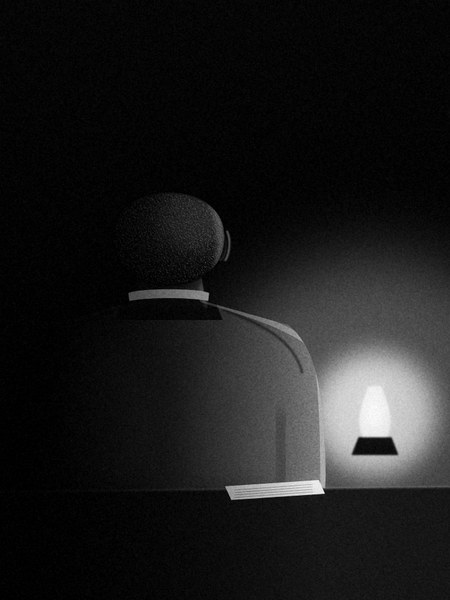
Portrait: Illustration by Ochorus (a scene, not a likeness)