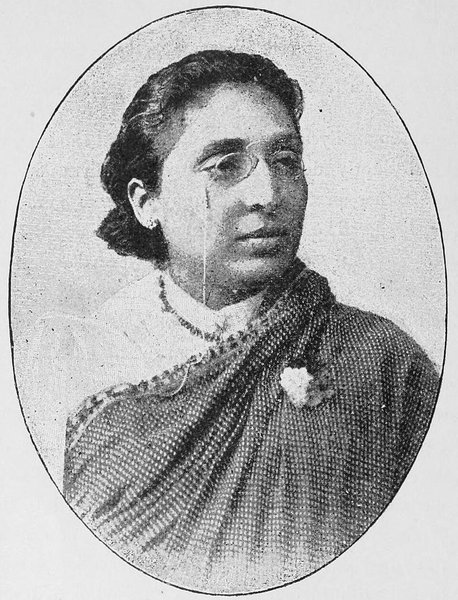
Biography
It is through prayer that hearts are reached.
Soonderbai Hannah Powar was born on July 29, 1856, into a family that had already crossed a great divide. Her parents, Ramachandra and Ganderbai Powar, had been high-caste Hindus who became Christians early in their lives, and so their daughter grew up in a home where Christ was named and the Bible was read. An American journal that introduced her in 1892 put the consequence plainly: because of her parents’ faith, Soonderbai “was spared the usual fate of Brahmin girls, early marriage and zenana seclusion.” She received a Christian education, learned to speak English fluently, and grew up free to go where most women of her birth could never go. She spent that freedom, for the rest of her life, on the women who had none.
Her childhood is thinly recorded; she left no memoir, and most of what is known of her comes from the friends who worked beside her. But the shape of her calling is clear. By her early twenties she was at work among the women of Bombay, and by 1892 she had given fifteen years to missionary work in that city. She was received, it was said, into an unusual number of zenanas, the secluded women’s quarters of high-caste homes, where an Indian Christian woman could sit, read, and talk as no foreign missionary easily could. In 1889 the Bombay Guardian reported her in charge of schools of the Methodist mission there, carrying on work begun by the Rev. W. W. Bruere: a school for high-caste girls that she taught herself, and a mixed school of low-caste children. That Christmas she wrote to the paper asking for gifts so that the children of three schools might have presents.
It is through prayer that hearts are reached.
— Soonderbai Powar
A friendship that shaped two lives
In March 1889 Pandita Ramabai opened the Sharada Sadan, her home and school for high-caste Hindu widows, in a house behind the sea-front at Chowpatty in Bombay. Ramabai had become a Christian, but she had promised Hindu families that the school would be neutral in religion, and the widows were free to keep their caste. Soonderbai came to visit. While Ramabai was out of the room, she took the chance to read the Bible to the girls. Ramabai’s little daughter, Manorama, then about eight or nine, won her heart by insisting that she was a Christian and that the Bible was her Shastra.
The friendship between the two women grew until, at Ramabai’s request, Soonderbai gave up her Bombay work and came to live at the Sharada Sadan, by then moved to Poona. The girls called Ramabai “Bai,” and Soonderbai “Akka,” elder sister. Helen Dyer, who visited often over the next seven years, remembered that the pupils followed Ramabai about like bees out of school hours, while Soonderbai’s little room was usually crowded with girls coming and going, sure of a hearing and help with any difficulty. When the bell rang for bed, wherever Bai and Akka were found, the whole household flocked in for a good-night kiss, from the forty-year-old Brahmin cook to the youngest child-widow. Dyer called her, simply, Ramabai’s “right hand.”
A voice for the silent
Soonderbai’s compassion did not stay inside the walls of a school. She saw what opium was doing in Indian homes: husbands enslaved to a drug the British government licensed and drew revenue from, wives and children left hungry. And she knew that the women who suffered most, shut away in the zenanas, had no way to be heard. So she went to be heard for them. She made more than one journey to Britain to speak against the opium trade, the first in 1888–89, with the support of the Bombay Guardian and the women’s anti-opium movement.
Before one of these journeys, she gathered messages from the women themselves. In Poona, Ramabai brought together a large company of Hindu and Christian women. In Lucknow, in October 1891, Muslim women who had lived their whole lives in seclusion came together at a public meeting and, one after another, stood up to charge Soonderbai with their messages to England. On January 12, 1892, she carried those messages to a crowded anti-opium meeting in Exeter Hall, London. Dressed in her own country’s clothes, speaking in forceful English, she put a question to a Christian nation:
There are millions of broken-hearted women spending their days in misery, because their husbands have been poisoned by the agents of the government.
— Soonderbai Powar
She reminded her hearers that they were sending missionaries to preach Christ in India while the same government licensed men to sell the poison, and she closed without softening anything: if Britain could not rule India justly and righteously, the best plan was to give it up. That year she published a pamphlet, An Indian Woman’s Impeachment of the Opium Crime of the British Government, and she was back in England in 1892–93, seated at Frances Willard’s right hand at a great London welcome for the American temperance leader. She was invited on to America for a women’s congress, but she declined. She was sorry she could not go, she wrote to Willard, “but think it better to return to my native country and help our dear Ramabai.”
Blamed on earth
She came home to Poona in the spring of 1893 to find that something had happened while she was away. Ramabai and the girls who were her own family had been meeting for Bible study and prayer from five to six each morning, and the door had been left open to any who wished to come. By the time Soonderbai returned, about half the widows were attending.
The news got out, and a storm broke over the Sharada Sadan. Hindu supporters said Ramabai was making the girls Christians, and many put the blame on the Christian woman who lived with her. Soonderbai bore it with a smile. Dyer recorded her remark:
It is altogether too bad that I should have all the blame on earth, and Ramabai all the reward in heaven.
— Soonderbai Powar
Dyer added that she was plainly glad of what had happened, and not much troubled by the blame.
Famine, plague, and the work of faith
The two friends prayed together about everything. When Ramabai began to wonder how the school might one day support itself, she thought of buying land in the country and planting fruit trees. Taking hold of Christ’s promise that if two agree on earth touching anything they ask, it shall be done, she and Soonderbai prayed together that God would send the money if the plan was his.
The famine of 1896–97 tested them to the limit. Ramabai went into the famine districts and sent rescued girls to Poona in parties of ten and twenty, starving, filthy, and many of them sick. The work of receiving and caring for them fell to Soonderbai and the Christian girls of the Sharada Sadan. When plague reached Poona, the magistrate ordered that the number living at the Sharada Sadan must not grow, and Ramabai hired tents and sent the household into open country twenty miles away. Soonderbai went in charge of the girls. In 1898, when Ramabai went to America for most of the year, Soonderbai was left in full charge of the Sharada Sadan, with plague still in the city. Dyer says she told of how the household would gather to pray whenever a girl fell sick with fever, and how, even when five or six were unwell at night, their temperatures were normal when the inspectors came round the next day. It was a hard time, and she carried it. Around the same time a letter of hers, sent to England, reported the baptism of more than two hundred girls, many of them famine orphans. “Is this not good news,” she wrote, “for you and for all God’s children?”
The record of these years also carries things a careful reader should weigh for themselves. Dyer reports that Ramabai, after years of consulting doctors in vain, began to pray for her own healing, that Soonderbai joined her in prayer for half an hour every day, and that within two months Ramabai spoke of being completely healed. Dyer gives it as Ramabai’s testimony, and so it is given here.
A home of her own
Around the turn of the century, when the Sharada Sadan was moved out to Khedgaon, Soonderbai left Ramabai’s work. Dyer says only that she was “led by circumstances” to withdraw, that some friends were grieved, and that it later proved to be of the Lord, because it set her free for a work of her own. In Poona she founded the Zenana Training Home. There she trained the daughters of Indian Christians to be Bible-women, carrying the gospel to women in their homes for other missions, and she took in famine orphans as well. Like Ramabai, she ran it on faith lines, looking to God rather than to any society for daily needs.
In 1905, when revival spread from Mukti across western India, it reached her school too. Two girls began a prayer meeting; within days the whole household of about a hundred and twenty was praying. Soonderbai described the scenes honestly: girls who trembled, laughed, or shook; shy girls who found their tongues; nights of prayer that went on until two or three in the morning; and four girls who said they had seen visions of Jesus. Such things were controversial even among friends of the revival, and she did not hide them. “I do not interfere,” she wrote, “for fear I might hinder God’s work.” She judged the revival by its fruit: the girls loved one another and longed to win others, and the Bible-women began to preach in the open road, “an unusual thing for Indian women to do.” The lesson she drew was a humble one, and she wrote it down:
I have never felt in my life such a power in prayer as I have experienced in these days.
— Soonderbai Powar
She had spent years trying to convince people by speaking well, she said; now her Bible-women prayed more with the women they visited and spoke much less, because they had learned that it is through prayer that hearts are reached. Around 1907 she published Hinduism and Womanhood, a collection of personal histories of Indian women, written for British Christian women, with an account of her call and work by Helen Dyer.
Faithful to the end
Soonderbai Powar died on December 15, 1921, aged sixty-five. That year was a year of grief for the household she had helped to build: Manorama, the little girl who had once told her that the Bible was her Shastra, had died that summer, and Ramabai herself would follow a few months later. Dyer wrote of Soonderbai as Ramabai’s “greatly valued friend and former associate” and noted that many of the Bible-women trained in her Poona home and sent out to other missions had been famine orphans. In 1924 a short biography was published in London under a title that sums her up well: Soonderbai Powar, for 45 Years an Earnest Worker for God in India.
She is less remembered than the friend whose right hand she was, and she would likely not have minded. She was an Indian woman who spoke for silenced women in Exeter Hall, a sister who answered children’s questions in a crowded little room, and a teacher who learned, late and gladly, that the work was God’s and not her own. She took the blame on earth with good humour and left the reward to heaven.
No books or sermons in the library yet for this writer.
Questions and Answers
Who was Soonderbai Powar?
Soonderbai Hannah Powar (1856–1921) was an Indian Christian evangelist and teacher who worked among the secluded women of Bombay and Poona. For years she was Pandita Ramabai's closest helper at the Sharada Sadan, she spoke in London against the British opium trade, and she later founded the Zenana Training Home in Poona to train Indian Bible-women.
What kind of family was she born into?
She was born on July 29, 1856, to Ramachandra and Ganderbai Powar, high-caste Hindus who had become Christians early in their lives. Because of her parents' faith she was spared the early marriage and zenana seclusion that was the usual lot of Brahmin girls. She received a Christian education and learned to speak English fluently.
What was her early work in Bombay?
By 1892 she had spent fifteen years in missionary work in Bombay, and she was welcomed into an unusual number of zenanas, the secluded women's quarters of high-caste homes. In 1889 the Bombay Guardian reported her in charge of schools of the Methodist mission there, including a school for high-caste girls that she taught herself.
How did she meet Pandita Ramabai?
After Ramabai opened the Sharada Sadan for high-caste widows in Bombay in 1889, Soonderbai visited and read the Bible to the pupils. Ramabai's young daughter Manorama won her heart by insisting that she was a Christian and that the Bible was her Shastra. The friendship grew until Soonderbai left her Bombay work to live at the Sharada Sadan in Poona, where the girls called her Akka, elder sister.
Why did she campaign against opium?
She saw opium, licensed by the British government for revenue, ruining Indian homes and leaving wives and children hungry. Before travelling to Britain she collected messages from Hindu, Muslim and Christian women in Poona and Lucknow. On January 12, 1892, she spoke at a crowded meeting in Exeter Hall, London, and that year she published An Indian Woman's Impeachment of the Opium Crime of the British Government.
What happened at the Sharada Sadan in 1893?
When she came home in the spring of 1893, about half the widows were attending Ramabai's early-morning prayers. On a festival holiday some twenty-five to thirty girls chose a day of prayer over a picnic, and Soonderbai wrote that seventeen testified that they believed in Jesus and knew their sins were forgiven. When Hindu critics blamed her for the conversions, she joked that she had all the blame on earth and Ramabai all the reward in heaven.
What prayer did she and Ramabai see answered?
In 1892 the two friends agreed together in prayer, on Christ's promise in Matthew 18, that God would provide money for a fruit farm if the plan was his. Two years later the money was in hand, and land was bought at Khedgaon. That rocky ground later became the site of Mukti, which grew to shelter about two thousand women and girls.
What did she do during the famine and plague?
In the famine of 1896–97 she led the work at Poona of receiving and caring for the starving girls Ramabai sent from the famine districts. When plague came, she took the girls out to tents in open country, and in 1898 she was in full charge of the Sharada Sadan while Ramabai was in America. Helen Dyer records that the household prayed together whenever a girl fell ill with fever.
What was the Zenana Training Home?
After leaving Ramabai's work around the turn of the century, she founded the Zenana Training Home in Poona, where she trained the daughters of Indian Christians as Bible-women for other missions and also took in famine orphans. In the 1905 revival about 120 girls there were caught up in days and nights of prayer. She wrote that she had never in her life felt such power in prayer, and that it is through prayer that hearts are reached.
When did she die, and how is she remembered?
Soonderbai Powar died on December 15, 1921, a few months after Manorama and a few months before Ramabai. Helen Dyer remembered her as Ramabai's greatly valued friend and noted that many of the Bible-women she trained had been famine orphans. A biography published in 1924 called her an earnest worker for God in India for forty-five years.