Biography
From this day until death and beyond, I will never, never draw back.
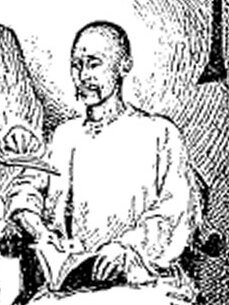
Xi Zizhi — the man the English-speaking church came to know as Pastor Hsi — was born about 1836 in the Western Chang village (Xiliangzhuang), at the foot of the mountains about ten miles from the city of P’ing-yang (modern Linfen) in the province of Shanxi, northern China. He was the youngest of four sons in a family of scholars and hereditary physicians, and his father’s favourite. Even as a small boy he was haunted by questions no one around him could answer. His biographer, who heard his story from his own lips, records that at eight years old he asked himself, “What is the use of living in this world? Men find no good. And in the end?” No missionary had ever lived in Shanxi; the only thing that had reached it from the Christian West, as his biographer bitterly put it, was opium.
He was clever and ambitious. Married at sixteen, he won his first literary degree the same year, and grew into a man of property and influence: a village leader, a writer of lawsuits who moved easily among the mandarins’ offices, feared for his scholarship, his nerve, and a temper that was the terror of anyone who crossed it. He despised foreigners. But the restlessness of his childhood never left him. His first wife died, and in his grief he turned to Taoism, hoping it held the secret of a life that could outlast the grave. Around the age of thirty he married again — a bright young woman from a neighbouring village, who would become the great partner of his life. But his health was breaking, and the Taoist promise of immortality proved empty. Sick and failing, he gave in to friends who urged a few pipes of opium for the pain.
“The opium that eats the man”
The descent was swift. For a year and a half he hardly left his couch. Studies, profession, and farm all slipped away, and he loathed himself and the habit he could not break. Then came the terrible North China famine of 1876–79, in which millions died. Famine relief brought the first Protestant missionaries into Shanxi, among them a gentle English Methodist, David Hill, who reached Shanxi in 1878 and made his home in P’ing-yang. Hsi thought it shameful that anyone should even accept their help.
In the autumn of 1879, as thousands of scholars gathered at the provincial capital for the great examinations, Hill and his colleague Timothy Richard handed out packets of Christian books along with an offer of prizes for essays on Christian themes, one of them on how the opium curse might be broken. Hsi had not gone to the examination; but a brother brought the papers home. Seeing a chance to make money out of the foreigner without ever meeting him, Hsi read the accompanying books and wrote several essays under different names. He won three of the four prizes.
Hill would hand the silver only to the writer himself, so Hsi had to go to the mission house in person. He went expecting sorcery. Instead he looked up into David Hill’s face. “One look, one word, it was enough,” he said years later. “That face told me I was in the presence of a true, good man.” A few days later Hill asked him to become his Chinese teacher, and Hsi went to live in the missionary’s house.
Kneeling at Gethsemane
On the table in his little room lay a New Testament, which he needed for his lessons and found himself reading for hours. The life of Jesus grew real to him; and with it the weight of his own guilt and his slavery to opium grew unbearable. At last he knelt on the floor with the book before him and read on through the story of the cross. When he reached the agony in Gethsemane, as he himself recorded, the Holy Spirit moved his soul, and “with tears that flowed and would not cease” he yielded himself to Christ as his Saviour and his God. His later colleague D. E. Hoste said that from that hour Hsi lived as one who had seen the living Christ.
Hill, cautious, suggested he wait a few weeks before joining the believers openly, lest he go back as quickly as he had come. Hsi’s reply was characteristic.
From this day until death and beyond, I will never, never draw back.
— Pastor Hsi
He knew at once that the opium must go — entirely and for ever. What followed was a week of agony. For seven days and nights, by his biographer’s account, he scarcely ate or slept; Hill’s medicines, native and foreign, did nothing. Hsi came to believe that he was fighting not only a craving but a spiritual enemy.
The answer, he said, came suddenly and completely, and the craving never returned.
He did what man and medicine could not do. From that moment my body was perfectly at rest.
— Pastor Hsi
Soon after, sensing that the Christian life would be a war, he took a new name. Instead of an elegant literary title he chose Shengmo — “Overcomer of Demons.” When David Hill left Shanxi in the spring, Hsi walked beside his cart out of the city and stood weeping on the old stone bridge until it was out of sight. They never met again.
A new man in the Western Chang village
The village was scandalised: the scholar Hsi had “eaten the foreign religion.” He burned his idols, was cut off by the gentry, and later even had his degree taken from him by the education chancellor (it was eventually restored). But people could not ignore the change. He brought home the aged stepmother he had once driven out, and humbly sought peace with the brothers he had quarrelled with for years.
Then Mrs. Hsi fell into a terrible affliction that the whole village took for demon possession — a judgment, they said, on the “Conqueror of Demons.” Prayer seemed to do nothing, and she grew weaker. Hsi called his household to a three-day fast; then, by the account he gave his biographer, he laid his hands on her and in the name of Jesus commanded the evil spirits to leave. She was delivered at once, never suffered so again, and from that day declared herself a Christian and his partner in the work. Accounts of healing and deliverance in answer to prayer run all through his story. His biographer and Hoste record them as the Chinese Christians described them, without claiming to explain them; they are best read the same way, as the testimony of believers who simply took the Gospels at their word.
He grew slowly, and he made mistakes. In his early zeal he dragged a persecution case before the mandarin with all his old lawyer’s force, and grew opium for one more summer before his conscience caught up with him. Setting out alone one evening on a seventeen-mile walk to pray with a dying woman, he found himself surrounded in the dark by wolves.
The opium refuges
Hsi’s great work grew out of the need around him. In Shanxi, people joked that eleven men out of ten smoked opium, and he knew from experience how hopeless the habit was. With his friend Fan, a convert from a local religious sect, he began receiving addicts into homes where they were nursed through withdrawal, surrounded with prayer and hymns, and pointed to Christ. In 1883, when the missionaries’ supply of medicine ran out and patients were left in the middle of their cure, Hsi fasted and prayed and then compounded anti-opium pills from native drugs. They worked, and the refuges no longer depended on supplies from the coast. The refuges were self-supporting and run by Chinese Christians. Patients joined in worship morning and evening, because Hsi had no faith in medicine alone: as he had learned on his own knees, only Christ could break the chain. His refuges spread across Shanxi and into Henan and Shaanxi, often where no missionary had yet gone.
His home filled with former addicts, inquirers, and men in training, and he fed whoever came. In one lean year, facing a large debt, he won the first prize in a second Christian essay competition with a set of poems — the beginning of a gift for hymn-writing that gave the Shanxi churches some sixty songs in their own idiom.
Pastor of the flock
The Christians had long called him “our Pastor,” a title he tried hard to stop. In the summer of 1886 Hudson Taylor, founder of the China Inland Mission, came to southern Shanxi, and at the Hung-tung conference the missionaries and Chinese leaders asked Hsi to become superintending pastor of the churches across the three districts. He refused again and again: “Full of weakness and failings myself, how should I assume oversight of all the churches?” Only when the mission’s deputy director, J. W. Stevenson, told him that God had already called him to the work did he give way. In August 1886, pale from prayer and fasting, he knelt before Hudson Taylor in the first ordination service ever held in Shanxi.
The next year brought the darkest trial of his life. Some fellow workers, Fan among them, resented his new standing, and Hsi himself — his biographer does not hide it — gave them an opening by a lack of tact and humility, preaching once in a way that sounded like boasting over his own reward. In 1887 Fan led a mob that seized the Hung-tung refuge and, sword in hand, tried more than once to attack him. The rebels opened rival refuges beside his in more than twenty places. Hsi fasted for days at a time; “the tears that I shed,” he wrote, “were beyond knowledge.” He would not go to law. Within a few years the rival refuges had collapsed, and long afterwards Fan came to pay his respects to his old friend at the New Year.
Those years broke something in him and made something new. He drew close to Hoste, and the proud Confucianist became, by the testimony of those who lived with him, a servant. In 1891 he and Hoste led the Hung-tung church to renounce appeals to foreign treaty rights and trust the Lord alone in persecution. When a neighbour moved his boundary stones and took a patch of his best land, he let it go. “It is my Master’s land,” he said. “I hold it only for His service.” His quick temper still sometimes got the better of him, and when it did he would turn at once to prayer, saying, “Truly, I am nothing. I am unfit to shepherd the flock of God.”
The path that Jesus follows, leads to the Cross.
— Pastor Hsi
Higher service
In August 1895, at about sixty, Hsi gathered two hundred refuge workers at his home and preached a last, searching sermon on the rich man and Lazarus. A few days later he collapsed at Hung-tung. Doctors spoke of exhaustion after years of overwork, and of his heart. He was carried home and lay for six months, too weak at last to kneel or speak. “The Lord is taking away my strength,” he said. “It must be because my work is done.” He died on 19 February 1896, and was buried on a hillside overlooking the plain. By Hoste’s count about seven hundred people had been baptized in the churches under his care. Mrs. Hsi, weeping beside him, said, “I think of Jesus — and He is enough.” She carried on the women’s refuges after him and survived the Boxer persecution of 1900.
Three months after Hsi’s death, David Hill also died, in Central China. His story reached the wider church through two books by Hudson Taylor’s daughter-in-law, Geraldine Taylor. Its lesson is the one Hsi himself drew from his week of agony: that the chains of sin give way only to the living Christ, by the power of His Spirit.
No books or sermons in the library yet for this writer.
Questions and Answers
Who was Pastor Hsi (Xi Shengmo)?
Pastor Hsi, or Xi Shengmo (c. 1836–1896), was a Confucian scholar from Shanxi in northern China who was set free from opium addiction when he became a Christian in 1879. He founded a network of self-supporting opium refuges that brought addicts to Christ, and in 1886 he was ordained pastor of the churches of southern Shanxi alongside the China Inland Mission.
What was his early life like?
He was born about 1836 in the Western Chang village near P'ing-yang (modern Linfen), the youngest son in a family of scholars and physicians. From the age of eight he was troubled by the fear of death. He won his first literary degree at sixteen and became an influential village leader and lawyer, feared for his temper and hostile to foreigners.
How did he become addicted to opium?
After his first wife died he turned to Taoism looking for immortality, but his health broke down. Around the age of thirty, sick and failing, he gave in to friends who urged him to smoke opium for the pain. He soon became a complete slave to it, lying on his couch for a year and a half while his studies and property slipped away.
How did David Hill's essay prize lead to his conversion?
In 1879 the missionary David Hill, who had come to Shanxi during the great famine, offered prizes for essays on Christian themes. Hsi read the Christian books to write his entries and won three of the four prizes. When he collected the money in person he was won over by Hill's kindness, became his Chinese teacher, and began reading the New Testament in Hill's house.
How did he come to faith in Christ?
Alone in his room, overwhelmed by his guilt and his slavery to opium, he knelt and read the story of the cross. When he reached Jesus' agony in Gethsemane he yielded himself to Christ with tears, as his Saviour and his God. When Hill urged him to wait before joining the believers, he answered, "From this day until death and beyond, I will never, never draw back."
How was he freed from opium?
He gave up opium at once and endured about a week of agony that no medicine relieved. Believing he was fighting a spiritual enemy, he prayed for the gift of the Holy Spirit, and he testified that the craving left him completely and never returned. He then took the name Shengmo, "Overcomer of Demons."
What happened to his wife?
Soon after his conversion his wife fell into an affliction the whole village believed was demon possession. After a three-day household fast, Hsi laid hands on her and commanded the evil spirits to leave in Jesus' name, and he and his biographer record that she was immediately delivered. She became a Christian and his lifelong partner in the work.
What were the opium refuges?
Starting with his friend Fan around 1882, Hsi took addicts into homes where they were nursed through withdrawal and surrounded with worship and prayer. In 1883 he compounded his own anti-opium pills after fasting and prayer. The refuges were self-supporting, staffed by Chinese Christians, and spread across Shanxi and into Henan and Shaanxi.
When was he ordained, and what trials followed?
In August 1886, at a conference attended by Hudson Taylor, he was ordained superintending pastor after repeatedly refusing the post as unworthy. In 1887 jealous fellow workers led by Fan seized one of his refuges, attacked him with a sword, and set up rival refuges. He refused to go to law, fasted and prayed, and grew humbler and gentler through the trial.
How did his life end?
In August 1895, after a conference at his home, he collapsed from years of overwork and lay weak for six months, saying the Lord was taking his strength because his work was done. He died on 19 February 1896, leaving churches in which about seven hundred people had been baptized. His wife carried on the women's refuges after him.