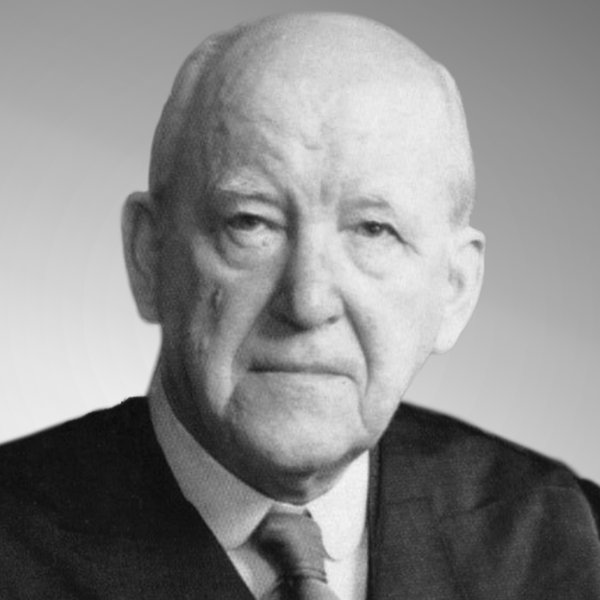
Biography
- 1899 Born
- 1927 Left medicine
- 1938 Westminster
- 1943 Sole minister
- 1968 Retired
- 1981 Died
Preaching is theology coming through a man who is on fire.
By his early twenties he was working at the top of London medicine — junior assistant to Sir Thomas Horder, physician to the Royal Household, the King's own doctor. A brilliant career lay open in front of him: the qualifications taken in about five years, the research doctorate, the mantle of one of the most eminent physicians of the day apparently his to inherit. And then he walked away from all of it to pastor a mission church among the working people of industrial South Wales. London was astonished. He spent the rest of his life explaining, in effect, why: that a physician can relieve the symptoms of a man but cannot touch the disease at the root of him, and that the root disease is not in the body at all.
A Welsh boy in a London dairy
David Martyn Lloyd-Jones was born on 20 December 1899 in Cardiff, and raised from 1906 in Llangeitho, Cardiganshire — deep Welsh-speaking country, in the heartland where earlier revivals had burned. In 1914 the family moved to London and ran a dairy business in Westminster. He was clever, driven, and quick: from Marylebone Grammar School he went to St Bartholomew's Hospital Medical School, "Bart's," one of Britain's most prestigious teaching hospitals.
The record of those years is a record of relentless ability. He took his medical qualifications with distinction, earned an MD in 1923 for research on infective endocarditis, became a Member of the Royal College of Physicians in 1925, and served as chief clinical assistant to Horder — a man whose diagnostic gift was legendary, and whose gift the young Lloyd-Jones absorbed and never lost. The habit of asking what is really wrong, underneath the presenting complaint, would follow him into the pulpit and stay there for fifty years.
The real disease
Somewhere in the mid-1920s, over roughly two years, the diagnosis turned on the diagnostician. It was not a single dramatic moment — he came under deep conviction gradually — but its conclusion was clear enough to reorder his life. He became convinced that the deepest trouble in the people he treated was not medical but spiritual; that he could send a man home patched up and send him home still lost; that the real disease was sin, and that he himself had been treating everything except the thing that was killing people.
Out of that conviction came a decision that, by every worldly measure, made no sense. The inward matter settled in 1926, and in 1927 he left medicine for the Christian ministry, sponsored by the Presbyterian Church of Wales. On 8 January 1927 he married Bethan Phillips — herself a qualified doctor, and granddaughter of the Welsh revival preacher Evan Phillips. Two physicians, newly married, went straight from their honeymoon not to a Harley Street consulting room but to a mission hall in Port Talbot.
Preaching is theology coming through a man who is on fire.
— D. Martyn Lloyd-Jones, Preaching and Preachers
Sandfields
The church was the Bethlehem Forward Movement Mission Church at Sandfields, Aberavon — the Calvinistic Methodists' home-mission work among the industrial working class. His stipend was about £220 a year. He would stay eleven years, from 1927 to 1938, and it was his first pastorate and his only one in Wales.
What happened there is the reason people still tell the story. Among ordinary working people — dockers, drinkers, men and women whom respectable religion had given up on — lives were visibly and durably changed. Bethan Lloyd-Jones later wrote her own memoir of those years, Memories of Sandfields, and it is full of such transformations: hard men made gentle, ruined homes rebuilt. Those who were there told of the drink-broken finding they could stop, and of at least one who had trafficked in the occult turning from it altogether. Lloyd-Jones did not stage these things or advertise them; he preached, plainly and searchingly, and left the results to God. It confirmed everything he had come to believe: that the gospel reaches the disease that medicine and social improvement never touch.
He gave himself to individuals as well as to crowds — the diagnostic instinct again, the doctor sitting with one troubled soul and asking the patient questions until the real complaint surfaced. He distrusted showmanship, distrusted eloquence that carried no spiritual weight, and longed instead for what he called unction: the anointing of the Holy Spirit on a man's words without which, he believed, preaching was only lecturing.
Westminster Chapel
In 1938 he was called to Westminster Chapel in London, at first alongside the venerable G. Campbell Morgan. On Morgan's retirement in 1943 he became sole minister, and he held that pulpit until 1968, when major surgery for cancer ended his ministry there. For thirty years, week by week, he did one essentially unfashionable thing: he preached consecutively through books of the Bible, verse by verse, sometimes staying with a single epistle for years.
The great series became landmarks — a multi-year Friday-evening exposition of Romans, a long Sunday-morning journey through Ephesians, the Studies in the Sermon on the Mount, and the sermons gathered as Spiritual Depression: Its Causes and Cure. In that last book the doctor's ear is unmistakable, turning a diagnosis into a cure:
Have you realised that most of your unhappiness in life is due to the fact that you are listening to yourself instead of talking to yourself?
— D. Martyn Lloyd-Jones, Spiritual Depression
He set out his whole understanding of the work in lectures given in 1969 and published as Preaching and Preachers. Preaching, he said, was "logic on fire"; a theology that did not catch fire was to him a defective theology. He was, by then, a central figure in a wider recovery — the resurgence of Reformed and Puritan theology in Britain, the founding of the Puritan Conference, the early years of the Banner of Truth Trust, and a long labour among students through the Inter-Varsity Fellowship. He wanted none of it to rest on personality. He kept redirecting attention from the preacher to the Word and the Spirit, and he prayed and preached toward revival — a sovereign outpouring that no technique could manufacture — rather than toward numbers he could produce himself.
A costly disagreement
On 18 October 1966, at the National Assembly of Evangelicals in London, Lloyd-Jones made a public appeal for evangelicals to leave doctrinally "mixed" denominations — those that also housed teachers who denied the essentials of the gospel — and to come together in visible evangelical unity. John Stott, chairing the meeting, used the chair to disagree, urging Anglican evangelicals to remain within the Church of England. The exchange opened a lasting breach, and a dividing line ran through British evangelicalism for years afterward.
It is tempting, and wrong, to make one of these men the hero and the other the villain. Both were godly; both believed they were being faithful; both paid for it. Exactly what Lloyd-Jones was calling for — a new denomination, a loose fellowship, or simply withdrawal — is still debated, and his own biographer reads him more narrowly than his critics did at the time. What is not in doubt is that two men who honoured each other found they could not walk together on this, and that the cooling of their fellowship cost them both. It is one of the honest sorrows of the story, and it should be left honest.
Do not hold me back
He preached his final sermon in 1980, at a chapel in Sussex, and then declined through his last months as the cancer advanced. In his last days, too weak to say much, he wrote a note to his wife and family. Iain Murray, his biographer, records its words:
Do not pray for healing. Do not hold me back from the glory.
— his dying note, in Iain Murray, The Fight of Faith
It was the settled verdict of a man who had spent his youth learning to postpone death and his manhood learning what death could not touch. The physician who had once fought disease at Bart's now asked to be released to the only cure that had ever finally interested him.
What he leaves
Lloyd-Jones left a large body of expository sermons still read and heard, a recovered seriousness about biblical preaching, and the memory of a man who gave up one of the most enviable careers in Britain because he had decided what was really wrong with people. "The Doctor," everyone called him, long after he had stopped practising — and the name kept telling the truth about him. He had simply changed patients, and changed the disease he was treating, and never stopped taking the case history until the real complaint came out.
He was not a martyr and not a mystic. He was a Welsh physician who read the human heart the way he had been trained to read a body, found the sickness under the symptoms, and spent fifty years offering the one remedy he had come to trust. To an ordinary reader who has never heard of him, that is the thing worth knowing: he believed the deepest trouble in every one of us is curable, and he gave up everything he had to say so.
Sermons by Martyn Lloyd-Jones (11)
Books about Martyn Lloyd-Jones (1)

Also appears in
Questions and Answers
Who was Martyn Lloyd-Jones?
David Martyn Lloyd-Jones (1899–1981), known as "the Doctor," was a brilliant young London physician — assistant to the King's doctor, Sir Thomas Horder — who left medicine for the ministry, convinced that humanity's deepest disease is spiritual. After eleven years pastoring working people at Sandfields in industrial South Wales, he preached expositionally at Westminster Chapel, London, for thirty years and became a central figure in the twentieth-century recovery of Reformed preaching.
What was his medical career?
Born in Cardiff in 1899 and raised in Welsh-speaking Cardiganshire, he moved with his family to London and trained at St Bartholomew's Hospital, one of Britain's most prestigious. The record of those years is one of relentless ability: qualifications with distinction, an MD in 1923 for research on infective endocarditis, membership of the Royal College of Physicians in 1925, and a post as chief clinical assistant to Sir Thomas Horder, physician to the Royal Household. The habit of asking what is really wrong beneath the presenting complaint would follow him into the pulpit.
Why did he leave medicine?
In the mid-1920s, over roughly two years, the diagnosis turned on the diagnostician. He became convinced that the deepest trouble in the people he treated was not medical but spiritual — that he could send a man home patched up and still lost, that the real disease was sin, and that he had been treating everything except the thing killing people. In 1927 he left medicine for the ministry, married Bethan Phillips (herself a qualified doctor), and the two went straight from their honeymoon to a mission hall in South Wales.
What happened at Sandfields?
From 1927 to 1938 he pastored the Bethlehem Forward Movement Mission Church at Sandfields, Aberavon, among the industrial working class, on a stipend of about 220 pounds a year. Among ordinary people whom respectable religion had given up on — dockers, drinkers, ruined homes — lives were visibly and durably changed. He did not stage or advertise these things; he preached plainly and searchingly and left the results to God, and it confirmed what he had come to believe: that the gospel reaches the disease medicine and social improvement never touch.
What did he do at Westminster Chapel?
In 1938 he was called to Westminster Chapel in London, at first alongside G. Campbell Morgan, becoming sole minister in 1943 and holding the pulpit until 1968. For thirty years, week by week, he did one unfashionable thing: he preached consecutively through books of the Bible, verse by verse, sometimes staying with a single epistle for years. The great series became landmarks — a multi-year exposition of Romans, a long journey through Ephesians, the Studies in the Sermon on the Mount, and the sermons gathered as "Spiritual Depression."
What did he teach about preaching?
He set out his whole understanding in lectures published as "Preaching and Preachers," defining preaching as "logic on fire" and "theology coming through a man who is on fire" — a theology that did not catch fire was, to him, a defective theology. He longed for what he called unction, the anointing of the Holy Spirit on a man's words without which preaching was only lecturing, and he distrusted showmanship and eloquence that carried no spiritual weight.
What did he teach about the mind and spiritual depression?
The doctor's ear is unmistakable in his best-known counsel: "Have you realised that most of your unhappiness in life is due to the fact that you are listening to yourself instead of talking to yourself?" His "Spiritual Depression: Its Causes and Cure" turned a diagnosis into a remedy — teaching the downcast believer to preach truth to his own heart rather than passively absorb its moods, exactly the instinct he had brought from the sickbed to the pulpit.
What was his disagreement with John Stott?
On 18 October 1966, at the National Assembly of Evangelicals, Lloyd-Jones appealed for evangelicals to leave doctrinally "mixed" denominations and come together in visible evangelical unity; John Stott, chairing, used the chair to disagree, urging Anglican evangelicals to remain in the Church of England. The exchange opened a lasting breach across British evangelicalism. Both men were godly and believed they were being faithful, both paid for it, and the cooling of their fellowship is one of the honest sorrows of the story.
How did he die?
He preached his final sermon in 1980 and declined through his last months as cancer advanced. Too weak to say much, he wrote a note to his family: "Do not pray for healing. Do not hold me back from the glory." It was the settled verdict of a man who had spent his youth learning to postpone death and his manhood learning what death could not touch. He died peacefully in his sleep on 1 March 1981, St David's Day, and was buried in the west Wales country he had come from.
What does he leave?
He left a large body of expository sermons still read and heard, a recovered seriousness about biblical preaching, and the memory of a man who gave up one of the most enviable careers in Britain because he had decided what was really wrong with people. "The Doctor," everyone called him long after he stopped practising, and the name kept telling the truth: he had changed patients and changed the disease he was treating, and never stopped taking the case history until the real complaint came out. He believed the deepest trouble in every one of us is curable, and gave up everything to say so.
Portrait: Ligonier Ministries