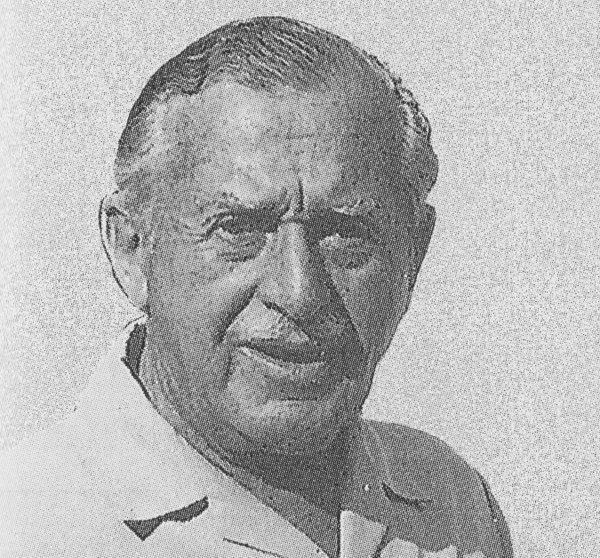
Biography
- 1899 Born
- 1920 Conversion
- 1929 Namirembe
- 1989 Died
There is something missing in me and the Uganda church. Can you tell what it is?
Most of the East African Revival belongs to Africans — to the health worker who confessed his pride in front of the hospital, to the layman who preached in the street until people thought he had lost his mind, to the archbishop murdered for refusing to stay silent. Joe Church was none of these. He was an English doctor, a missionary of ordinary rank, sent out to run a hospital in a country that was not his own. What makes his name inseparable from the Revival is not that he led it — he always insisted he did not — but that on a discouraged holiday in 1929 he was asked a question he could not have invented, and had, by grace, the one answer the questioner needed.
A clergyman's son who chose medicine
John Edward Church — Joe to everyone — was born on 10 August 1899 in England, the son of an English country clergyman, Edward Joseph Church. He was sent away to junior school at St Lawrence College, Ramsgate, from the age of eleven, in the settled Edwardian way of the manse.
Then the century broke. He came of age into the First World War and served in the Tank Corps, commissioned a second lieutenant at nineteen — a boy officer in the newest and ugliest machine of that war. When it was over he went up to Emmanuel College, Cambridge, in 1919, on an army grant to study medicine, and there he fell in with the Cambridge Inter-Collegiate Christian Union, the earnest evangelical student body that has shaped generations of English Christians.
His conversion he dated precisely: 29 August 1920. It is worth noticing that a clergyman's son, raised inside the church and already at a Christian union, could still name a day on which the thing became his own. Church knew from his own life that being near the faith is not the same as being filled by it — a distinction that would become the whole burden of his ministry.
He trained at St Bartholomew's Hospital in London and qualified MD in 1926. He was a real doctor, competent and thorough, not a preacher who happened to carry a medical bag. On 28 October 1927 he sailed for Africa with the Church Missionary Society, under its Ruanda Mission, and after some five months of training at Kabale in Uganda he was posted across the border to Gahini, in Rwanda. He arrived to find the district in the grip of a serious famine — his first work in Africa was among the starving.
Namirembe Hill, September 1929
Two years in, Church was worn out and discouraged. The hospital was hard, the fruit was thin, and by his own account he was near the end of his strength. In September 1929 he took a short break in Kampala, staying on Namirembe Hill, where the great cathedral of the Church of Uganda stands. There, near the cathedral, he met a Ugandan layman named Simeoni Nsibambi.
Nsibambi was a man of standing and no small religious energy, and he was profoundly dissatisfied — not with the world, but with himself and with his church. He put to this tired English doctor a question that has echoed through the Revival ever since:
There is something missing in me and the Uganda church. Can you tell what it is?
— Simeoni Nsibambi to Joe Church, Namirembe Hill, 1929
Church did not have a programme to offer him. What he had was the Keswick teaching on holiness he had absorbed as a student — the filling of the Holy Spirit and what its preachers called the Victorious Life — and an open Bible. The two men stayed together for two days and did nothing but study and pray. They worked through the chain-references and notes of Church's Scofield Bible on the filling of the Spirit, tracing the theme from passage to passage, and they prayed. Nsibambi, convicted to the bone, prayed to quit all sin in faith.
Church later wrote of that meeting with unmistakable gladness — of the great joy of telling Nsibambi about the filling of the Spirit and the Victorious Life. He went back to Gahini changed, and wrote home a sentence that turned out to be a prophecy of everything that followed:
There can be nothing to stop a real outpouring of the Holy Spirit in Rwanda now except our own lack of sanctification.
— Joe Church, writing home after the 1929 meeting
Nsibambi did not keep the two days to himself. Ashamed of his old religion and burning with the new, he began to preach in the open air on Namirembe Hill — on brokenness, on repentance, on renewal — until his neighbours thought him unbalanced. Historians of the movement call that meeting between the two men the official spark of the East African Revival. It is a strange thing to trace a fire that swept a continent back to two people praying quietly on their knees, but that is where it goes.
Gahini, and the fire that would not stay put
The centre of Church's own life was the hospital at Gahini, and it was there, and not on the platform of any great meeting, that the Revival is generally said to have originated when it broke out around 1933. In 1930 he had married Decima Tracey — Decie — on 19 May in Uganda; she was herself a trained doctor and worked beside him at Gahini, and they raised five children in that place. The Revival was, from the start, a thing of ordinary work: two doctors, a ward full of the sick, and the slow discovery that the gospel they preached had to be true of them first.
The turn at Gahini came through a hospital worker named Yosiya Kinuka, a dresser, the son of a chief from Ankole, proud and openly resistant to a message of repentance. He bitterly resented being called a Laodicean — lukewarm — and for a time he fought the whole thing. Then conviction found him. He confessed his nominal religion and his spiritual pride in public, was converted, and became one of the first of the evangelistic teams and Church's lifelong co-worker. That pattern — the proud man broken, naming his own specific sin out loud, in company — became the Revival's engine. It ran not on eloquence but on confession, restitution and reconciliation, from the conviction of sin to the reach of grace.
Others came. In 1931 Blasio Kigozi, Nsibambi's younger brother, joined Church at Gahini, and threw himself into the work with an intensity that seemed to know its time was short. He called the church to zukuka — to wake up — and then, on 26 January 1936, he died of tick fever, still a young man. A greater outbreak had already come at Kabale, in Uganda, in 1935, and from there conventions carried the movement outward across East Africa and, in time, to Europe, the Americas and India.
Through all of it the marching song of the Revival was a simple hymn of thanks, sung in Luganda wherever the balokole — the saved ones — gathered:
Tukutendereza Yesu — We praise you, Jesus; Jesus, Lamb of God, your blood cleanses me.
— “Tukutendereza Yesu,” the hymn of the East African Revival
Church would have been the first to say that none of this was his doing. He had brought a Scofield Bible, some Keswick teaching, and a willingness to be undone alongside the Africans he had come to serve. The rest came from somewhere else. If there was an answer to the prayer on Namirembe Hill, it was not a single miracle he could point to. It was the thing itself — the fire at Gahini, the changed life of a proud hospital dresser, the tens of thousands who would name their sins and find them washed.
The long service, and the leaving
Church gave the greater part of his life to that hospital and that country. He served as physician to the king of Rwanda and was decorated by King Baudouin of Belgium — marks of a standing he never sought and rarely mentioned. He wrote, too, though always as a witness rather than an author: a life of Blasio Kigozi, Awake! An African Calling (1937); Forgive Them (1966), the story of the African martyr Yona Kanamuzeyi; and, late in life, his own account of the whole movement, Quest for the Highest (1981), drawn from the journals he had kept for half a century.
The end of his time in Africa was not gentle. In 1961 he left Rwanda amid the ethnic and political violence that was tearing the country apart — the same fractures that would harden into far worse. For a time he helped serve a hospital at Kabarole, in Uganda, before retiring around 1964. He finally left Africa altogether in 1972, during the Amin years, and settled at Little Shelford, near the Cambridge where he had first found his faith as a student. He died there on 29 September 1989, aged ninety.
What he leaves
Joe Church left a hospital, a shelf of modest books, and a movement that never bore his name because he would not let it. What he most clearly leaves is the shape of the 1929 meeting — the proof that the great things of God can begin very small and very low.
He was not a founder in the way ambition understands the word. He was a discouraged doctor on a borrowed holiday who happened to be carrying an open Bible and a teaching about the fullness of the Spirit, and who sat down for two days with an African brother who would not be put off. Out of that came a revival that changed the church across a whole region of the world. His own sentence remains the truest thing he said about it: that nothing could stop an outpouring of the Spirit except a lack of sanctification in those who prayed for it. He spent the rest of his life making sure the lack, at least, would not be his.
Also appears in
Questions and Answers
Who was Joe Church?
Dr Joe E. Church (1899–1989) was an English CMS missionary doctor at Gahini Hospital in Rwanda whose two days of Bible study and prayer with the Ugandan layman Simeoni Nsibambi on Namirembe Hill in September 1929 are remembered as the spark of the East African Revival. He served in Africa for over three decades and always insisted the Revival was God's work, not his own — he was not a founder in the way ambition understands the word, but a discouraged doctor who happened to be carrying an open Bible.
What was his background?
John Edward Church — Joe to everyone — was born on 10 August 1899, the son of an English country clergyman. He served in the Tank Corps in the First World War, commissioned at nineteen, then went up to Emmanuel College, Cambridge, on an army grant to study medicine, where he fell in with the Cambridge Inter-Collegiate Christian Union and dated his conversion precisely to 29 August 1920. He trained at St Bartholomew's Hospital, qualified MD in 1926, and sailed for Africa with the Church Missionary Society's Ruanda Mission in 1927, posted to Gahini in Rwanda.
What happened on Namirembe Hill in September 1929?
Two years into his work Church was worn out and discouraged, and took a short break in Kampala, staying on Namirembe Hill. There he met a Ugandan layman, Simeoni Nsibambi, profoundly dissatisfied not with the world but with himself and his church, who put to him a question that has echoed ever since: "There is something missing in me and the Uganda church. Can you tell what it is?" The two men stayed together for two days and did nothing but study the Bible and pray.
What did the two men actually do over those two days?
Church had no programme to offer — only the Keswick teaching on holiness he had absorbed as a student, the filling of the Holy Spirit and what its preachers called the Victorious Life, and an open Bible. They worked through the chain-references and Scofield notes on the filling of the Spirit, tracing the theme from passage to passage, and prayed; Nsibambi, convicted to the bone, prayed to quit all sin in faith. Neither knew they were lighting anything — they thought they were only praying for one man.
What did Church write home afterward?
He went back to Gahini changed, and wrote home a sentence that turned out to be a prophecy of everything that followed: "There can be nothing to stop a real outpouring of the Holy Spirit in Rwanda now except our own lack of sanctification." He later recalled the meeting with unmistakable gladness — of the great joy of telling Nsibambi about the filling of the Spirit and the Victorious Life.
What was his work at Gahini?
The centre of his life was the hospital at Gahini, and it was there, not on any great platform, that the Revival is generally said to have originated when it broke out around 1933. In 1930 he married Decima Tracey — Decie — herself a trained doctor who worked beside him, and they raised five children there. The Revival was from the start a thing of ordinary work: two doctors, a ward full of the sick, and the slow discovery that the gospel they preached had to be true of them first.
How did the turn come at Gahini?
It came through a hospital worker named Yosiya Kinuka, a proud dresser openly resistant to a message of repentance, who bitterly resented being called lukewarm. Then conviction found him: he confessed his nominal religion and his spiritual pride in public, was converted, and became Church's lifelong co-worker. That pattern — the proud man broken, naming his own specific sin out loud, in company — became the Revival's engine, running not on eloquence but on confession, restitution and reconciliation.
Did he think the Revival was his achievement?
No — he would have been the first to say none of it was his doing. He had brought a Scofield Bible, some Keswick teaching, and a willingness to be undone alongside the Africans he had come to serve; the rest came from somewhere else. The honest answer to the 1929 prayer, he believed, was not a single miracle he could point to but the thing itself — the fire at Gahini, the changed life of a proud hospital dresser, the tens of thousands who would name their sins and find them washed.
What did he write?
He wrote always as a witness rather than an author: a life of Blasio Kigozi, "Awake! An African Calling" (1937); "Forgive Them" (1966), the story of the African martyr Yona Kanamuzeyi; and, late in life, his own account of the whole movement, "Quest for the Highest" (1981), drawn from the journals he had kept for half a century. He also wrote the little book "A Great Lover of Jesus" about William Nagenda.
How did his time in Africa end?
It was not gentle. In 1961 he left Rwanda amid the ethnic and political violence tearing the country apart, helped serve a hospital at Kabarole in Uganda, and retired around 1964; he finally left Africa altogether in 1972, during the Amin years, settling at Little Shelford near Cambridge, where he died on 29 September 1989, aged ninety. He left a hospital, a shelf of modest books, and a movement that never bore his name because he would not let it — proof that the great things of God can begin very small and very low.
Portrait: From H. H. Osborn, Pioneers in the East African Revival, via Beautiful Feet