
New to F. B. Meyer? Start with
The Way Into the Holiest
All works · 23 hr 7 min read
Biography
- 1847 Born
- 1870 Liverpool
- 1878 Melbourne Hall
- 1888 London
- 1929 Died
If you don't trust Me in all, you don't trust Me at all.
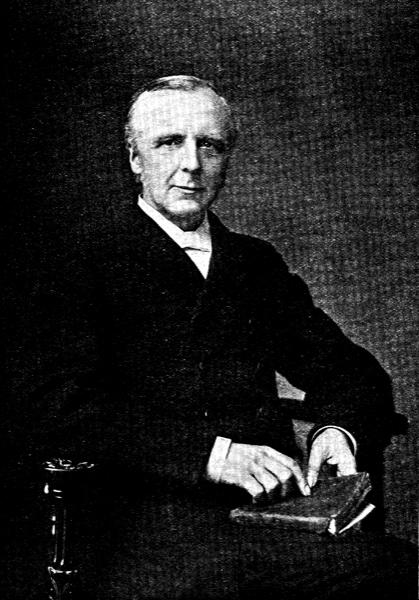
Frederick Brotherton Meyer was born in Clapham, London, on 8 April 1847, the son of a businessman, Frederick, and his wife Ann, and grew up in a comfortable and devout home. His was not a dramatic, from-the-gutter conversion story; he grew up amid church-going respectability, sitting as a boy under the preaching of William Brock at Bloomsbury Chapel, where the family worshipped in the 1850s and whose pastoral example left a lasting mark on him. He was baptised in 1864 at New Park Road Chapel in Brixton, and by the age of sixteen he knew himself called to the ministry. Schooled at Brighton College, he entered Regent's Park College in 1866 to train for the Baptist ministry, taking his degree at the University of London in 1869. Yet the tidy path of a well-bred young minister would soon open onto something far wider and stranger than he could have planned. Meyer would become, over sixty years of preaching, one of the most beloved evangelical voices of his age, a friend of D. L. Moody, a fixture of the Keswick Convention, and a man the newspapers would come to call, half in jest and half in earnest, "the Archbishop of the Free Churches."
A Young Minister and a Turning Point
Meyer's first pastorate was at Pembroke Baptist Chapel in Liverpool in 1870, where he served first as assistant and then as associate minister, followed in 1872 by Priory Street Baptist Church in York. In February 1871 he married Jane Eliza Jones, who would be his companion in life and ministry to the end of his days; they had one daughter. It was in York, still a young man, that he met the American evangelist Dwight L. Moody, then largely unknown in England. Meyer opened doors for Moody among the English chapels and ministers, and the two became lifelong friends. The friendship marked Meyer deeply; he later said that Moody's warmth and directness showed him a Christianity larger than his own careful piety had yet grasped, and he came to credit Moody's counsel as the most significant influence on his ministry — the advice that a great preacher must be a great worker, and a great worker a great preacher. That integration of pulpit ministry with practical, street-level engagement became the hallmark of Meyer's work.
But the decisive hour of his life came not through a famous name but through a young cricketer. In Leicester, where Meyer had gone in 1874 to pastor Victoria Road Church and then, in 1878, to found the independent mission at Melbourne Hall, he encountered Charles T. Studd and the young missionaries bound for the China Inland Mission. Their unclouded joy exposed something Meyer lacked. He asked how he might have what they had, and Studd told him it was a matter of giving himself to Christ not in general but in particular — holding nothing back. Meyer knelt and, in his own vivid telling, handed Christ an iron ring bearing all the keys of his life, save one small key he kept clutched for a private closet of his heart.
If you don't trust Me in all, you don't trust Me at all.
— F. B. Meyer
He could not say he was willing to yield that last key. What he could say became one of the most quoted confessions in evangelical devotion — the honest prayer of a man too truthful to pretend a surrender he did not yet feel.
Meyer spoke of another hour of surrender as well, one he always distinguished from his conversion and counted as the true beginning of his empowered ministry. At a season when he felt powerless and ineffective, he went out to seek God alone.
Ministry and Its Fruit
From that surrender flowed the ministry for which Meyer is remembered. At Melbourne Hall in Leicester (1878–1888) his congregation swelled into the thousands, and from 1888 he moved to London, dividing the next three decades between Regent's Park Chapel (1888–1892, and again 1909–1915) and Christ Church, Lambeth (1892–1909, with a final term from 1915 to 1921). He preached across Britain and America, in Canada, South Africa, Asia, and the Middle East, and became one of the most sought-after teachers at the Keswick Convention — he addressed twenty-six of its gatherings — where the "higher life" of consecration and dependence on the Spirit was pressed home on tens of thousands. His Keswick messages were marked by simplicity, vivid imagery, and a pastoral tone: the call to full surrender, dependence on the Holy Spirit, and the pursuit of holiness.
Meyer's holiness was never merely interior. He waged tireless war on the social evils of his city — drunkenness, gambling, and the trade in prostitution. Between the mid-1890s and 1907 his crusades are credited with closing hundreds of brothels and public houses, and he built into his ministry a prisoners' aid society, homes for the destitute, and work among the poorest of London's neighbourhoods. A committed advocate of temperance, he spoke and campaigned against the devastation of drink wherever he ministered, and his care for the vulnerable reached to rescue missions, orphanages, and adoption societies, through which abandoned and homeless children were placed in safer homes. His opponents mocked him as "Meddling, Maudlin Meyer," but he did not stop. To Meyer, guidance and mercy were of a piece: the God who led the soul into peace also led the hand into the slum.
His reach was startlingly wide for a man who had begun as an unassuming Baptist minister in the provinces. Melbourne Hall, the mission he founded in Leicester, grew into one of the earliest of the great modern congregations, its membership swelling into the thousands drawn by his plain, affectionate preaching. His American tours, made first in Moody's company and afterward on his own, carried his voice across the Atlantic again and again — twelve tours in all, the last begun at the age of eighty. On a tour of South Africa with his wife in 1908 he met Mohandas Gandhi and spent several days in conversation with him, expressing a careful sympathy with Gandhi's philosophy of passive resistance — a small, telling glimpse of a man whose curiosity and compassion refused to be fenced within his own tradition.
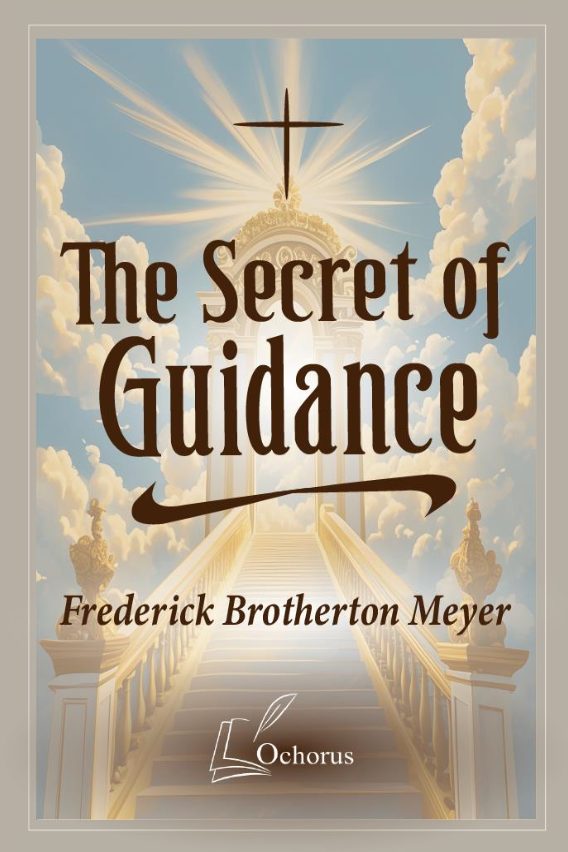
He was, above all, a writer who taught ordinary Christians to walk with God. Alongside some sixteen thousand sermons preached over his lifetime, he produced more than seventy books, including tender Bible biographies of Abraham, Moses, Elijah, John the Baptist, Peter, and Paul, and devotional classics such as Our Daily Homily that are still read. These character studies were less about historical context than about the inner spiritual lives of imperfect people in whom God's grace and purpose unfold — mirrors, as he saw them, in which modern Christians could recognise their own journey. His books crossed denominational lines, read by Baptists, Methodists, Anglicans, and non-conformists alike, and sold in the millions, carrying his message far beyond the capacity of his London pulpits. In The Secret of Guidance, the volume of his that Ochorus carries, his pastoral heart is fully audible.
Our power and peace depend on knowing where God wants us to be and being there.
— F. B. Meyer
He wrote for the anxious and the slow-hearted rather than the confident, insisting that God stoops to the dullest child who truly wants to obey. His counsel on prayer was not a technique but a temper of trust — that facts come first, faith rests on them, and feelings follow in God's own time.
God's facts, laid like a foundation of adamant. Our faith, apprehending and resting on them. Joyous feelings, coming all at once or after the lapse of days and months, as God wills.
— F. B. Meyer
Trials Met by Faith
Meyer's public life was long and fruitful, but he did not pretend to be untroubled. He was candid, in his teaching and letters, about the inner battles a minister fights out of sight. The struggle he confessed most openly was jealousy. He ministered in the same city as preachers whose crowds and fame outran his own, and he admitted that his heart could be gripped by envy of them. His remedy was the one he preached to others: he took the sin to his knees and prayed deliberately for his rivals' success, asking God that ever more people would flock to hear them, until the envy was starved and the love restored. It was a small, private victory, but it revealed the same principle as the surrendered keys — that the way out of a bound heart is to hand even one's resentments over to Christ.
He carried, too, the ordinary weight of a man who felt for the suffering of others. During the First World War he served as a chaplain, bringing spiritual comfort to soldiers facing the grim realities of the front, and he crossed to France with the Quaker Hubert Peet to see for himself how imprisoned conscientious objectors were being treated, lending his voice to the unpopular and the outcast when it would have been easier to stay silent. He knew what it was to be misunderstood, and he answered misunderstanding not with bitterness but with more work.
Death and Legacy
Meyer preached and travelled almost to the end. In March 1929, days before his eighty-second birthday, he learned that his death was near. The note he sent to a friend has outlived a great many of his sermons, and it reads exactly as a man who had spent his life on the far side of a surrendered will might be expected to write.
I have just heard, to my great surprise, that I have but a few days to live. It may be that before this reaches you, I shall have entered the palace. Don't trouble to write. We shall meet in the morning.
— F. B. Meyer
He died on 28 March 1929. The Daily Telegraph called him "the Archbishop of the Free Churches," and across the English-speaking world he was mourned as a bridge-builder who had held together the evangelical and the social, the deeply personal and the widely public, in a single unhurried life. His books remained in print; his hymn of consecration went on being sung; and generations of quiet believers who never heard him preach still found, in the pages he left behind, a friend who understood their fears and pointed them gently to the guidance of God.
What Meyer left the church was not a system but a posture — the open hand that keeps back no key, the confession that trusts God before it feels ready, and the settled confidence that the One who leads the pilgrim will also feed him on the way. "If we are where our heavenly Father wants us to be," he wrote, "we are sure He will provide." He staked his life on it, and by every account, he was not disappointed.
Books by F. B. Meyer (4)

Books about F. B. Meyer (1)

Articles about F. B. Meyer (4)
Questions and Answers
Where did F. B. Meyer come from?
He was born in Clapham, London, on 8 April 1847, the son of a businessman, Frederick, and his wife Ann, and grew up in a comfortable and devout home. His was no dramatic, from-the-gutter conversion; he grew up amid church-going respectability, sitting as a boy under William Brock at Bloomsbury Chapel. Baptised in 1864, he knew himself called to the ministry by sixteen, and trained at Regent's Park College, taking his degree at the University of London in 1869.
How did his friendship with D. L. Moody shape him?
As a young minister in York he met the American evangelist Dwight L. Moody, then largely unknown in England, opened doors for him among the English chapels, and the two became lifelong friends. Meyer credited Moody's counsel as the most significant influence on his ministry — the advice that "a great preacher must be a great worker, and a great worker a great preacher" — and that integration of pulpit ministry with practical, street-level engagement became the hallmark of his work.
What was the crisis of the surrendered keys?
In Leicester he met the cricketer Charles T. Studd and young missionaries bound for China whose unclouded joy exposed something he lacked. Told to give himself to Christ in particular, holding nothing back, Meyer knelt and handed Christ a ring bearing all the keys of his life — save one small key to a private closet. Unable to yield it, he prayed, "I am not willing, but I am willing to be made willing"; within a week, he testified, Christ had cleared the closet and filled it with something far better.
What was the second surrender he distinguished from his conversion?
At a season when he felt powerless and ineffective, he went out to seek God alone. Walking a lonely road one night, he sensed a call to receive "the anointing of the most Holy Spirit" and to claim it by faith alone, without waiting for any accompanying emotion. He yielded there by what he called "naked, unemotional faith," and from that hour his ministry shifted from teaching doctrine to leading believers into a personal, Spirit-empowered walk with God.
Where did he minister, and how widely?
From Melbourne Hall in Leicester (which he founded in 1878, its congregation swelling into the thousands) he moved to London, dividing three decades between Regent's Park Chapel and Christ Church, Lambeth. He became one of the most sought-after teachers at the Keswick Convention, addressing twenty-six of its gatherings, and preached across Britain, America, Canada, South Africa, Asia and the Middle East — twelve American tours in all, the last begun at the age of eighty.
How did his holiness show itself in social reform?
Meyer's holiness was never merely interior. He waged tireless war on the social evils of his city — drunkenness, gambling and the trade in prostitution — and between the mid-1890s and 1907 his crusades are credited with closing hundreds of brothels and public houses. He built into his ministry a prisoners' aid society, homes for the destitute, orphanages and adoption work. Opponents mocked him as "Meddling, Maudlin Meyer," but to him the God who led the soul into peace also led the hand into the slum.
What kind of writer was he?
Alongside some sixteen thousand sermons, he produced more than seventy books, including tender Bible biographies of Abraham, Moses, Elijah, John the Baptist, Peter and Paul, and devotional classics such as "Our Daily Homily." These character studies dwelt less on historical context than on the inner spiritual lives of imperfect people in whom God's grace unfolds — mirrors, as he saw them, in which ordinary Christians could recognise their own journey. His books crossed denominational lines and sold in the millions.
What does "The Secret of Guidance" teach?
In "The Secret of Guidance" his pastoral heart is fully audible: "Our power and peace depend on knowing where God wants us to be and being there." He wrote for the anxious and slow-hearted rather than the confident, and his counsel on prayer was not a technique but a temper of trust — "God's facts, laid like a foundation of adamant. Our faith, apprehending and resting on them. Joyous feelings, coming all at once or after the lapse of days and months, as God wills."
What inner battles did he confess?
He was candid about the struggles a minister fights out of sight, the one he confessed most openly being jealousy. Ministering in the same city as preachers whose crowds outran his own, he admitted his heart could be gripped by envy — and his remedy was the one he preached to others: he took the sin to his knees and prayed deliberately for his rivals' success, that ever more people would flock to hear them, until the envy was starved and love restored.
How did he die?
Meyer preached and travelled almost to the end. In March 1929, days before his eighty-second birthday, he learned his death was near, and the note he sent a friend has outlived many of his sermons: "I have just heard, to my great surprise, that I have but a few days to live... Don't trouble to write. We shall meet in the morning." He died on 28 March 1929, mourned across the English-speaking world as the man the newspapers called "the Archbishop of the Free Churches."