Where to start reading
Start with
A Practical View of Christianity
Books by William Wilberforce (1)
Biography
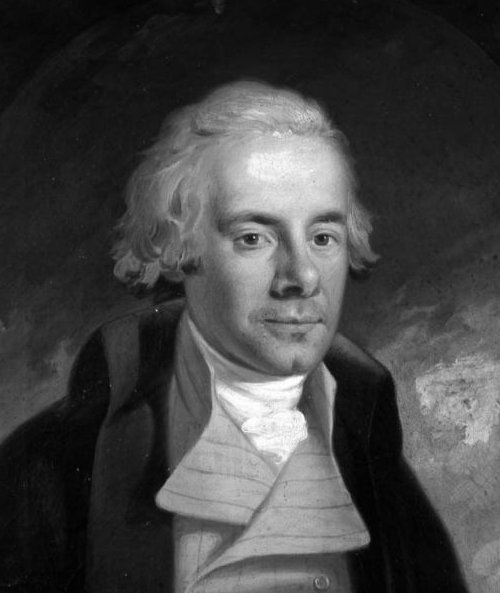
William Wilberforce is remembered as the man who would not let Parliament forget the slave ships. For twenty years he brought the same cause back to the House of Commons until, in 1807, the British slave trade was outlawed; and he lived just long enough to hear that slavery itself would be abolished. But underneath the campaign was a quieter turning: a witty, wealthy young politician who met Christ in his mid-twenties, asked whether he ought to leave public life, and was told to stay and serve God where he stood.
From Hull to the Commons
He was born in Hull, in Yorkshire, on 24 August 1759, the only son of Robert Wilberforce, a wealthy merchant, and his wife, Elizabeth Bird. His grandfather had made the family fortune in the Baltic trade. The boy was small and sickly, with poor eyesight, and went to Hull Grammar School under Joseph Milner, who became a lifelong friend.
Then, in 1768, his father died. With his mother struggling to cope, the nine-year-old was sent to a prosperous uncle and aunt in London and Wimbledon. He grew extremely fond of them, and in their home he first met warm evangelical faith. His aunt Hannah was the sister of the merchant and philanthropist John Thornton, a supporter of George Whitefield, the great open-air preacher of the Methodist revival.
His staunchly Church of England mother and grandfather were alarmed. In 1771 they brought the twelve-year-old back to Hull, heartbroken, and kept him from his old school because Milner had become a Methodist too. At first the boy resisted Hull’s lively social round; slowly the fervour cooled, and he took to the theatre, balls and cards.
In October 1776 he went up to St John’s College, Cambridge. Independently rich after the deaths of his grandfather and uncle, he felt little need to study, and gave himself to cards, gambling and late-night drinking. Fellow students remembered him as witty, generous and an excellent talker. Among his friends was a more studious young man named William Pitt.
The two watched Commons debates from the gallery, and Pitt urged him into politics. In September 1780, aged twenty-one and still a student, Wilberforce was elected Member of Parliament for Hull, spending over £8,000 on the votes, as was the custom of the day. He sat as an independent, resolving to be “no party man.” Madame de Staël called him the “wittiest man in England,” and James Boswell, hearing him speak, left a famous picture of him:
I saw what seemed a mere shrimp mount upon the table; but as I listened, he grew, and grew, until the shrimp became a whale.
— James Boswell, on hearing Wilberforce in the House of Commons
Pitt became Prime Minister in December 1783, and in April 1784, aged twenty-four, Wilberforce was returned as Member for Yorkshire. He had everything a young man of his world could want.
The change of heart
In October 1784 he set out on a tour of Europe with his mother, his sister and Isaac Milner, the younger brother of his old headmaster. But on the journey home to England, Milner and Wilberforce read together Philip Doddridge’s The Rise and Progress of Religion in the Soul, by a leading nonconformist of the previous generation, and something began to move.
Through 1785 the change deepened into a full evangelical conversion. He looked back on his past life with regret and resolved to give his future life and work to the service of God. Outwardly his temper was unchanged: still cheerful, tactfully urging his new faith on others. Inwardly he became a harsh judge of his own spirituality, use of time, vanity and self-control.
The change raised a hard question. In polite society religious enthusiasm was scorned, and he wondered whether he should remain in public life at all. Late in 1785 he sought out John Newton, a leading evangelical clergyman of the Church of England and Rector of St Mary Woolnoth. Newton counselled him to remain in politics, as, by most accounts, did Pitt. Wilberforce resolved to stay, and to do so “with increased diligence and conscientiousness.”
Two great objects
In November 1786 a letter from Sir Charles Middleton suggested he bring the abolition of the slave trade before Parliament. Wilberforce answered that he “felt the great importance of the subject, and thought himself unequal to the task allotted to him, but yet would not positively decline it.” In early 1787 Thomas Clarkson began visiting him weekly with first-hand evidence. At a dinner on 13 March 1787 he agreed to lead the campaign, “provided that no person more proper could be found,” and that May, sitting under an oak on Pitt’s estate in Kent, his friend pressed him to give notice of a motion. Wilberforce later said that was the moment he decided.
That same autumn, in October 1787, he wrote in his journal that God Almighty had set before him “two great objects”: the suppression of the slave trade and the reformation of manners, by which he meant the moral life of the nation. He held them equally important, and at his and Bishop Porteus’s suggestion a royal proclamation against vice was issued that year, which he backed with societies pressing for its enforcement.
In peak years British ships carried forty thousand enslaved men, women and children across the Atlantic in the horrors of the middle passage. On 12 May 1789 Wilberforce made his first great speech against the trade, describing those conditions from Clarkson’s evidence and calling it a moral wrong. His first bill to abolish it came in April 1791, after a four-hour speech, and was defeated by 163 votes to 88.
The defeats kept coming. In 1793 a vote was lost by eight, and war with France pushed the question aside; abolition came to be linked in the public mind with revolution and radicalism. In 1804 his bill passed the Commons, only to run out of time in the Lords, and in 1805 it failed again.
The record is honest about his part in the delays. He agreed in 1789 to let the Commons hear its own evidence, a choice criticised for prolonging the trade, and his trusting, even credulous nature, with its deference to men in power, held the cause back.
Yet he would not let go. In 1806 a change of tactic suggested by the lawyer James Stephen banned British subjects from supplying slaves to the French colonies, and Wilberforce restated the whole case in his Letter on the Abolition of the Slave Trade. On 23 February 1807 the Commons carried the Abolition Bill by 283 votes to 16. As tributes were paid to him in the chamber, his face streamed with tears.
The Clapham circle and the household
He did not work alone. Around him were the friends called the Clapham Sect, among them his best friend and cousin Henry Thornton, with whom he shared a house from 1792. Together they backed the free colony of Sierra Leone, founded in 1792 for black settlers, and Wilberforce helped found the Church Missionary Society and the society that became the RSPCA. He supported Hannah More’s Sunday schools for the poor and gave away thousands of pounds a year, in one year of food shortage more than his whole income.
In the spring of 1797, in his late thirties, he met Barbara Spooner and, after a whirlwind of eight days, proposed. They married in Bath on 30 May 1797 and were devoted to each other. Six children followed in under ten years, and he was an adoring father who revelled in play with them. From 1788 he suffered a bowel illness now thought to be ulcerative colitis, managed for the rest of his life with moderate doses of opium, and his eyes often made reading impossible.
A real Christianity
He had worked on his book since 1793, and in April 1797 he published A Practical View of the Prevailing Religious System of Professed Christians … Contrasted with Real Christianity. He opens by confessing that “the various duties of his public station, and a constitution incapable of much labour” had kept him from writing it sooner. His aim was not to argue with unbelievers but “to point out the scanty and erroneous system of the bulk of those who belong to the class of orthodox Christians,” the comfortable churchgoers of his own class, and to set beside it a faith whose trust in Christ was, as he put it, “not merely formal and nominal, but real and substantial.”
It is a searching book, plainly written by a man who meant to go on working in the world:
It is the desire of your hearts to act in all things with a single eye to the favour of God, and thus the most ordinary actions of life are raised into offices of Religion.
— William Wilberforce, A Practical View, ch. 8
Guard indeed against the distraction of worldly cares; and cultivate heavenly mindedness, and a spirit of continual prayer, and neglect not to watch incessantly over the workings of your deceitful heart: but be active also, and useful.
— William Wilberforce, A Practical View, ch. 8
It sold 7,500 copies in six months and was translated into several languages. It is worth reading still: a statesman’s plea that faith be a matter of the heart and the whole life, not of the name alone, and the clearest window into what drove him.
Shadows and limits
The man who fought for the enslaved abroad was, at home, deeply conservative, fearing revolution and radical causes. He supported the suspension of habeas corpus in 1795 and Pitt’s “Gagging Bills” against large meetings, spoke for the Combination Act of 1799 that suppressed trade unions, opposed an enquiry into the Peterloo Massacre of 1819, and approved the repressive Six Acts that followed. William Cobbett attacked what he saw as hypocrisy, and William Hazlitt condemned him as one “who preaches vital Christianity to untutored savages, and tolerates its worst abuses in civilised states.” Sydney Smith mocked his Society for the Suppression of Vice for chasing the sins of the poor rather than the rich. He disapproved of women organising anti-slavery campaigns, and opposed Catholic emancipation until by 1813 he changed his mind. These belong in an honest portrait; so do the chimney-sweeps and prisoners he worked to help.
Finishing the work
The 1807 Act ended the trade, not slavery, and in later years he denounced slavery itself, though he favoured gradual emancipation. In 1823 his Appeal called slavery a national crime that Parliament must end. With his health failing he had handed leadership in the Commons to Thomas Fowell Buxton in 1821, and in 1826 he resigned his seat, declining a peerage. Repaying in full his eldest son’s farming losses left him with little income, and he spent his last years among family and friends.
In April 1833, weakened by influenza, he made a final anti-slavery speech at Maidstone. The government brought in its abolition bill, saluting him as it did. On 26 July he heard that its passage was assured. Three days later, early on 29 July 1833, he died in London. Leading members of both Houses asked that he be buried in Westminster Abbey, and on 3 August he was laid there, near his old friend Pitt, while both Houses suspended their business.
His sons’ biography played down Thomas Clarkson’s work; later historians call the two men one of history’s great partnerships. But the young man who once asked whether a Christian could stay in politics left his own answer, in the humblest terms:
God can give effect to the weakest effort; and the writer will feel himself too much honoured, if by that which he has now been making, but a single fellow creature should be awakened from a false security, or a single Christian, who deserves the name, be animated to more extensive usefulness.
— William Wilberforce, closing A Practical View
Questions and Answers
Who was William Wilberforce?
William Wilberforce (1759–1833) was a Member of Parliament from Hull, Yorkshire, and an evangelical Anglican who led the twenty-year parliamentary campaign against the British slave trade. He also worked for moral reform, missions and many charities, and wrote A Practical View, a call to real Christianity.
Where did Wilberforce grow up, and how did he first meet evangelical faith?
He was born in Hull on 24 August 1759, the only son of the merchant Robert Wilberforce and Elizabeth Bird. After his father died in 1768 he lived with an uncle and aunt in London and Wimbledon, whose evangelical faith, especially his aunt Hannah’s, moved him deeply. His Church of England mother and grandfather, alarmed at these Methodist influences, brought him home to Hull in 1771.
How did Wilberforce enter politics?
At St John’s College, Cambridge, from 1776 he lived a carefree social life and became friends with William Pitt, who encouraged him toward Parliament. In 1780, aged twenty-one, he was elected MP for Hull, and in 1784 he became MP for Yorkshire, sitting as an independent.
What was Wilberforce’s conversion?
During a European tour begun in 1784 he read Philip Doddridge’s The Rise and Progress of Religion in the Soul with Isaac Milner, and in 1785 he underwent an evangelical conversion. He began rising early to read the Bible and pray, kept a private journal, and resolved to give his life and work to the service of God.
Why did Wilberforce stay in politics after his conversion?
Unsure whether a committed Christian should remain in public life, he sought the counsel of John Newton, Rector of St Mary Woolnoth, who urged him to stay, as Pitt did too. He resolved to stay and to serve God through his work in Parliament.
What were Wilberforce’s two great objects?
In his journal in October 1787 he wrote that God had set before him two great objects: the suppression of the slave trade and the reformation of manners, meaning the moral life of the nation. He treated the two as equally important for the rest of his life.
How was the British slave trade abolished?
Persuaded by Thomas Clarkson, Charles Middleton and others, Wilberforce made his first great speech against the trade in 1789 and brought bill after bill against it, losing repeatedly through the 1790s and early 1800s. In 1807 the Abolition Bill passed the Commons by 283 votes to 16, as tributes were paid to him and tears streamed down his face.
What was the Clapham Sect, and what was his family life like?
The Clapham Sect was the circle of evangelical friends, including his cousin Henry Thornton, who worked with him for abolition, the Sierra Leone colony, missions and charitable causes. In 1797 he married Barbara Spooner, and they had six children; he suffered chronic illness, probably ulcerative colitis, and poor eyesight.
What is A Practical View, and why read it?
Published in April 1797, A Practical View of the Prevailing Religious System of Professed Christians contrasted the nominal religion of comfortable churchgoers with real Christianity, a heartfelt dependence on Christ that shapes the whole of life. It sold 7,500 copies in six months and remains the clearest statement of the faith behind his public work.
How did Wilberforce die, and what criticisms are made of him?
He heard on 26 July 1833 that the bill abolishing slavery in most of the British Empire was assured, and died three days later, on 29 July; he was buried in Westminster Abbey. Critics note that he supported repressive measures at home, such as the suspension of habeas corpus and the Combination Act, and that his sons’ biography downplayed Thomas Clarkson’s role.