Where to start reading
Start with
The Crook in the Lot
Books by Thomas Boston (1)
Biography
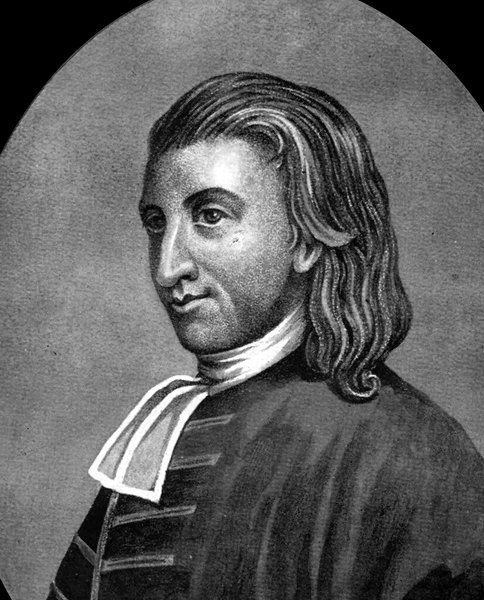
Thomas Boston spent his whole ministry in two small country parishes in the south of Scotland. The first, Simprin, was so small that it counted only ninety people old enough to be catechised. The second, Ettrick, lay among the sheep-hills of Selkirkshire, a long ride from any town. He never held a city pulpit or a university chair. Yet his books were read in Scottish farmhouses for more than a century, and Robert Burns, joking in verse that he had grown respectable, pictured himself sitting by the fire “Perusing Bunyan, Brown, an’ Boston.” Behind the books stands a pastor who knew discouragement, controversy and long sorrow at home, and who learned under all of them to look for the hand of God.
A Covenanter’s son from Duns
He was born at Duns in Berwickshire on 17 March 1676, the son of John Boston and Alison Trotter. Both his parents were Covenanters, Scots who held to the National Covenant and the Presbyterian government of the Kirk against the bishops the Crown had imposed. His father suffered imprisonment for his nonconformity, and the boy grew up knowing that faith could cost something.
Biographers date his conversion to the time when he was about eleven. His father took him to hear Henry Erskine, an ejected minister then preaching at Whitsome, near Duns, and under that preaching the boy came to a new awareness of his own sin and of his need of Christ. Erskine was the father of Ebenezer and Ralph Erskine, two men who would one day stand beside Boston in the great controversy of his life.
He was schooled at the grammar school of Duns, worked for a time for a local notary, and then went to the University of Edinburgh, graduating Master of Arts on 9 July 1694. His whole college expenses, it was carefully recorded, came to little more than ten pounds. He taught school at Glencairn, served as tutor and household chaplain in the family of Colonel James Bruce of Kennet, and was licensed to preach by the presbytery of Duns and Chirnside on 15 June 1697.
Ninety souls at Simprin
On 21 September 1699 he was ordained minister of Simprin. It was a tiny charge, and a spiritually cold one. Later accounts say that when he came he found only one household in the parish that kept family worship, and that he visited every family and urged them to secret prayer and to worship in their own homes. By the time he left, the same accounts say, prayer was offered morning and evening across the parish. He married Katharine Brown, a daughter of Robert Brown of Barhill near Culross, on 17 July 1700. She would be his companion, and his deepest grief, for thirty-two years.
At Simprin he preached a series of sermons on the four states of man: as God first made him in innocence, as he is by nature after the fall, as he is when renewed by grace, and as he will be in the eternal state. Those sermons, worked over for many years, became his best-known book. And it was at Simprin, in 1704, that he noticed in a parishioner’s house an old English book brought into Scotland by a soldier of Cromwell’s army: The Marrow of Modern Divinity by Edward Fisher, a gathering of the teaching of Reformation writers on grace and the free offer of the gospel. He read it, and it shaped the rest of his preaching.
The long work at Ettrick
He was admitted minister of Ettrick on 1 May 1707, the very day the Union of Scotland and England took effect. The parish was large and scattered, and its people were in no hurry to welcome him. It was three years before he first gave them the Lord’s Supper, and for years afterwards he feared that his labours there had been in vain. Yet he stayed for a quarter of a century. Accounts drawn from his memoirs say that some sixty people came to his first communion at Ettrick in 1710 and more than seven hundred to his last in 1731. In time his communion seasons drew crowds from all over the south of Scotland, and he became one of the most influential figures in the church life of his time.
He was a scholar as well as a pastor. He studied the Hebrew text of the Old Testament so closely that he wrote a learned Latin treatise on the Hebrew accents, printed at Amsterdam in 1738 after his death. He held that the accents themselves were given by God. Even the scholar who wrote its preface did not accept that view, but the book shows wide and careful learning.
In 1720 the sermons from Simprin appeared at Edinburgh as Human Nature in its Fourfold State. It became one of the religious classics of Scotland, was reprinted again and again through the eighteenth century, and was translated into Welsh and Gaelic. Plain people read it as a map of their own souls: what they had lost in Adam, what they were without Christ, what grace makes of a sinner, and what waits beyond death.
The Marrow and the men who stood for it
On Boston’s recommendation, James Hog of Carnock reprinted The Marrow of Modern Divinity in 1718. Its purpose was to show that the gospel is freely offered. A sinner need not first reach some degree of repentance or reform before he may come to Christ; where Christ is heartily received, repentance and a new life follow. Some in the Church of Scotland heard this as dangerous, as if it loosened the claims of holiness. In May 1720 the General Assembly condemned the book and told ministers to warn their people against reading it.
Boston and eleven other ministers, Ebenezer and Ralph Erskine among them, gave in a Representation and Petition against the Act in 1721. Their critics called them the Marrow Men, and the twelve were nicknamed “the twelve apostles.” The Assembly of 1722 confirmed its condemnation and ordered the signers to be rebuked by the Moderator. The rebuke was given, but Boston prepared a protest which the Assembly refused to receive and which the brethren later printed. In 1726 he published his own edition of the Marrow, with notes. He remained a Calvinist throughout; the Marrow Men did not teach that Christ died for all alike, but they insisted that Christ is offered freely to all who hear the gospel. Boston was not quarrelsome by nature, but he would not be silent where he thought the gospel was at stake. In another case before the Assembly, that of John Simson, professor of divinity at Glasgow, accused of false teaching about the person of Christ, he was the only member to enter a protest that the sentence was too light.
Sorrow in the manse
The records of his family are short, and they are hard to read. Katharine bore him ten children. Six of them died young. Their first child, Katharine, born in 1701, died the next year. Robert died in his first year. Two sons named Ebenezer were born and buried within the same two years, in 1707 and 1708. A little Thomas died at two, and a second Katharine before her first birthday. Four children lived to grow up: John, Jane, Alison, and Thomas, who succeeded his father at Ettrick.
Katharine herself suffered a long illness, which those who have studied his memoirs describe as a disorder of the mind as well as of the body. For many years she was often confined to a small room of the manse, and one modern writer notes that Boston called it, sorrowfully, the “inner prison.” He cared for her tenderly through it all. She outlived him, dying on 4 March 1737.
His own spirit was not always bright. His autobiography is honest about dry seasons, about a sense of dullness even in preaching and praying, and about his own unworthiness. One older writer judged him “unduly introspective,” and the charge has some truth. But it is the honesty of a man who would not pretend before God. Out of such a life came the words he preached to people under trials that would not lift:
Say not that your crook hath been of so long continuance, that it will never mend. Put it in the hand of God, who made it, that he may mend it, and wait on him.
— Thomas Boston, The Crook in the Lot
The book: The Crook in the Lot
A “lot” is the portion God gives each person in this life; a “crook” is a bend in it, some trial that runs against the grain and will not straighten. The Crook in the Lot grew out of sermons on three texts: Ecclesiastes 7:13, “Consider the work of God: for who can make that straight which he hath made crooked?”; Proverbs 16:19, on the humble spirit; and 1 Peter 5:6, “Humble yourselves therefore under the mighty hand of God, that he may exalt you in due time.” It was published in 1737, five years after his death.
His argument is simple and searching. Whatever crook there is in a person’s lot is of God’s making. What God has seen fit to bend, no one can straighten by force or fretting. And to see the trial as God’s own work, through faith in Christ, is the way to bear it well. He is realistic: no one’s lot is wholly straight, and no one’s is wholly crooked.
Every body’s lot in this world hath some crook in it.
— Thomas Boston, The Crook in the Lot
Boston does not ask the sufferer to pretend that the trial is pleasant. He asks for submission, patience, and a humbled spirit, and he holds out a real hope of being lifted up, in this life or in the next. Readers carrying a sorrow that will not go away, an illness, a loss, a disappointment, will find in it a pastor who carried such things himself and wrote from inside them.
If the night were ever so long, the morning will come at length.
— Thomas Boston, The Crook in the Lot
The last sermons from a window
In his last years his health broke. He had finished his account of his life in October 1730, written for his children. Illness did not stop his preaching. Several accounts say that on his last Sundays, too weak to climb into the pulpit, he preached from a window of the manse to the people gathered outside, and one biography says his theme was self-examination. The detail comes to us through later biographers, and it is told here as they tell it. He died at Ettrick on 20 May 1732 at the age of fifty-six. His son Thomas was later ordained minister of the same parish.
Most of his writings were printed after his death: sermons, a body of divinity on the Shorter Catechism, his treatise on the covenant of grace, and his memoirs, which appeared in 1776. A collected edition of his works in twelve volumes followed in the nineteenth century. Through them the minister of a remote hill parish became a teacher of Scotland’s farmhouses and cottages, and his voice still reaches anyone who has found a crook in the lot and wondered what God is doing with it.
Questions and Answers
Who was Thomas Boston?
Thomas Boston (1676–1732) was a Scottish Presbyterian minister who served the country parishes of Simprin in Berwickshire and Ettrick in Selkirkshire. He wrote Human Nature in its Fourfold State and The Crook in the Lot, and was a leading defender of The Marrow of Modern Divinity.
Where and when was Thomas Boston born?
He was born at Duns in Berwickshire on 17 March 1676, the son of John Boston and Alison Trotter. Both parents were Covenanters, and his father was imprisoned for his nonconformity.
How was Thomas Boston converted?
His biographers date his conversion to about his eleventh year, when his father took him to hear the preaching of Henry Erskine at Whitsome near Duns. Erskine was the father of Ebenezer and Ralph Erskine.
What was Thomas Boston’s ministry at Simprin like?
He was ordained to Simprin on 21 September 1699, a parish of only about ninety people of catechising age. Later accounts say he found only one household keeping family worship and left family worship kept across the parish. There he preached the sermons that became Human Nature in its Fourfold State.
When did Thomas Boston go to Ettrick?
He was admitted minister of Ettrick on 1 May 1707, the day the Union of Scotland and England took effect, and served there until his death. The early years were discouraging, but in time his communion seasons drew crowds from far and wide.
What is Human Nature in its Fourfold State?
Published at Edinburgh in 1720, it describes humanity in four states: innocence, nature after the fall, grace, and the eternal state. It became one of the religious classics of Scotland, was often reprinted, and was translated into Welsh and Gaelic.
What was the Marrow controversy?
It was a dispute in the Church of Scotland over The Marrow of Modern Divinity, an English book on the free offer of the gospel that Boston found at Simprin in 1704. The General Assembly condemned it in 1720; Boston and eleven others protested in 1721 and were rebuked by the Moderator in 1722.
What sorrows did Thomas Boston face in his family?
He married Katharine Brown in 1700, and six of their ten children died young. Katharine suffered a long illness, described by later writers as a disorder of mind as well as body, and he cared for her through it. She outlived him and died in 1737.
What is The Crook in the Lot about?
The Crook in the Lot, published in 1737 after Boston’s death, grew from sermons on Ecclesiastes 7:13, Proverbs 16:19 and 1 Peter 5:6. It teaches that every trial in a person’s lot is of God’s making, that no one can straighten what God has made crooked, and that seeing the trial as God’s work, by faith, is the way to bear it with humble patience.
How did Thomas Boston die?
He died at Ettrick on 20 May 1732, at the age of fifty-six. Later biographers say that on his last Sundays, too weak for the pulpit, he preached from a window of the manse. His son Thomas later became minister of the same parish.