Where to start reading
Start with
To Autolycus
Books by Theophilus of Antioch (1)
Biography
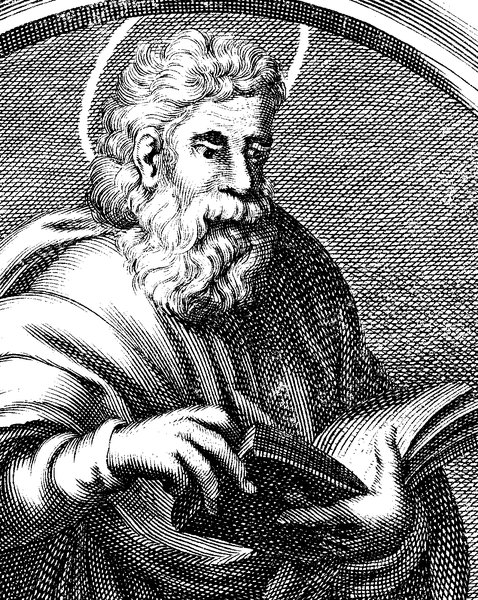
Almost everything we know about Theophilus of Antioch comes from one long answer to one man: Autolycus, a learned pagan friend who had mocked him for being a Christian and challenged him to produce his God. Theophilus answered in three short books, and they are all that survive of him. They never mention even the office he held. But they give us the voice of a second-century pastor explaining, patiently and sometimes sharply, why he had stopped believing in the old gods and what he had found instead.
A pagan who read the prophets
He was born a pagan. His birth year is unknown; one nineteenth-century editor guessed around 115, and said it was a guess. Describing the rivers of Eden, Theophilus remarks that the Tigris and Euphrates “border on our own regions,” a hint, many think, that he was born not far from them. Beyond that, the record of his early life is empty.
What he did leave, in one paragraph of his first book, is the story of how he came to faith. Autolycus did not believe that the dead are raised. Neither, Theophilus admits, had he: “I myself also used to disbelieve that this would take place, but now, having taken these things into consideration, I believe.” What changed him was reading: “I met with the sacred Scriptures of the holy prophets,” he says, and found in them things foretold that had come to pass as spoken. It is a quiet conversion: a thoughtful man reading the Bible and finding that it would not let him go. He offers Autolycus the same road.
A bishop in the city of the name
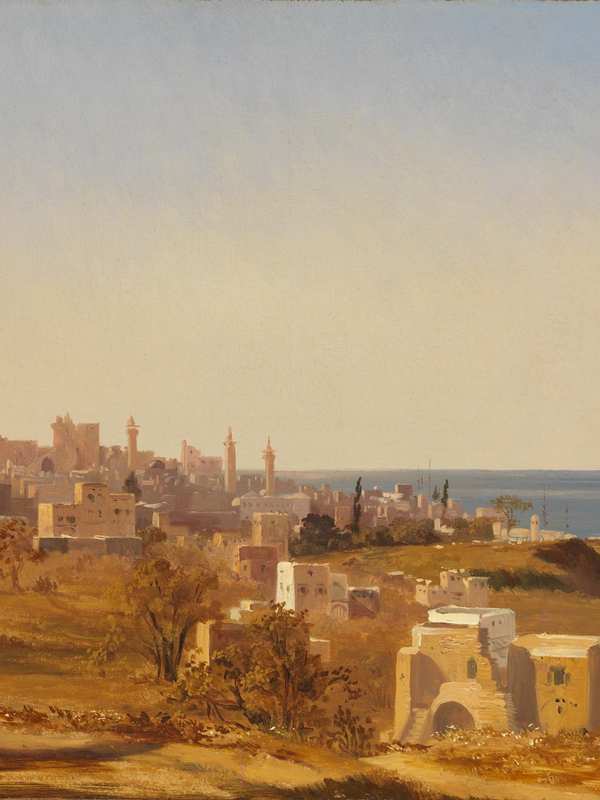
He became bishop of Antioch in Syria, the great city where, as the book of Acts records, the disciples were first called Christians. Eusebius, the fourth-century church historian, counts him the sixth bishop there after the apostles, in a line running back through Ignatius; others make him the seventh. He took office around 168 or 169, in the eighth year of the emperor Marcus Aurelius.
Eusebius remembered him as one of the faithful shepherds of that generation who laboured to drive the heretics away from the flock of Christ, and he singled out Theophilus’s book against Marcion, who rejected the Old Testament and its God, as “of no mean character.” He and Jerome knew of other works too — against the teacher Hermogenes, for the instruction of new believers, and commentaries that Jerome doubted were his. All are lost.
“Show me yourself”
Autolycus had boasted of his gods of wood and stone and used the word Christian as a sneer. Theophilus takes the name gladly — “I, for my part, avow that I am a Christian” — and then turns the challenge back on the man who made it.
But if you say, “Show me thy God,” I would reply, “Show me yourself, and I will show you my God.”
— Theophilus of Antioch, To Autolycus, Book I
His point is that God is seen not with the eyes of the body but with the eyes of the soul, and those eyes can be clouded. Sin, he says, is like rust on a mirror: as long as it is there, no face can be seen in it. The question is not only whether God exists, but whether the one asking is willing to be made clean, and Theophilus lists the vices of the pagan city one by one and asks his friend to show that he is free of them.
Yet the book is not only rebuke. When Theophilus tries to describe God, his language rises into worship — “For in glory He is incomprehensible, in greatness unfathomable, in height inconceivable” — and he finds God known through the seasons, the stars, and the rain that falls in its time. And for the man whose eyes are clouded there is a remedy.
Entrust yourself to the Physician, and He will couch the eyes of your soul and of your heart. Who is the Physician? God, who heals and makes alive through His word and wisdom.
— Theophilus of Antioch, To Autolycus, Book I
To couch an eye was the old surgical word for removing a cataract. The healing ends in resurrection: “God will raise thy flesh immortal with thy soul,” and then the one who believes shall see the Immortal. When Autolycus scoffs, Theophilus points to seasons that die and return, and the seed of wheat that rots and rises as a stalk. Even the mocked name is a kind of promise: “we are called Christians on this account, because we are anointed with the oil of God.”
God, his Word, and his Wisdom
The second book followed another conversation, after which the friends parted “with much mutual friendliness.” Theophilus, “not educated to the art of speaking,” sets the poets’ accounts of the beginning beside the prophets’, and most of the book becomes a commentary on the opening chapters of Genesis.
The prophets, he says, taught that God made all things out of nothing. God had his Word within him, and when he willed to create, he brought the Word forth with his Wisdom and made all things through him. It was this Word, “who is also His Son,” who walked in the garden and spoke with Adam, and here Theophilus quotes the opening of John’s Gospel by name. He seems to call the Holy Spirit God’s Wisdom, as his contemporary Irenaeus did, though his terms move freely.
In his commentary on the six days of creation he writes the sentence for which he is best remembered. The sun, always full, is a picture of God; the waning and returning moon, of man and the resurrection. And the days before the sun and moon were made carry a meaning of their own: “In like manner also the three days which were before the luminaries, are types of the Trinity, of God, and His Word, and His wisdom.” This is the earliest surviving Christian use for God of the Greek word trias, a group of three, which Dods translates Trinity. He does not seem to be coining it, so it was probably already in use among Christians.
The commentary is full of such pictures, some lovely, some strained. As the sea has islands with good harbours, he says, so God has given the storm-tossed world “holy churches,” where those who wish to be saved may find refuge, while heresies are barren rocks where ships are wrecked. On Adam he is tender. The tree of knowledge was good, he says; the death was in the disobedience. Adam was still “an infant in age,” and God put him out of Paradise so that he would not remain in sin for ever. Man was made “neither mortal nor immortal,” but capable of both, and free.
It is fair to say that later Christians did not follow him in every step. The church came to state more carefully that the Son is eternally begotten rather than brought forth at the moment of creation, and to name the three as Father, Son and Holy Spirit. And in this book Theophilus never uses the name Jesus, nor does he go on to speak of the incarnation or of Christ’s atoning death. He treats the Sibylline oracles, verses of uncertain origin, as true prophecy, and some of his derivations of words are fanciful. He wrote before many questions had been settled, to a man who did not yet believe in one God at all.
Older than Homer
The third book answers the slanders Autolycus had half believed: that Christians held their wives in common, committed incest and ate human flesh, and that their faith was a recent novelty. He answers by setting out what Christians are taught: the Ten Commandments, care for the stranger, repentance, justice for the widow and the fatherless, chastity of heart and love of enemies. Christians, he adds, may not even watch the gladiators, lest they become partakers in murder.
But far be it from Christians to conceive any such deeds; for with them temperance dwells, self-restraint is practiced, monogamy is observed, chastity is guarded, iniquity exterminated, sin extirpated, righteousness exercised, law administered, worship performed, God acknowledged: truth governs, grace guards, peace screens them; the holy word guides, wisdom teaches, life directs, God reigns.
— Theophilus of Antioch, To Autolycus, Book III
To the charge of novelty he answers with history. Drawing on Moses, Josephus, the Egyptian and Chaldean historians and the Roman lists, he reckons the years from Adam to the death of the emperor Marcus Aurelius, 5,698 in all, to show that Moses and the prophets are older than all the Greek poets and lawgivers. He is honest about his sums: if he has erred by fifty, a hundred or even two hundred years, at least it is not by thousands, as the Greek authors had.
He can be scornful of Greek learning, sometimes misquoting the authors he dismisses, and his sums belong to his century. But he believed the God of the prophets had acted in real history, and took the trouble to show it.
A letter that outlived the writer
Theophilus died around 183; the old sources give 181 or 188, and modern accounts place his death probably between 183 and 185. No account of his death has come down, and Maximus followed him as bishop. Only the books to Autolycus survived, quoted in the West by Lactantius and honoured centuries later by Archbishop James Ussher, who paid him tribute as a founder of Christian biblical chronology.
To Autolycus repays a reader who comes to it as it was written: not as a treatise, but as one man’s long answer to a friend, severe with idols and gentle with the idolater. He quotes the Old Testament on almost every page, because the prophets had brought him to believe, and he hoped they would do the same for Autolycus. We do not know whether they did. The book ends with an invitation rather than a victory: study these things carefully, he tells his friend, “that you may have a compendium and pledge of the truth.” It is an invitation still open to anyone who will read.
Questions and Answers
Who was Theophilus of Antioch?
Theophilus was a second-century bishop of Antioch in Syria, the city where the disciples were first called Christians. He is known today for one surviving work, To Autolycus, a defence of the Christian faith written to a learned pagan friend around 180.
How did Theophilus become a Christian?
He was raised a pagan and, by his own account, once disbelieved in the resurrection. He came to faith by reading “the sacred Scriptures of the holy prophets,” in which he found things foretold that had come to pass as they were spoken.
Where did Theophilus come from?
Nothing certain is known of his birthplace or birth year. Describing the rivers of Eden, he says the Tigris and Euphrates “border on our own regions,” which many take as a hint that he was born not far from them.
When was he bishop of Antioch?
Eusebius counts him the sixth bishop of Antioch after the apostles, in the line of Ignatius, and says he took office in the eighth year of Marcus Aurelius, around 168 or 169; other reckonings make him the seventh. The length of his episcopate is uncertain.
What else did Theophilus write?
Eusebius and Jerome knew of works against the heretics Marcion and Hermogenes, writings for the instruction of new believers, and commentaries on the Gospels and Proverbs, though Jerome doubted the commentaries were his. Eusebius called the book against Marcion “of no mean character.” All of these are lost.
What is To Autolycus?
To Autolycus is three short books written to a pagan friend who had mocked Theophilus for being a Christian. The first speaks of the unseen God and the resurrection, the second compares the poets with the prophets and comments on the six days of creation, and the third answers slanders against Christians and argues that Moses is older than the Greek writers. It is read here in Marcus Dods’s 1885 translation for the Ante-Nicene Fathers.
What did Theophilus mean by “Show me yourself, and I will show you my God”?
Autolycus had demanded, “Show me thy God.” Theophilus answered that God is seen with the eyes of the soul, and that sin clouds them as rust clouds a mirror; God, the Physician, heals those eyes through his Word and wisdom.
Was Theophilus the first to call God a Trinity?
His is the earliest surviving Christian use for God of the Greek word trias, a group of three, which Dods translates Trinity: he calls the three days before the sun and moon “types of the Trinity, of God, and His Word, and His wisdom.” He names the three as God, his Word and his Wisdom rather than Father, Son and Holy Spirit, and later Christians stated the doctrine with more care.
How did Theophilus answer the charges against Christians?
To rumours that Christians shared wives and ate human flesh, he set out what they are taught, from the Ten Commandments to love of enemies, and said that among them chastity is guarded and God reigns. To the charge that the faith was new, he built a chronology from Adam to the death of Marcus Aurelius, 5,698 years, to show that Moses and the prophets are older than the Greek poets.
When did Theophilus die?
He died around 183, though the year is uncertain: older sources give 181 or 188, and modern accounts place his death probably between 183 and 185. No account of how he died survives, and he was followed as bishop by Maximus.