Where to start reading
Start with
The Apology
Books by Tertullian (3)

Biography
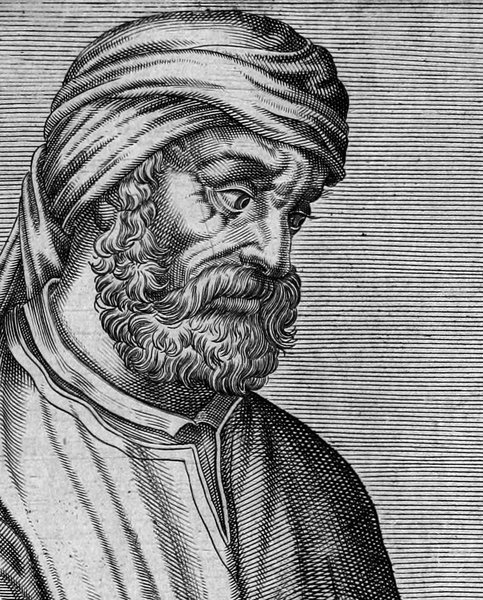
Tertullian is the first great Christian writer in Latin, the man who gave the Western church much of the vocabulary it still uses to speak about God. He was brilliant, funny, fierce, and at times unbearable. He could defend his fellow believers before the magistrates of Rome with a courage and wit that still leap off the page, and he could turn the same sharp pen on fellow Christians he thought too lax. Late in life he was drawn to a strict movement that the wider church came to reject. The record keeps all of this, and so should we. But the book we publish comes from his strongest years, when he stood up for persecuted Christians and told the empire, in effect: look at how we actually live before you kill us.
A son of Carthage
He was born Quintus Septimius Florens Tertullianus in Carthage, the great port city of Roman Africa, on the coast of what is now Tunisia. The year is uncertain; modern scholars usually say about 155, while older editors suggested ten years earlier. Jerome, writing two centuries later, says his father was a centurion serving the Roman governor of Africa. Tertullian once called himself “Punic among Romans,” a man of the old Carthaginian stock living in a Roman world, and he claimed Africa as his homeland.
He was born a pagan and received an excellent education. Roman Africa was famous for its orators, and Tertullian wrote like one: vivid, compressed, full of paradox and sudden jokes. He could also write Greek, and composed at least three books in it, all now lost. Ancient writers thought he had been a lawyer, and his works are full of legal argument, though modern historians point out that a good Roman education would explain that too. Whether he was ever ordained a presbyter, an elder of the church, is also disputed. Jerome says so, but in his own writings he seems to count himself among the laity.
Made, not born
We do not know when or how he became a Christian. Some place it about 185, others about 197. He tells us almost nothing about it directly. But he plainly remembered what it was to stand outside and scoff, and his conversion seems to have been sudden and decisive. In the Apology, explaining the Christian hope of resurrection and judgment, he stops to admit:
Once these things were with us, too, the theme of ridicule. We are of your stock and nature: men are made, not born, Christians.
— Tertullian, The Apology, chapter 18
That last phrase has become one of his most famous. He could not imagine a Christian life that had not been chosen with open eyes. He was married to a Christian wife, and two little books he wrote to her survive.
The African church of his day was large, and it paid for its faith; its persecutions were cruel. Christians were being condemned in the courts simply for the name they bore. It was for them that he wrote his most famous book.
A voice for the accused
The Apology was written about 197; scholars have argued for dates from 197 to as late as 217, but most place it near the end of the second century. It is addressed to the “Rulers of the Roman Empire,” the magistrates who sat in judgment over Christians. Because they would not hear the Christians openly, Tertullian sends the truth to them, he says, “by the secret pathway of a noiseless book.” The truth knows she is a stranger on earth and expects enemies here. She asks only one thing:
One thing, meanwhile, she anxiously desires of earthly rulers—not to be condemned unknown.
— Tertullian, The Apology, chapter 1
He writes like the lawyer he may have been. In every other case, he says, the accused is questioned, may defend himself, and is tortured, if at all, to make him confess. Only Christians are tortured to make them deny, and are condemned for the name alone. He answers the rumours one by one: that Christians murder and eat a child at their secret rites, that they commit incest, that they are traitors to the emperor. He turns the charges back on the accusers, showing from their own customs and stories where such cruelty is really found. And he mocks the habit of blaming Christians for every disaster: “If the Tiber rises as high as the city walls, if the Nile does not send its waters up over the fields, if the heavens give no rain, if there is an earthquake, if there is famine or pestilence, straightway the cry is, ‘Away with the Christians to the lion!’”
He also wants the magistrates to see how much the Christians already are among them. “We are but of yesterday,” he writes, “and we have filled every place among you,” the cities and islands, the army camp, the palace and the senate. If Christians were really enemies of the empire, they had numbers enough to do it harm. Instead, they pray for it.
How Christians pray
Some of the warmest pages of the Apology describe the prayer and common life of the church. Christians would not burn incense before the emperor’s image, and so they were called public enemies. Tertullian answers that they do something better for the emperor: they pray for him to the only God who can help him.
He describes the gatherings themselves with the same plainness. Christians meet to read the Scriptures, to encourage and correct one another, and to pray together. Each brings a small gift once a month, if he wishes and can, and the money is spent not on feasts but on burying the poor, feeding orphans, caring for the old and the shipwrecked, and helping those condemned to the mines or prisons for their faith. Their neighbours, he says, look on and remark, “See,” they say, “how they love one another.”
He was bold enough to claim answered prayer as evidence, too. He appeals to letters of the Emperor Marcus Aurelius which, he says, bore witness that a drought afflicting the army in Germany was ended by rain obtained through the prayers of Christian soldiers. A sudden storm on that campaign was remembered by pagan writers as well, who credited it to their own gods or to the emperor; the letter later circulated in Marcus’s name is judged a forgery, and we cannot now be sure what happened. But it shows what Tertullian believed: that the prayers of despised Christians were holding up the world.
The blood of Christians
The Apology ends with its most famous lines. Why, the magistrates might ask, do Christians complain of persecution if they are so eager to suffer? Tertullian answers that they want suffering only as a soldier wants battle: not for itself, but for the victory. Every time Christians die without denying Christ, more people stop to ask what kind of faith could do this, and many of them believe:
The oftener we are mown down by you, the more in number we grow; the blood of Christians is seed.
— Tertullian, The Apology, chapter 50
It is sometimes quoted as “the blood of the martyrs is the seed of the church.” His own words are shorter and harder. He was writing to men who had the power to kill his friends, and he was telling them that they could not win.
A hard and restless mind
The Apology was only the beginning. More than thirty of his works survive. He wrote on prayer, on patience, on baptism and on repentance; he wrote to encourage Christians in prison awaiting martyrdom. He wrote at length against the heretic Marcion, who rejected the God of the Old Testament, and against Praxeas, who taught that the Father and the Son were simply one person under two names. In that work Tertullian became the first writer in Latin known to use the word trinitas, “Trinity,” and he gave Latin theology terms such as “person” and “substance” that later theology would build on. Not all of his own teaching was later judged sound; his way of describing the Son as subordinate to the Father was set aside. But it is no exaggeration that he has been called the father of Latin Christianity. He was suspicious of mixing the gospel with Greek philosophy, and asked a question that has been repeated ever since: “What has Athens to do with Jerusalem?”
He was also a rigorist, a man for whom there could be no halfway Christianity. He told believers to stay away from the theatre and the arena, urged women to give up jewellery, insisted that virgins be veiled, and grew ever harsher against second marriage. Jerome remembered him as a man “of a sharp and vehement temper.” That temper, which made him so formidable against persecutors, could make him hard on weaker Christians too.
In the middle of his life, perhaps about 207, he was drawn to the “New Prophecy,” the movement begun by Montanus in Asia Minor and later called Montanism. Its followers believed that the Holy Spirit, the Paraclete Jesus had promised, was still speaking through their prophets, calling the church to stricter fasting and a firmer discipline. Jerome thought that Tertullian had been driven to it by the envy and insults of the Roman clergy, but that is doubtful, and his own temperament was already close to the movement’s strictness. How far he went is now debated. Older writers spoke of him leaving the church; most scholars today doubt that he ever formally left it or was excommunicated, and the North African followers of the New Prophecy seem to have kept most of the church’s doctrine. What is clear is that his later writings are sharper against the leaders of the mainstream church, and that the church as a whole did not follow him. Two centuries later Augustine knew of a small group in Carthage called “Tertullianists,” whose church building passed in his own day to the main body of Christians.
The master Cyprian read
Jerome says that Tertullian lived to a great age. The year of his death is unknown; it is usually put about 220, and possibly later. He is not counted among the saints, and the church has always read him with some caution. Yet it has never stopped reading him. Cyprian, the martyr bishop of Carthage a generation later, is said to have read some of Tertullian every day, and to have asked for his books with the words, “Give me my master.” Through Cyprian, and later through Augustine and Jerome, much of the language and the temper of Western Christianity passed through Tertullian’s hands.
We publish his Apology in the nineteenth-century translation of S. Thelwall. It is not a gentle book; Tertullian is sarcastic and sometimes unfair to the pagans he mocks. But it is a brave one, written for people who were being killed for their faith, and it gives us a vivid picture of how the church lived and prayed under persecution: their worship, their common purse, their care for the poor, their prayers for the very rulers who condemned them. Its last sentence says what all of it was for:
As the divine and human are ever opposed to each other, when we are condemned by you, we are acquitted by the Highest.
— Tertullian, The Apology, chapter 50
Questions and Answers
Who was Tertullian?
Tertullian, in full Quintus Septimius Florens Tertullianus, was a Christian writer of Carthage in Roman Africa, born about 155 and dying about 220 or later. He was the first Christian author to write a large body of work in Latin, and has been called the father of Latin Christianity.
Where did Tertullian come from?
He was born a pagan in Carthage, on the coast of what is now Tunisia. Jerome says his father was a centurion serving the Roman governor of Africa, and Tertullian called himself Punic among Romans and claimed Africa as his homeland.
Was Tertullian a lawyer or a priest?
Ancient writers said he was a lawyer, and his works are full of legal argument, but modern historians note that a good Roman education would explain this. Jerome calls him a presbyter, yet in his own writings he seems to count himself among the laity, so both claims are uncertain.
How did Tertullian become a Christian?
Little is known; the date is put anywhere from about 185 to about 197, and he says almost nothing about it directly. In the Apology he admits that Christian teaching was once a joke to him too, and insists that Christians are made, not born. He was married to a Christian wife, and two books he wrote to her survive.
What is Tertullian’s Apology about?
Written about 197 to the magistrates of the Roman Empire, it asks that Christians not be condemned unknown, answers rumours of child murder, incest and treason, and describes how Christians actually live, worship and pray for the emperor. The translation published here is that of S. Thelwall.
What did Tertullian say about how early Christians prayed?
He describes Christians praying with hands outstretched and heads uncovered, from the heart, for the emperor, the empire and the world at rest. He says they met to pray together as if wrestling with God in their supplications, a violence God delights in, and that their common meal began and ended with prayer.
Did Tertullian say the blood of the martyrs is the seed of the church?
That popular saying comes from the last chapter of his Apology, where he tells the persecutors that the more often Christians are mown down, the more they grow, because the blood of Christians is seed. His own words are shorter than the familiar version.
What did Tertullian contribute to the doctrine of the Trinity?
In his work against Praxeas he became the first writer in Latin known to use the word trinitas, Trinity, and he used terms such as person and substance that later theology built on. Some of his teaching, such as his way of describing the Son as subordinate to the Father, was later set aside.
Did Tertullian become a Montanist?
In middle life, perhaps about 207, he was drawn to the New Prophecy, or Montanism, a strict movement that believed the Holy Spirit was still speaking through its prophets. Jerome blamed the envy of the Roman clergy, but that is doubtful, and most scholars today doubt that he formally left the church or was excommunicated, though his later writings are sharper against its leaders.
When did Tertullian die, and how is he remembered?
Jerome says he lived to a great age; the year of his death is unknown and is usually put about 220. He is not counted among the saints, but Cyprian of Carthage is said to have read him daily and called him his master, and through Cyprian, Augustine and Jerome he shaped the language of Western theology.