Biography
Come just as you are, with all your sins and abominations, with all your blood-guiltiness, with all your condemnation, and lay hold of the hope set before you this day.
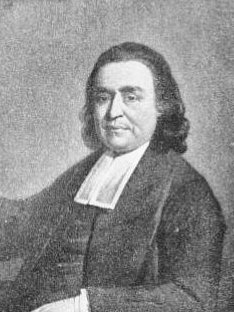
Samson Occom was born in 1723 in a wigwam at Mohegan, near New London in Connecticut, on a day he never knew. His father, Joshua, was a hunter who ranged abroad in the season of the chase and came home when the snows began; his mother, Sarah, was a woman of uncommon strength and affection who in time joined the church of the nearby English parish. “I was Born a Heathen and Brought up in Heathenism,” Occom wrote of those years, describing parents who lived “a wandering life.”
He was about sixteen when, as he put it, “we heard a Strange Rumor among the English, that there were Extraordinary Ministers Preaching from place to Place and a Strange Concern among the White People.” The Great Awakening had come to eastern Connecticut, and by summer its preachers had come to Mohegan. For about six months he went to every meeting he could reach, “under Trouble of Mind,” and in the same season he bought a primer and began to learn his letters. Eleazar Wheelock later credited his conversion to the preaching of the revivalist James Davenport.
Come just as you are, with all your sins and abominations, with all your blood-guiltiness, with all your condemnation, and lay hold of the hope set before you this day.
— Samson Occom
A discovery of the way of salvation
At seventeen the long struggle ended. “I had, as I trust, a Discovery of the way of Salvation through Jesus Christ,” he wrote, “and was enabled to put my trust in him alone for Life & Salvation. From this Time the Distress and Burden of my mind was removed, and I found Serenity and Pleasure of Soul, in Serving God.” What followed was compassion: he felt “an uncommon Pity and Compassion to my Poor Brethren According to the Flesh.”
When he was in his nineteenth year his mother went to Lebanon, Connecticut, and Occom asked her to find out whether the Reverend Eleazar Wheelock, who kept a small school for English boys, would take him for a week or two. Wheelock wanted to see him at once. “So I went up, thinking I Should be back again in a few Days,” Occom remembered; “he received me With kindness and Compassion and instead of Staying a Forthnight or 3 Weeks, I Spent 4 Years with him.” He arrived on 6 December 1743 and threw himself into Latin, Greek and later Hebrew, but he strained his eyes so badly over his books that by the winter of 1748–49 he had to give up formal study altogether.
Schoolmaster at Montauk
In 1749 Occom went with some of his people on a fishing trip to Montauk, at the eastern tip of Long Island. He went from wigwam to wigwam holding meetings instead, and the Montaukett people asked him to stay and open a school. He stayed about twelve years. “I kept School,” he wrote, “and Carried on the Religious Meetings as often as ever, and attended the Sick and their Funerals, and did what Writings they wanted, and often Sat as a Judge to reconcile and Decide their Matters.” Every school day began the same way: “as Soon as the Children got together, and took their proper Seats, I Prayed with them.” On the Sabbath he sang Watts’s psalms and hymns with the people and opened the Scriptures “in Familiar Discourse.” A revival followed, and many at Montauk, he wrote, were “hopefully converted to the Saving knowledge of God in Jesus.”
He lived as his people lived. His home was a wigwam, moved with the seasons. His salary was tiny and sometimes unpaid, so he hunted and fished, farmed a plot of corn, carved spoons, ladles, pails and gunstocks, and bound books for the English families of East Hampton, often working at night by torchlight. In the autumn of 1751 he married Mary Fowler, a Montaukett woman whose brothers David and Jacob became his pupils and lifelong co-workers. They raised at least ten children. On 30 August 1759, at East Hampton, the Presbytery of Suffolk ordained him a Presbyterian minister.
The Indian preacher in Britain
After missions to the Oneida people of New York in the early 1760s, Occom settled again at Mohegan. Wheelock’s school at Lebanon now trained Native American missionaries, and George Whitefield believed a converted Indian who could preach would win it British support. In December 1765 Occom left his family in God’s care and set out for Boston with the Reverend Nathaniel Whitaker. Opponents in Boston scoffed that he had been a Christian all his life and could not even speak his own language. He wrote to Wheelock:
He landed in England in February 1766 and preached for the first time on 16 February, in Whitefield’s Tabernacle in London, to a packed house. For more than two years he travelled through England and into Scotland, preaching by most counts between three and four hundred times. He met the Earl of Dartmouth and John Newton and won a firm friend in the merchant John Thornton; King George III gave £200. By the time Occom sailed home in the spring of 1768, the tour had raised more than £12,000, a sum without precedent for a missionary cause in the colonies. He was offered Anglican orders and refused them: “I had no such view when I came from home.”
“Because I am a poor Indian”
He came home to trouble. Support promised to his family had come slowly. Mary had been forced to write to Wheelock, “I am out of Corn and have no Money to buy any with and am affraid we shall suffer for want.” In September 1768 he wrote a short account of his life. It is one of the earliest autobiographies written in English by a Native American, and it was not printed until 1982. It ends with a grievance he could no longer keep quiet about. For twelve years of service as both schoolmaster and minister, he had been paid what another mission received in a single year. “I was my own Interpreter,” he wrote. “I was their Ear, Eye & Hand, as Well as Mouth.”
I believe it is because I am a poor Indian. I Can’t help that God has made me So; I did not make myself so.
— Samson Occom
A deeper hurt followed. In 1769 Wheelock received a charter for Dartmouth College and moved his school to the woods of New Hampshire, and the money Occom had preached for went more and more to educating white missionaries rather than Native students. Wheelock sincerely believed this would serve the Indians best; Occom felt it as a betrayal of everything he had told the givers in Britain. He warned Wheelock, with a pun, that the school meant to be an Alma Mater to his people would prove an Alba Mater, a white mother. A friendship of a quarter-century never fully recovered.
A fall, confessed
In those dark days Occom fell. Ill, without employment and discouraged, he was overcome by drink on one occasion early in 1769. He did not hide it, but accused himself before his own presbytery: “I have been shamefully overtaken with strong drink, by which I have greatly wounded the cause of God, blemished the pure religion of Jesus Christ, blackened my own character and hurt my own soul.” After hearing him in person, the Suffolk Presbytery concluded in November 1769 that he had drunk only a small quantity of spirits after going all day without food, while in what it called “a very gloomy and desponding Frame of Mind,” and it cleared him. Wheelock reported a second lapse the following summer. His English friend John Thornton answered, “I fear he had hard usage and that drove him into the horrid sin of drinking. Pray my dear Sir, use him tenderly, for I am much mistaken if his heart is not right with God.” When rumours prompted his presbytery to investigate in 1791, nothing was found against him. The record shows a man who named his sin before God and his brethren, and got up again.
A sermon at the gallows
That experience lies behind his best-known work. In 1772 Moses Paul, a Native American man condemned for killing a man after he was turned out of a tavern for drunkenness, asked that Occom preach the sermon before his execution. On 2 September, a stormy day, Occom preached in the crowded meeting-house at New Haven from Romans 6:23: “For the wages of sin is death; but the gift of God is eternal life through Jesus Christ our Lord.” To the condemned man he spoke as kin, “You are the bone of my bone, and flesh of my flesh.” If Moses would believe, he said, “instead of a melancholy day, it would be a wedding day to your soul.” To the Native people present he spoke frankly about drink. Then he walked with Moses Paul to the gallows and prayed with him there. The sermon was printed that October and went through at least nineteen editions in America and Britain, and was later translated into Welsh.
Two years later, in 1774, he published A Choice Collection of Hymns and Spiritual Songs, gathered “for the Edification of sincere Christians, of all Denominations” and including hymns that seem to be his own. The hymn most often sung under his name, “Awaked by Sinai’s awful sound,” is not in that book. It appeared only after his death, revised from an earlier text, “Wak’d by the gospel’s pow’rful sound,” that hymn scholars believe was his. Its refrain could stand over his whole life: “The sinner must be born again.”
Brothertown
Occom’s last great work was to gather the scattered Christian Indians of southern New England into a single town of their own. He led the plan with his son-in-law Joseph Johnson and his brothers-in-law David and Jacob Fowler. The Oneida nation granted them land in New York in 1774, but the Revolution scattered the first settlers. On 7 November 1785, in a clearing near David Fowler’s house, they organized themselves at last. “We Named our Town by the Name of Brotherton,” Occom wrote in his diary, and its people “Concluded to live in Peace, and in Friendship and to go on in all their Public Concerns in Harmony.” They asked him to be their teacher, and he agreed to make the town “my Home and center.”
He moved his own family west in 1789 and also preached in the barns and cabins of the new frontier settlements. Shortly before his death he wrote that the church at Brothertown had placed itself under the Presbyterian order, and that it was “the first Indian Presbyterian Church that ever was formed by Indians themselves, for we had no white man to assist us.” His last years were troubled by a bitter quarrel over the leasing of Brothertown land to white settlers, and in the winter of 1791–92 he moved a few miles west to New Stockbridge.
On 14 July 1792, on his way to a cedar swamp to look for timber, he stopped, asked for water, and told the man with him, “I have done.” He folded his hands on his chest and died within minutes, in the sixty-ninth year of his age. More than three hundred Native people from many nations gathered the next day to hear Samuel Kirkland preach his funeral sermon from Matthew 24:44: “Therefore be ye also ready.” His grave was never marked. Honoured in London, slighted at home, fallen and restored, he remained to the end what he had become at seventeen: a man who had put his trust in Christ “alone for Life & Salvation,” and who spent the rest of his life telling his own people, just as they were, to come.
Sermons by Samson Occom (1)
Also appears in
Questions and Answers
Who was Samson Occom?
Samson Occom (1723–1792) was a Mohegan minister, teacher and writer who came to faith in the Great Awakening and became an ordained Presbyterian minister in 1759. He preached across Britain to raise funds for Native education, wrote one of the earliest autobiographies in English by a Native American, published a famous execution sermon and a hymnbook, and led the Christian Indians of southern New England to found Brothertown in New York.
What was his early life like?
He was born in 1723 in a wigwam at Mohegan, near New London, Connecticut, to Joshua, a hunter, and Sarah, who later joined a Christian church. He described himself as born and raised in his people's traditional ways, in a family that lived a wandering life. Nothing in his childhood pointed toward the pulpit.
How was he converted?
When he was about sixteen, preachers of the Great Awakening came to Mohegan, and he spent some six months under deep conviction, going to every meeting he could reach and teaching himself to read from a primer. At seventeen, he wrote, he had a discovery of the way of salvation through Jesus Christ and put his trust in him alone. The burden lifted, and he felt a new compassion for his own people.
How did he come to study with Eleazar Wheelock?
In his nineteenth year he asked his mother to find out whether the Reverend Eleazar Wheelock of Lebanon, Connecticut, would teach him for a week or two. Wheelock took him in on 6 December 1743, and he stayed four years, studying Latin, Greek and Hebrew. Badly strained eyesight finally ended his formal education in the winter of 1748–49.
What did he do at Montauk?
From 1749 he spent about twelve years among the Montaukett people of Long Island as schoolmaster, preacher, scribe and judge, opening each school day with prayer and seeing a revival among them. He lived in a wigwam, hunted, fished, carved woodenware and bound books to support himself on a very small salary. He married Mary Fowler, a Montaukett woman, in 1751, and the Presbytery of Suffolk ordained him on 30 August 1759.
What happened on his preaching tour of Britain?
From early 1766 to 1768 Occom and Nathaniel Whitaker toured England and Scotland raising money for Wheelock's school for Native students. Occom preached between three and four hundred times, met the Earl of Dartmouth and John Newton, and the tour raised more than 12,000 pounds, including 200 from King George III. Before sailing he wrote that he believed he was called of God by a strange providence, and that this was enough.
Why did he feel betrayed afterward?
He came home to find his family left short of food, and in 1768 he wrote a short narrative of his life protesting that he had been paid far less than white missionaries, adding that he believed it was because he was a poor Indian. Then in 1769 Wheelock received a charter for Dartmouth College in New Hampshire and increasingly used the British funds to educate white missionaries. Occom saw this as a betrayal of the donors' purpose, and the friendship never fully recovered.
What was his confession of drunkenness?
Early in 1769, ill and discouraged, Occom was overcome by drink on one occasion, and he accused himself before his own presbytery, saying he had wounded the cause of God and hurt his own soul. The Suffolk Presbytery examined him and concluded he had taken a small quantity of spirits after a day without food, and cleared him. Wheelock reported a second lapse in 1770, but a 1791 inquiry by his later presbytery found nothing against him.
What were his execution sermon and hymnbook?
On 2 September 1772 he preached at New Haven before the execution of Moses Paul, a Native man condemned for murder, from Romans 6:23, urging him to come to Christ just as he was. The sermon went through at least nineteen editions and was later translated into Welsh. In 1774 he published A Choice Collection of Hymns and Spiritual Songs; the famous hymn Awaked by Sinai's awful sound, often credited to him, appeared only after his death as a revision of an earlier text believed to be his.
What was Brothertown, and how did he die?
Brothertown was a Christian settlement on Oneida land in New York, gathered from several New England Native communities and formally organized on 7 November 1785, with Occom as its minister; he moved his family there in 1789 and called its church the first Indian Presbyterian church formed by Indians themselves. He died suddenly at New Stockbridge on 14 July 1792, telling a companion, I have done, before folding his hands and dying. More than three hundred Native people attended his funeral.