New to Maria W. Stewart? Start with
Meditations from the Pen of Mrs. Maria W. Stewart
All works · 2 hr 39 min read
Biography
Lord, if thou wilt be with me, then will I speak for thee so long as I live.
Maria W. Stewart was born Maria Miller in Hartford, Connecticut, in 1803, and by the time she was five years old she had lost both her parents. The orphan girl was bound out to a clergyman’s family, where — as she put it many years later — she “had the seeds of piety and virtue early sown” in her mind, though she was denied the schooling her soul thirsted for. She left that household at fifteen and went on attending Sabbath schools until she was twenty, gathering what learning she could. The book she knew best, she said, was the Bible: through childhood and youth it was the book she “mostly studied,” and its language would run through everything she ever wrote.
In 1826, in Boston, she married James W. Stewart, an older man who had served in the United States Navy during the War of 1812 and who made a good living as a shipping agent, fitting out vessels. For three short years she lived in comfort among the free Black community on the north slope of Beacon Hill, where the Stewarts knew the abolitionist David Walker, whose fiery Appeal she would later honor. Then, in December 1829, James fell ill and died.
A widow at the bedside
The loss broke her open. She sat by his sickbed through the long last days, and years afterward she still wrote of it in the present tense of grief — the dying groans, the restless head turning from side to side, the dim eye turned on her for relief. What wounded her most was that he seemed to die without hope in Christ: “he had no God to look to!”
Worse followed. The will James had made two days before his death was carried out of the house by one of its executors before she ever heard it read, and the white executors stripped her, through the courts, of everything he had left her. She was young, childless, without a single living relative, and suddenly poor. A friend who examined the case nearly fifty years later wrote that the executors had “literally robbed and cheated her out of every cent,” and that she was a woman who “would have suffered wrong rather than defend her rights.”
It was in that ruin that she met Christ. In 1830, she wrote, she was, “as I humbly hope and trust, brought to the knowledge of the truth, as it is in Jesus,” and in 1831 she made a public profession of her faith. In her own retelling, conversion came as surrender: “borne down with a heavy load of sin and shame,” she was “at last brought to accept of salvation as a free gift, in and through the merits of a crucified Redeemer.” It was not easy. It was hard, she admitted, to say “Thy will be done” when she saw her earthly prospects blasted; but she “was at last made willing to be anything or nothing for my Redeemer’s sake.”
A voice for her people
From the moment of that change she felt, she said, a strong desire to give the rest of her days to God and to her people. Soon after her profession, at a gathering, she was moved to speak before many — and walked home ashamed, not knowing where to hide herself. Then came the inward word that set the course of her life.
Lord, if thou wilt be with me, then will I speak for thee so long as I live.
— Maria W. Stewart
In 1831 she walked into the office of William Lloyd Garrison, who had just begun publishing The Liberator, and put a manuscript into his hands. Garrison was so struck by it that he set it in type himself and printed it as a tract: Religion and the Pure Principles of Morality, the Sure Foundation on Which We Must Build. It is an astonishing document — part sermon, part prayer, part summons. She reminded her Black readers that God had “formed and fashioned you in His own glorious image,” that “it is not the color of the skin that makes the man, but it is the principle formed within the soul.” She pleaded with mothers to plant in their children “a thirst for knowledge, the love of virtue,” urged the women of her community to pool their earnings for a high school, and turned on America itself: “O, America, America, foul and indelible is thy stain!” And through it all she pressed the gospel, plainly and personally.
Religion is pure; it is ever new; it is beautiful; it is all that is worth living for.
— Maria W. Stewart
The next year Garrison printed her Meditations from the Pen of Mrs. Maria W. Stewart, presented to the First African Baptist Church and Society of Boston. It is a little book of devotion, written about a year after Christ “first spoke peace to my troubled soul” and soon after her baptism: fourteen meditations, most closing with a written prayer. They are the prayers of a grieving widow learning to trust — confessing sin, interceding for her church and pastor, pleading for her unconverted friends and for “the benighted sons and daughters of Africa,” and begging God to “rivet this heart alone upon thyself.” Alexander Crummell, who knew her soon afterward, later recalled that she had so little schooling that a young girl had written out the words for her.
Four lectures in Boston
Then she did something almost no woman in America had done: she spoke in public, on matters of faith and justice, before audiences of men and women. Over 1832 and 1833 she gave four lectures in Boston — to the Afric-American Female Intelligence Society; at Franklin Hall on 21 September 1832; at the African Masonic Hall on 27 February 1833; and a farewell address that September. She is often called the first American-born woman known to lecture publicly on political themes, and the first Black woman to do so. She stood up as a Christian first. At Franklin Hall she told how the question had come to her in prayer: “Who shall go forward and take off the reproach that is cast upon the people of color? Shall it be a woman?” And her heart answered, “If it is Thy will, be it even so, Lord Jesus!”
She asked hard things of everyone. She urged free Black Bostonians to education, thrift, and self-respect, and rebuked the white North for shutting Black girls out of every trade but service. She rebuked the church too, longing to see believers “not holding religion in one hand and the world in the other.” Not everyone welcomed it. Some told her to stop talking so much about religion; others resented a woman lecturing at all. In her farewell address she defended her calling from Scripture.
What if I am a woman; is not the God of ancient times the God of these modern days?
— Maria W. Stewart
Did not God raise up Deborah to judge Israel, she asked, and Esther to save her people? Was it not Mary Magdalene who first declared the resurrection, and the woman of Samaria who called her town to come and see the Christ? Christ, she said, would not condemn “this worthless worm”: “The bruised reed he will not break.” But she left Boston wounded. It was, she said, “contempt for my moral and religious opinions in private that drove me thus before a public,” and she had found it “no use for me, as an individual, to try to make myself useful among my color in this city.” Even so she would not leave in bitterness. “The bitterness of my soul has departed from those who endeavored to discourage and hinder me,” she said, “and I can now forgive my enemies, bless those who have hated me, and cheerfully pray for those who have despitefully used and persecuted me.” In 1835 Garrison gathered her writings into one volume, Productions of Mrs. Maria W. Stewart.
The long years of teaching
Her public speaking ended at thirty, and almost fifty years of quiet labor followed. In New York she joined a Female Literary Society, studied eagerly with the help of other young women, and became a schoolteacher in New York and in Williamsburg, Long Island. In 1852, having lost her position there and hearing that the Black people of the South were more God-fearing, she moved to Baltimore. There, at the foot of the cross, she resolved to make the best of hard circumstances, printed her own circulars, and opened a school — charging so little that she was always poor. Soon after President Lincoln took office she went on to Washington, a stranger, praying all the way.
The Washington years were the hardest. She had become an Episcopalian, and when the free school she taught in during the war would keep her only if she gave up her church, she refused: “before I will give up my religious sentiments for dollars and cents I will beg my bread from door to door.” She very nearly did. She kept a day school, a night school, a Sunday school, and a prayer meeting in a room with a stove too small to warm it; one bitter night she waited and no one came to pray. When gossip turned her rector against her and he withdrew his support, she wrote that “no tongue can portray my agony of mind.” She prayed God to show him “that I was a clean woman before the Lord,” went to church on Ash Wednesday as if nothing had happened, and committed her cause, she said, “to Him who judgeth righteously.” In time the rector sent for her, and she brought thirteen of her night scholars to help found St. Mary’s, a church for Black Episcopalians in Washington. Later, near the Freedmen’s Hospital, she opened a Sunday school and raised money to buy it a building, gathering poor children of the neighborhood so that they might be taught, a friend wrote, “to fear God and keep His Commandments.” A Washington pastor whose own children she taught remembered her walking the streets in the dead of winter looking for children who should have been in school, whether or not their parents could pay.
Remembered at the last
By the late 1870s she was matron of the Freedmen’s Hospital in Washington. In 1878 Congress opened pensions to widows of the War of 1812, and a friend went to Boston, found four old witnesses who had known her and James, and proved her claim; in March 1879 she was granted a pension of eight dollars a month. Her friend saw it as an answer to long years of prayer: “surely God was good to her and did answer her prayers.” That spring she visited Garrison in Boston, forty-six years after they had last met, and he wrote to her of “your intelligence and excellence of character.” With the pension money she republished her Meditations in 1879, adding letters from old friends and her own account of her wartime sufferings, written so that “souls may be brought to the knowledge of the truth as it is in Jesus.”
She died at the Freedmen’s Hospital in December 1879, the year the book appeared, at about seventy-six. She had stood almost alone for most of her life — “I have neither kindred nor friends,” she had written in 1831 — yet she never stopped praying for her people, teaching their children, and pointing them to Christ. Her own confidence, written at the start, held to the end: “though all the powers of earth and hell were to combine against me … still would I trust in the Lord, and joy in the God of salvation.”
Books by Maria W. Stewart (1)
Questions and Answers
Who was Maria W. Stewart?
Maria W. Stewart (1803–1879) was a Black Christian writer, lecturer and teacher from Boston who is often called the first American-born woman known to lecture publicly on political themes. Converted as a young widow, she wrote prayers and essays that William Lloyd Garrison printed, spoke four times in Boston in 1832–33, and then spent nearly fifty years teaching Black children in New York, Baltimore and Washington.
What was her early life like?
Born Maria Miller in Hartford, Connecticut, in 1803, she was orphaned at five and bound out to a clergyman's family until she was fifteen. She was denied formal schooling but went on attending Sabbath schools until she was twenty, and she said the Bible was the book she most studied in childhood and youth.
What happened in her marriage?
In 1826 in Boston she married James W. Stewart, a Navy veteran of the War of 1812 who made a good living fitting out ships. He died in December 1829 after only three years of marriage, and the white executors of his will took everything he had left her, leaving her young, childless, without living relatives, and poor.
How did she become a Christian?
Out of that grief and loss she wrote that in 1830 she was "brought to the knowledge of the truth, as it is in Jesus," and in 1831 she made a public profession of faith and was baptized. She described accepting salvation as a free gift through the merits of a crucified Redeemer, and being made willing to be anything or nothing for Christ's sake.
What did she write?
In 1831 Garrison printed her tract Religion and the Pure Principles of Morality, which called Black Americans to faith, education and self-respect and rebuked America for slavery and prejudice. In 1832 he printed her Meditations, fourteen devotional pieces, most ending in a written prayer, and in 1835 he gathered her writings and lectures as Productions of Mrs. Maria W. Stewart.
What were her Boston lectures?
Between 1832 and 1833 she gave four public lectures in Boston, including one at Franklin Hall on 21 September 1832 and one at the African Masonic Hall in February 1833, speaking to audiences of men and women. She said the call came in prayer, when she heard the question "Shall it be a woman?" and answered, "If it is Thy will, be it even so, Lord Jesus!"
How did she defend a woman speaking?
In her farewell address of September 1833 she asked, "What if I am a woman; is not the God of ancient times the God of these modern days?" She pointed to Deborah, Esther, Mary Magdalene and the woman of Samaria, and trusted that Christ, who does not break the bruised reed, would not condemn her. She left Boston hurt by contempt for her views but said she forgave her enemies and prayed for them.
What did she do after leaving Boston?
She moved to New York, studied with a Female Literary Society, and taught school in New York and Williamsburg, Long Island. In 1852 she went to Baltimore and opened her own school, and soon after Lincoln took office she moved to Washington, where she kept day, night and Sunday schools and prayer meetings, often in deep poverty.
How did she hold to her faith in Washington?
When the free school she taught in would keep her only if she left the Episcopal Church, she refused, saying she would rather beg her bread from door to door. Slandered and left without support for a time, she prayed, kept going to church, and committed her cause to God; she later helped gather the first members of St. Mary's Church and ran a Sunday school near the Freedmen's Hospital.
How did her life end?
By the late 1870s she was matron of the Freedmen's Hospital in Washington, and in 1879 she won a widow's pension for her husband's War of 1812 service, which friends saw as an answer to her prayers. She used it to republish her Meditations with an account of her later sufferings, and she died at the Freedmen's Hospital in December 1879, still praying that souls would come to know Jesus.
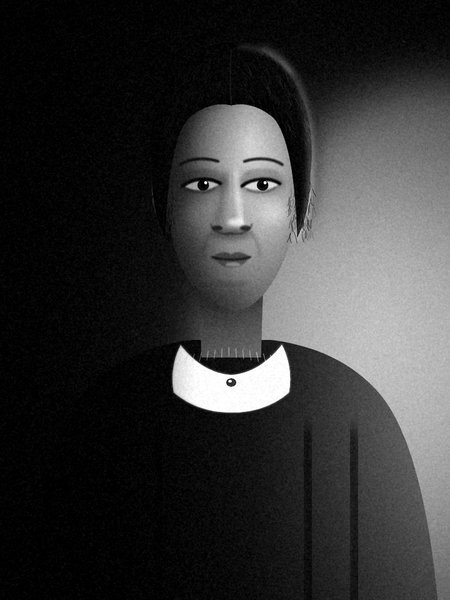
Portrait: Illustration by Ochorus (an imagined likeness)