Biography
- 1935 Born
- 1956 Vision
- 1960 YWAM
- 1984 Book
- 2023 Died
The waves became young people — kids my age and even younger — covering all the continents of the globe.
Most mission movements begin with a strategy. Youth With A Mission began with a question a young man kept asking a room where he was the only person visible — is that really you, God? — and then acting as though the answer were yes. Loren Cunningham spent sixty years teaching ordinary believers, and especially the young, that the God of the Bible still speaks, that his voice can be tested and trusted, and that the whole adventure of a Christian life is learning to hear him and obey. He was not a scholar or a statesman. He was a preacher's son from an oil town in California who believed he had been shown something, and who never got over it.
A preacher's son from Taft
He was born Loren Duane Cunningham on 30 June 1935 in Taft, California, an oil-boom town in the dry hills north of Los Angeles. Faith was not something he had to go looking for; it was the air of the house. His parents, Tom and Jewell Cunningham, were both ordained ministers in the Assemblies of God — second-generation Pentecostal evangelists — so the boy grew up not merely with a father who preached but with two parents who did.
He came to a personal faith of his own as a boy, by the usual accounts around the age of thirteen. As a young man he traveled and sang, ministering in music with a gospel quartet. It was an unremarkable start for a Pentecostal youth of his generation: converted early, useful in the meetings, expected in time to take up the family trade of the pulpit. Nothing in it announced a worldwide movement. What set his life on its course was not a plan but something he could only ever describe as a picture given to him while he prayed.
The waves
In June 1956, a few days short of his twenty-first birthday, Cunningham was in the Bahamas as one of a group of young men who had come to preach and evangelize. He testified that, kneeling in a guest room, he received a vision. In his own account he was suddenly looking at a map of the world — only the map was alive and moving, with waves rolling in and breaking over the continents. As he watched, the waves became young people, going out everywhere to share the gospel.
The waves became young people — kids my age and even younger — covering all the continents of the globe.
— Loren Cunningham, Is That Really You, God?
He was careful, ever after, about how he told it. It was his experience, recounted in his book, not a thing an observer could confirm; and he had a disarming explanation for why the picture came to him in the shape it did. God, he liked to say, speaks in a language you already know.
God speaks in your language, and I was a surfer as a teenager in California, and I saw these waves.
— Loren Cunningham, quoted in Christianity Today (2023)
That is the whole man in one sentence. The vision that would send tens of thousands of young people to the ends of the earth reached its first recipient in the imagery of a California teenager watching the surf. He did not tidy it up into something grander. He took it as it came, and he took it seriously.
Youth With A Mission
The vision did not become an organization overnight. It waited four years. In 1960 — Cunningham was twenty-four — Youth With A Mission was founded, with Lausanne, Switzerland commonly named as its birthplace; it was incorporated in California in February 1961, after he had left the Assemblies of God to give himself wholly to the idea. The two dates are not a contradiction. One is a beginning; the other is the paperwork that caught up with it.
The idea itself was almost scandalously simple. The mission field had long been the preserve of the trained, the ordained, the middle-aged. Cunningham believed the young — teenagers straight out of high school, students, anyone across the denominations who would say yes — could be mobilized to go, on short-term and long-term missions alike. Many told him it would not work. It worked. YWAM grew into one of the largest interdenominational mission movements in the world, active in most countries on earth.
Two structures carried the work and are worth naming. The first was the Discipleship Training School, YWAM's foundational course — the doorway through which a young person entered the movement, learning to know God before being sent to make him known. The second was the University of the Nations, headquartered in Kona, Hawaii, which he and his wife Darlene helped to found, joined by Dr. Howard Malmstadt, to train Christians for service across every field of human life.
Cunningham himself went further than almost anyone. He is reported by YWAM and by his obituaries as the first person to travel to every sovereign nation on earth — together with every dependent country and more than a hundred territories and islands — for the sake of the gospel. He would not have wanted the record to be about him. When people reached for a title, he waved it away.
Please, just call me Loren.
— Loren Cunningham, reported in 2023
Is that really you, God?
For all the scale of the movement he began, the thread that ran through Cunningham's teaching was quieter and more personal: he believed that God still guides those who will listen. His best-known book, written with Janice Rogers and first published in 1984, took its title from the very question a believer asks when he thinks he has heard something — Is That Really You, God? Hearing the Voice of God. Its whole subject is discerning God's guidance, told through his own story and the stories of his co-workers: they listen, they obey, and they watch what God does.
The teaching was never a technique for extracting instructions from heaven. Hearing God, in Cunningham's account, flows out of relationship with him, not out of a method — you learn a friend's voice by knowing the friend. And what is heard must be tested. Guidance, he insisted, is confirmed by Scripture, by circumstances, and by godly counsel; anything that contradicts the Bible is refused, however vivid it feels. Prayer, on this reckoning, is not only asking. It is listening, and then the harder thing — doing what you heard.
That was the pattern of his own life, drawn out to sixty years. An ordinary man kept saying yes to what he believed God had said, submitting each prompting to the Book and to wiser heads and to the slow verdict of events, and out of that ordinary obedience a worldwide work was built. He would have resisted any grander telling. The movement was not the achievement; the listening was.
His later years kept the same shape. He gave himself increasingly to seeing the whole Bible read and heard in every nation — the same instinct that had always driven him, that God's word belongs to every person, carried into old age. It was of a piece with the waves: a gospel meant for all the continents, and young people to take it there.
Kona
He did not walk that road alone. In 1963 he married Darlene, née Scratch, who is recognized as a co-founder of YWAM and who was his ministry partner for the whole of it. They had two children, Karen and David, and grandchildren survive him. The home they made in Kona, Hawaii, became the heart of the movement's training.
In March 2023 he was diagnosed with Stage 4 cancer. He died on 6 October 2023 at home in Kona, aged eighty-eight. He left no reputation as a great orator and founded no denomination. What he left was a question, put into the mouths of hundreds of thousands of ordinary Christians who had learned it from him — is that really you, God? — and the conviction, tested across a long obedient life, that the God who answers is worth spending everything to hear.
He was the least imposing kind of leader the modern missionary movement produced, and perhaps for that reason the most encouraging. He was a young man who thought he had heard something, checked it, believed it, and obeyed it — and then kept checking, believing, and obeying until he was old. Nobody, on his account, is too young or too ordinary to be sent. You have only to learn the voice, and go.
Also appears in
Questions and Answers
Who was Loren Cunningham?
Loren Cunningham (1935–2023) was the founder of Youth With A Mission (YWAM), who mobilized generations of young people into missions and taught believers to discern and obey the voice of God. From a vision he testified he received in 1956, he built one of the largest interdenominational mission movements in the world, and in his book "Is That Really You, God?" taught that guidance comes through listening prayer tested by Scripture, circumstances, and counsel.
What was his background?
He was born on 30 June 1935 in Taft, California, an oil-boom town, into a home where faith was the air of the house: his parents were both ordained ministers in the Assemblies of God. He came to a personal faith of his own around thirteen and as a young man traveled and sang with a gospel quartet — an unremarkable start for a Pentecostal youth expected in time to take up the family trade of the pulpit. Nothing in it announced a worldwide movement.
What was the vision of the waves?
In June 1956, a few days short of his twenty-first birthday, while in the Bahamas to preach, Cunningham testified that kneeling in a guest room he received a vision: a living map of the world with waves rolling in and breaking over the continents, and as he watched, the waves became young people going out everywhere to share the gospel. He was careful ever after that it was his experience, recounted in his book, not a thing an observer could confirm.
Why did the vision come in the shape it did?
He had a disarming explanation: God speaks in a language you already know. "God speaks in your language, and I was a surfer as a teenager in California, and I saw these waves." That is the whole man in one sentence — the vision that would send tens of thousands of young people to the ends of the earth reached its first recipient in the imagery of a California teenager watching the surf, and he took it as it came, seriously, without tidying it into something grander.
How did Youth With A Mission begin?
The vision waited four years. YWAM was founded in 1960, with Lausanne, Switzerland commonly named as its birthplace, and incorporated in California in 1961 after he left the Assemblies of God to give himself wholly to it. The idea was almost scandalously simple: the mission field had long been the preserve of the trained, ordained, and middle-aged, but Cunningham believed the young — teenagers, students, anyone across the denominations who would say yes — could be mobilized to go. Many told him it would not work. It worked.
What did YWAM grow into?
One of the largest interdenominational mission movements in the world, active in most countries on earth. Two structures carried the work: the Discipleship Training School, its foundational course and the doorway through which a young person entered, learning to know God before being sent to make Him known; and the University of the Nations, headquartered in Kona, Hawaii, which he and his wife Darlene helped found to train Christians for service across every field of life. He is reported to have been the first person to travel to every sovereign nation on earth for the sake of the gospel.
What is the message of "Is That Really You, God?"
His best-known book, first published in 1984, took its title from the very question a believer asks when he thinks he has heard something. Its whole subject is discerning God's guidance, told through his own story: they listen, they obey, and they watch what God does. Hearing God, in his account, flows out of relationship with Him, not out of a method — you learn a friend's voice by knowing the friend — and what is heard must be tested against Scripture, circumstances, and godly counsel.
How did he understand prayer?
Not only as asking, but as listening, and then the harder thing — doing what you heard. That was the pattern of his own life drawn out to sixty years: an ordinary man kept saying yes to what he believed God had said, submitting each prompting to the Book and to wiser heads and to the slow verdict of events. Out of that ordinary obedience a worldwide work was built. He would have resisted any grander telling — the movement was not the achievement; the listening was.
What kind of leader was he?
The least imposing kind the modern missionary movement produced, and perhaps for that reason the most encouraging. When people reached for a title, he waved it away: "Please, just call me Loren." His later years kept the same shape as his first — he gave himself increasingly to seeing the whole Bible read and heard in every nation, the same instinct that had always driven him, that God's word belongs to every person. He married Darlene in 1963, recognized as a co-founder of YWAM and his partner in all of it.
How did he die, and what does he leave?
Diagnosed with Stage 4 cancer in March 2023, he died on 6 October 2023 at home in Kona, aged eighty-eight. He left no reputation as a great orator and founded no denomination. What he left was a question, put into the mouths of hundreds of thousands of ordinary Christians who learned it from him — is that really you, God? — and the conviction, tested across a long obedient life, that the God who answers is worth spending everything to hear. Nobody, on his account, is too young or too ordinary to be sent; you have only to learn the voice, and go.
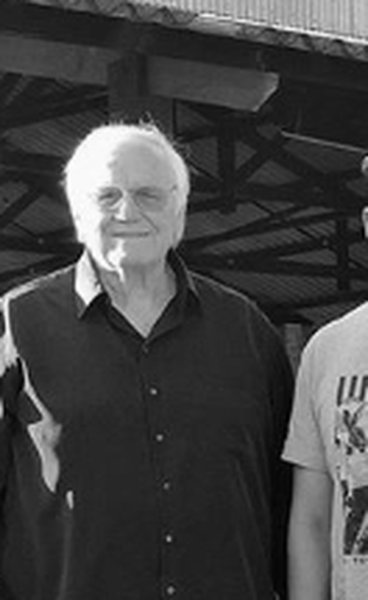
Portrait: Dunamis Movement, CC BY-SA 4.0, via Wikimedia Commons — adapted (cropped, black-and-white)