New to John R. Mott? Start with
The Evangelization of the World in This Generation
All works · 3 hr 29 min read
Biography
These words went straight to the springs of my motive life. I have forgotten all else that the speaker said, but on these few words hinged my life-investment decision. I went back to my room not to study but to fight.
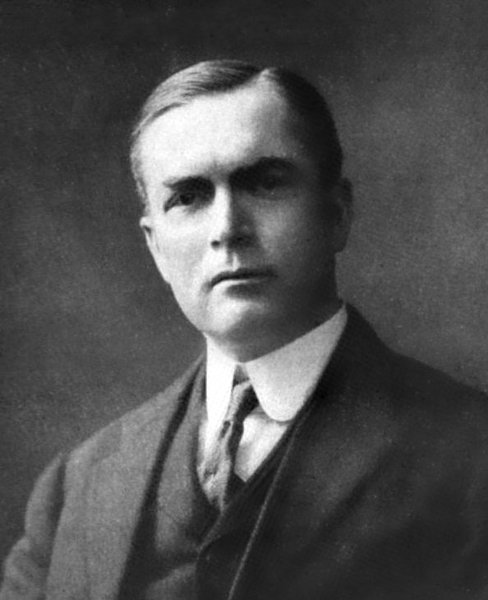
John Raleigh Mott was born on the 25th of May, 1865, at Livingston Manor in Sullivan County, New York, the third of four children and the only son. When he was four months old his parents, John and Elmira Mott, carried him west to Iowa, and the boy grew up in Postville, a prairie village of fewer than five hundred people near the Mississippi. His father prospered in the lumber trade and became the town’s first mayor; his mother read constantly and never missed a Methodist prayer meeting. He later said those boundless plains had kindled his imagination for worldwide plans.
In the winter of 1878–79 a Quaker evangelist named J. W. Dean, secretary of the Iowa Young Men’s Christian Association, spent several weeks in Postville. Scores of townspeople were converted, the elder Mott among them, and his thirteen-year-old son felt the first serious stirrings of faith. The local Methodist pastor, Horace Warner, took the boy in hand, directed his reading, and persuaded his father to send him to college. At sixteen he went to Upper Iowa University at Fayette, where he won prizes in debate. But he meant to be a lawyer and a politician, and partly to escape the pressure toward religious work, he moved in 1885 to Cornell University.
Three sentences at Cornell
He was lonely at first, and restless. Within two months he was writing home that he had long felt he was “meant for something more than a business life,” though in what sphere he could not yet say. That winter J. E. K. Studd, the Cambridge cricketer and brother of C. T. Studd, came to Cornell. On Friday evening, the 15th of January, 1886, Mott hesitated a long while before going to hear him, arrived late, and slipped into a seat at the back of the botanical lecture room just as Studd gave out his text. Decades later Mott told a student convention what happened.
These words went straight to the springs of my motive life. I have forgotten all else that the speaker said, but on these few words hinged my life-investment decision. I went back to my room not to study but to fight.
— John R. Mott
The words were three short sentences: “Seekest thou great things for thyself? Seek them not. Seek ye first the Kingdom of God.” The next afternoon he found the courage to call on Studd, who sent him back to the New Testament itself and urged him to rest the guidance of his life on a personal relationship with Christ. But the ground had been prepared for weeks, and the struggle had been waged on his knees.
The letter began: “I have glad news for you for your prayers have been answered.” Later he told his father to dispose of the business he had held for his only son. The fuller surrender, Mott always said, came gradually. He spent much of that year serving prisoners in the county jail, and set himself to a hard, honest study of the resurrection, and he never forgot the day when, with his notes spread across the desk and the faded rag carpet, he could say with Thomas, in full intellectual honesty, “My Lord and my God.”
The Mount Hermon hundred
That summer Cornell sent him as its delegate to the first international Christian student conference, called by Dwight L. Moody at Mount Hermon, Massachusetts, in July 1886. Two hundred and fifty-one young men from eighty-nine colleges gathered for four weeks, and for nearly two of them nobody spoke of foreign missions. But a Princeton student, Robert Wilder, had come after weeks of prayer, backed by the prayers of his sister Grace, convinced that God would call many of those men to the mission field.
From that pledge grew the Student Volunteer Movement for Foreign Missions, formally organized in 1888, with Mott as chairman of its executive committee for the next thirty-two years. The movement took as its watchword “The Evangelization of the World in This Generation.” In 1900 Mott explained the phrase in a book of that title. He insisted that it did not promise the conversion of the world: “It means to give all men an adequate opportunity to know Jesus Christ as their Saviour and to become His real disciples.” And he never let the plan stand apart from prayer. “The missionary church is a praying church,” he wrote. “The history of missions is a history of prayer.”
He graduated from Cornell in 1888 with Phi Beta Kappa honours. That September, after long searching of heart, he agreed to serve for one year as a travelling college secretary of the YMCA. He stayed with the work for the rest of his life. In November 1891 he married Leila Ada White of Wooster, Ohio. She shared his work for more than sixty years, and they had two sons and two daughters.
The morning watch
In 1895, at Vadstena Castle in Sweden, Mott and the Swede Karl Fries founded the World’s Student Christian Federation. As its general secretary Mott set out at once on a world tour through some two dozen countries, helping to form national student movements in India, Ceylon, China, Japan, Australia, and New Zealand. He pressed on students everywhere the “morning watch,” by which he meant spending at least the first half-hour of every day alone with God in Bible study and prayer. He called the first hour “preeminently the still hour,” and urged his readers to form “an undiscourageable resolution” to keep it.
The true object should be (and it is necessary to remind ourselves of this constantly) to meet God, to hear His voice, to receive guidance and strength from Him, which will enable me to please Him today in thought, in word, in activity.
— John R. Mott, The Morning Watch
Travel became the pattern of his life. He crossed the Atlantic more than a hundred times and the Pacific fourteen times, and by one reckoning he covered some two million miles, at an average of thirty-four days a year at sea. He studied each country’s history and religion before he arrived, and the Nobel Committee later remarked that he never carried the gospel abroad “in an American style.”
Edinburgh, and a world at war
In June 1910 he presided over the World Missionary Conference at Edinburgh, where some twelve hundred delegates of the Protestant missionary societies met for ten days of careful study. On the closing evening, the 23rd of June, Mott rose to send them home.
The end of the Conference is the beginning of the conquest. The end of the planning is the beginning of the doing.
— John R. Mott, closing address, Edinburgh, 1910
The rest of that address was more searching than triumphant. The conference, he said, had humbled them as they discovered “that the greatest hindrance to the expansion of Christianity lies in ourselves.” He asked leaders to go quietly home and revise their plans “not in the light of our resources, but of His resources and wishes.” He admitted how flat and timid their intercession had been. He chaired the committee that carried Edinburgh’s work forward, and in 1921 that committee became the International Missionary Council, which he led until 1942.
Four years after Edinburgh the world went to war, and much of what Mott had built across borders was torn apart. Christian students who had prayed together now faced each other across the trenches. Mott had already declined President Wilson’s offer of the ambassadorship to China. He now served on a commission to Mexico in 1916 and on the special diplomatic mission to Russia in 1917. As general secretary of the YMCA’s National War Work Council he raised vast sums for work among soldiers and for the relief of prisoners of war on both sides, and he received the Distinguished Service Medal. When the Nobel Committee later spoke of his long life, it said plainly that it had brought him “profound disappointments,” and that these had never broken his spirit.
There were other disappointments too. The watchword that had fired a generation drew criticism from the German mission historian Gustav Warneck and others who thought it overconfident, and the generation it named passed without its fulfilment. After the peak of the student conventions around 1920, the Student Volunteer Movement began to lose its focus on Bible study, evangelism, and the missionary call. Mott remained steady through it all. He presided at world missionary conferences at Jerusalem in 1928 and Tambaram in 1938, and in the Second World War again gave himself to aid for prisoners of war.
The servant of all
In 1946, at eighty-one, he shared the Nobel Peace Prize with Emily Greene Balch, “for his contribution to the creation of a peace-promoting religious brotherhood across national boundaries.” In his Oslo lecture on the 13th of December he spoke of the leadership the post-war world required. Leaders must rely, he said, on “the superhuman resources,” and above all on “the superhuman power of prayer.” He ended with the words of Christ: “He who would be greatest among you shall be the servant of all.” Two years later, at Amsterdam, the new World Council of Churches elected him its honorary president, and the old man stood in his academic robes before the assembly of churches whose unity he had spent his life preparing.
Leila died in 1952, after more than sixty years of marriage. The next year, in his late eighties, he married Agnes Peter. John R. Mott died at his home in Orlando, Florida, on the 31st of January, 1955, at the age of eighty-nine, and was buried in the Washington National Cathedral. At the memorial service in New York his friend Ralph Sockman summed up the secret of his influence: he was so great a master of men, Sockman said, because he was so truly a servant of God. Yet the heart of his life lies further back than any movement he founded: in a young man praying night after night in an Ithaca rooming house, in a hundred students on a New England hillside, and in the first half-hour of each day given to God. A prayer of his, printed in the YMCA’s memorial folder, asks the Father that each one present might be placed “afresh at Thy disposal in Thine unerring and loving hands.” That is where John Mott had tried to live since the winter night at Cornell.
Books by John R. Mott (1)
Questions and Answers
Who was John R. Mott?
John Raleigh Mott (1865–1955) was an American Methodist layman who gave his life to "the evangelization of the world in this generation." He led the Student Volunteer Movement, founded the World's Student Christian Federation, chaired the 1910 Edinburgh Missionary Conference, and shared the 1946 Nobel Peace Prize. A tireless traveller and a man of the "morning watch," he helped lay the foundations of the International Missionary Council and the World Council of Churches.
When and where was John R. Mott born?
He was born on 25 May 1865 at Livingston Manor in Sullivan County, New York, the third of four children and the only son. At four months old his parents, John and Elmira Mott, took him to Iowa, and he grew up in Postville, a prairie village of fewer than five hundred people. His father prospered in lumber and became the town's first mayor; his mother never missed a Methodist prayer meeting. He said those plains kindled his imagination for worldwide plans.
How did John R. Mott come to faith and give his life to Christian work?
He first felt serious stirrings of faith at thirteen, when a YMCA evangelist visited Postville. At Cornell, on 15 January 1886, he heard the cricketer J. E. K. Studd preach on three sentences: "Seekest thou great things for thyself? Seek them not. Seek ye first the Kingdom of God." Mott said they "went straight to the springs of my motive life" and that he "went back to my room not to study but to fight." After nights of prayer he knew he "must work in His vineyard."
What happened at the Mount Hermon conference in 1886?
In July 1886 Cornell sent Mott to the first international Christian student conference, called by Dwight L. Moody at Mount Hermon, Massachusetts. A Princeton student, Robert Wilder, gathered twenty-one young men who were considering missionary service, and they prayed that God would set apart many for the work. By the close of the conference the twenty-one had become exactly one hundred, and Mott was one of them. From that pledge grew the Student Volunteer Movement.
What did John R. Mott mean by the evangelization of the world in this generation?
The watchword of the Student Volunteer Movement, which Mott chaired for thirty-two years, did not promise the conversion of the world. In his 1900 book of that title he explained, "It means to give all men an adequate opportunity to know Jesus Christ as their Saviour and to become His real disciples." He never separated the plan from prayer: "The missionary church is a praying church. The history of missions is a history of prayer." Critics such as Gustav Warneck thought it overconfident.
What was the morning watch that John R. Mott taught?
Mott urged students everywhere to spend at least the first half-hour of every day alone with God in Bible study and prayer, calling the first hour "preeminently the still hour" and urging "an undiscourageable resolution" to keep it. The true object, he wrote, is "to meet God, to hear His voice, to receive guidance and strength from Him." Some of his most vivid lessons came from abroad, as in Japan, where students climbed a hill before daybreak to pray together.
What did John R. Mott do at the Edinburgh Missionary Conference of 1910?
In June 1910 he presided over the World Missionary Conference at Edinburgh, where some twelve hundred Protestant missionary delegates met for ten days. Closing it on 23 June, he said, "The end of the Conference is the beginning of the conquest. The end of the planning is the beginning of the doing." He confessed "that the greatest hindrance to the expansion of Christianity lies in ourselves." The continuation committee he chaired became the International Missionary Council in 1921, which he led until 1942.
How much did John R. Mott travel?
Travel became the pattern of his life. After founding the World's Student Christian Federation with Karl Fries at Vadstena Castle in Sweden in 1895, he set out on a world tour through some two dozen countries. He crossed the Atlantic more than a hundred times and the Pacific fourteen times, and by one reckoning covered some two million miles. He studied each country's history and religion before arriving, and never carried the gospel abroad "in an American style."
Why did John R. Mott win the Nobel Peace Prize?
In 1946, at eighty-one, he shared the Nobel Peace Prize with Emily Greene Balch "for his contribution to the creation of a peace-promoting religious brotherhood across national boundaries." During both world wars he had given himself to relief for prisoners of war, and he had served on diplomatic missions to Mexico and Russia. In his Oslo lecture he spoke of "the superhuman power of prayer" and closed with Christ's words that the greatest must be the servant of all.
When and how did John R. Mott die?
In 1948 the new World Council of Churches elected him its honorary president. His wife Leila, whom he had married in 1891, died in 1952 after more than sixty years of marriage, and the next year he married Agnes Peter. Mott died at his home in Orlando, Florida, on 31 January 1955, aged eighty-nine, and was buried in the Washington National Cathedral. His friend Ralph Sockman said he was so great a master of men because he was so truly a servant of God.