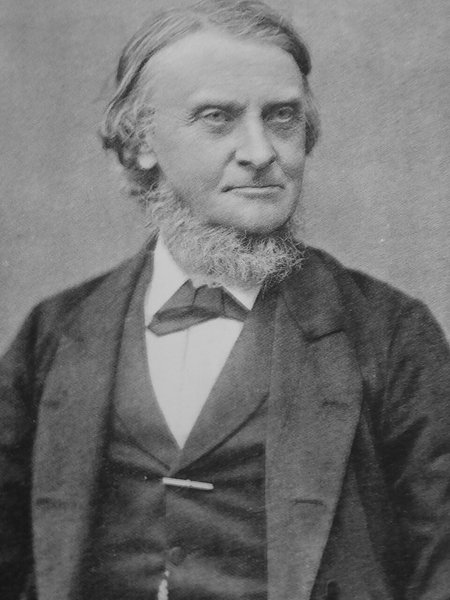
Biography
- 1826 Born
- 1846 Southampton
- 1858 Manchester
- 1905 World Alliance
- 1910 Died
This world's gifts cloy and never satisfy; God satisfies and never cloys.
Alexander Maclaren was born in Glasgow on 11 February 1826, the son of David Maclaren, a merchant who was also a Baptist lay preacher — so the boy grew up hearing the Scriptures opened at home before he ever opened them in a pulpit. He was quick, bookish, and devout. He studied first at Glasgow University, and when the family moved to London he was set to train for the ministry at Stepney College, the Baptist ministerial school, entering in 1842. There he came under a teacher who shaped him for life: the Hebraist Benjamin Davies, who grounded his young student so thoroughly in Greek and Hebrew that Maclaren never afterwards let a day pass without them. It was the making of the expositor: a man who would spend half a century drawing sermons out of the very words of Scripture had first been taught to love those words in the tongues they were written in. He took the London University degree in 1845, winning a prize in the Scripture examination, and at twenty he was ready — younger than most men are when they first begin to listen to preachers, he had already been called to be one.
A three-month supply that lasted twelve years
His first charge was Portland Chapel in Southampton, which he began to serve on 28 June 1846. He was invited as a temporary supply, for perhaps three months, to a small congregation — a room for three hundred hearers, a membership of twenty, and a modest guaranteed stipend. The three months became twelve years. It was a hard, unglamorous apprenticeship, and it taught him the craft that would make him famous: how to take a single text and open it until a plain congregation saw the whole gospel standing in it.
In 1858 he was called to Union Chapel, Manchester, and there he stayed — not for a season, but for the rest of his working life. From 1858 to 1903, forty-five years, he preached to substantially the same people, in the same city, from the same book. It is one of the most remarkable long pastorates of the century, and out of it came the reputation that clung to him ever after: the prince of expository preachers. Crowds came from across the city and beyond to hear him, and young ministers came to learn; yet the man himself never courted the fame, and would have counted a single soul helped toward Christ a better return than a full gallery. Twice the Baptist Union made him its president, and when the Baptist World Alliance first gathered in London in 1905 it made the old man of Manchester its first president. But the honours never drew him from his desk, and he wore them lightly, an expositor to the last rather than a dignitary.
The study, not the lounge
Maclaren's power in the pulpit was the fruit of a discipline in the study that never relaxed. Every morning he read a chapter of the Old Testament in Hebrew and a chapter of the New in Greek — not as a scholar sharpening tools, but as a worshipper, the Word read on his knees before it was ever preached from the platform. He entered his study at nine o'clock, and — so the story went among those who knew him — he would take off his slippers and pull on a pair of heavy outdoor work boots, to remind himself that what he was about to do was hard labour. His study, he insisted, was a study, not a lounge and certainly not an office; there was no telephone, and interruptions were not welcome. He warned young ministers against letting themselves be pitch-forked into committees and tea-meetings when they ought to be at their desks with the text.
He refused to prepare his sermons weeks in advance. “I must give it red-hot,” he said, and he meant it — the message had to come warm from that morning's fire, not reheated from a cold week's notes. He preached, famously, without a manuscript. The habit was born of a small accident early in his ministry: notes he had tucked into his Bible blew away during a service, and he resolved on the spot never again to face his people with a scrap of paper between them. For half a century afterward he wrote out only his first few sentences and preached the rest from a single sheet of the barest headings — and the stenographers who took him down found little to correct.
What he preached
His sermons had a shape as recognisable as his voice. They ran to some forty minutes and four thousand words, close-knit to the text and almost always divided into three clear heads — so reliably that a friendly critic said he served the bread of life with a three-pronged fork. But the structure was never a cage; it was a way of carrying a congregation, point by point, into the heart of a passage until they saw it whole. He preached to persuade, not to display, and he guarded that aim jealously. To get himself out of the way, so that nothing stood between his hearers and the Christ of the text, he held to be among a preacher's first duties — and forty-five years in one pulpit, refusing the platforms and committees that would have made him a public man, was the long practice of that conviction.
What he gave his people, red-hot and note-free, was Christ — Christ set out of the text with a clarity that made men see what they had read a hundred times and never noticed. He had a gift for the memorable sentence that lodged in the memory and would not leave, and again and again his theme was the one thing he was surest of: that the human heart is made for God and is restless until it rests in him.
This world's gifts cloy and never satisfy; God satisfies and never cloys.
— Alexander Maclaren
He did not preach an anxious religion. The rest he commended was not the reward of a strenuous striving but the natural repose of a soul that has found its true home, and he pressed his hearers toward it as toward a settled and all-sufficient good.
We are at rest when we have God, and to long for Him is to insure the possession of an absolute and all-sufficing good.
— Alexander Maclaren
The forty-five years of sermons were gathered, in the end, into the great work by which most readers now know him: the Expositions of Holy Scripture, a running exposition of the whole Bible drawn straight from the pulpit of Union Chapel. It has never gone out of use. Generations of preachers who never heard his voice have learned from those volumes how to find the sermon that is already hidden in the text — how to open a verse until it yields its Christ, and then to keep out of the way while it does its work. They are not lectures but sermons still, warm off the page, and readers who come to them for a commentary find themselves preached to instead. Maclaren himself reckoned that a preacher's own comfort and effectiveness rose and fell exactly with the depth of his daily communion with God; his own long fruitfulness was simply the visible proof of a hidden life. The forty-five years at Union Chapel, the daily hour on his knees with the Greek and Hebrew, the plain sermons in their three plain heads — all of it flowed from the same conviction, that a man cannot give out what he has not first taken in.
The end of a long faithfulness
Maclaren gave up the active pastorate of Union Chapel in 1903, on the day forty-five years to the date from the day he had begun it, and was made pastor emeritus. In 1909 he retired to Edinburgh, and there, on 5 May 1910, he died, in his eighty-fifth year. His was not a life of signs and wonders — there is no famous deliverance to relate, no dramatic answer to a desperate prayer — but of something rarer and, in its way, harder: a faithfulness so steady and unbroken that it can be easy to overlook. He read the same two Testaments every morning, entered the same study, and preached to the same people, for the better part of half a century, and the freshness never failed because the fountain never failed. His life is the quiet argument of his own preaching — that the soul which has God wants for nothing, and that a man who keeps close to the fountain will never run dry.
Sermons by Alexander Maclaren (7)
Questions and Answers
Who was Alexander Maclaren?
Alexander Maclaren (1826–1910) was a Scottish Baptist preacher who served Union Chapel, Manchester, for forty-five years — "the prince of expository preachers," whose lifelong daily reading of the Greek and Hebrew Scriptures fed the sermons gathered in his "Expositions of Holy Scripture." His was a life not of signs and wonders but of a faithfulness so steady and unbroken that it can be easy to overlook.
What was his background and training?
He was born in Glasgow on 11 February 1826, son of a merchant who was also a Baptist lay preacher, so he grew up hearing the Scriptures opened at home. He studied at Glasgow University and then, when the family moved to London, trained for the ministry at Stepney College from 1842, where the Hebraist Benjamin Davies grounded him so thoroughly in Greek and Hebrew that he never afterwards let a day pass without them. It was the making of the expositor — a man who would spend half a century drawing sermons out of the very words of Scripture.
What was his first charge?
Portland Chapel in Southampton, which he began to serve in June 1846, invited as a temporary supply for perhaps three months to a small congregation of twenty members. The three months became twelve years. It was a hard, unglamorous apprenticeship that taught him the craft that would make him famous: how to take a single text and open it until a plain congregation saw the whole gospel standing in it.
What was his ministry at Union Chapel, Manchester?
In 1858 he was called to Union Chapel, Manchester, and stayed for the rest of his working life — from 1858 to 1903, forty-five years, preaching to substantially the same people, in the same city, from the same book. It is one of the most remarkable long pastorates of the century, and out of it came the reputation that clung to him ever after: the prince of expository preachers. Crowds came from across the city to hear him, and young ministers came to learn, yet he never courted the fame.
What was his discipline in the study?
His power in the pulpit was the fruit of a discipline that never relaxed. Every morning he read a chapter of the Old Testament in Hebrew and a chapter of the New in Greek — not as a scholar sharpening tools but as a worshipper. He entered his study at nine o'clock and, so the story went, pulled on heavy outdoor work boots to remind himself that what he was about to do was hard labour. His study was a study, not a lounge; there was no telephone, and interruptions were not welcome.
How were his prayer and his study related?
They were not two things but one. The daily half-hour in the Hebrew and Greek Scriptures was itself his devotion — the Word taken in on his knees each morning, so that when he stood to preach it, he was only handing on what he had already received in communion with God. He reckoned that a preacher's own comfort and effectiveness rose and fell exactly with the depth of his daily communion; his long fruitfulness was the visible proof of a hidden life.
How did he prepare and deliver his sermons?
He refused to prepare weeks in advance: "I must give it red-hot," he said — the message had to come warm from that morning's fire, not reheated from a cold week's notes. He preached without a manuscript, a habit born of a small accident: notes tucked into his Bible blew away during a service, and he resolved never again to face his people with a scrap of paper between them. For half a century he wrote out only his first few sentences and preached the rest from a single sheet of bare headings.
What were his sermons like?
They ran to some forty minutes and four thousand words, close-knit to the text and almost always divided into three clear heads — so reliably that a friendly critic said he served the bread of life with a three-pronged fork. But the structure was never a cage; it was a way of carrying a congregation, point by point, into the heart of a passage until they saw it whole. He preached to persuade, not to display, holding it a first duty to get himself out of the way so nothing stood between his hearers and the Christ of the text.
What did he most love to preach?
That the human heart is made for God and is restless until it rests in Him. He had a gift for the memorable sentence that would not leave the memory: "This world's gifts cloy and never satisfy; God satisfies and never cloys." His was not an anxious religion — the rest he commended was not the reward of strenuous striving but the natural repose of a soul that has found its home: "We are at rest when we have God, and to long for Him is to insure the possession of an absolute and all-sufficing good."
What does he leave?
The forty-five years of sermons were gathered into the work by which most readers now know him, the "Expositions of Holy Scripture," a running exposition of the whole Bible drawn straight from the pulpit, which has never gone out of use — teaching generations of preachers how to find the sermon already hidden in a text. He gave up the active pastorate in 1903, forty-five years to the day from when he began it, and died in Edinburgh on 5 May 1910. His life is the quiet argument of his own preaching: that a man who keeps close to the fountain will never run dry.