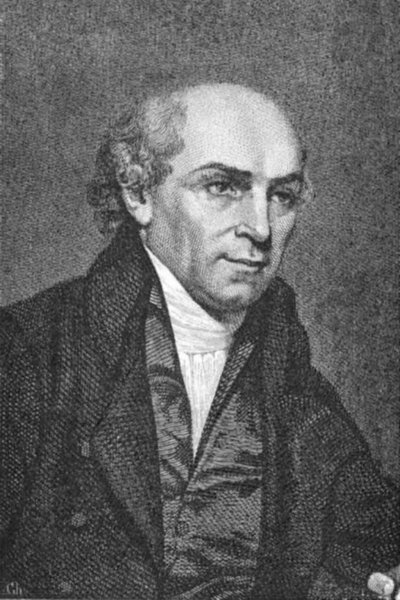
Biography
- 1761 Born
- 1793 To India
- 1834 Died
If he gives me credit for being a plodder, he will describe me justly. I can plod. I can persevere in any definite pursuit. To this I owe everything.
He was a shoemaker who never went to university, a man who learned his Greek and Hebrew and Latin at a cobbler's bench with a book propped open beside the leather. He would spend the last forty years of his life in India and never once come home. He would translate the whole Bible into six of India's languages and parts of it into some thirty more, watch a lifetime's manuscripts burn in a single night, bury a son, lose his wife to madness, and wait seven years to see one man believe. William Carey is called the father of modern missions, and the title is deserved. But the more useful thing about him is how ordinary his gifts were, and how far plain perseverance carried them.
The bench and the map
He was born on 17 August 1761 at Paulerspury in Northamptonshire, into a family of weavers. There was no money for education and no expectation of greatness. At fourteen he was apprenticed to a shoemaker at Hackleton, and it was there, mending shoes, that he began the self-teaching that would define him. He taught himself languages at the bench — Latin, then Greek, then Hebrew — reading while his hands worked. He drew a crude map of the world and hung it before him, and covered it with everything he could learn about the peoples of the earth and how few of them had ever heard the gospel.
In 1783 he was baptised as a Baptist. He began to preach, and took a small pastorate at Moulton, where the stipend was so meagre that he kept on cobbling and ran a little school besides to feed his family. This is worth holding onto: the man who would move the church of his century to look outward was, for years, a poor village pastor mending shoes and teaching children their letters, with no platform and no prospects.
What he had instead was a conviction that would not leave him alone. The older ministers of his circle held that if God intended to convert the nations, God would do it without their help. Carey could not accept it. He believed the command of Christ to go and make disciples of all nations still bound Christians as plainly as it had bound the first apostles — and that believing it obliged him to do something about it.
Expect great things
In 1792 he put the argument into print, in a long tract with a longer title: An Enquiry into the Obligations of Christians to Use Means for the Conversion of the Heathens. Its plainness is its power. He surveyed the whole known world, counted its peoples and its religions, and argued — against the caution of his elders — that the Great Commission was not a relic but a standing order, and that Christians were obliged to use ordinary means to obey it.
That same year, on 31 May, he preached a sermon at Nottingham on the text of Isaiah — "Enlarge the place of thy tent" — that would be remembered ever after as the "Deathless Sermon." Its full text has not survived. What has survived is a couplet drawn from it, in two forms. It is most often quoted as "Expect great things from God; attempt great things for God." But careful scholarship notes that the earliest recorded form was shorter — simply "Expect great things; attempt great things" — and that the familiar "from God" and "for God" appear to be a later expansion. Since the sermon itself is lost, honesty asks us to hold the short form as the likely original and the fuller version as the one tradition has loved. Either way the burden is the same, and it was aimed squarely at men who expected little and attempted less.
It opened on 2 October 1792, at Kettering, where Carey and Andrew Fuller and a handful of others founded the Baptist Missionary Society — the first English Protestant missionary society. Carey is remembered as offering the image that became its motto: he would be willing to go down into the mine, if others would hold the ropes. The exact wording varies in the telling, but the arrangement was real. In June 1793 he sailed for India. He reached Calcutta on 11 November 1793. He was thirty-two, and he would never see England again.
The long cost of the work
The early years were brutal, and the hardest of the hardship was at home. Carey's wife, Dorothy, had not wanted to go. She was a countrywoman with young children and no appetite for the far side of the world, and she went unwillingly. In India the family met fever and want. Carey took work superintending an indigo works at Mudnabati to keep them. He fell ill with malaria. Their son Peter died of dysentery at five years old. Under the weight of it all Dorothy's mind gave way. She sank into delusions from which she did not recover, and for years Carey did his enormous labours alongside a wife who was, by every account, seriously and lastingly ill; she was confined for her own safety and died in 1807. It is not a detail to hurry past. The father of modern missions carried his family's grief and his wife's madness through the very years of his greatest work, and the record does not pretend the two were ever reconciled into something tidy.
And the work itself yielded nothing, for a long time. For about seven years there was not a single convert. Seven years of preaching and translating and waiting, with the ledger empty. Then, in December 1800, a Bengali carpenter named Krishna Pal came to faith and was baptised in the river Ganges — the first Bengali believer, the first fruit of all those years.
Serampore
Because the East India Company was hostile to missionaries, the work found a home at Serampore, a small Danish settlement where it could not be shut down. There Carey was joined by Joshua Marshman, an educator, and William Ward, a printer — the three of them remembered as the "Serampore Trio." From 1801 Carey also held a professorship at Fort William College in Calcutta, teaching Bengali, Sanskrit and Marathi, and turning his salary back into the mission.
What he produced from that base is almost hard to believe. The complete Bible in six Indian languages — Bengali, Oriya, Sanskrit, Hindi, Marathi and Assamese — and portions of Scripture in some twenty-nine more. In his lifetime the Serampore press issued around 212,000 copies of Scripture. He compiled grammars and dictionaries. He was, in the end, not a genius so much as a man who did an astonishing amount of careful work and did not stop.
He put the same doggedness to the service of the vulnerable. He documented and campaigned against sati, the burning of widows on their husbands' funeral pyres, and against infanticide. When sati was at last legally banned in Bengal in 1829, the long weight of his advocacy stood behind the reform.
If he gives me credit for being a plodder, he will describe me justly. I can plod. I can persevere in any definite pursuit. To this I owe everything.
— William Carey
Be still
On the night of 11 March 1812 the Serampore printing works caught fire. Manuscripts, a great dictionary, grammars, and irreplaceable type were destroyed — years of labour gone in a few hours. Carey was away when it happened. He is remembered as saying, when he learned of it, "In one short evening the labours of years are consumed. How unsearchable are the ways of God!" — and for the following Sunday he is said to have chosen as his text Psalm 46:10, "Be still, and know that I am God." He did not rage and he did not quit. The work was begun again, and much of it rebuilt within months. The plodder went back to the bench.
A wretched, poor, and helpless worm
Carey died at Serampore on 9 June 1834, aged seventy-two, having laboured in India for four decades. For a man of such achievement, he arranged for his grave the humblest possible words. He chose for his epitaph two lines from the hymns of Isaac Watts, and nothing about missions or translations or reform:
A wretched, poor, and helpless worm, / On thy kind arms I fall.
— William Carey's chosen epitaph, from Isaac Watts
That is the true measure of him. The man who told a cautious church to attempt great things asked to be remembered as a helpless worm falling on the kind arms of God. He had expected great things and attempted them; and at the last he claimed no credit for any of it. He had said as much of himself all along — that he was no genius, only a plodder who could persevere. It is, perhaps, the most hopeful thing about his whole life. What God did through William Carey, God did through an unschooled shoemaker who simply refused to stop.
Also appears in

Questions and Answers
Why is William Carey called the father of modern missions?
Carey was an English shoemaker who argued, against the caution of his elders, that Christ’s command to make disciples of all nations still bound Christians and obliged them to use ordinary means to obey it. He put that conviction into print, helped found the first English Protestant missionary society in 1792, and then gave forty years of his own life to India. His example set the modern missionary movement in motion, which is why the title has stuck to him.
How did a poor cobbler teach himself Greek and Hebrew?
Born in 1761 into a Northamptonshire weaving family with no money for schooling, Carey was apprenticed to a shoemaker at fourteen and taught himself languages at the workbench, propping a book beside the leather and reading while his hands worked. He learned Latin, then Greek, then Hebrew this way. He also hung a homemade map of the world before him and filled it with everything he could learn about the peoples of the earth and how few had heard the gospel.
Did Carey really say “Expect great things; attempt great things”?
He preached the sermon those words come from at Nottingham on 31 May 1792, on the text of Isaiah, “Enlarge the place of thy tent.” The sermon itself has not survived, and careful scholars note that the earliest recorded form of the famous line was the shorter “Expect great things; attempt great things,” with the beloved “from God … for God” appearing to be a later expansion. Either way the challenge was aimed squarely at a church that expected little and attempted less.
What was Carey’s “Enquiry,” and how did the Baptist Missionary Society begin?
In 1792 Carey published a tract titled An Enquiry into the Obligations of Christians to Use Means for the Conversion of the Heathens, surveying the world’s peoples and arguing that the Great Commission was a standing order rather than a relic. That October, at Kettering, he and Andrew Fuller and a few others founded the Baptist Missionary Society, the first of its kind in England. Carey is remembered for offering its guiding image: he would go down into the mine if others would hold the ropes.
How long did Carey wait before he saw his first convert in India?
He reached Calcutta in November 1793 at the age of thirty-two, and for roughly seven years of preaching and translating there was not a single convert. Then, in December 1800, a Bengali carpenter named Krishna Pal came to faith and was baptised in the river Ganges, the first Bengali believer. Carey had told the church to expect great things, and after long waiting Krishna Pal was the first of them.
How much of the Bible did Carey manage to translate?
Working from the Danish settlement of Serampore alongside the educator Joshua Marshman and the printer William Ward, Carey helped produce the complete Bible in six Indian languages, including Bengali, Sanskrit and Marathi, and portions of Scripture in some twenty-nine more. He also compiled grammars and dictionaries and taught at Fort William College in Calcutta, turning his salary back into the mission. In his lifetime the Serampore press issued around 212,000 copies of Scripture.
How did Carey respond when fire destroyed years of his work?
On the night of 11 March 1812 the Serampore printing works burned, consuming manuscripts, a great dictionary, grammars and irreplaceable type, the labour of years gone in a few hours. Carey did not rage and did not quit; he is remembered for calling it unsearchable in the ways of God and for turning back to the bench, with much of the work rebuilt within months. He had long described himself not as a genius but as a plodder who could persevere, and here that was tested.
What was the cost of the mission to Carey’s own family?
His wife Dorothy had not wanted to leave England and went unwillingly, and in India the family met fever, poverty and grief, losing their five-year-old son Peter to dysentery. Under that weight Dorothy’s mind gave way; she sank into delusions from which she never recovered and was confined for her own safety until her death in 1807. Carey carried on his enormous labours through those same years, and the record does not pretend the suffering was ever tidied away.
Did Carey do anything to stop the burning of widows?
Yes. He documented and campaigned for years against sati, the burning of widows on their husbands’ funeral pyres, as well as against infanticide, presenting petitions to the government to have such practices ended. When sati was legally banned in Bengal in 1829, Carey, who served as a government translator, had the task of rendering the new regulation into Bengali and worked quickly, believing lives depended on every hour’s delay.
How did Carey want to be remembered when he died?
He died at Serampore on 9 June 1834, aged seventy-two, after four decades in India without ever returning home. For a man of such achievement he chose the humblest possible grave, asking for no mention of missions or translations but only two lines from the hymns of Isaac Watts: “A wretched, poor, and helpless worm, on thy kind arms I fall.” The man who told a cautious church to attempt great things asked at the last to be remembered as a helpless worm falling on the kind arms of God.