Where to start reading
Start with
Letters of Samuel Rutherford
Books by Samuel Rutherford (1)
Biography
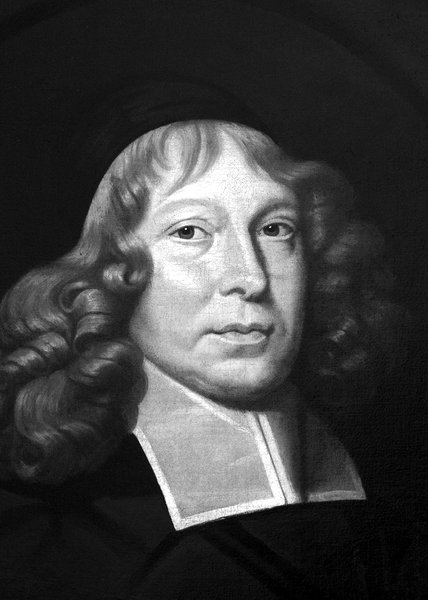
Few men have written about Jesus Christ the way Samuel Rutherford did. His letters, most of them sent from a northern town where he had been ordered to live in silence, read less like correspondence than like love songs. He calls Christ his Bridegroom, his King, his lovely Lord, and runs out of words and tries again. Richard Baxter, who disagreed with him on a good deal, said of those letters, “Hold off the Bible, such a book the world never saw.” Yet the man who wrote them was no dreamy recluse. He was a country pastor, a hard-headed scholar, a fierce controversialist and, at the last, a man summoned on a charge of treason. The ardour and the iron belonged to one life.
A Border boyhood and a hard beginning
Rutherford was born about 1600, almost certainly at Nisbet, a village in the parish of Crailing in Roxburghshire, in the Scottish Borders. Nothing certain is known of his parents; his father is believed to have been a farmer or miller.
He was schooled at Jedburgh and went up to Edinburgh in 1617, taking his Master of Arts in 1621. His gifts were noticed quickly, and in 1623 he was appointed regent of Humanity, a teaching post in Latin. Then came a fall. In 1626 he gave up the post after an accusation of immoral conduct with Euphame Hamilton, whom he had married that year. The sources do not agree on how far the charge was true. Bonar thought it difficult to ascertain and noted that no church court took the matter up; others have suggested that the real offence was marrying without the leave of the bishop or the college. What is plain is that Rutherford himself never pretended his youth had been godly. “Like a fool as I was,” he wrote later, “I suffered my sun to be high in the heaven, and near afternoon, before ever I took the gate by the end.” Bonar thought it was in the chastened years that followed, studying theology as a private man, that he truly came to know Christ.
The shepherd of Anwoth
In 1627 he was settled as minister of Anwoth, a scattered rural parish on the river Fleet near the Solway, in Galloway, in the south-west of Scotland. Though bishops then governed the Scottish church, he seems to have entered his charge without any promise to the bishop.
His people remembered him for one thing above all: he was everywhere. It was said of him that he was “always praying, always preaching, always visiting the sick, always catechising, always writing and studying.” Catechising meant taking families through the questions and answers of the faith, and he set aside whole days for it. He was not a polished speaker; his voice was shrill, and one friend recalled a strange cry in it when he came to speak of Christ. Yet an English merchant who heard several Scottish preachers later said that after the others he heard “a little, fair man,” and “he showed me the loveliness of Christ.”
The fruit did not always seem to match the labour. Two years in, he confessed, “I see exceedingly small fruit of my ministry. I would be glad of one soul, to be a crown of joy and rejoicing in the day of Christ.” He laboured on regardless, among gentry and herd boys alike, and carried his people in prayer.
There I wrestled with the Angel and prevailed. Wood, trees, meadows, and hills are my witnesses, that I drew on a fair meeting betwixt Christ and Anwoth.
— Samuel Rutherford, Letter CCLXXIX, to Marion M’Naught, from Aberdeen
Sorrow in the manse
The shepherd’s heart was formed partly in grief. In his first years at Anwoth his wife fell into a long and agonising illness. He wrote to his friend Marion M’Naught that “my wife is so sore tormented night and day, that I have wondered why the Lord tarrieth so long. My life is bitter unto me.” She suffered for more than a year before she died in June 1630. He himself was laid aside for thirteen weeks with fever in the same season, and Bonar adds that his two children had also been taken from him. In the midst of it he wrote a line that became one of his watchwords: “Welcome, welcome cross of Christ, if Christ be with it.” Four years later, comforting the newly widowed Lady Kenmure, he spoke of his own loss as a wound “not yet fully healed and cured.” His mother came from Nisbet and lived with him for six years after his wife’s death.
Grief would come back. In 1640 he married Jean M’Math, a woman of whom a friend said he never knew any among women to exceed her. They had seven children, and only one, Agnes, outlived her father. Writing from London in 1645 to a mother whose son had died, Rutherford put it simply: “I had but two children, and both are dead since I came hither.”
Christ’s prisoner in Aberdeen
In 1636 Rutherford published in Latin, at Amsterdam, a learned defence of the doctrines of grace against the Arminians, who taught that God’s grace could be finally resisted. That book, and his refusal to conform to the bishops’ ways, brought him before the authorities. Proceedings were begun by Sydserff, Bishop of Galloway, at Wigtown, and on 27 July 1636 the Court of High Commission forbade him to exercise his ministry and ordered him to live in Aberdeen during the King’s pleasure.
Aberdeen was then a stronghold of the bishops’ party, and its divines lost little time in disputing with him. When some in the town began to warm to him, there was talk of moving him elsewhere. He wrote that the preachers meant to have him moved, “so cold is northern love; but Christ and I will bear it.” People pointed him out in the streets, and he answered, “I am not ashamed of my garland, ‘the banished minister.’” His deepest pain was being cut off from Anwoth; for a year and a half, his parishioners later said, no sound of the Word of God was heard in their church.
And yet these were the years of the letters. Bonar reckoned that about two hundred and twenty were written from Aberdeen, to ministers, lairds, noblewomen and plain parishioners, many of them in Galloway and Ayrshire. Bonar calls them letters “from Christ’s palace in Aberdeen,” and Rutherford himself calls his chains gold. He writes of Christ as a lover writes, and then checks himself for loving Christ’s gifts more than Christ himself.
My prison is a palace to me, and Christ’s banqueting-house. My Lord Jesus is as kind as they call Him. O that all Scotland knew my case, and had part of my feast!
— Samuel Rutherford, Letter LXXX, to Marion M’Naught
Covenant, Westminster and St Andrews
In 1638 the tide turned. The Covenant was again triumphant in the land, as Bonar puts it, and the Glasgow Assembly of that year restored presbyterian government. Rutherford returned to Anwoth in February and sat in that Assembly. Against his own wishes, for he loved his rural flock, the church moved him in 1639 to St Andrews as Professor of Divinity. He accepted on condition that he might preach every Sabbath alongside the minister there, Robert Blair. In 1647 he became Principal of St Mary’s College.
In 1643 he was sent as one of the four Scottish commissioners to the Westminster Assembly in London, the gathering that produced the Westminster Confession and Catechisms, and he stayed four years. In London he published, in 1644, Lex, Rex, or The Law and the Prince. That book argued that the king is under the law, defended limited government, and justified defensive resistance to a ruler who breaks it.
His convictions deserve to be stated plainly, as he held them. He believed the presbyterian government of the church, by ministers and elders in courts rather than by bishops, was laid down in Scripture. He held that church and state were distinct kingdoms, yet that the magistrate must uphold the true religion, and in A Free Disputation against Pretended Liberty of Conscience (1649) he argued against toleration of religious error, which drew the scorn of John Milton. In the bitter split of the 1650s between the Resolutioners and the Protesters, who resisted readmitting former opponents of the Covenant to power, he took the Protesters’ side against old friends such as David Dickson and Blair. Even Bonar admits that “Rutherford wrote too violently on this matter.” Yet he could also write, of those quarrels, “A doubt it is if we shall have fully one heart till we shall enjoy one heaven.”
A summons before a superior Judge
When Charles II was restored in 1660, Rutherford was among the first marked out. Lex, Rex was burned by the common hangman at Edinburgh and St Andrews, he was deprived of all his offices, and he was cited to answer a charge of high treason before Parliament. Bonar judged that, had he lived a few weeks longer, his might have been the cruel death soon suffered by his friend James Guthrie, to whom he had written words of steadfastness that February. But the citation came too late. He was already on his deathbed, and, Bonar records, he replied that he had got another summons before a superior Judge and judicatory, and sent the message, “I behove to answer my first summons; and, ere your day arrive, I will be where few kings and great folks come.” When Parliament voted that he should not be allowed to die in his college, Lord Burleigh rose and said, “Ye cannot vote him out of heaven.”
He disclaimed all his own labours and rested on forgiveness through Christ’s blood alone. Asked what he now thought of Christ, he answered:
I shall live and adore Him. Glory, glory to my Creator and Redeemer for ever. Glory shineth in Immanuel’s land.
— Samuel Rutherford, on his deathbed, as recorded in Bonar’s sketch
He died at St Andrews on 29 March 1661 and was buried there in the cathedral churchyard. His epitaph calls him one who was “Acquainted with Immanuel’s love.” Long afterwards his words about Immanuel’s land gave Anne Cousin the hymn “The Sands of Time are sinking,” and in 1842 a monument was raised on the hill above Anwoth.
The letters he left
The letters were gathered after his death by M’Ward, a former student who had gone with him to Westminster as his secretary, and first printed at Rotterdam in 1664 under the title Joshua Redivivus. They came out in no particular order. Andrew Bonar’s edition, the one we publish, arranges all 365 chronologically, so that a reader can walk with Rutherford from the grief of the Anwoth manse, through the Aberdeen years, to the final notes from St Andrews in 1661, with short notices on many of his correspondents.
They are not all easy reading: the Scots is old, the imagery sometimes startles, and some in his own century sneered that they were fit only for old wives. But they have been read for three and a half centuries by the sick, the bereaved and the spiritually dry, because they keep turning the reader away from himself toward the person of Christ. Read a few from 1636 and 1637 slowly, one at a sitting, and let a man who had lost wife, children, pulpit and freedom tell you that he found Christ enough.
Questions and Answers
Who was Samuel Rutherford?
Samuel Rutherford (c. 1600–1661) was a Scottish Presbyterian minister and theologian, pastor of Anwoth in Galloway, later Professor of Divinity and Principal of St Mary’s College at St Andrews, and one of the Scottish commissioners to the Westminster Assembly. He is best remembered for his letters, full of ardent love for Christ.
Where and when was Samuel Rutherford born?
He was born about 1600, almost certainly at Nisbet in the parish of Crailing, Roxburghshire, in the Scottish Borders. The exact year is not known, and nothing certain is known of his parents, though his father is believed to have been a farmer or miller.
Why did Rutherford leave his teaching post at Edinburgh?
After graduating M.A. in 1621 he was appointed regent of Humanity at Edinburgh in 1623, but in 1626 he gave up the post after an accusation of immoral conduct with Euphame Hamilton, whom he married that year. The sources differ on how far the charge was true; some suggest the real offence was marrying without episcopal or academic authority. Rutherford himself later spoke of having come to Christ late.
What was Rutherford’s ministry at Anwoth like?
Settled at Anwoth in 1627, he rose early to pray, visited the sick, catechised families and preached faithfully to a scattered rural flock. It was said of him that he was “always praying, always preaching, always visiting the sick, always catechising, always writing and studying.”
What sorrows did Rutherford suffer in his family?
His first wife, Euphame Hamilton, died in June 1630 after more than a year of terrible illness, and his two children were also taken from him. By his second wife, Jean M’Math, he had seven children, of whom only his daughter Agnes outlived him.
Why was Rutherford banished to Aberdeen?
In 1636, mainly for his Latin book against Arminianism and for his nonconformity to the bishops, he was accused by Bishop Sydserff of Galloway. On 27 July 1636 the Court of High Commission forbade him to exercise his ministry and ordered him to live in Aberdeen, where he stayed until 1638.
Why did Rutherford call his prison “Christ’s palace”?
Though cut off from his flock, he found Christ so near in Aberdeen that he wrote, “My prison is a palace to me, and Christ’s banqueting-house.” About two hundred and twenty of his letters were written there.
What part did Rutherford play in the Covenant and the Westminster Assembly?
After the Covenant triumphed in 1638 he returned from Aberdeen, sat in the Glasgow Assembly, and was moved to St Andrews as Professor of Divinity in 1639. From 1643 he spent four years in London as a Scottish commissioner to the Westminster Assembly, where he wrote Lex, Rex (1644), arguing that the king is under the law.
How did Rutherford answer the summons for treason?
After the Restoration of Charles II, Lex, Rex was burned, he was deprived of his offices and cited for high treason, but he was already dying. He sent the message, “I behove to answer my first summons; and, ere your day arrive, I will be where few kings and great folks come.” He died at St Andrews on 29 March 1661.
What are the Letters of Samuel Rutherford?
They are his collected letters of spiritual counsel, first printed at Rotterdam in 1664 as Joshua Redivivus. Andrew A. Bonar’s edition arranges 365 of them in order of date, from the Anwoth years through the Aberdeen exile to his last months, and they have been loved for their ardent language about Christ.