Where to start reading
Start with
The Rise and Progress of Religion in the Soul
Books by Philip Doddridge (1)
Biography
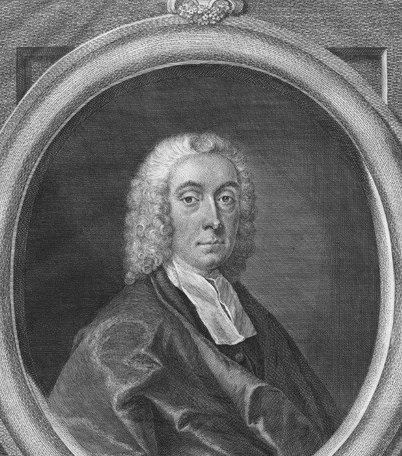
Philip Doddridge spent his life in a Midlands market town, running a small college for ministers, preaching to one congregation, and writing whenever he could find the time. He was thin, often ill, and endlessly busy. Yet a book he wrote in that crowded life, The Rise and Progress of Religion in the Soul, crossed oceans and centuries. It was translated into several languages and helped turn William Wilberforce toward Christ, and churches still sing hymns that Doddridge wrote to close his Sunday sermons. He prayed that the book would reach readers who were not yet born, and it did.
The Bible on the chimney tiles
He was born in London on 26 June 1702, the last of the twenty children of Daniel Doddridge, a dealer in oils and pickles. Dissent ran in the family. His grandfather John Doddridge, rector of Shepperton, had been ejected from his parish in 1662 for refusing to conform to the Church of England. His mother Elizabeth was the orphaned daughter of a Lutheran pastor who had fled persecution in Prague. She was the deeper influence on him. Before Philip could read, she taught him the stories of the Old and New Testaments from the blue Dutch tiles around the fireplace of their sitting room.
She died in 1711, when he was eight, and his father died in 1715. The guardian left in charge of the boy squandered his inheritance, and at thirteen Philip was an orphan with nothing, at school in St Albans. There Samuel Clarke, the local Presbyterian minister, took him in and treated him as a son. Clarke guided his studies and encouraged his sense of a call to the ministry. Doddridge never forgot it. Preaching at Clarke’s funeral decades later, he said that to him, under God, he owed “even myself and all my opportunities of public usefulness in the church.”
Offers came that would have led the clever orphan into the Church of England, or into the law. He turned them down. In 1719, with Clarke’s support, he entered the Dissenting academy at Kibworth in Leicestershire under John Jennings. Dissenters, the Protestants who would not conform to the national church, were shut out of the universities, and academies like Kibworth trained their ministers. In 1723, still only about twenty-one, he briefly succeeded Jennings and settled as minister of a small village congregation.
Northampton
He was soon asked to lead a new academy for Dissenting ministers at Market Harborough. In 1729 he accepted a call from an Independent congregation at Northampton, and the academy moved with him. For the next twenty-two years he was both pastor of the Castle Hill church and head of the college. He lectured on philosophy and theology, and some two hundred young men passed through his hands. In 1736 both universities at Aberdeen made him a Doctor of Divinity.
On 22 December 1730 he married Mercy Maris of Worcester after a seven-month courtship. They had nine children, and only four lived to grow up. Their first, Elizabeth, whom they called Tetsey, died just before her fifth birthday in 1736 and was buried beneath the floor of the chapel where her father preached. Many of the letters between Philip and Mercy survive, and they give a rare window into their life together.
His preaching was plain and practical. Its aim was to bring hearers into a devout, prayerful frame of mind rather than to win arguments. He liked to end a sermon with a new hymn summing up its lesson, so the congregation could sing back what they had heard. He wrote some four hundred of these. None was published in his lifetime, but a collection of three hundred and seventy appeared after his death, and several are still sung today: “O God of Bethel, by whose hand,” “Hark the glad sound! the Saviour comes,” and “Awake, my soul, stretch every nerve.”
A friend to all who loved Christ
Doddridge lived in an age of quarrelling religious parties, and he refused to join any of them. He kept up a wide correspondence with ministers of many kinds and worked for a united Nonconformity that could hold together educated and uneducated believers. When he wrote his great book, he asked readers to take it as a whole, because he had watched Christians seize on single parts of the truth “as if each had been all.” In the preface he prayed:
I pray God to give to all his ministers and people more and more of the spirit of wisdom, and of love, and of a sound mind
— Philip Doddridge, preface to The Rise and Progress of Religion in the Soul
That generous spirit cost him something. When the evangelical revival began to stir England, Doddridge welcomed it. In 1743 he preached at George Whitefield’s Tabernacle in London and then opened his own Northampton pulpit to Whitefield. His friend Isaac Watts, the great hymn-writer, rebuked him for lowering the dignity of a Dissenting minister and tutor, and other Dissenting ministers sharply censured him. It was the price of his openness, and he paid it.
A book for every reader
The book itself began with Watts. In the preface Doddridge explains that Watts had sketched the plan of such a work, but illness kept him from writing it, and he “in a very affectionate and importunate manner” urged Doddridge to take it on. Doddridge did, and Watts lived to see it finished and to read much of it. It appeared in 1745, dedicated to him.
The Rise and Progress of Religion in the Soul follows a single reader through the whole Christian life in thirty short chapters. It begins with a careless person who has never thought seriously about God. It goes on through conviction of sin and the good news of salvation in Christ, then a solemn dedication of oneself to God and the Lord’s Supper. After that come the ordinary disciplines of daily devotion, and the hard seasons of spiritual dryness, relapse and affliction. It ends at the deathbed. Each chapter closes with a written prayer that the reader can make their own. Doddridge wrote it for the humblest reader he could imagine:
I have studied in this Treatise the greatest plainness of speech, that the lowest of my readers may, if possible, be able to understand every word
— Philip Doddridge, preface to The Rise and Progress of Religion in the Soul
He was also careful not to make his map a rule. He added a caution in the preface: not everyone comes to faith through the same stages of terror and conviction. Some, especially those raised in godly homes, are drawn to God “by such gentle and insensible degrees” that they cannot tell the story of their conversion at all. They should not doubt their faith because their story is quiet.
Labours beyond his strength
He had a weak constitution from childhood, and he gave himself more work than a strong man could have carried. Alongside the church and the academy he wrote The Family Expositor, a paraphrase of and commentary on the whole New Testament, in six volumes from 1739. John Wesley acknowledged a debt to it in his own notes on the New Testament. Doddridge also wrote a Life of Colonel Gardiner (1747), sermons and treatises, and a vast number of letters. In 1750 he started a scheme to give poor but able boys a grammar-school education so that they could go on to train for the ministry. The scheme did not survive him.
The record admits that all this took a toll. His engagements and his correspondence grew so heavy that they interfered with his preaching and teaching. His body paid for it too. In December 1750 he travelled to St Albans to preach the funeral sermon of Samuel Clarke, the man who had rescued him as a boy, and on that journey he caught a cold that he never shook off. In July 1751 he preached to his Northampton congregation for the last time.
Lisbon
By then he had tuberculosis. His friends hoped a warmer climate might save him, and they raised three hundred pounds to send him to Lisbon. The Countess of Huntingdon gave a third of it. He sailed at the end of September 1751. The voyage did not help. He died at Lisbon on 26 October 1751, aged forty-nine, and was buried in the British Cemetery there, where his grave can still be seen.
He had already written, in the last chapter of his book, what he hoped his dying would show. He had asked that certain promises of Scripture be read to him on his deathbed, with pauses between them, so that he could rest on each. And he made it plain that the book had been written from experience, not theory:
And I can truly and cheerfully say, that I have marked out to you the path which I myself have trod, and in which it is my desire still to go on.
— Philip Doddridge, The Rise and Progress of Religion in the Soul, Chapter XXX
Readers yet unborn
His academy outlived him. In time it became New College, London, and went on training ministers for generations. But his widest influence came through the book. It was reprinted again and again and translated into several languages. Charles Spurgeon called it “that holy book.” Long after Doddridge’s death, William Wilberforce read it with his friend Isaac Milner, and it set him on the spiritual journey that ended in his conversion.
Readers who open it today will find it serious, searching and tender. It does not hurry, and it does not flatter. Doddridge writes, as he promised, “as a friend to a friend,” stepping aside after each short address to let the reader pray. Its prayers alone make it worth reading. They give words to people at every stage, from the first stirring of conscience to the last hour of life. He wrote it in the gaps of an exhausting life for anyone who might pick it up, and it is still doing what he asked of it.
Questions and Answers
Who was Philip Doddridge?
Philip Doddridge (1702–1751) was an English Nonconformist minister of the Congregational, or Independent, tradition. He was pastor of a church in Northampton for twenty-two years, ran an academy that trained Dissenting ministers, and wrote hymns, a New Testament commentary and The Rise and Progress of Religion in the Soul.
What was Philip Doddridge’s childhood like?
He was born in London on 26 June 1702, the last of twenty children of an oil merchant. His mother taught him Bible stories from the Dutch tiles around their fireplace before he could read. She died when he was eight and his father when he was thirteen, and a guardian then squandered his inheritance.
Who was Samuel Clarke to Philip Doddridge?
Samuel Clarke was the Presbyterian minister at St Albans who took in the orphaned and penniless Doddridge, treated him as a son, guided his education and encouraged his call to the ministry. They stayed friends for life, and Doddridge said he owed Clarke, under God, even himself.
Why did Philip Doddridge train at a Dissenting academy?
He turned down openings that would have led him into the Church of England or the law, choosing instead to serve the Dissenters. In 1719 he entered the academy at Kibworth in Leicestershire under John Jennings, whom he briefly succeeded.
What did Philip Doddridge do in Northampton?
From 1729 until 1751 he was pastor of an Independent congregation at Northampton and head of an academy for ministers, where some two hundred students studied with him. In 1736 the universities of Aberdeen made him a Doctor of Divinity.
What hymns did Philip Doddridge write?
He wrote some four hundred hymns, often to close a sermon by summing up its lesson. They were published after his death, and several are still sung, including “O God of Bethel, by whose hand” and “Hark the glad sound! the Saviour comes.”
What was Philip Doddridge’s connection with Isaac Watts and George Whitefield?
Isaac Watts was a close friend who sketched the plan for The Rise and Progress and urged Doddridge to write it. In 1743 Watts rebuked him for preaching at George Whitefield’s Tabernacle, and Doddridge was censured by other Dissenting ministers when he opened his own pulpit to Whitefield.
What is The Rise and Progress of Religion in the Soul about?
Published in 1745 and dedicated to Isaac Watts, it follows a reader through the Christian life in thirty short chapters, from careless indifference through conviction, faith and dedication to God, daily devotion, spiritual trials, and finally death. Each chapter ends with a prayer, and Doddridge wrote it as plainly as he could so that anyone could follow it.
How did Philip Doddridge die?
His health had always been weak, and in 1751 he had tuberculosis. Friends raised money to send him to a warmer climate, and he sailed for Lisbon at the end of September, but he died there on 26 October 1751 and was buried in the British Cemetery.
What is Philip Doddridge’s legacy?
His academy later became New College, London, and his hymns are still sung. The Rise and Progress was often reprinted and translated, Charles Spurgeon called it a holy book, and William Wilberforce began the spiritual journey that led to his conversion by reading it.