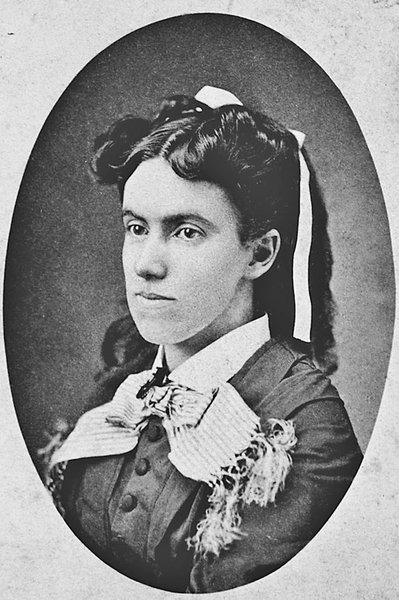
Biography
- 1840 Born
- 1858 Converted
- 1873 To China
- 1887 Offering
- 1912 Died
What we need in China is more workers. The harvest is very great, the laborers, oh! so few. Why does the Southern Baptist church lag behind in this great work?
She was small — under five feet — and she spent thirty-nine years in a country that was not hers, in a province most of her supporters at home could not have found on a map. She had one of the first Master of Arts degrees a Southern institution ever gave a woman, and she used it to bake tea cakes for the children of a Chinese village so that their mothers might one day sit and listen to her. Lottie Moon is remembered now mostly for an offering that bears her name and has since gathered more than five billion dollars for missions. But the offering was an afterthought of her real work, which was to give herself away in Shandong until there was nothing left to give.
A Virginia girl who did not believe
Charlotte Digges Moon was born on 12 December 1840 at Viewmont, the family estate in Albemarle County, Virginia. The Moons were affluent and staunchly Baptist, and Lottie was raised inside the faith without belonging to it. She was clever, sharp-tongued, and by her own account religiously indifferent as a young woman — the sort of student who could argue circles around the pious and enjoyed doing it.
Her education was unusual for a woman of her time and place. She read several languages and, in 1861, received from the Albemarle Female Institute one of the first Master of Arts degrees a Southern institution had awarded to a woman. But the decisive change had come three years earlier. In December 1858, under the preaching of John A. Broadus at the First Baptist Church of Charlottesville, the indifferent young woman was converted. The story her friends told afterward was that she had gone to the meetings partly to scoff and stayed to be undone.
For more than a decade after that she taught school. Teaching was one of the few serious occupations open to an educated single woman, and she was good at it. But a conviction was forming in her that the church was leaving half its work undone — that there were women and girls across the world whom no man could ever reach, and that it would take women to reach them.
The call to China
Her younger sister Edmonia went first, sailing for China in 1872 as one of the first single women the Southern Baptists had ever sent. On 7 July 1873, at the age of thirty-two, Lottie was appointed a missionary in her own right, and she followed her sister out to Shandong province. She would remain, with only two furloughs, for the rest of her life.
What she found was not a field prepared for her. It was hard, slow, and often lonely, and she saw quickly that the labour was enormous and the workers pitifully few. Within months of her arrival she was already writing home with the complaint — half lament, half rebuke — that would echo through the rest of her letters.
What we need in China is more workers. The harvest is very great, the laborers, oh! so few. Why does the Southern Baptist church lag behind in this great work?
— Lottie Moon, Tungchow, 1 November 1873
The words were barely her own. They were Christ's, from Matthew's Gospel — the harvest truly is plenteous, but the labourers are few; pray ye therefore the Lord of the harvest, that he will send forth labourers into his harvest. Lottie Moon prayed that prayer for nearly forty years, and she prayed it not as a pious sentiment but as a working woman staring at more fields than she could ever reap alone.
Becoming Chinese to win the Chinese
She taught at first in a girls' school in Tengchow, the coastal city where she was based. But the schoolroom chafed at her. The real need, she became convinced, was out in the villages of the interior, among women who had never once heard the name of Christ and never would from a man. So she began to travel — itinerant trips deep into the countryside, and from around 1885 pioneering work at P'ingtu, in the interior, where she often lived and worked alone.
She made a deliberate decision that set her apart from many missionaries of her era: she would not stand over the Chinese as a foreigner but sit among them as a neighbour. She adopted Chinese dress, ate Chinese food, learned the language until it was fluent, and took on the customs of the people she had come to serve. Suspicion of the strange Western woman softened into welcome. Famously, she learned to bake cookies and tea cakes and gave them to the village children, who ran ahead of her from house to house — and behind the children came the mothers, curious about the small woman who fed their little ones and spoke their tongue.
It was patient, unglamorous work, measured in trust slowly earned rather than crowds quickly gathered. And all the while she wrote. Her letters and articles home were the other half of her ministry, and in the long run perhaps the more consequential half. In a steady stream of vivid, unsentimental, sometimes stinging prose, she laid before Southern Baptists the reality of the field and shamed their comfortable neglect of it. She built, almost single-handedly, the foundation of Southern Baptist mission support — and she was blunt about the cost to anyone who might follow her.
Please say to the new missionaries that they are coming to a life of hardship, responsibility and constant self denial. … Let them come "rejoicing to suffer" for the sake of that Lord and Master who freely gave his life for them.
— Lottie Moon, P'ingtu, 9 January 1889
The offering born of a letter
The plea for more workers needed more than prayer; it needed money to send them. In 1887 Lottie Moon wrote home with a concrete proposal: let Southern Baptists set apart the week before Christmas for prayer and for a special offering for missions. She framed it not as a fundraising drive but as a fitting act of worship — a gift given in memory of the great Gift.
Is not the festive season, when families and friends exchange gifts in memory of The Gift laid on the altar of the world for the redemption of the human race, the most appropriate time to consecrate a portion … to send forth the good tidings of great joy into all the earth?
— Lottie Moon, 15 September 1887
The appeal was answered, and answered concretely. The Woman's Missionary Union organized in 1888, and that first Christmas offering raised $3,315 — enough to send three new women missionaries to China, the very labourers she had been begging God to raise up for fifteen years. She had prayed the prayer of Matthew 9; she lived to see it begin to be answered in flesh and blood, in three women stepping off a ship into the field she loved.
She did not live to hear it called by her name; the offering was named for her only after her death, and the Woman's Missionary Union formalized the title in 1918. It is a strange and fitting memorial — not a statue or a book, but a recurring act of giving that has funded generations of the very work she gave her life to.
Poured out
Her last years were lived in the middle of catastrophe. The Qing dynasty fell in 1911 and 1912, and Shandong was swept by regional war, by plague, and by famine. The suffering around her was immense and real, and she carried it in a way that broke her. Never robust and long past her physical prime, she gave and gave into need that had no bottom, and in her final months her health and her mind gave way. From about October 1912 she declined rapidly, ill, worn down, malnourished, and neglecting herself in the midst of a famine that was starving the people she loved.
A popular version of her death holds that she deliberately starved herself, giving away every scrap of food and every coin until she had nothing. It is a moving story, and it is disputed. Historians who have examined her final months carefully — Regina Sullivan among them — conclude that she did not deliberately starve herself, and that she had money in the bank at the end. What is not in doubt is harder and truer than the legend: here was a woman genuinely poured out in a hard place, ill and depressed and undernourished amid real famine, whose body finally failed under the weight of it all. She did not choose death, but she had long since chosen a life that spent itself without reserve, and that life had run its course.
Her colleagues, alarmed, arranged to send her home to recover. She never arrived. On 24 December 1912 — Christmas Eve — Lottie Moon died in the harbour at Kobe, Japan, aboard ship, on her way back to the United States. She was seventy-two, and she had been in China for thirty-nine years. That she should die on the eve of the feast whose offering would carry her name is one of those coincidences that reads like providence.
What she leaves
She left no great book, no theological system, no institution of her own founding. What she left was a body of letters that reshaped how a whole denomination thought about the world, an offering that has sent thousands of workers into the fields she wept over, and an example of a certain kind of holiness — small, stubborn, unspectacular, and total.
Above all she left a prayer she never stopped praying, and the truest picture of her heart is the sentence she wrote after fifteen years in the field, when she had already given more than most and would go on to give everything else.
I would I had a thousand lives that I might give them to … China!
— Lottie Moon, Zhenjiang, 27 August 1888
She had only one life, and she gave it — not thrown away in a single dramatic gesture, but handed over slowly, letter by letter, tea cake by tea cake, village by village, until there was nothing left to hand. The harvest is still great and the labourers still few, and every Christmas the church she scolded and loved takes up an offering in her name and sends a few more.
Also appears in

Questions and Answers
What was Lottie Moon's background and education before she became a missionary?
Charlotte "Lottie" Digges Moon was born in 1840 at Viewmont, an affluent Baptist family estate in Albemarle County, Virginia. She received an unusually fine education for a Southern woman of her day, reading several languages and, in 1861, earning from the Albemarle Female Institute one of the first Master of Arts degrees a Southern institution ever awarded a woman. So learned was she that the Baptist preacher John A. Broadus reportedly reckoned her among the best-educated women in the South.
Was Lottie Moon always devout, or did she come to faith later?
As a young woman she was clever, sharp-tongued, and by her own account religiously indifferent, quite capable of arguing circles around the pious. The change came in December 1858, under the preaching of John A. Broadus at the First Baptist Church of Charlottesville. Friends said she had gone to the meetings partly to scoff and stayed to be undone; she was baptized and gave her life to Christ.
How did Lottie Moon end up going to China?
Teaching school for over a decade, she grew convinced that there were women and girls across the world whom no man could reach, and that it would take women to reach them. Her younger sister Edmonia sailed for China in 1872, and on 7 July 1873, at thirty-two, Lottie was appointed a missionary in her own right and followed her to Shandong province. She would remain there, with only two furloughs, for the rest of her life.
Why did Lottie Moon adopt Chinese dress and customs?
She made a deliberate decision that set her apart from many missionaries of her era: rather than stand over the Chinese as a foreigner, she chose to sit among them as a neighbour. She adopted Chinese dress, ate Chinese food, learned the language until she was fluent, and took on local customs, working for years in the interior at P'ingtu, often alone. Famously she baked cookies and tea cakes for the village children, who ran ahead of her from house to house, and behind them came their mothers, curious about the small woman who fed their little ones and spoke their tongue.
What did Lottie Moon believe about the role of women in missions?
She was convinced that the church was leaving half its work undone, because vast numbers of Chinese women would never hear the gospel from a man. She insisted that women could evangelize women effectively and pressed the point relentlessly in her letters home. Her own patient village work, measured in trust slowly earned rather than crowds quickly gathered, was meant to prove it.
How did the Christmas offering that bears her name come about?
Her letters home laid the reality of the mission field before Southern Baptists and shamed their neglect of it, begging repeatedly for more workers and more support. In 1887 she proposed setting apart the week before Christmas for prayer and a special offering for missions, framing it not as a fundraising drive but as an act of worship. The Woman's Missionary Union organized in 1888 and gathered a first offering of $3,315, enough to send three new women missionaries to China; after her death the annual offering was named the Lottie Moon Christmas Offering in her honour, a title the Woman's Missionary Union formalized in 1918.
Did Lottie Moon ever marry?
She never married and spent her long life in China unmarried and often lonely. She had once been drawn to Crawford H. Toy, a scholar she had known in Virginia, and by the early 1880s the two were exchanging letters and contemplating marriage. The engagement came apart over religious differences and over her decision that she could not abandon her depleted mission post; Toy went on to teach at Harvard, and Lottie stayed in China, having concluded that God's claim on her life had to come first.
Is it true that Lottie Moon starved herself to death?
Her final years were spent amid the collapse of the Qing dynasty and the war, plague, and famine that swept Shandong, and she gave and gave into suffering that had no bottom until her own health and mind gave way. A popular story holds that she deliberately starved herself, giving away every scrap of food and coin, but that account is disputed; historians such as Regina Sullivan have concluded she did not deliberately starve and had money in the bank at the end. What is not in doubt is that she was genuinely poured out, ill and undernourished amid real famine, her body finally failing under the weight of it all.
How and when did Lottie Moon die?
Alarmed at her decline, her colleagues arranged to send her home to recover, but she never arrived. On 24 December 1912, Christmas Eve, Lottie Moon died aboard ship in the harbour at Kobe, Japan, emaciated and worn out, on her way back to the United States. She was seventy-two and had given thirty-nine years to China.
What is Lottie Moon best remembered for?
She left no great book, no theological system, and no institution of her own founding; what she left was a body of vivid, stinging letters that reshaped how a whole denomination thought about the world, and an example of a small, stubborn, total devotion. She had once written, after fifteen years in the field, "I would I had a thousand lives that I might give them to China!" She had only one, and she handed it over slowly, letter by letter and tea cake by tea cake, until there was nothing left to give.