Where to start reading
Start with
The Divine Institutes
Books by Lactantius (1)
Biography
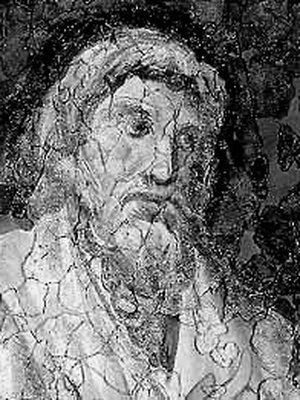
Lactantius spent the first half of his life teaching young men how to win an argument. He was good at it — good enough that an emperor sent for him across the sea to teach Latin eloquence in a Greek city. Then he came to believe that the art he had mastered had been used to train his pupils, as he later put it, “not to virtue, but altogether to cunning wickedness.” He did not throw the art away. He turned it around, and spent the rest of his life using the finest Latin of his age to plead for a faith the Roman state was trying to destroy. The Renaissance would call him the Christian Cicero. He might rather have been remembered as a man who changed what his words were for.
A rhetorician from Africa
Little about his early life is certain, and the oldest notices of him admit it. He was probably born around 250 in Roman North Africa, into a family that was not Christian; he is usually described as of Berber origin, though his translator, William Fletcher, records that some once argued for a birth in Italy. Even his full name, usually given as Lucius Caecilius Firmianus Lactantius, is unsettled; Fletcher mentions the old guess that “Lactantius” was a nickname for the milky softness of his style. An inscription at Cirta in Numidia names a certain L. Caecilius Firmianus, and that city may have been his home.
One thing the record does hold is his teacher. According to Jerome he studied under Arnobius, who taught rhetoric at Sicca Veneria, in what is now Tunisia. Rhetoric — the art of persuasive speaking and writing — was the crown of an ancient education and the road to a public career, and the pupil’s fame soon outstripped his master’s. He taught in Africa until the emperor Diocletian invited him to become an official professor of Latin rhetoric at Nicomedia, the imperial capital in Bithynia, in what is now north-western Turkey.
A professor at Diocletian’s court
Nicomedia put him close to power. He moved in the imperial circle, and there he first met Constantine, and Galerius, whom he would later cast as the villain of the persecutions. Yet the post was not the triumph it seemed. A Latin teacher in a Greek-speaking city found few pupils, and Fletcher records that he was reduced to extreme poverty.
Somewhere in these years he became a Christian. When and how, no source tells us. Fletcher wondered whether his poverty and his change of religion were connected; the American editor of the same volume answered in a footnote that he saw no force in the idea, since a man converting then could expect nothing but worse suffering. What that editor did insist on was that Lactantius was not a “fair-weather Christian,” but confessed the faith amid the last and most terrible of the great persecutions.
Diocletian published his first edict against the Christians on 24 February 303. Modern accounts say Lactantius had already resigned his post; either way, his public career was over. In the fifth book of The Divine Institutes he remembers what he saw. While he was teaching rhetoric in Bithynia, he writes, the temple of God was overthrown, and two men in the same city seized the moment to publish attacks on the Christians: a philosopher who praised frugality and lived in luxury, and a judge who had urged the persecution and then wrote books pretending to advise its victims kindly. He recalls, too, a governor in Bithynia exulting as if he had conquered a nation of barbarians, because one Christian who had held out for two years seemed at last to give way. It was out of that grief, he says, that he took up the task of answering them — moved by their arrogance, by the consciousness of truth itself, “and (as I think) by God.”
Turning the art around
Stripped of his chair, Lactantius lived in poverty, Jerome says, and eked out a living by writing. Around 303 or 304 he wrote On the Workmanship of God, on the human body as evidence of its Maker’s wisdom, dedicated to a former pupil. And he began the great work of his life, The Divine Institutes, written between about 303 and 311.
The title borrows from the law courts. Roman jurists wrote Institutes of civil law to settle the quarrels of citizens; Lactantius would write the divine Institutes, which would speak not of rain-droppings and water rights and the pressing of claims, but of hope, of life, of salvation, of immortality, and of God. In the preface he says plainly why a professor of rhetoric should turn to such a subject:
For they, the philosophers, were considered teachers of right living, which is far more excellent, since to speak well belongs only to a few, but to live well belongs to all.
— Lactantius, The Divine Institutes, Preface
He did not despise his training: truth, he says, flows more powerfully into the mind when it is set out clearly and well. And he knew whom he was writing for. Educated pagans, he thought, scorned Christianity partly because it lacked defenders who could write in a way they respected. Even Cyprian, the great bishop of Carthage, had in his view answered a pagan critic with Scriptures the man did not believe, when such a reader needed to be led by reason, step by step, “that he might not be dazzled.” So Lactantius met the learned on their own ground — Cicero and Virgil, Seneca and the philosophers, and the Sibylline oracles that Romans revered — and tried to show them where it all was pointing.
Seven books on true wisdom
The Divine Institutes runs to seven books. The first three clear the ground: the false worship of the gods, the origin of that error, and the false wisdom of the philosophers. The fourth makes his central claim, that true wisdom and true religion cannot be separated: the philosophers sought wisdom without God, the cults worshipped without wisdom, and the two meet only in the one God made known in Christ. It was the first attempt to set out Christian teaching as a whole system in Latin.
The fifth book, on justice, was written while Christians were still being tortured, and it argues that worship cannot be forced, because “nothing is so much a matter of free-will as religion.” Christians call one another brethren, he says, because they believe themselves equal, rich and poor, master and servant alike. And he turns the persecutors’ claim to be defending religion against them:
For religion is to be defended, not by putting to death, but by dying; not by cruelty, but by patient endurance; not by guilt, but by good faith.
— Lactantius, The Divine Institutes, Book V
The sixth book turns from argument to life. It is about true worship, and much of it is practical: works of mercy, repentance and forgiveness, the governing of the passions. Worship, for Lactantius, is not costly gifts or the blood of animals, for God needs nothing:
His offering is innocency of soul; His sacrifice praise and a hymn.
— Lactantius, The Divine Institutes, Book VI
The seventh book, on the happy life, looks to the end. Lactantius sets out a vivid millenarian hope: that when six thousand years of history are complete, Christ will come, the righteous will reign on earth for a thousand years, and then the world will be renewed. He drew much of it from the Sibyls and other apocalyptic sources. He even reckoned the end no more than two hundred years away, though nothing of the kind need be feared while the city of Rome still stood.
Later Christian thought did not follow him everywhere. The church came to see attempts to fix the date of the end as at odds with Christ’s word that no one knows the day or the hour, and his earthly millennium was not the view that prevailed. In the third book he also ridiculed philosophers who thought the earth round, with people on the far side whose footsteps would be higher than their heads; Copernicus later called this mockery childish. His statements of doctrine could be loose, and his grasp of Scripture thin. Jerome put both sides in a sentence that has stuck: “Lactantius has a flow of eloquence worthy of Tully: would that he had been as ready to teach our doctrines as to pull down those of others!” None of this cancels what he got right. He is best read as what he was: an earnest convert making the case for Christ to the world he had come out of.
Tutor to an emperor’s son
The persecution ended, and Lactantius lived to see what had seemed impossible: a Roman emperor who honoured the God of the Christians. Constantine, whose Christian policy he is said to have helped guide in its first stages, became his patron and appointed him, already old, as Latin tutor to his son Crispus. The sources date this differently — some say 309–310, Fletcher about 315 — but the work took him to Gaul, and he is said to have followed Crispus to Trier in 317, when the young man was made Caesar.
Some manuscripts of the Institutes open several of its books with addresses to Constantine, praising him as the first Roman prince to repudiate error and honour the one true God. Other manuscripts lack them, but the editors judged them true to the style and spirit of Lactantius, and they show the work reaching for a new reader: no longer a hostile magistrate but a ruler who might be won to a deeper faith. He also wrote On the Anger of God, against philosophers who held that God is moved by nothing men do, and On the Deaths of the Persecutors, on the fates of the emperors who had attacked the church — written by a man who had known both Diocletian’s court and Constantine’s, and still a valuable witness to its events, including Constantine’s vision of the Chi Rho.
How his life ended, we do not know. Fletcher says he is believed to have died at Trier around 325, but in truth the time and circumstances of his death are unknown.
The Christian Cicero
His reputation had a strange afterlife. For reasons that are not clear, he came to be thought somewhat suspect, and the sixth-century Gelasian Decree counted his works among those not to be read. A thousand years later the humanists of the Renaissance fell in love with his Latin and named him Cicero Christianus, the Christian Cicero. An edition of his works printed at the Abbey of Subiaco in 1465 was the first book printed in Italy to carry a date.
The book on this page is The Divine Institutes in William Fletcher’s translation, published in 1886 in the Ante-Nicene Fathers. It is worth reading for more than its style. It is a picture of the church at the hinge of its history, written by a man who saw the church at Nicomedia overthrown and lived to tutor an emperor’s son, and who never stopped trying to persuade the educated, sceptical reader that wisdom and worship belong together. Its pages on justice, mercy and freedom of conscience still speak, and near its close he gave his readers a sentence any of them could carry:
We can take nothing with us, except a well and innocently spent life.
— Lactantius, The Divine Institutes, Book VII
He began his life teaching young men to speak well. He ended it trying to teach them to live well, which, he said, belongs to everyone.
Questions and Answers
Who was Lactantius?
Lucius Caecilius Firmianus Lactantius was an early Christian writer and teacher of Latin rhetoric who lived from about 250 to about 325. He is best known for The Divine Institutes, a reasoned defence of Christianity written for educated pagans, and Renaissance humanists called him the Christian Cicero for the elegance of his Latin.
Where was Lactantius born?
He was probably born in Roman North Africa into a family that was not Christian, and Wikipedia describes him as of Berber origin. The exact place is unknown; an inscription at Cirta in Numidia naming a L. Caecilius Firmianus suggests it may have been his home, though some older scholars argued for Italy.
Who taught Lactantius?
According to Jerome, he was a pupil of Arnobius, who taught rhetoric at Sicca Veneria in North Africa. Lactantius taught rhetoric in Africa himself, and his fame came to outstrip his master’s.
Why did Lactantius go to Nicomedia?
The emperor Diocletian invited him to become an official professor of Latin rhetoric at Nicomedia, the imperial capital in Bithynia. There he moved in the imperial circle and first met the future emperor Constantine, though as a Latin teacher in a Greek-speaking city he found few pupils and fell into poverty.
When did Lactantius become a Christian?
No source records when or how he converted. It was evidently before or during the Great Persecution that began in 303, and his editor stressed that he was no fair-weather Christian but confessed the faith while Christians were being persecuted.
What happened to Lactantius in the Great Persecution?
His public career at Nicomedia ended when Diocletian turned against the Christians in 303; Wikipedia says he resigned his post before the first edict was published. He saw the church in the city overthrown, lived afterwards in poverty, and supported himself by writing.
What is The Divine Institutes about?
Written between about 303 and 311, The Divine Institutes is a defence of Christianity in seven books, addressed to educated readers who did not yet believe. It exposes the false worship of the gods and the limits of the philosophers, argues that true wisdom and true religion are one, and teaches on justice, true worship and the happy life, ending with the last things. This page presents William Fletcher’s 1886 translation from the Ante-Nicene Fathers.
What did Lactantius teach about freedom of religion?
In the fifth book of The Divine Institutes he argued that worship cannot be forced, since nothing is so much a matter of free will as religion. Religion, he wrote, is to be defended not by putting to death but by dying, not by cruelty but by patient endurance.
Which views of Lactantius did later Christians not follow?
He held a millenarian view of the end, expecting a thousand-year reign of the righteous on earth and reckoning the end no more than two hundred years away, and he ridiculed the idea of a round earth with people on the far side. Later Christian thought did not follow him on these points, and Jerome, while praising his eloquence, wished he had been as ready to teach Christian doctrine as to pull down pagan ideas.
How did Lactantius end his life?
Constantine became his patron and appointed him, in old age, as Latin tutor to his son Crispus, and he followed Crispus to Trier in Gaul. The time and circumstances of his death are unknown; he is traditionally believed to have died at Trier around 325.