Where to start reading
Start with
The Rule and Exercises of Holy Living
Books by Jeremy Taylor (2)
Biography
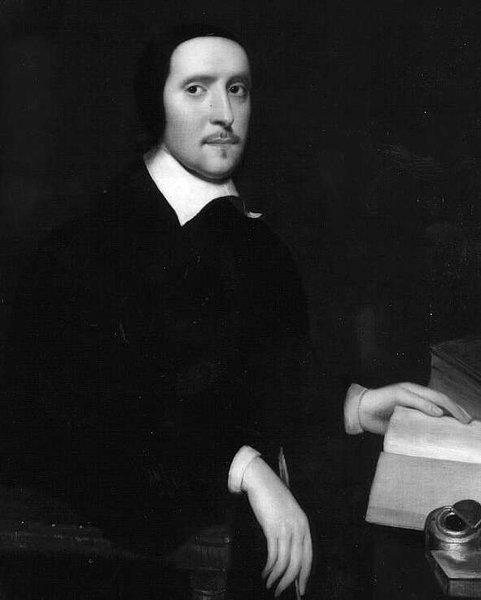
Jeremy Taylor wrote his best-loved book in exile, in years when the prayers he had been ordained to say were forbidden. His church had lost its bishops, his king had been beheaded, his parish had been taken from him, and he had been a prisoner of war. He was living in Wales on the kindness of a nobleman. Out of that wreckage came The Rule and Exercises of Holy Living, a calm, orderly, deeply practical guide to living every hour before God. Later readers called him the “Shakespeare of Divines” for the music of his prose. But the music was learned in hard places, and the man behind it knew grief, poverty and failure as well as eloquence.
The barber’s son
He was baptized on 15 August 1613 at Holy Trinity Church in Cambridge, the son of Nathaniel Taylor, a barber. Nathaniel was an educated man who taught his son grammar and mathematics himself. The family claimed descent from Rowland Taylor, a Protestant martyr under Queen Mary, though the claim has never been proved. In 1626 the boy went up to Gonville and Caius College as a sizar, a “poor scholar” who paid for his education by waiting on wealthier students.
In 1633, still below the usual age, he was ordained. A college friend asked him to stand in for a while as lecturer at St Paul’s Cathedral, and the young preacher’s fervour drew notice. William Laud, the Archbishop of Canterbury, sent for him. The story is told that Laud objected only to his youth, and that Taylor begged his grace to pardon the fault, promising that if he lived he would amend it. Laud took him under his wing, secured him a fellowship at All Souls College, Oxford, and made him his chaplain. Soon he was also chaplain to King Charles I.
In 1638 he became rector of Uppingham in Rutland and settled into the life of a country priest. In 1639 he married Phoebe Langsdale. Several children were born to them, and several were buried young. From these years a suspicion followed him for life: that he leaned secretly toward Rome. It came from his friendship with a Franciscan friar, his link with Laud, and his own ascetic habits. He preached to clear himself, but he never fully shook it off.
The great storm
Then England went to war with itself. In 1642 Taylor published a defence of bishops, Episcopacy Asserted, and was made Doctor of Divinity by the king’s command. He joined Charles at Oxford and served the royal army as chaplain. Parliament took his living. Laud was beheaded in January 1645, and a few weeks later, on 4 February, Taylor was captured with other Royalists at the siege of Cardigan Castle in Wales.
He was not held long, but he had nothing left. With two other ejected clergymen he opened a school in Carmarthenshire to support his family. He later described himself as shipwrecked on the coast of Wales, his anchor lost, saved only because God had provided him a plank. Writing without a library, he produced The Liberty of Prophesying in 1646, a plea for Christians to bear with one another’s honest differences. It was one of the first great English arguments for religious toleration.
When the king was a prisoner, his chaplains were allowed to visit him, and Charles gave Taylor his watch and some jewels from the case of his Bible. By 1649 the king was dead, and the Church of England had been driven from public life. Taylor described what he saw:
I have lived to see religion painted upon banners, and thrust out of churches…
— Jeremy Taylor, dedication to The Rule and Exercises of Holy Living
Golden Grove
Shelter came from Richard Vaughan, Earl of Carbery, who had led the Royalists in South Wales. His house at Golden Grove stood near Taylor’s school, and Taylor became his chaplain. The earl’s wife Frances was a constant friend. Under that roof, while the churches were closed to men like him, Taylor preached a yearly course of sermons to the household and its neighbours. Few writers have used an exile so fully. Within a few years he wrote a life of Christ, The Great Exemplar; a defence of set forms of prayer; the Golden Grove sermons; and the two books that would make him loved, Holy Living in 1650 and Holy Dying in 1651.
Death came close in those years. Lady Carbery died, and early in 1651 so did Taylor’s wife Phoebe. Holy Dying was written in that shadow. He married again, to Joanna Bridges, who owned an estate at Mandinam in Carmarthenshire. People said she was a natural daughter of Charles I, but there is no good evidence for it. He remained a marked man. His preface to Golden Grove offended the authorities, and he was imprisoned. In 1655 he was held for months in Chepstow Castle, where he wrote that his keepers were “civil to my person.” In 1657 he was sent to the Tower, and his friend the diarist John Evelyn pleaded until he was freed.
In the middle of all this he lost more children. Writing to Evelyn about the death of a small son, he put a whole theology of grief into one sentence:
But now he rejoices in his little orb while we think, and sigh, and long to be as safe as he is.
— Jeremy Taylor, in a letter to John Evelyn
A book for a scattered church
Holy Living was written for people who had lost the ordinary helps of religion. Their clergy were scattered and there was no pastor at hand to advise them. Taylor wanted to give them, in one book, the counsel a wise spiritual guide would have given in person. Some said that a church so beaten down must have been forsaken by God. Taylor answered that the marks of a Christian were never revenues, assemblies or armies. They were faith, prayer, purity, mercy, justice, humility, and patience under suffering, and no government could take them away:
And now the case is so with us that we are reduced to that religion which no man can forbid, which we can keep in the midst of a persecution; by which the martyrs, in the days of our fathers, went to heaven; that by which we can be servants of God, and receive the Spirit of Christ, and make use of his comforts, and live in his love, and in charity with all men: and they that do so cannot perish.
— Jeremy Taylor, dedication to The Rule and Exercises of Holy Living
Its first chapter sets out three instruments of a holy life: care of our time, purity of intention, and the practice of the presence of God. The other three chapters, on sobriety, justice and religion, follow St Paul’s call to live soberly, righteously and godly, in our conduct toward ourselves, our neighbour and God. Each section ends with prayers. Taylor is a strict teacher who will not let a reader waste an hour. He is also a humane one. He warns against anxious scruples, and he holds that honest work offered to God is itself service: the ploughman and the merchant are, in their callings, “the ministers of the Divine Providence.”
He was gentle with readers who felt they had no time to pray. A short prayer breathed in the middle of a trade, he promised, is no lesser offering:
God is present at thy breathings and hearty sighings of prayer, as soon as at the longer offices of less busied persons
— Jeremy Taylor, The Rule and Exercises of Holy Living, Chapter I
A bishop in a hard country
In 1658, again through Evelyn, Lord Conway offered Taylor a lectureship at Lisburn in the north of Ireland. He went reluctantly, for the pay was meagre. At Conway’s house of Portmore on Lough Neagh he finished his great work on cases of conscience, Ductor Dubitantium. Even there he was informed against, partly for making the sign of the cross at a private baptism, and he was summoned to Dublin in midwinter. The journey left him seriously ill.
At the Restoration he hoped to be recalled to England. Instead he was made Bishop of Down and Connor, and he was consecrated in Dublin in January 1661. The diocese of Dromore was soon added, with a seat on the Irish privy council and the vice-chancellorship of the University of Dublin, which he found in disorder and set on a sound footing. He commissioned a new cathedral at Dromore. He also warned the Irish parliament, as it dealt with confiscated land, not to let “the pretence of a different religion” excuse oppressing any man in his just rights.
In his own diocese, honesty requires saying that he fell short of that standard. The north was full of Presbyterian ministers who would not accept bishops. The author of The Liberty of Prophesying now had the power to practise the tolerance he had argued for, and he did not use it. He gave the ministers a single choice: accept a bishop’s ordination or be removed. At his first visitation he declared thirty-six churches vacant, and he wrote that he felt “thrown into a place of torment.” With the Irish-speaking Catholic majority he did no better, writing a Dissuasive from Popery but never urging his clergy to learn the people’s language. Some of the gentry were won by his evident sincerity. But his deepest gifts were for the study and the household, not for governing a divided land.
The last sorrows
His last years brought fresh grief. According to his nineteenth-century biographer, his two surviving sons both died young: one was killed in a duel, and the other died of consumption in England. On 3 August 1667 Taylor fell ill with a fever, and on 13 August he died at Lisburn, in his mid-fifties. No account of his last hours survives. He was buried at Dromore. His wife outlived him by many years.
What he leaves
Taylor was no flawless saint. He was a loyal party man in a savage age, and he argued for toleration that he failed to practise when he had power. But he was also a pastor who held a shattered church together with prayer books and sermons in a country house, a scholar who wrote masterpieces without a library, and a father who buried child after child and still wrote tenderly of heaven. Anglican churches remember him each year on 13 August.
The Rule and Exercises of Holy Living is the best place to meet him. It is a book of rules that reads like a wise friend’s counsel, firm about sin and generous about weakness, and always turning back to prayer. It has kept its place with devout readers for more than three and a half centuries. It was written for people who had lost almost everything outward, and it shows them what remains: the religion, as Taylor said, which no man can forbid.
Questions and Answers
Who was Jeremy Taylor?
Jeremy Taylor (1613–1667) was an English priest of the Church of England, chaplain to King Charles I, and later Bishop of Down and Connor in Ireland. He is remembered as one of the great prose writers in English, sometimes called the “Shakespeare of Divines,” and above all for his devotional books Holy Living and Holy Dying.
Where did Jeremy Taylor come from?
He was baptized in Cambridge on 15 August 1613, the son of a barber, Nathaniel Taylor, who taught him grammar and mathematics. He went to Gonville and Caius College in 1626 as a sizar, a poor scholar who paid his way by serving wealthier students.
How did Jeremy Taylor come to the notice of Archbishop Laud?
Ordained in 1633 while still under the usual age, he filled in for a friend as lecturer at St Paul’s Cathedral, and his preaching reached the ears of Archbishop William Laud. Laud took him under his protection, secured him a fellowship at All Souls College, Oxford, and made him his chaplain.
What happened to Jeremy Taylor in the English Civil War?
He sided firmly with the king, served as a Royalist chaplain, and lost his parish of Uppingham to Parliament. In February 1645 he was captured at the siege of Cardigan Castle, and afterwards he kept a school in Carmarthenshire to support his family.
What was The Liberty of Prophesying?
Published in 1646, it was Taylor’s plea for Christians to bear with one another’s honest differences of opinion, and it is counted among the earliest great English arguments for religious toleration. He wrote it in poverty, without a library.
What was Golden Grove?
Golden Grove was the Carmarthenshire home of Richard Vaughan, Earl of Carbery, who sheltered Taylor as his chaplain. There Taylor preached to the household and wrote his most famous works, and he gave the house’s name to his 1655 manual of daily prayers.
Why was Jeremy Taylor imprisoned?
Under Cromwell’s government he was imprisoned more than once: over a preface to his Golden Grove prayer manual, in Chepstow Castle in 1655, and in the Tower in 1657 after his publisher put a picture of Christ at prayer in a book of his services. His friend John Evelyn pleaded for his release.
What is The Rule and Exercises of Holy Living about?
Published in 1650, it is a practical guide to the whole Christian life, written for believers who had lost their churches and clergy. It begins with care of time, purity of intention and the practice of God’s presence, then treats sobriety, justice and religion, with prayers for every part of the day and every need.
What kind of bishop was Jeremy Taylor in Ireland?
Made Bishop of Down and Connor after the Restoration, and given Dromore as well, he worked hard to reform the University of Dublin and was respected for his sincerity. But he refused to tolerate the Presbyterian ministers of his diocese and declared thirty-six churches vacant, and he did little to reach the Irish-speaking Catholic population.
When did Jeremy Taylor die and how is he remembered?
After the deaths of his last two sons, he fell ill with a fever and died at Lisburn on 13 August 1667, and he was buried at Dromore. Anglican churches remember him each year on 13 August, and Holy Living is still read as a classic of devotion.