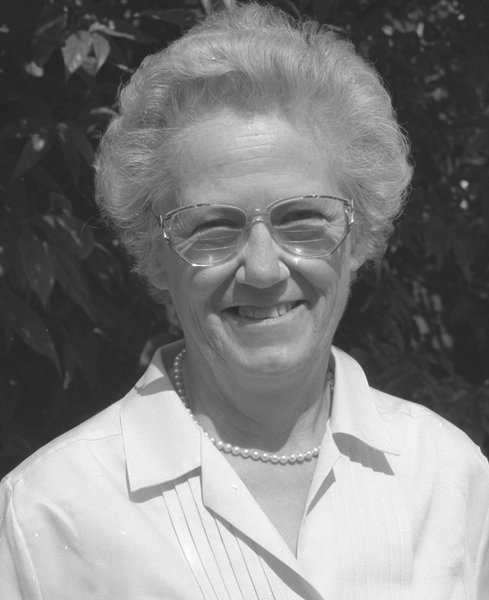
Biography
- 1925 Born
- 1945 Converted
- 1953 Congo
- 1964 Captured
- 2016 Died
Can you thank Me for trusting you with this experience, even if I never tell you why?
Most of the people the wider church remembers from the mission field are remembered for what they built or how they died. Helen Roseveare is remembered for something harder to file: for what was done to her, and for what she decided it meant. She was a doctor — a good one, trained at Cambridge — who spent twenty years building hospitals in the north-east of the Congo and teaching Congolese men and women to do the work she had come to do. She is remembered, though, for five months in 1964 when all of that was taken from her by soldiers, and for the sentence she carried out of those months for the rest of her life: that the worst thing that ever happened to her was, somehow, a form of being trusted.
A ration-book childhood and a late conversion
She was born on 21 September 1925 at Haileybury College in Hertfordshire, where her father worked. Martin Roseveare was a mathematician and civil servant who, during the Second World War, designed the British ration book — the ordinary document that fed a nation through its lean years. It is a small thing to note about a daughter who would spend her life measuring out scarce medicine among people who had almost nothing, but it is the kind of small thing that stays with you.
She was clever, driven, and not particularly religious. She went up to Newnham College, Cambridge, to read medicine, and it was there, in 1945, through the Cambridge Inter-Collegiate Christian Union, that she was converted. This matters to the shape of her life. She did not grow up devout and drift into missionary work as the family trade. She came to Christ as a young woman already committed to medicine, and the two callings fused: the science she had chosen and the Lord she had newly found pointed the same direction, toward people who had neither doctor nor gospel.
Ibambi, Nebobongo, and the work of handing it on
She qualified as a doctor and, in 1953, sailed for the Belgian Congo with the Worldwide Evangelization Crusade. She was young, single, and formidable, and she went to a region where a trained physician was a rarity approaching a miracle.
Her first station was Ibambi. From there she moved to Nebobongo — a former leprosy camp, which tells you the condition of the place she was asked to make into a hospital. She built. She built wards and a training school and a maternity unit; she pulled a working medical centre out of a settlement that had been left to the sick. And from the beginning she understood the thing that separates a missionary from a colonist: that her job was not to be indispensable but to make herself unnecessary.
So she trained Africans. She taught Congolese men and women to nurse, to diagnose, to run a ward, to deliver a baby, to carry the work when she was not there — and, as it turned out, when she could not be there. Later she helped establish the medical school and hospital at Nyankunde, a larger training centre meant to send qualified Congolese practitioners across the region. This was the heart of her first decade: not a doctor doing wonders alone, but a teacher multiplying herself into a generation of local hands. When people speak of her hospitals, the more important legacy is the people she taught to run them.
Into the middle of this ordinary, fruitful labour came one of the stories she would tell for the rest of her life — a story small enough to fit in a parcel.
A hot-water bottle
A premature baby had been born at Nebobongo, and its mother had died. There was no incubator, no reliable electricity, and the one hot-water bottle on the station had burst. Roseveare told her nurses and the orphanage children that the baby needed warmth they could not give it. One of the children, at prayers, asked God plainly to send a hot-water bottle — and, since a bottle would be no use arriving next week, to send it that afternoon; and while He was at it, would He send a doll for the baby's sister, so she would know God loved her.
She would say afterward that she was moved almost to tears — not by the coincidence, but by the realisation that God had answered a prayer before it was prayed, and that her part had merely been to open the box.
1964: five months among the Simba
In 1964 the Congo, only four years independent, tore itself apart. The Simba rebellion swept across the north-east, and the rebel soldiers turned on foreigners and on the mission stations. Roseveare was taken captive. For roughly five months she was held prisoner, and during that captivity she was beaten and raped by rebel soldiers.
It must be said plainly, because she said it plainly. She did not hide it, minimise it, or dress it in euphemism when she came to speak and write about her life; she spoke of the assault openly, in front of audiences, so that other women who had suffered the same thing would not think God had abandoned them for it. To honour her is to state it as she did: she was raped, and she refused to let that fact be unspeakable.
What she also refused was to let it be the last word. In her account of that night and the months around it, she described a sense of God turning her ordeal into a question — not an explanation, which she was never given, but a question she could answer or refuse. She wrote of it, years later, in her book Enough:
Can you thank Me for trusting you with this experience, even if I never tell you why?
— Helen Roseveare, recalling God's word to her in captivity, in Enough (2011)
It is a startling reframing, and it should not be smoothed over. She did not say the suffering was good, or deserved, or a punishment, or a lesson she had needed. She said that being asked to bear it — without an answer, in the dark — was a kind of trust placed in her, a share in what she called the fellowship of Christ's own suffering. The privilege, as she understood it, was not the pain. It was being counted worthy to carry it for Him.
She went back
The plain fact of the next part is the sermon. In 1966 — two years after the Simba took everything from her — Helen Roseveare returned to the Congo. She went back to the country where she had been imprisoned and assaulted, and she took up the work of rebuilding what the rebellion had wrecked. She stayed until 1973.
People who have not been through it sometimes imagine that faith after trauma is a matter of getting over it. Her return says something harder and truer: she did not go back because the wound had healed and the fear was gone. She went back because she had decided the work, and the people, were worth more than her right to stay safe. The trauma was real; she carried it. She went anyway.
When she finally left the Congo for good in 1973, she settled in the United Kingdom — eventually in Northern Ireland — and became, for the last four decades of her life, one of the most sought-after missionary speakers in the English-speaking world. She wrote the books that carried her testimony far past any lecture hall: Give Me This Mountain (1966), He Gave Us a Valley (1976), Living Sacrifice (1979), Count It All Joy. The titles alone map her theme. It was always the same theme, worked from every side: the cost of following Christ, and what that cost turns out to be worth.
The privilege greater than the price
Her clearest statement of it came at the great student missionary convention at Urbana in 1976. She had every right, of anyone alive, to weigh the cost of obedience and find it too high. Instead she told a stadium of young people that she had learned to stop asking whether it was worth it. The cost was real, she said — but set beside the privilege of being Christ's, it was small, transient, swallowed up.
The cost is swallowed up in the privilege.
— Helen Roseveare, Urbana 1976
She sharpened it elsewhere into the question she said had reordered everything for her. The question, she came to believe, was never really Is it worth it? — a sum you do about God, with yourself as the accountant. The question was whether He was worthy; and to that, she said, the answer is always yes. Once she had settled that, the arithmetic of cost simply stopped mattering. A price you have decided in advance to pay is no longer a price you count.
What she leaves
She died on 7 December 2016 in Northern Ireland, aged ninety-one.
What she leaves is not, in the end, the hospitals, though the hospitals were real and the students she trained carried on long after she was gone. What she leaves is a way of holding suffering that has steadied a great many people who will never build anything. She took the single worst thing that can be done to a person, refused to pretend it had not happened, refused equally to let it define God as absent — and named it, instead, as trust. It is a claim so large it can only be made by someone who has earned the right to make it, and she had.
She was not a martyr; she outlived her ordeal by half a century and told the story with her own mouth. She was not a founder of a movement. She was a doctor who was given more than she asked to carry, went back to the place that had broken her, and spent forty years telling anyone who would listen that the privilege is greater than the price. Coming from her, it is not a slogan. It is a receipt.
Also appears in
Questions and Answers
Who was Helen Roseveare?
Helen Roseveare (1925–2016) was a British missionary doctor who built hospitals and trained African medical workers in the Congo. Beaten and raped during the 1964 Simba rebellion, she spoke of it as being "trusted" by God with suffering, returned to Congo to rebuild, and taught for the rest of her life that the cost is swallowed up in the privilege of knowing Christ. She is remembered not chiefly for what she built but for what was done to her, and for what she decided it meant.
What was her background?
She was born on 21 September 1925 at Haileybury College in Hertfordshire, where her father — a mathematician and civil servant — worked; during the Second World War he designed the British ration book. Clever and driven but not particularly religious, she went up to Newnham College, Cambridge, to read medicine, and there, in 1945, through the Cambridge Inter-Collegiate Christian Union, she was converted. The science she had chosen and the Lord she had newly found pointed the same way, toward people who had neither doctor nor gospel.
What was her work in the Congo?
She qualified as a doctor and sailed for the Belgian Congo in 1953 with the Worldwide Evangelization Crusade. From her first station at Ibambi she moved to Nebobongo — a former leprosy camp — and built it into a hospital with wards, a training school, and a maternity unit. She understood the thing that separates a missionary from a colonist: that her job was to make herself unnecessary, so she trained Congolese men and women to nurse, diagnose, and run a ward, later helping establish the medical school at Nyankunde.
What is the story of the hot-water bottle?
A premature baby had been born at Nebobongo and its mother had died; there was no incubator and the one hot-water bottle had burst. At prayers an orphanage child asked God to send a hot-water bottle that very afternoon — and, while He was at it, a doll for the baby's sister. That afternoon a parcel arrived, posted from England five months before the child prayed, holding a hot-water bottle and, near the bottom, a dressed doll. She told it for decades not as a marvel about herself but as a rebuke to her own small expectations.
What happened to her in 1964?
In 1964 the Simba rebellion swept the north-east Congo, and the rebels turned on foreigners and mission stations. Roseveare was taken captive, held for roughly five months, and during that captivity she was beaten and raped by rebel soldiers. She said it plainly ever after — she did not hide it, minimise it, or dress it in euphemism — speaking of the assault openly in front of audiences, so that other women who had suffered the same thing would not think God had abandoned them for it.
How did she come to understand that suffering?
Not as good, or deserved, or a lesson she had needed, but as a kind of trust placed in her. In her account she described God turning her ordeal into a question — not an explanation, which she was never given: "Can you thank Me for trusting you with this experience, even if I never tell you why?" The privilege, as she understood it, was not the pain but being counted worthy to carry it for Him — a share in what she called the fellowship of Christ's own suffering. Her surrender ran not through an answer but through saying yes to being trusted.
Did she go back to the Congo?
Yes — and the plain fact of it is the sermon. In 1966, two years after the Simba took everything from her, Helen Roseveare returned to the country where she had been imprisoned and assaulted, and took up the work of rebuilding what the rebellion had wrecked, staying until 1973. She did not go back because the wound had healed and the fear was gone; the trauma was real and she carried it. She went back because she had decided the work, and the people, were worth more than her right to stay safe.
What did she do after leaving the Congo?
When she left for good in 1973 she settled in the United Kingdom, eventually in Northern Ireland, and became for the last four decades of her life one of the most sought-after missionary speakers in the English-speaking world. She wrote the books that carried her testimony far past any lecture hall — "Give Me This Mountain," "He Gave Us a Valley," "Living Sacrifice," "Count It All Joy" — whose titles alone map her one theme: the cost of following Christ, and what that cost turns out to be worth.
What did she teach about the cost of following Christ?
Her clearest statement came at the Urbana missionary convention in 1976. She had every right, of anyone alive, to weigh the cost of obedience and find it too high; instead she told a stadium of young people that she had learned to stop asking whether it was worth it. "The cost is swallowed up in the privilege," she said. The real question, she came to believe, was never "Is it worth it?" — a sum with yourself as the accountant — but whether He is worthy, and to that the answer is always yes.
What does she leave?
She died on 7 December 2016 in Northern Ireland, aged ninety-one. What she leaves is not, in the end, the hospitals — real as they were — but a way of holding suffering that has steadied many who will never build anything. She took the single worst thing that can be done to a person, refused to pretend it had not happened, refused equally to let it define God as absent, and named it instead as trust. She was not a martyr; she outlived her ordeal by half a century and told the story with her own mouth: the privilege is greater than the price.
Portrait: Zohre6, CC BY-SA 4.0, via Wikimedia Commons — adapted (black-and-white)