Where to start reading
Start with
The Theological Orations
Books by Gregory of Nazianzus (1)
Biography
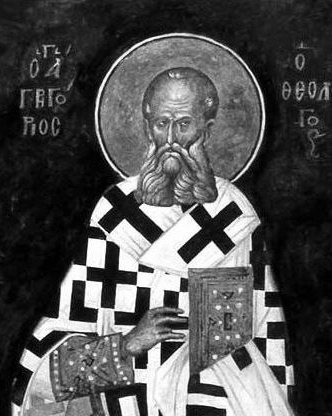
The church gave Gregory of Nazianzus a title it has given to almost no one else: the Theologian. He shares it among the early Fathers with the apostle John alone. It is a strange honour for a man who wanted, above all, quiet — books, prayer, a friend to share them with — and was given noise. He was ordained against his will, consecrated a bishop against his will, called to the capital of the empire against his will, and, when he had won the argument he was sent there to win, he resigned and went home. In between, in a borrowed house turned chapel, he preached five sermons on the Trinity that the whole church still reads.
A son promised to God
He was born around 329 at Arianzus, a country estate of his family near the small Cappadocian town of Nazianzus, in what is now central Turkey. The exact year is uncertain. His father, also named Gregory, had belonged to a little sect called the Hypsistarians, who worshipped one “Most High” God but rejected the Trinity. He was brought to Christian faith by his wife, Nonna, and was soon afterwards made bishop of Nazianzus. Nonna was a woman of deep holiness, and Gregory believed she had dedicated him to God even before he was born. He had a sister, Gorgonia, and a brother, Cæsarius, who became a physician at the imperial court.
The family was wealthy, and Gregory was given the finest education the fourth century had to offer: schools at Cæsarea in Cappadocia, then Cæsarea in Palestine, then Alexandria, and at last Athens. Like many Christians of his day he had put off baptism, and he was still unbaptized when, eager to reach Athens, he set sail out of season, in November.
The storm and the vow
In sight of Cyprus a storm struck the ship so violently that the crew said they had seldom seen its like. Gregory, telling the story years later at his father’s funeral, said plainly what frightened him most: “spiritual death was what I was most afraid of,” for he was about to die unbaptised. He cried out to God and begged for a respite, and his shipmates, in their own danger, joined their cries to his.
At Athens he met again a young man he had first known at school in Cæsarea: Basil, later bishop of Cæsarea and remembered as Basil the Great. The two became inseparable. “Two ways were known to us,” Gregory later wrote, one leading to the church and its teachers, the other to their lectures. Looking back on that friendship after Basil’s death, Gregory put it in a sentence that has been quoted ever since:
We seemed to have one soul, inhabiting two bodies.
— Gregory of Nazianzus, Funeral Oration on Basil
He stayed in Athens until he was about thirty. When he came home he was baptized, most likely around this time, and at his baptism he vowed never to swear and to give his whole strength to the glory of God. He longed for the life of a monk. For some years he went back and forth between his aging parents and Basil’s retreat in the wilds of Pontus, where the two friends divided their days between prayer, study and manual work.
The noble tyranny
The quiet ended at Christmas, probably in 361. His father, old and failing, wanted his son beside him, and the people of Nazianzus wanted it too; together they had Gregory ordained a priest more or less by force. Gregory was stung, and fled to Basil in Pontus. Even in old age he called that ordination an act of tyranny. But he thought better of the flight, and was back in the church at Nazianzus for Easter 362, where he preached his first sermon as a priest. In it he offered his own pardon “for the noble tyranny which I have suffered (for I can now call it noble).” He also wrote a long defence of his flight, which became a treatise on the priesthood. In it he called the guiding of human souls “the art of arts and science of sciences,” and both John Chrysostom and Gregory the Great built their own books on pastoral care upon it.
The same pattern came round again. Around 372 Basil, now archbishop of Cæsarea and locked in a dispute over church boundaries, consecrated his friend bishop of Sasima, a wretched little village on a disputed border, to strengthen his own side. Gregory, as his editors put it, “bent his neck, but not his will.” A rival bishop held Sasima with soldiers, and Gregory probably never administered it at all. The wound to the friendship was real and long, and Gregory never pretended otherwise — nor stopped loving Basil.
He served instead as his father’s assistant at Nazianzus. When both his parents died in 374, he cared for the diocese for a time, gave away most of his inheritance, and then, after a serious illness, withdrew to Seleucia in Isauria, where he lived for some three or four years near the church of St Thecla. It was there that word reached him of Basil’s death.
Five sermons in a borrowed chapel
In 379 the small company of Christians in Constantinople who held to the faith of the Council of Nicaea asked him to come to them. For forty years the capital had been ruled by bishops of the Arian party, who taught that the Son of God was a creature, not truly God. Gregory resisted for a long time, then went. A relative gave him a house, and he turned part of it into a chapel and named it Anastasia — “Resurrection” — as the place where the faith of the church was to rise again.
There, in 380, he preached the five sermons now called the Theological Orations. His opponents, the followers of Eunomius, claimed that human logic could define the very essence of God. Gregory began by telling his hearers that this was not a subject for idle talk: “Not to every one, my friends, does it belong to philosophize about God.” It required a cleansed life, a quiet mind, and reverence. That did not mean God should be thought of seldom — just the reverse:
For we ought to think of God even more often than we draw our breath; and if the expression is permissible, we ought to do nothing else.
— Gregory of Nazianzus, The First Theological Oration
The second sermon dwells on how far beyond our grasp God is. The third and fourth defend the full divinity of the Son from the Scriptures, answering the texts his opponents used against it. The fifth does the same for the Holy Spirit. There, to describe how the Spirit comes from the Father in a way different from the Son’s being begotten, Gregory says he must “coin a word for the sake of clearness,” and the word he uses, procession, has shaped Christian teaching about the Spirit ever since. At the heart of it all is not a puzzle but a Person, the Christ who is both truly God and truly man:
He hungered—but He fed thousands; yea, He is the Bread that giveth life, and That is of heaven. He thirsted—but He cried, If any man thirst, let him come unto Me and drink.
— Gregory of Nazianzus, The Third Theological Oration
The preaching drew growing crowds, and it was dangerous work. One Easter vigil an Arian mob burst into the chapel during worship; Gregory was wounded and another bishop was killed. At his farewell he would ask his flock simply to “Remember my stonings.” He was also deceived by an adventurer named Maximus, who won his trust and then had himself secretly consecrated bishop of the city while Gregory lay ill. The people drove Maximus out, but the fashionable capital looked down on the plain provincial who would not play the showman in the pulpit.
Farewell, my throne
In late 380 the new emperor Theodosius came to Constantinople, expelled the Arian bishop and put Gregory in possession of the city’s churches. In 381 the emperor called the council of about one hundred and fifty Eastern bishops that is now counted as the Second Ecumenical Council. It confirmed Gregory as archbishop of the capital, and when its president, Meletius of Antioch, died, Gregory was chosen to lead it. The council divided over a dispute in Antioch, and late-arriving bishops from Egypt challenged his right to the see at all, arguing that a bishop could not lawfully move from one see (Sasima) to another. Rather than become the cause of a new division, Gregory resigned.
His farewell sermon to the council is among the most moving things he wrote. He was honest about his exhaustion: “I am weary of being charged with my gentleness.” He compared himself to a pilot struggling at the helm, “contending alike with the sea and the passengers,” and asked only to be dismissed with their prayers. Then he took leave of everything he loved there — the little Anastasia, the cathedral, the choirs and the night-long vigils, the widows and orphans and “ye eyes of the poor, turned towards God and towards me” — and ended with the God he had spent his strength defending:
Farewell, O Trinity, my meditation, and my glory.
— Gregory of Nazianzus, The Last Farewell
The garden at Arianzus
He went home to Cappadocia and looked after the church at Nazianzus once more, fighting the teaching of the Apollinarians, who denied that Christ had a full human mind. Around the end of 383, his health too frail for the work, he saw a bishop named Eulalius chosen for Nazianzus and withdrew for good to the family estate at Arianzus.
His last years were spent writing — hundreds of poems, among them a long autobiographical poem on his own life, along with letters and epitaphs for friends — and praying. Before leaving Constantinople he had made his will, leaving his property in the end to the poor of Nazianzus.
He died at Arianzus, by the date most commonly given on 25 January 390; the exact year is uncertain, and some older writers place it a year earlier or later. He is honoured as a saint and Doctor of the Church in the West, and in the East as one of the Three Holy Hierarchs, with Basil and John Chrysostom.
Why the Orations still matter
Gregory was not a flawless man. He was sensitive and easily hurt, sometimes sharp in his judgments, quicker to resolve than to persevere, and more at home in solitude than in the rough politics of the church. But he forgave readily and held no grudges. He was generous to the poor and never flattered the powerful. And when holding on to his throne would have split the church, he let it go.
The Five Theological Orations, given here in the translation of Charles Gordon Browne and James Edward Swallow, are the reason the church calls him the Theologian. They are short, dense, sometimes fierce, and alive: a great orator saying with every gift he had that the God Christians worship as Father, Son and Holy Spirit is one God, to be adored rather than dissected. A reader who comes to them slowly, as Gregory asked, will find something rarer than a clever argument: a man for whom the Trinity was not a doctrine to win but, as he said on the day he gave up everything else, his meditation and his glory.
Questions and Answers
Who was Gregory of Nazianzus?
Gregory of Nazianzus (c. 329–390) was a bishop, preacher and poet from Cappadocia, in what is now central Turkey, and one of the three Cappadocian Fathers with Basil the Great and Gregory of Nyssa. The church calls him “the Theologian,” a title it shares among the early Fathers only with the apostle John.
Where did Gregory of Nazianzus grow up?
He was born on his family’s estate at Arianzus, near Nazianzus. His father, also Gregory, was brought to Christian faith by his wife Nonna and became bishop of Nazianzus, and Gregory believed his mother had dedicated him to God before he was born.
What happened during Gregory’s voyage to Athens?
Sailing to Athens out of season, still unbaptized, he was caught in a violent storm and feared spiritual death more than drowning. In his own telling, his parents prayed for him at home after learning of his danger in a vision, the sea grew calm, and he gave himself to God as he had promised.
What was Gregory’s friendship with Basil the Great like?
The two became inseparable as students at Athens, and later lived together for a time as monks in Pontus. Gregory said they seemed to have “one soul, inhabiting two bodies,” though the friendship was badly strained when Basil made him bishop of Sasima for church-political reasons.
Why did Gregory call his ordination a “tyranny”?
Around Christmas 361 his aging father and the people of Nazianzus had him ordained a priest against his will, and he fled to Basil in Pontus. He soon returned, and in his first Easter sermon forgave what he called “the noble tyranny” he had suffered.
Why did Gregory go to Constantinople?
In 379 the Nicene Christians of the capital, long oppressed under Arian bishops, asked him to lead them. He turned part of a relative’s house into a chapel named Anastasia, “Resurrection,” and preached there despite mob violence.
What are the Five Theological Orations?
They are five sermons Gregory preached in Constantinople in 380 defending the doctrine of the Trinity: two on God and how far he surpasses human understanding, two on the full divinity of the Son, and one on the divinity of the Holy Spirit. They are the reason he is called the Theologian, and the translation published here is Browne and Swallow’s.
Why did Gregory resign as archbishop of Constantinople?
In 381 he presided over the Council of Constantinople, but some bishops challenged his right to the see because he had already been consecrated for Sasima. Rather than divide the church, he resigned and gave a farewell sermon ending “Farewell, O Trinity, my meditation, and my glory.”
How did Gregory spend his last years?
He returned to Cappadocia, cared for the church at Nazianzus until a bishop was chosen around 383, and then withdrew to his family estate at Arianzus. There he wrote many poems, including a long poem on his own life, and lived simply in prayer.
When did Gregory of Nazianzus die, and how is he remembered?
He died at Arianzus, most often dated to 25 January 390, though the exact year is uncertain. He is honoured as a saint and Doctor of the Church in the West and, in the East, as one of the Three Holy Hierarchs with Basil and John Chrysostom.