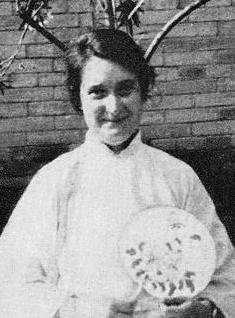
Biography
- 1902 Born
- 1930 To China
- 1936 Citizen
- 1940 Mountains
- 1970 Died
I wasn't God's first choice for what I've done for China. There was somebody else… I don't know who it was — God's first choice. It must have been a man… a well-educated man. I don't know what happened. Perhaps he die…
Most people who have heard of Gladys Aylward met her by accident, through a film she came to hate. In 1958 Hollywood turned her life into The Inn of the Sixth Happiness, gave her Ingrid Bergman's face and a love affair she never had, and sent the story around the world. The real woman was a small London parlourmaid who was turned down for the mission field as unteachable, who bought a one-way railway ticket she could barely afford, and who crossed a continent alone to reach a country that had not asked for her. The truth is stranger and better than the film, and it is worth telling straight — beginning with the fact that even the inn's name was wrong. It was not the Sixth Happiness. It was the Eight.
A parlourmaid who would not settle
She was born on 24 February 1902 in Edmonton, in north London, into a working-class family, and went into domestic service in her early teens. She was a parlourmaid — the servant who answers the door and lays the table in another family's house. Her schooling had been undistinguished and her prospects were exactly what her class and era allotted her: a lifetime of other people's rooms.
She became convinced, as a young woman, that God meant her to go to China. It was not a sentimental wish; she acted on it. She applied to the China Inland Mission, the great missionary society of the day, and offered herself for training.
They rejected her. The judgement was that she was unlikely ever to master the Chinese language, given her poor academic record — and there was her age against her too, for she was by then in her late twenties, old to be starting. By every measure the mission used, she was not a candidate. She was a servant with no gift for study who had already, in their eyes, left it too late.
This is the hinge of her whole life, and she never pretended otherwise. She was not the church's first choice for China. She was not its choice at all.
The long way to China, alone
What she did next is the part the film could not improve on, because it needed no improving. Refused the mission's training and the mission's money, she went anyway, and she went the cheapest way there was.
In the autumn of 1930 — on 15 October, not the 1932 that some tellings give — she left London by train, alone, to cross Europe and Siberia overland on the Trans-Siberian Railway. It was a genuinely dangerous route. An undeclared border conflict was under way between the Soviet Union and China, and a lone Englishwoman travelling east into it had no protection at all. She was detained by the Russians along the way, got free of them with the help of local people, and completed the last stages of the journey into China by mule. She arrived with almost nothing.
It is easy to say those sentences quickly. Hold them still for a moment: a parlourmaid who had been told she could not learn the language crossed most of the known world on her own to go and learn it. The mission board had weighed her and found her wanting. She had weighed the call and found it heavier than the verdict.
She made her way to Yangcheng, in the mountainous province of Shanxi, and joined an elderly missionary already at work there, Jeannie Lawson.
The Inn of the Eight Happinesses
The two women hit on a plan that suited the country they were in. Yangcheng sat on a mule-train route, and the muleteers who drove the caravans needed food and a bed for the night. So Lawson and Aylward opened an inn for them — The Inn of the Eight Happinesses. (The 1958 film renamed it the Inn of the Sixth Happiness; the real inn was the Eight.) They fed the muleteers, stabled their animals, and, over the evening meal, told them the stories of the Bible. The men carried both the meal and the stories on to the next town.
When Jeannie Lawson died, Gladys carried the work on alone. She learned the language she had been told she could never learn — well enough that the local Mandarin appointed her a "foot inspector," sending her from village to village to enforce the new ban on the binding of women's feet. It was a government job, and it opened every door in the region to her; where she went to measure feet, she could also speak of Christ. In 1936 she took the step that sealed her belonging: she became a national of the Republic of China. The people gave her a Chinese name, Ai-weh-deh — "The Virtuous One" — and it stuck to her for the rest of her life.
I wasn't God's first choice for what I've done for China. There was somebody else… I don't know who it was — God's first choice. It must have been a man… a well-educated man. I don't know what happened. Perhaps he died. Perhaps he wasn't willing. And God looked down… and saw Gladys Aylward. And God said — "Well, she's willing!"
— Gladys Aylward (a much-repeated recollection of her own)
That is the sound of her whole theology, and it is the honest opposite of self-importance. She did not think herself specially gifted. She thought herself specially available. The gap the mission board had measured so accurately was real; she simply did not believe it was the decisive thing. Willingness was.
A hundred children over the mountains
Then came the war. The Japanese invasion reached Shanxi, and by the spring of 1940 the fighting had made Yangcheng deadly and put a price on Gladys Aylward's head. She had gathered a crowd of orphaned and refugee children around her over the years, and now she could not leave them to the war.
So she took them out. With about a hundred children in her care, she set off on foot over the mountains toward Sian — Xi'an — and safety, a journey of roughly twelve days across hard country, including a crossing of the Yellow River. She did it while wounded and increasingly ill; she was carrying typhus by the end of it. This is the exploit her name is now attached to, and its core is solid fact: one woman, a hundred children, the mountains, the river, and no way back.
The most vivid versions of the trek — the snatches of conversation, the perfectly timed rescues — come from Alan Burgess's 1957 book The Small Woman and the film that followed, and they are dramatizations. What her biographers hand down, and it is worth receiving as their account rather than as documented minute-by-minute record, is a march sustained by prayer and small providences: food that appeared, shelter that opened, soldiers who fed and guarded the children, boats found at the river's edge when the children had to cross. Strip away the invented dialogue and the shape that remains is still astonishing — that they nearly all came through.
She reached Sian to find the city closed to refugees. She had to move on again, and then her body finally gave out: she collapsed with typhus, spent and gravely sick, the hundred delivered and their guide undone.
The film she resented, and the end she chose
She recovered, and went on working in China for years. In 1949 she returned to Britain. And it was in Britain, safe at last, that the strangest ordeal of her life caught up with her — her own fame.
Burgess's book made her famous; the 1958 film made her a legend and, in the same stroke, mortified her. The screen version invented a romance for her, complete with love scenes and an ending in which she abandons the orphans to go away with an army officer. There had been a real Colonel Linnan in her life, but the on-screen affair was fiction. She was deeply distressed by it. She felt the love scenes damaged her reputation, and she said plainly that she had never kissed a man. The world had fallen in love with a Gladys Aylward who did not exist, and the real one had to watch.
She did not stay to be a celebrity. In 1958 she settled in Taiwan, where she founded the Gladys Aylward Orphanage and returned to the only work she had ever wanted — small rooms, other people's children, the stories of the Bible told at the day's end. She died there on 3 January 1970, aged sixty-seven.
What she leaves
Gladys Aylward left few of her own words and no famous books. What she left is a life shaped like a single argument, made against the estimate of a mission board that was, by its own reasonable standards, correct.
They were right that she could not pass their examinations. They were right about her age and her schooling. They were wrong about the one thing that turned out to matter, because they were measuring the wrong thing. She could not have told you why God would pass over the well-educated man she imagined and reach down for a parlourmaid. She only knew that when God looked for someone willing, she was there, and she said yes — to the railway, to the mule, to the inn, to the mountains, to the hundred children — every time it cost her something.
She was not the first choice. She was the willing one. It turned out to be the same thing.
Also appears in


Questions and Answers
Who was Gladys Aylward?
Gladys Aylward (1902–1970) was an English parlourmaid, rejected by the missionary society, who spent her savings to travel overland alone to China in 1930. She ran an inn that told Bible stories and led about a hundred children over the mountains to safety during the Japanese invasion — insisting she was not God's first choice, only a willing one. The 1958 film "The Inn of the Sixth Happiness" made her a legend and, in the same stroke, mortified her, inventing a romance she never had.
What was her background?
She was born on 24 February 1902 in Edmonton, north London, into a working-class family, and went into domestic service in her early teens as a parlourmaid — the servant who answers the door and lays the table in another family's house. Her schooling had been undistinguished and her prospects were exactly what her class and era allotted her: a lifetime of other people's rooms. Then she became convinced, as a young woman, that God meant her to go to China, and she acted on it.
Why did the mission society reject her?
She applied to the China Inland Mission, the great missionary society of the day, and offered herself for training. They rejected her, judging she was unlikely ever to master the Chinese language given her poor academic record — and there was her age against her too, for she was by then in her late twenties. By every measure the mission used, she was not a candidate: a servant with no gift for study who had already, in their eyes, left it too late. It is the hinge of her whole life, and she never pretended otherwise.
How did she get to China?
Refused the mission's training and money, she went anyway, the cheapest way there was. On 15 October 1930 she left London by train, alone, to cross Europe and Siberia overland on the Trans-Siberian Railway — a genuinely dangerous route, with an undeclared border conflict under way between the Soviet Union and China. She was detained by the Russians, got free with the help of local people, and completed the last stages by mule, arriving with almost nothing. A parlourmaid told she could not learn the language crossed most of the known world to learn it.
What was the Inn of the Eight Happinesses?
At Yangcheng, in mountainous Shanxi, she joined an elderly missionary, Jeannie Lawson, and the two hit on a plan that suited the country. Yangcheng sat on a mule-train route, so they opened an inn for the muleteers — The Inn of the Eight Happinesses (the 1958 film renamed it the Sixth). They fed the men, stabled their animals, and over the evening meal told them the stories of the Bible, which the muleteers carried on to the next town. When Lawson died, Gladys carried the work on alone.
How did she come to belong in China?
She learned the language she had been told she could never learn — well enough that the local Mandarin appointed her a "foot inspector," sending her from village to village to enforce the new ban on binding women's feet, a government job that opened every door and let her speak of Christ everywhere she went. In 1936 she became a national of the Republic of China, and the people gave her a Chinese name, Ai-weh-deh — "The Virtuous One" — that stuck to her for the rest of her life.
What did she say about being God's choice?
Her whole theology is in a recollection she often repeated: "I wasn't God's first choice for what I've done for China. There was somebody else... a well-educated man. I don't know what happened. Perhaps he died. Perhaps he wasn't willing. And God looked down... and saw Gladys Aylward. And God said — 'Well, she's willing!'" She did not think herself specially gifted; she thought herself specially available. The gap the mission board had measured was real; she simply did not believe it was the decisive thing.
What was the journey over the mountains?
When the Japanese invasion reached Shanxi and put a price on her head, she could not leave the orphaned and refugee children she had gathered, so she took them out. With about a hundred children she set off on foot over the mountains toward Sian and safety — roughly twelve days across hard country, including a crossing of the Yellow River — while wounded and increasingly ill, carrying typhus by the end. The most vivid versions come from a book and the film and are dramatizations; the solid core is one woman, a hundred children, the mountains, the river, and no way back.
How was the trek sustained?
As her biographers tell it, on prayer for provision and safe passage, and provision kept arriving — a meal, a roof, a guard of soldiers, a boat at the water's edge when the children had to cross. No prayer of hers was written down word for word, but what is beyond dispute is the result: she brought about a hundred children over the mountains and the Yellow River, reached Sian to find the city closed to refugees, had to move on again, and then collapsed with typhus — the hundred delivered and their guide undone.
How did her later life and the famous film go?
She recovered and worked on in China for years, returning to Britain in 1949, where her own fame became her strangest ordeal: the 1958 film invented a love affair for her and an ending in which she abandons the orphans, and she was deeply distressed by it, saying she had never kissed a man. She did not stay to be a celebrity; in 1958 she settled in Taiwan, founded the Gladys Aylward Orphanage, and returned to the only work she had ever wanted, dying there on 3 January 1970. She was not the first choice — she was the willing one, and it turned out to be the same thing.