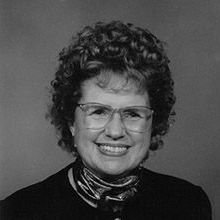
Biography
- 1922 Born
- 1967 Experiment
- 1975 Bestseller
- 2011 Died
I accepted it from the Lord, and I not only accepted it, but I made it my philosophy.
Some books are written from a study. Evelyn Christenson’s most famous one was written from a small experiment that nearly did not happen — a handful of reluctant women, asked to pray together and watch what God did, and a pastor’s wife given six months to keep a record. What came out of those six months reached, by the publisher’s reckoning, several million readers. But the more durable thing she left was not a sales figure. It was a way of praying together that ordinary people could actually do, and a single sentence she taught them to pray: Lord, change me.
A pastor’s wife in Minnesota
She was born in 1922. The details devotional readers usually want — where she was born, the maiden name, the schoolroom she grew up in — the reliable record does not preserve, and it is better to admit that than to invent it. What is certain is that her life’s work grew out of an ordinary calling: she was married to a pastor, the Reverend Harold L. Christenson, and her ministry began in and around his church in Minnesota. She was not a celebrity brought in from outside. She was the minister’s wife, doing the unglamorous work of a congregation, when she was handed the assignment that changed everything.
Before that, though, she had already walked through the sorrow that would quietly govern the rest of her teaching.
Four babies, and a settled conviction
Evelyn and Harold lost four children. There were miscarriages and a stillbirth during the war years, and a daughter, Judy, born with spina bifida, who lived only seven months. Three children — Jan, Nancy, and Kurt — grew up. But a mother who has buried four does not arrive at a theology of prayer by way of theory. She arrives at it by way of grief, and either it holds or it does not.
Hers held, and it fastened onto one verse: Romans 8:28, that God works all things together for good to those who love him. She did not treat it as a slogan to soften a loss. She treated it as a decision she had made and would not revisit.
I accepted it from the Lord, and I not only accepted it, but I made it my philosophy.
— Evelyn Christenson, on losing a child (Revive Our Hearts)
And underneath it, the plainer conviction she came back to again and again: God is not making a mistake. It is a hard thing to say over a small grave, and she said it, and meant it, and it became the ground from which she later comforted grieving women for the rest of her life. The teacher who told others what happens when women pray had first learned, in the worst circumstances a mother can face, what happens when a woman keeps trusting God after the answer is no.
The experiment: about eight reluctant women
In 1967 and 1968 her denomination asked her to run an experiment. The brief was simple and a little daunting: gather some women, have them pray together over a set period, and record what actually happened. It was, in effect, six months of praying with a notebook open.
She began with about eight women, and they were reluctant. That detail matters, because it is the opposite of the way these stories are usually told. There was no revival atmosphere, no crowd, no momentum to ride. There were a few ordinary women, unsure about praying aloud in front of one another, agreeing to try for six months.
What she watched happen over those months became both a method and a message. She saw that when women prayed together honestly — aloud, about real things — God moved, and the women themselves were changed first. The experiment quietly outgrew its own modest terms. From 1968 onward she was leading prayer seminars, and she went on leading them, across the world, for decades.
What she taught: praying so anyone can join in
Out of the experiment came the book, What Happens When Women Pray, published in 1975. By the publisher’s figures it reportedly sold over three million copies — a number worth stating cautiously, since such counts come from promotional copy rather than any audit. However it is counted, it was a genuine bestseller, and it carried her method far beyond Minnesota.
The method itself was refreshingly practical. She had noticed something that surprises people when they first hear it: roughly two-thirds of the women in her audiences had seldom or never prayed aloud with another person. The reason was almost never unbelief. It was fear — the fear of praying a long, polished, public prayer in front of others who seemed better at it. So she took that fear apart.
She taught what she called the six S’s of praying together. Pray subject by subject, one thing at a time, so the group stays together instead of scattering. Pray short prayers, and simple ones — no performance, no eloquence required. Make the requests specific, so an answer can actually be recognized when it comes. Leave silent periods, room to listen. And keep the groups small, small enough that no one can hide and no one is on stage.
It was conversational prayer — aloud, subject by subject, everyone welcome. She framed prayer’s parts as praise, thanksgiving, confession, and intercession, and she made each of them something a frightened beginner could do in a sentence. The effect was to hand the practice of shared prayer back to the ordinary Christian who had always assumed it was for someone more qualified.
Lord, change me
Her second great theme arrived in 1977, in a book whose title was its whole argument: Lord, Change Me! Where much prayer runs quietly toward fixing other people, she turned it back on the one praying.
I have discovered through the years that surprising things happen when I pray, ‘Lord, change me — don’t change my husband, don’t change my children, don’t change my pastor, change me!’
— Evelyn Christenson, Lord, Change Me! (1977)
It is a disarming prayer because it removes the escape route. It is far easier to intercede for a difficult husband than to ask God to work on oneself first. Christenson had discovered — in a marriage, a family, a church, and four gravesides — that the prayer God most readily answers is the one that offers him the person praying. Her two books are really one lesson from two sides: what happens when women pray is that, more often than they expect, the woman herself is the first thing that changes.
Other books followed — What Happens When God Answers Prayer, A Time to Pray God’s Way, and more — and she founded United Prayer Ministry in St. Paul, which she led as its president. The teaching stayed the same. Prayer was not a technique for managing God. It was the place where a person was remade.
Around the world, and to the end
By the early 1990s her reach had gone global in a formal way. She served as co-chairperson of the North American Women’s Track of the AD2000 & Beyond Movement, a worldwide evangelism effort, and her Study Guide for Evangelism Praying was distributed in 84 countries and translated into eight languages. Later publicity would inflate those figures; the contemporaneous numbers are impressive enough without help. A woman who had started with eight reluctant friends was now teaching the same simple prayers on nearly every continent.
She kept at it to the end. According to the Revive Our Hearts tribute published at her death, about a month before she died she was still leading people to Christ — at her own assisted-living home, an old woman past the reach of the podium, still doing in a corridor what she had done on platforms for forty years.
Evelyn Christenson died of heart failure on 1 November 2011, in Minnesota, at the age of eighty-nine. She had outlived her husband and buried four of her children, and she went to her death holding the verse she had chosen over the first of those graves.
She left no dramatic story — no martyrdom, no founding of a great institution. She left something quieter and more usable: permission for ordinary women to pray aloud together without fear, a method simple enough for the most reluctant, and a single sentence that keeps its edge every time it is prayed honestly. Lord, change me. She had prayed it first, and it had.
Also appears in
Questions and Answers
Who was Evelyn Christenson?
Evelyn Christenson (1922–2011) was an American pastor's wife whose six-month prayer experiment among a handful of reluctant women grew into the bestselling "What Happens When Women Pray" and a worldwide prayer-seminar ministry. Through the loss of four children she made Romans 8:28 her philosophy: "God is not making a mistake." The more durable thing she left was not a sales figure but a way of praying together that ordinary people could actually do.
What was her background?
She was born in 1922, and much of the personal detail devotional readers want the reliable record does not preserve. What is certain is that her life's work grew out of an ordinary calling: she was married to a pastor, the Reverend Harold L. Christenson, and her ministry began in and around his church in Minnesota. She was not a celebrity brought in from outside but the minister's wife, doing the unglamorous work of a congregation, when she was handed the assignment that changed everything.
How did the loss of her children shape her?
Evelyn and Harold lost four children — miscarriages and a stillbirth during the war years, and a daughter, Judy, born with spina bifida, who lived only seven months; three others grew up. A mother who has buried four does not arrive at a theology of prayer by theory but by grief, and it fastened onto Romans 8:28. "I accepted it from the Lord," she said, "and I not only accepted it, but I made it my philosophy" — and underneath it, the plainer conviction: God is not making a mistake.
What was the prayer experiment?
In 1967 and 1968 her denomination asked her to run an experiment: gather some women, have them pray together over a set period, and record what happened — six months of praying with a notebook open. She began with about eight women, and they were reluctant, which is the opposite of the way these stories are usually told. There was no revival atmosphere and no crowd, just a few ordinary women, unsure about praying aloud, agreeing to try for six months and write down what God did.
What did the experiment become?
What she watched became both a method and a message: when women prayed together honestly — aloud, about real things — God moved, and the women themselves were changed first. It quietly outgrew its own modest terms. From 1968 onward she was leading prayer seminars, and went on leading them across the world for decades. A denominational assignment that started with a handful of hesitant women became, over more than forty years, a seminar ministry that circled the globe — which she always told as an answer to prayer rather than an achievement.
What was her book, and how did it sell?
Out of the experiment came "What Happens When Women Pray," published in 1975, which reportedly sold over three million copies — a number worth stating cautiously, since such counts come from promotional copy. However counted, it was a genuine bestseller that carried her method far beyond Minnesota. Her second great theme arrived in 1977 in a book whose title was its whole argument: "Lord, Change Me!"
What was her method of praying together?
Refreshingly practical. She had noticed that roughly two-thirds of the women in her audiences had seldom or never prayed aloud with another person — not from unbelief but from fear of praying a long, polished prayer in front of others. So she taught the "six S's": pray subject by subject, one thing at a time; pray short prayers and simple ones; make requests specific so an answer can be recognized; leave silent periods to listen; and keep the groups small. It handed shared prayer back to the ordinary Christian who assumed it was for someone more qualified.
What did she mean by "Lord, change me"?
Where much prayer runs quietly toward fixing other people, she turned it back on the one praying: "surprising things happen when I pray, 'Lord, change me — don't change my husband, don't change my children, don't change my pastor, change me!'" It is disarming because it removes the escape route — far easier to intercede for a difficult husband than to ask God to work on oneself first. She had discovered that the prayer God most readily answers is the one that offers him the person praying.
How far did her ministry reach?
By the early 1990s it had gone global in a formal way: she served as co-chairperson of the North American Women's Track of the AD2000 & Beyond Movement, and her Study Guide for Evangelism Praying was distributed in eighty-four countries and translated into eight languages. A woman who had started with eight reluctant friends was now teaching the same simple prayers on nearly every continent, and she kept at it to the end.
How did she die, and what does she leave?
About a month before her death she was still leading people to Christ at her own assisted-living home — an old woman past the reach of the podium, still doing in a corridor what she had done on platforms for forty years. She died of heart failure on 1 November 2011 in Minnesota, aged eighty-nine, having outlived her husband and buried four of her children, still holding the verse she had chosen over the first of those graves. She left permission for ordinary women to pray aloud without fear, and a single sentence that keeps its edge: Lord, change me.
Portrait: Revive Our Hearts