Where to start reading
Start with
Exhortation to the Heathen
Books by Clement of Alexandria (3)

Biography
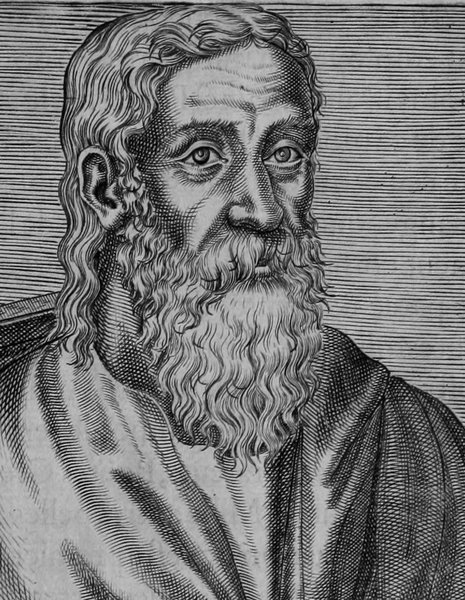
Clement of Alexandria is one of those early Christians we know far better by his voice than by his life. The facts of his biography would fit on a single page, and his nineteenth-century translator said as much, plainly: after setting down a handful of dates and names, he wrote, “The above is positively the sum of what we know of Clement’s history.” Yet the books he left behind are among the largest and liveliest that survive from the church’s second century. Through them we meet a man of enormous reading and restless curiosity, a former pagan who came to believe that every scattered gleam of truth he had found in them was a ray from one Light. This is the story of what can honestly be said about him, and of the book in which his voice rings out most clearly.
A seeker from the old world
His full name was Titus Flavius Clemens. When and where he was born, no one knows. He is usually placed around 150, and the old writers disagree about the city: one tradition says Athens, another Alexandria. Almost everything about his early years has to be read back from his writing. He was, it seems, born to pagan parents, and the ease with which he describes the Greek mystery cults, their rites and their secret words, suggests a man who had once stood close to them. His pages are thick with quotations from Greek authors whose works have otherwise perished.
At some point, how and when we are not told, he became a Christian. What we do know is what he did next. Like a student going from teacher to teacher, he travelled widely through Greece, Italy, Palestine, the East and Egypt, looking for the best Christian teachers he could find. He remembered them with reverence: an Ionian he met in Greece, an Assyrian in the East, a Hebrew, and others. Later readers have tried to put names to some of them, but they are guesses. Only one can be identified for certain, and Clement thought him the greatest of them all.
The bee of Alexandria
That teacher was Pantaenus, who taught the faith in Alexandria, the great harbour city at the mouth of the Nile. Clement seems to have reached him around 180, and there his long search came to rest. Clement speaks of him with deep reverence, and the old editors of his works call Pantaenus “the Sicilian bee,” gathering and storing up wisdom for his pupils.
The city held the most famous library of the ancient world, a meeting-place of Greek, Jewish and Egyptian learning; it was here, centuries before, that the Hebrew Scriptures had been put into Greek. Around Pantaenus a school had grown up for teaching the faith, the “catechetical school,” so called because it prepared catechumens, those learning the faith before baptism, and went on to train the more learned. Historians still debate how formal that school was in Clement’s day. But it is clear that Clement studied with Pantaenus, that he was ordained a presbyter, an elder of the church, and that he came to teach in his master’s place, probably around 189, when Pantaenus is said to have gone away on a mission to the East.
For a dozen years or so Clement taught in Alexandria with great distinction. The old accounts count among his pupils the young Origen, who would become the most famous Christian scholar of the next generation. Another was Alexander, later bishop of Jerusalem, who never forgot what he owed him. Writing years afterwards of the teachers who had gone before him into glory, Alexander named them with love:
the truly blest Pantænus, I mean, and the holy Clemens, my teacher, who was to me so greatly useful and helpful.
— Alexander, bishop of Jerusalem, on his teacher
A new song for the Greeks
It was in these Alexandrian years, about 195, that Clement wrote the Exhortation to the Heathen, known by its Greek name as the Protrepticus, an appeal to his pagan neighbours to turn to Christ. It was the first of three books he seems to have planned as a ladder. The Exhortation calls the outsider in; The Instructor (the Paedagogus) then trains the new believer in daily Christian living, down to food, dress and table manners; and the sprawling Miscellanies (the Stromata) lead the mature believer on toward deeper knowledge of God. Over all three stands one figure: Christ, the Word of God, the true Teacher.
The Exhortation opens not with an argument but with music. Clement retells the old Greek tales of minstrels whose songs charmed fish and beasts and raised the walls of Thebes, and then turns on his readers. You believe that singers tamed animals, he says, and yet you look with incredulous eyes on the truth. He offers them another song, “the New Song,” which is Christ himself. That song, he writes, has made men out of stones and men out of beasts; it tuned the whole universe into harmony, and above all it tunes the human being, whom he calls a beautiful breathing instrument made by God. And what does the Singer want? “To open the eyes of the blind, and unstop the ears of the deaf,” and to reconcile disobedient children to their father.
The heart of it is the incarnation. The Word who made the world has come among us as a man, as our Teacher, so that we might share his life. Clement put it in a sentence that Eastern Christians have pondered ever since:
And now the Word Himself clearly speaks to thee, shaming thy unbelief; yea, I say, the Word of God became man, that thou mayest learn from man how man may become God.
— Clement of Alexandria, Exhortation to the Heathen, chapter 1
He did not mean that people become gods in their own right. He meant what the Eastern churches call theosis, or deification: that by grace men and women can be drawn into the very life and likeness of God. To readers who scorned the faith as a novelty, he answered in a single line:
Error seems old, but truth seems a new thing.
— Clement of Alexandria, Exhortation to the Heathen, chapter 1
Learning brought to the feet of Christ
Much of the middle of the Exhortation makes hard reading. Clement goes through the gods, mysteries and sacrifices of Greece one by one, exposing them with fierce, mocking energy. Even his nineteenth-century editor wished he had spared some of the details. But he had a reason: he wanted his readers to see what they were actually worshipping, and to see that many of their own best minds had seen it first.
For Clement was no enemy of learning. That is perhaps the most important thing to know about him. Many Christians of his day thought Greek philosophy useless or dangerous. Clement believed that philosophy had been, for the Greeks, something like what the law was for the Hebrews: a schoolmaster to bring them toward Christ. In the Exhortation he quotes Plato and the poets again and again, not to set them beside Scripture, but to show that they had glimpsed fragments of a truth now whole in Christ. He is honest that they only glimpsed it: “that which the chiefs of philosophy only guessed at,” he wrote, “the disciples of Christ have both apprehended and proclaimed.”
And he never let learning become a reason to keep God at a distance from ordinary life. One of the most attractive passages in the book is an invitation to people in every trade:
Practise husbandry, we say, if you are a husbandman; but while you till your fields, know God. Sail the sea, you who are devoted to navigation, yet call the whilst on the heavenly Pilot.
— Clement of Alexandria, Exhortation to the Heathen, chapter 10
Exile and silence
In 202 the storm broke. Under the emperor Septimius Severus, persecution fell on the church at Alexandria. Clement left the city, and as far as we know he never returned to teach there.
His going has sometimes been questioned. It is fair to remember what he himself taught: that every Christian must be ready to die for Christ, but that to rush forward and seek out death was not courage but a failure to honour God’s gift of life. He seems to have lived by that. The next glimpses of him come from his old pupil Alexander, by then a bishop. About 211 Alexander gave Clement a letter commending him to the church at Antioch, and spoke of him as a blessed presbyter, a man illustrious and approved. The letter suggests that Clement had spent some of the intervening years near Alexander, perhaps in Cappadocia or in Jerusalem.
After that, silence. He is thought to have died about 215, but where and how, no one recorded. Alexander later counted him among the blessed fathers who had gone before.
A disputed saint and a lasting teacher
Later generations honoured Clement highly. Jerome called him the most learned of the ancients; Theodoret said he surpassed all others and was a holy man; Eusebius called him an incomparable master of Christian philosophy. His name stood in the Western calendar of saints for centuries, with a feast on 4 December.
But he was also a pioneer, and pioneers leave rough edges. He wrote before the great creeds had settled the language of Christian doctrine, and some of his phrases, especially in works now lost, troubled later readers; the ninth-century patriarch Photius criticised several of his ideas sharply, though it is not clear that Photius always read him fairly. At the end of the sixteenth century his name was removed from the Roman Martyrology, on the grounds that his life was little known and some of his teaching doubtful. The Coptic Church still keeps him as a saint, and Anglicans commemorate him. One Victorian writer said he did not know where to look for a purer or a truer man.
His great achievement was to show that a Christian could be both deeply learned and wholly devoted to Christ. His nineteenth-century editors called him, after Justin and Irenaeus, the founder of Christian literature. With Clement, and then with Origen after him, a Christian intellectual tradition began in Alexandria that would shape theology for centuries. And under all the learning was a simple conviction, which he put in one short sentence of the Exhortation: “The instrument of God loves mankind.”
Reading the Exhortation today
The book we publish is the Exhortation to the Heathen, in William Wilson’s translation from the Ante-Nicene Fathers, with the editors’ introductory note on Clement’s life and works. The catalogue of pagan gods can be wearying, but a reader who keeps going will be rewarded. The opening chapter on the New Song is among the most beautiful pages in early Christian literature, and the closing chapters are a sustained, tender appeal: to the sailor, to the old blind seer Tiresias, to anyone who has heard the sirens’ song, “bound to the wood of the cross, thou shalt be freed from destruction”.
Above all, the book shows how an educated Christian of the second century spoke to a world that thought his faith new, foreign and foolish. He did not retreat from that world or flatter it. He took what was true in it, named what was false, and pointed past both to the Word who had become man. He sums it up himself: “Good is the whole life of those who have known Christ.” Little as we know of Clement’s own life, the book suggests he found that to be true.
Questions and Answers
Who was Clement of Alexandria?
Titus Flavius Clemens, known as Clement of Alexandria, was a Christian teacher and writer who lived from about 150 to about 215. He taught the faith in Alexandria, and his surviving books are among the largest that remain from the church’s second century.
Where was Clement of Alexandria born?
No one knows for certain. One ancient tradition says Athens and another says Alexandria, and his birth year is also uncertain, usually given as about 150.
How did Clement become a Christian?
He seems to have been born to pagan parents, and his writing shows close knowledge of the Greek mystery religions. The details of his conversion are not recorded, but afterwards he travelled widely through Greece, Italy, Palestine and the East looking for the best Christian teachers.
Who was Pantaenus, and what did he mean to Clement?
Pantaenus was a Christian teacher in Alexandria, the only one of Clement’s teachers who can be identified with certainty, and the one Clement regarded as the greatest. Clement reached him around 180, studied under him, and later taught in his place.
What was the catechetical school of Alexandria?
It was the circle in Alexandria where the faith was taught to catechumens, people preparing for baptism, and to more advanced students. Clement taught there from about 189, and the old accounts count Origen and Alexander, later bishop of Jerusalem, among his pupils, though historians debate how formal the school was in his day.
What is Clement’s Exhortation to the Heathen about?
Written about 195, it is an appeal to pagan Greeks to leave their idols and mysteries and turn to Christ, whom Clement calls the New Song. It exposes the old religions sharply, draws on Plato and the poets as witnesses to partial truth, and ends with a warm invitation to come to the Word of God. The translation published here is William Wilson’s, from the Ante-Nicene Fathers.
What did Clement think about Greek philosophy?
Unlike many Christians of his day, he valued it. He taught that philosophy prepared the Greeks for Christ as the law prepared the Hebrews, and that whatever truth it held came in fragments from the one truth found whole in Christ.
What other books did Clement write?
Besides the Exhortation, his surviving works are The Instructor, a guide to daily Christian living, the Miscellanies or Stromata, a long and wide-ranging work on Christian knowledge, and the short treatise Who Is the Rich Man That Shall Be Saved? Many other writings are lost or survive only in fragments.
Why did Clement leave Alexandria?
In 202 persecution under the emperor Septimius Severus fell on the church in Alexandria, and Clement left the city. About 211 his former pupil Alexander, by then a bishop, gave him a letter commending him to the church at Antioch.
When did Clement die, and is he a saint?
He died about 215, at a place no one recorded. He was long honoured in the Western calendar with a feast on 4 December, but his name was dropped from the Roman Martyrology at the end of the sixteenth century; the Coptic Church still venerates him as a saint and Anglicans commemorate him.