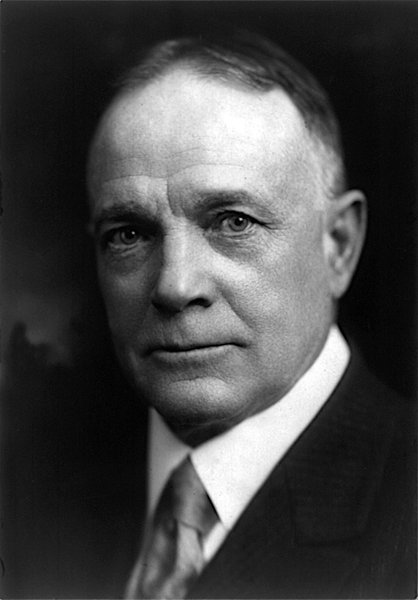
Biography
I’m through. I am going to Jesus Christ. We’ve come to the parting of the ways.
Billy Sunday never saw his father. William Sunday, a bricklayer, enlisted in the Twenty-third Iowa Infantry in the summer of 1862, and four months later, on the 19th of November, his wife gave birth to a third son in a two-room log cabin near Ames, Iowa, and named the boy after the soldier who was away. Private Sunday died of disease in a camp at Patterson, Missouri, on the 22nd of December, a little more than a month after the child was born. The boy who would one day draw larger crowds than any American evangelist before him began his life as one of the war’s many small casualties: fatherless, poor, and very soon on his own.
A soldier’s orphan
His mother, Mary Jane, kept her three boys together as long as she could, with help from her father. But the wolf, as Sunday put it, scratched at the cabin door, and at last she told her sons she was sending two of them to the Soldiers’ Orphans’ Home. Woken at a hotel in Ames for a train in the small hours, he saw that his mother’s eyes were red. “All the time Ed and I slept,” he said, “mother had been praying.” She put an arm around each boy on the platform and sobbed as though her heart would break.
He spent about two years in the orphanages at Glenwood and Davenport. By fourteen he was shifting for himself — doing farm chores in Nevada, Iowa, attending the high school there without graduating, working as a school janitor. He liked to say he had crawled out of “the university of poverty and hard knocks.”
The fastest man in the National League
In Marshalltown, Iowa, where he ran with the fire brigade team and played ball for the town, he was noticed by Cap Anson, the captain of the Chicago White Stockings, the champions of the National League. In 1883, not yet twenty-one, Sunday went straight from the Iowa sandlots to Chicago. He never became much of a hitter, but he was reckoned the fastest runner in the league, and the bleachers loved his diving catches and head-first slides. He played five seasons in Chicago and then moved to Pittsburgh and Philadelphia.
A curbstone recruit
One Sunday afternoon in Chicago — in 1886 or 1887; the sources differ — he and several teammates came out of a saloon and sat down on a curb. Across the street a band from the Pacific Garden Mission was playing horns and trombones and singing the gospel hymns he had heard his mother sing in the log cabin. The memories came flooding back, and he sobbed. A young man from the band invited them down to the mission. Sunday stood up and spoke to his friends.
I’m through. I am going to Jesus Christ. We’ve come to the parting of the ways.
— Billy Sunday, recalling the street corner in Chicago
Some of them laughed and some mocked. He went to the mission again and again, and there, after conversation and prayer with Mrs. Clark, the wife of the mission’s founder, he made his decision. “I groped my way out of darkness into the arms of Jesus Christ,” he said long afterwards, “and I fell on my knees and cried ‘God be merciful to me a sinner!’” He dreaded the ridicule waiting at the ballpark, but the first man to meet him inside the gate the next morning was the team’s great star, Mike “King” Kelly: “Bill, I’m proud of you! Religion is not my long suit, but I’ll help you all I can.” Anson and the rest followed with the same encouragement.
The change in him was plain to teammates and fans alike. He gave up swearing, gambling and the saloon, refused to play ball on the Lord’s Day, and joined the Jefferson Park Presbyterian Church, where he threw himself into the mid-week prayer meeting and the Christian Endeavor society. There he met Helen Amelia Thompson — Nell — the capable daughter of a prosperous Scottish Presbyterian in the dairy business. Her father did not want a professional ballplayer for a son-in-law; her mother took Billy’s side, and in the end her father relented. They were married in the Thompson home on the 5th of September, 1888, and spent their honeymoon travelling with the team. For the next forty-seven years he would make almost no decision without her.
The parting of the ways
Sunday’s Christianity kept pulling him away from the diamond. He was in demand at YMCA meetings, though he was then a poor, stumbling speaker. In the spring of 1891, bound by a three-year contract with Philadelphia, he put the question to God in the plainest terms he knew: if God wanted him out of baseball and in Christian work, let the club release him before the 25th of March. On the 17th a letter came from the club’s president granting the release. Then the Cincinnati club arrived with a contract for $3,500 and a first month’s pay in advance. His father-in-law told him he was a fool not to take it.
He went to work for the Chicago YMCA as an assistant secretary for about eighty-three dollars a month — money that was sometimes months late. For three years he visited the sick, prayed with the troubled, and carried invitations into saloons, learning at close range what drink could do to a family. In 1893 he became the assistant to J. Wilbur Chapman, one of the best-known evangelists of the day — his advance man, organizing prayer meetings and choirs, driving tent pegs, and listening night after night to a master preacher at work. Chapman taught him to build a sermon, and pressed on him the importance of prayer.
Then, over the holidays of 1895–96, a telegram came: Chapman was returning to the pastorate, and the work was over. Sunday had a wife, two children, no job, and no money. He could not go back to baseball.
I have just gone on, as the Lord opened the way, trying to do his work. I had no plan for this sort of thing. It is all the Lord’s doings.
— Billy Sunday, to William T. Ellis
The sawdust trail
For twelve years he worked what he called the “kerosene circuit,” some seventy small towns, most of them in Iowa and Illinois, without electric light. When a snowstorm in Salida, Colorado, flattened his tent in 1906, he began to insist that towns build him plain wooden tabernacles, their floors strewn with sawdust to deaden the noise. In the Puget Sound country, among loggers who knew what it was to follow a sawdust trail home out of the forest, walking forward at the invitation became “hitting the sawdust trail.” From 1908 Nell travelled with him and ran the whole enterprise, leaving the younger children with a nanny; a staff grew around them, among them the song leader Homer Rodeheaver.
On the platform Sunday was unlike anything American religion had seen. He ran, stood on the pulpit, smashed chairs, and slid across the stage like a runner stealing home, in a torrent of slang. Many ministers were scandalized, and not without reason — he could be coarse and cruel. But beneath the performance lay something the crowds did not always see.
Before a hammer was lifted on a tabernacle, the churches of a city were divided into districts and blocks for cottage prayer meetings, held wherever possible in the homes of the unconverted. Conversions were often reported before the evangelist arrived.
Sunday’s own habit was the same. Ellis heard him pray in his room before going out to preach, in exactly the plain, conversational way he prayed on the platform.
I never preach a sermon until I’ve soaked it in prayer. Never.
— Billy Sunday, from his sermon “Teach Us to Pray”
Between 1915 and 1917 he preached in Philadelphia, Boston, Detroit, Buffalo and other great cities, and in the spring of 1917, as the United States entered the First World War, he held his largest campaign, in New York, from April to June. More than 98,000 people came forward, and he gave the entire offering there to war charities, as he gave his Chicago offering to the Pacific Garden Mission where he had been converted. Over his career something like a million people walked the sawdust trail. His most famous sermon was against strong drink, and he did as much as any man to arouse the nation for Prohibition; on the night it took effect in January 1920 he staged a mock funeral for “John Barleycorn” in Norfolk, Virginia.
Trials
The honest record has shadows. The campaigns made the Sundays wealthy, and critics questioned the offerings. His patriotism could curdle into harshness; in the 1920s he accepted gifts from members of the Ku Klux Klan and, hired by coal operators, spoke contemptuously of striking miners. After the war the crowds thinned, but he kept preaching wherever he was invited.
The deepest sorrow was at home. The children had been raised largely by others while their parents travelled, and the three sons struggled with drink and failed marriages; the Sundays paid money to keep scandals quiet. In 1930 Nora Lynn, the nanny who had become family, died. In 1932 their daughter Helen died after a long, wasting illness. In 1933 their eldest son, George, whom they had rescued from financial ruin, took his own life. Sunday had once prayed aloud before a tabernacle crowd, with a candour that made the critics wince, words that read very tenderly now.
Well, Jesus, I’m not up in heaven yet. I don’t want to go, not yet… I don’t want to leave Nell and the children. I like the little bungalow we have out at the lake.
— Billy Sunday, a tabernacle prayer
Early in 1935 he suffered a heart attack, and his doctor told him to stay out of the pulpit. He did not. About a week before he died he preached on the jailer’s question, “What must I do to be saved?” — the question that had found him on a Chicago curb half a century before. He died on the 6th of November, 1935, at the Chicago home of Nell’s brother, William Thompson, just short of his seventy-third birthday, and was buried in Forest Home Cemetery at Forest Park, Illinois.
He was a man of large faults and larger zeal. He was a soldier’s orphan who never forgot his mother praying through the night, and a ballplayer who asked God for a sign and kept his side of the bargain. The chair-smashing has dated. What remains is the simple gospel he heard from a mission band on a street corner and preached for forty years: that any sinner, however far gone, may still get up, turn his back on the old crowd, and go to Jesus Christ.
No books or sermons in the library yet for this writer.
Questions and Answers
Who was Billy Sunday?
Billy Sunday (1862–1935) was an American baseball player turned evangelist, a Chicago White Stockings outfielder converted outside the Pacific Garden Mission who became the most famous revivalist of the early twentieth century. Preaching in plain wooden tabernacles to vast crowds, he called hundreds of thousands to "hit the sawdust trail" for Christ, and he was a leading voice in the campaign for Prohibition.
When and where was Billy Sunday born?
He was born on 19 November 1862 in a two-room log cabin near Ames, Iowa, and named after his father, William Sunday, a bricklayer serving in the Twenty-third Iowa Infantry. His father died of disease in an army camp at Patterson, Missouri, on 22 December, a little over a month later, so Billy never saw him. Poverty forced his mother, Mary Jane, to send him to the Soldiers' Orphans' Home, and he spent about two years in orphanages at Glenwood and Davenport.
What kind of baseball player was Billy Sunday?
In Marshalltown, Iowa, where he ran with the fire brigade team and played ball for the town, he was noticed by Cap Anson, captain of the Chicago White Stockings, the National League champions. In 1883, not yet twenty-one, he went straight to Chicago. He never became much of a hitter, but he was reckoned the fastest runner in the league, and crowds loved his diving catches and head-first slides. He played five seasons in Chicago, then for Pittsburgh and Philadelphia.
How did Billy Sunday come to faith?
One Sunday afternoon in Chicago, in 1886 or 1887, he sat on a curb outside a saloon with teammates and heard a band from the Pacific Garden Mission singing hymns his mother had sung. He sobbed, and told his friends, "I'm through. I am going to Jesus Christ." After prayer at the mission with Mrs. Clark, the founder's wife, he cried, "God be merciful to me a sinner!" The next morning the star Mike "King" Kelly told him, "Bill, I'm proud of you!"
Why did Billy Sunday leave professional baseball?
In the spring of 1891, under a three-year contract with Philadelphia, he asked God that if He wanted him in Christian work the club would release him before 25 March. The release came on the 17th. Then Cincinnati offered $3,500 with a month's pay in advance, and his father-in-law called him a fool to refuse. Sunday "prayed that night until five o'clock" and said no. He went to work for the Chicago YMCA for about eighty-three dollars a month.
How did Billy Sunday begin preaching as an evangelist?
In 1893 he became assistant to the evangelist J. Wilbur Chapman, who taught him to build a sermon and pressed on him the importance of prayer. When Chapman returned to the pastorate over the holidays of 1895–96, Sunday was left with a wife, two children and no money. He laid it before the Lord, and a telegram came from Garner, Iowa, asking him to hold meetings. He went in January 1896 with eight sermons, and he said he never again had to seek an invitation.
What does hitting the sawdust trail mean?
After a snowstorm in Salida, Colorado, flattened his tent in 1906, Sunday insisted that towns build him plain wooden tabernacles with sawdust strewn on the floors to deaden the noise. In the Puget Sound country, among loggers who knew what it was to follow a sawdust trail home out of the forest, walking forward at the invitation became "hitting the sawdust trail." Over his career something like a million people walked it.
What part did prayer play in Billy Sunday's campaigns?
Before a tabernacle was built, a city's churches were divided into districts for cottage prayer meetings in homes. Before the Pittsburgh campaign of 1913–14, 4,137 such meetings were held in December alone, with a combined attendance of 68,360. The journalist William T. Ellis heard Sunday pray in his room in the same plain way he prayed on the platform. "I never preach a sermon until I've soaked it in prayer," Sunday said. "Never."
What was Billy Sunday's role in Prohibition?
His most famous sermon was against strong drink. Years spent carrying invitations into Chicago saloons for the YMCA had shown him at close range what drink could do to a family, and he did as much as any man to arouse the nation for Prohibition. On the night it took effect in January 1920 he staged a mock funeral for "John Barleycorn" in Norfolk, Virginia. His largest campaign, in New York in 1917, saw more than 98,000 people come forward.
What sorrows marked Billy Sunday's later life, and how did he die?
His record has shadows, from questioned offerings to gifts from Ku Klux Klan members. At home, his sons struggled with drink and failed marriages; his daughter Helen died in 1932, and his eldest son George took his own life in 1933. After a heart attack early in 1935 he kept preaching, and about a week before he died spoke on "What must I do to be saved?" He died in Chicago on 6 November 1935 and was buried at Forest Home Cemetery, Forest Park, Illinois.