New to Smith Wigglesworth? Start with
Ever-Increasing Faith
All works · 4 hr 32 min read
Biography
I can never recollect a time when I did not long for God.
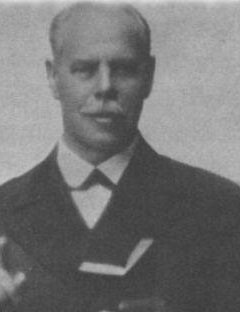
Smith Wigglesworth never pretended to be anything but what he was: a working man from the West Riding of Yorkshire, with a plumber’s hands and almost no schooling, who had been laid hold of by God. When he first visited America in 1914, the Pentecostal paper that received him put it simply: “He lays no claim to learning.” Yet the Bradford plumber who could not read as a boy became one of the most travelled preachers of his generation, and his whole message could be gathered, as he gathered it himself, into two words: only believe.
Six until six
He was born in June 1859 in Menston, a village near Bradford, to John and Martha Wigglesworth, a family so poor that there were days with no food in the house. Smith went to work at six, pulling and cleaning turnips in the fields until his small hands were sore. At seven he and his older brother went into a woollen mill. The children rose at five and worked twelve hours. “It’s a long time from six until six in the mill,” he told his father once, and his father, with tears in his eyes, answered, “Well, six o’clock will always come.” By nine he was working full time. “Schooling was not compulsory in those days,” he said long afterward, “and so I was robbed of an education.”
What the mill could not take from him was a hunger he could not remember being without. Neither of his parents knew God, but the boy would kneel in the fields and ask Him for help.
I can never recollect a time when I did not long for God.
— Smith Wigglesworth, telling his story to Stanley Frodsham
His grandmother, an old-time Wesleyan Methodist, took him to her meetings, and when he was eight a revival came to her chapel. Early one Sunday morning, as the simple congregation sang and clapped around the big stove about “the Lamb, the bleeding Lamb,” the boy looked to Christ and knew that he was born again. He saw then, he said, that God “has made the condition as simple as He possibly could — ‘Only believe.’” The first soul he won was his own mother.
But he had no words. When he stood up in testimony meetings he could only weep. In Bradford, where the family moved when he was thirteen, he carried a Testament everywhere, though he could make out little of it. Chosen with six other boys to give a fifteen-minute missionary talk at the Wesleyan chapel, he prepared the only way he knew: “For three weeks I lived in prayer.”
The plumber and the preacher
At sixteen he threw himself in with the Salvation Army, newly arrived in Bradford, whose all-nights of prayer and fierce zeal for souls matched his own. At the mill a godly Plymouth Brethren steam-fitter taught him plumbing, believer’s baptism and the hope of the Lord’s return. In his early twenties, in Liverpool, he spent nearly all his wages feeding the barefoot children of the docks and fasted every Sunday. Asked to speak, he could never get through without tears: “like Jeremiah,” he said, “I was a man with a fountain of tears.”
Back in Bradford at about twenty-three, he set up in business for himself as a plumber and there met, in his own words, “the best girl in the world.” Mary Jane Featherstone — Polly — was a Salvation Army preacher of real gifts, and on 4 December 1882 they were married at St Peter’s Church, Bradford. It was Polly who taught her husband to read, and the Bible remained, as he often said, almost the only book he ever read. They had five children: Alice, Seth, Harold, Ernest and George.
Together they opened a small mission in Bowland Street, in the Manningham district of Bradford, which was their spiritual home for some thirty years. For twenty years they sat on the platform there together — Polly the practised preacher, Smith the plumber who still could hardly speak in public without tears. He was honest in later years about what she had to bear. “I can remember the time when I used to go white with rage, and shake all over with temper,” he confessed. He waited on God for ten days, and Polly testified to the difference: “I never saw such a change.”
A faint glimpse of the Healer
His healing ministry began almost by accident. Stanley Frodsham records how Wigglesworth used to pay the fares of poor and sick neighbours and take them each week to a divine-healing meeting in Leeds. When the Leeds leaders went away to the Keswick Convention, they left the protesting plumber in charge. Fifteen came forward for prayer, among them a man on crutches who, as Frodsham tells it, was soon jumping about without them. “I am sure it was not my faith,” he said, “but it was God in His compassion coming to help me in that hour of need.”
He and Polly made a strict vow that no medicine or doctor would come into their house, and soon it was tested. For six months he had suffered from appendicitis. One Sunday the pain brought him down at an open-air meeting and two men helped him home.
Sunderland
In late October 1907 Wigglesworth went to All Saints’, Monkwearmouth, in Sunderland, where Alexander Boddy was vicar and people were said to be speaking in tongues as at Pentecost. Convinced he already had all there was to have, he questioned and argued until, he admitted, “the people wished I had never come.” But he was hungry.
On his last day, with a train to catch at four, he went to the vicarage to say goodbye and asked Mary Boddy, the vicar’s wife, to lay hands on him. “It isn’t tongues you need,” she told him, “but the Baptism.” She prayed, and was called out of the room, and he was left alone with God. He saw, he said, the empty cross and Jesus glorified, and was so overwhelmed by a sense of cleansing that he cried “Clean! Clean! Clean!” — and found himself worshipping in tongues.
Polly was not immediately impressed. “I am as much baptized in the Holy Ghost as you are,” she said, and sat at the back to watch him preach alone. Before long she was saying to herself, “That is not my Smith that is preaching. Lord, you have done something for him.” By the end of the evening, he said, fourteen people were on the floor under the power of God, “my own wife included.”
The plumbing business could not survive the calls that followed. He knew how unlikely a preacher he was:
There never was a weaker man on the platform. Language? None. Inability — full of it.
— Smith Wigglesworth, Ever Increasing Faith
“Her work is done”
In 1913 the partnership ended. Polly had once said to him, “You watch me when I’m preaching. I get so near to heaven when I’m preaching that some day I’ll be off.” He was leaving for Glasgow, having said goodbye to her before her evening meeting, when a doctor and a policeman met him at the door with the news that she had collapsed and died at the door of the mission. He told the story many times afterward, and told it plainly: he went up to her body and commanded death to give her up, and “she came back to me for a moment. Then God said to me, ‘She is Mine; her work is done.’” At the coffin he asked his children, “Is she there?” “No, father,” they said.
I knew she had got what she wanted.
— Smith Wigglesworth, on Polly’s death
He was fifty-three, and the widest part of his life still lay ahead.
To the ends of the earth
In 1914 he crossed to America for the first time. After the war the invitations multiplied. In 1920 he held crowded meetings in Switzerland, where doctors in one town tried to have him arrested. In 1921 he was in Norway, Sweden and Denmark, where police on horseback held back the crowds; when the Swedish authorities forbade him to lay hands on the sick, he simply asked the people to lay hands on themselves while he prayed. Writing home from Scandinavia, he did not describe himself as a conqueror.
I am at the feet of Jesus, and weep through my address, and God breaks up the people, and there are rows of people each night seeking salvation.
— Smith Wigglesworth, letter from Scandinavia, 1921
In 1922 he sailed to Australia and New Zealand; in 1926 he preached in India and Ceylon; he ministered widely in the United States in the later 1920s, and went on to South Africa, the Pacific and much of Europe. His daughter Alice, who had married the Congo missionary James Salter, often travelled and ministered with him; one woman he prayed for remembered him asking Alice to lay her hands on her alongside his own. His sermons, taken down as he spoke, were gathered into two books, Ever Increasing Faith (1924) and Faith That Prevails (1938).
He was not an easy man, and it would be dishonest to make him one. He was blunt, impatient with what he called unbelief, and at times rough with the very people he prayed for; one who knew him recalled him striking the afflicted part of the body and insisting it was the devil he was hitting. The no-medicine vow of his early years was a hard standard. And the legends grew faster than the records: the number of people he is said to have raised from the dead runs from three to more than a hundred, depending on who is telling it, and such stories cannot now be checked. What can be read, in his own words, is a man who gave God the credit every time, who wept as he preached, and who pressed on ordinary people the simple conviction that God means what He says.
Going home
He went on preaching into his late eighties. On 12 March 1947, at Glad Tidings Hall in Wakefield, he attended the funeral of his friend Wilf Richardson, and there, at the age of eighty-seven, he died. He was buried at Nab Wood Cemetery, near Shipley. The next year Frodsham published Smith Wigglesworth: Apostle of Faith, and the name stuck.
It is a fair title, so long as the faith is understood as he understood it — never as his own. The mill boy who could not find words, the plumber whose wife taught him his letters, believed to the end that everything he had came from a God who wanted him more than he wanted God, and who had made the condition as simple as He possibly could.
Books by Smith Wigglesworth (1)
Questions and Answers
Who was Smith Wigglesworth?
Smith Wigglesworth (1859–1947) was a Yorkshire plumber who could not read as a boy, worked in a woollen mill from the age of seven, and became one of the best-known evangelists of early Pentecostalism. With his wife Polly he led the Bowland Street Mission in Bradford, and after 1907 he preached faith and divine healing across Europe, America, Australasia, India and Africa. His whole message could be gathered into two words: only believe.
When and where was Smith Wigglesworth born?
He was born in June 1859 in Menston, a village near Bradford, to John and Martha Wigglesworth, a family so poor there were days with no food in the house. He went to work at six pulling turnips, and at seven entered a woollen mill, rising at five to work twelve hours. "It's a long time from six until six in the mill," he told his father, who answered, "Well, six o'clock will always come." By nine he worked full time and, as he put it, "was robbed of an education."
How did Smith Wigglesworth come to faith?
Neither of his parents knew God, but he said, "I can never recollect a time when I did not long for God." His grandmother, an old-time Wesleyan Methodist, took him to her meetings, and when he was eight a revival came to her chapel. One Sunday morning, as the congregation sang around the stove about "the Lamb, the bleeding Lamb," he looked to Christ and knew he was born again. The first soul he won was his own mother.
Who was Polly Wigglesworth, and what was her part in his ministry?
Mary Jane Featherstone, known as Polly, was a gifted Salvation Army preacher whom he called "the best girl in the world." They married on 4 December 1882 at St Peter's Church, Bradford, and had five children. It was Polly who taught her husband to read, and the Bible remained almost the only book he ever read. Together they opened a small mission in Bowland Street, Manningham, their spiritual home for some thirty years, where she was long the practised preacher.
How did Smith Wigglesworth's healing ministry begin?
He used to pay the fares of poor and sick neighbours to a weekly divine-healing meeting in Leeds, and when its leaders went to the Keswick Convention they left him in charge. A man on crutches was soon jumping about without them. Later, gravely ill with appendicitis and given up by the doctor, he was prayed for by an elderly woman and a young man, felt instantly free of pain, and went off to a plumbing job. Telling the story years later, he added, "Well, I'm the corpse."
When did Wigglesworth receive the baptism in the Holy Spirit?
In late October 1907 he went to All Saints', Monkwearmouth, in Sunderland, where Alexander Boddy was vicar. At first he argued so much that people wished he had never come, but he spent nights in prayer and said, "I wanted nothing but God." On his last day he asked the vicar's wife, Mary Boddy, to lay hands on him. Left alone with God, he saw the empty cross and Jesus glorified, cried "Clean! Clean! Clean!" and found himself worshipping in tongues.
How did Polly Wigglesworth die?
In 1913, as he was leaving for Glasgow, a doctor and a policeman met him with the news that Polly had collapsed and died at the door of the mission. She had once said that she got so near to heaven when preaching that some day she would be off. He said that she came back to him for a moment before God told him, "She is Mine; her work is done." Of her death he said, "I knew she had got what she wanted." He was fifty-three.
Where did Smith Wigglesworth travel to preach?
He first crossed to America in 1914. In 1920 he held crowded meetings in Switzerland, and in 1921 he was in Norway, Sweden and Denmark, where police on horseback held back crowds; forbidden to lay hands on the sick in Sweden, he had the people lay hands on themselves while he prayed. He went to Australia and New Zealand in 1922, India and Ceylon in 1926, and later South Africa, the Pacific and much of Europe, often with his daughter Alice.
What books did Smith Wigglesworth write?
He did not write books in the usual sense. His sermons were taken down as he spoke and gathered into two volumes, Ever Increasing Faith (1924) and Faith That Prevails (1938). They carry his plain, unlearned voice and his honesty about himself: "There never was a weaker man on the platform. Language? None. Inability — full of it." In 1948 Stanley Frodsham published the biography Smith Wigglesworth: Apostle of Faith, and the title stuck.
When and how did Smith Wigglesworth die?
He went on preaching into his late eighties. On 12 March 1947 he attended the funeral of his friend Wilf Richardson at Glad Tidings Hall in Wakefield, and there, at the age of eighty-seven, he died. He was buried at Nab Wood Cemetery, near Shipley. To the end he believed that everything he had came from God, who had made the condition of salvation "as simple as He possibly could — 'Only believe.'"