Where to start reading
Start with
On First Principles
Books by Origen of Alexandria (1)
Biography
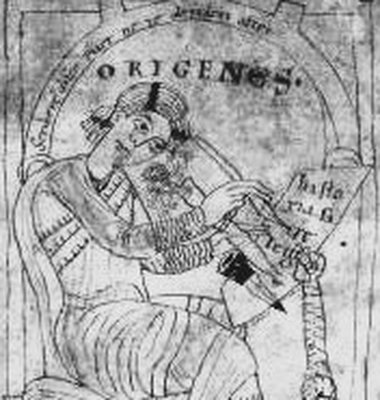
Few Christians have been so loved and so argued over as Origen of Alexandria. In his lifetime bishops sat at his feet like pupils, and the bishop of his own city drove him out. After his death the great theologians of the East learned from him, and three centuries later an emperor ordered his books burned. He was one of the most prolific writers of the ancient world. Yet the record of his life leaves something plainer than all that: a man who gave his days to the Scriptures, owned almost nothing, taught whoever would come, and in old age suffered torture rather than deny Christ.
A father’s son in Alexandria
Origen was born around 185 in Alexandria, the great Greek-speaking city of Roman Egypt. Almost everything we know of his life comes from the church historian Eusebius, who wrote about fifty years after Origen’s death, admired him deeply, and sometimes relied on hearsay. His father, Leonides, was a Christian teacher of literature who gave his son a full Greek education and, Eusebius says, had him learn and recite passages of Scripture every day. The boy soon asked questions about the deeper meaning of the texts that his father could not answer. Leonides told him to be content with the plain sense, but inwardly rejoiced.
In 202, when Origen was about seventeen, persecution broke out under the emperor Septimius Severus, and Leonides was imprisoned. Origen longed to share his father’s fate and give himself up. Eusebius tells the story that his mother hid all his clothes, so that he could not leave the house. Instead he wrote to his father in prison, urging him to stand firm and not to change his mind for the sake of his family. Leonides was beheaded, the family’s property was confiscated, and Origen, the eldest son, was left to provide for his mother and younger brothers.
Teacher at eighteen
He began to earn his living as a teacher of grammar, the ancient study of language and literature, and his pupils soon included young men drawn to the faith. When persecution struck again, many of them were martyred, and Origen stood by them so openly that more than once he had to flee from house to house to escape the mob. At about eighteen, Bishop Demetrius gave him a post teaching catechumens, those preparing for baptism. The editor’s Life in our edition says he became head of the school; some modern scholars think a teaching post more likely. Either way, he gave himself to it entirely. He sold his books for a small daily income of four obols and lived on it for years. He taught all day and studied Scripture far into the night, slept on the bare ground, fasted often, went barefoot and owned a single cloak.
Eusebius adds a darker story: that the young Origen, reading literally Christ’s words about those who make themselves eunuchs for the kingdom of heaven (Matthew 19:12), castrated himself. Some modern scholars accept the account; others doubt it, or think it gossip spread by his enemies. Origen himself never mentions it, and when he later commented on that verse he condemned the literal reading in the strongest terms.
He kept learning. He handed the beginners to his former pupil Heraclas, studied philosophy under Ammonius Saccas so that he could meet educated pagans on their own ground, and visited Rome. He also won a friend who changed his life. Ambrose, a wealthy man whom Origen had brought out of a Gnostic sect, gave him a house, relays of stenographers to take down his dictation and copyists to make fair copies, and paid for all of it to be published.
The bishop and the exile
When the emperor Caracalla turned his soldiers on Alexandria and its scholars around 215, Origen fled to Palestine, where Bishop Alexander of Jerusalem and Bishop Theoctistus of Caesarea asked him to explain the Scriptures in church. He was still a layman. Demetrius, protesting that such a thing had never been heard of, ordered him home, and Origen obeyed.
Around 230, travelling to Greece on church business, he passed again through Caesarea, and his friends there ordained him a presbyter, or priest. To Demetrius this was insubordination. Synods he summoned declared Origen unfit to teach, excommunicated him from the church of Alexandria and stripped him of the priesthood, though the churches of Palestine, Phoenicia, Arabia and Achaia refused the sentence. Rumours followed him: Eusebius says Demetrius published the castration story, and Demetrius also accused him of teaching that even the devil would be saved, which Origen denied in a Letter to Friends in Alexandria. Demetrius died about a year later, but the charges never quite went away. Origen did not go back. Caesarea, on the coast of Palestine, was his home for the rest of his life.
A school, a library and a pulpit
The Caesarea years were the fullest of his life. He founded a school there, aimed especially at young pagans drawn to the faith, and led his students from reasoning to the study of the natural world, and only then to theology, the crown of all they had learned. One of them, Gregory, later called the Wonderworker, stayed five years and wrote a warm tribute to his teacher. When Beryllus, bishop of Bostra in Arabia, taught a mistaken view of Christ, Origen reasoned with him until he came round. A record of a similar meeting, the Dialogue with Heracleides, found in Egypt in 1941, shows him questioning a bishop with unusual courtesy.
He preached in Caesarea, at first on Wednesdays and Fridays and later daily, and hundreds of his sermons survive. He built up the great Christian library of Caesarea, at whose heart stood the Hexapla, setting the Hebrew Old Testament beside a Greek transliteration and several Greek translations in parallel columns. He wrote commentaries on John, Matthew, Romans and the Song of Songs, which he read as the love of the Word for the believing soul, and late in life Against Celsus, a reply to a pagan philosopher’s attack on Christianity.
When the emperor Maximinus turned on Christian leaders in 235, Origen went into hiding in the house of a Christian woman named Juliana. Ambrose and Protoctetus, a priest of Caesarea, were arrested, and for them he wrote his Exhortation to Martyrdom, urging them to stand firm as he had once urged his father.
Thinking aloud before God
On First Principles belongs to his Alexandrian years, between about 220 and 230. It sets out the faith as an ordered whole: God, Christ and the Holy Spirit; angels and the world; free will, sin and redemption; and how to read Scripture. Origen begins with what the apostles taught plainly and the Church holds without question. Then he turns to the questions they left open, and insists more than once that here he is exploring, not deciding.
These subjects, indeed, are treated by us with great solicitude and caution, in the manner rather of an investigation and discussion, than in that of fixed and certain decision.
— Origen, On First Principles, Book I
Two of these explorations were later rejected by the Church. The first concerned the origin of souls. Troubled that people are born into such unequal lives, and unwilling to think God unjust, Origen suggested that God first created rational spirits, equal and free, devoted to contemplating him; that as their love cooled they fell, some further than others, becoming angels, human beings or demons; and that the variety of the world reflects their own free choices. The second was a hope about the end. Because “the end is always like the beginning,” he wondered whether all things might at last be restored to unity with God, and he believed God’s punishments are meant to heal. He presented this as a possibility rather than a doctrine, and in his letter to Alexandria he denied that the devil would be saved. Beneath both ideas lies a conviction he states plainly: that the mind’s longing for God is God’s own gift.
This desire, this longing, we believe to be unquestionably implanted within us by God; and as the eye naturally seeks the light and vision, and our body naturally desires food and drink, so our mind is possessed with a becoming and natural desire to become acquainted with the truth of God and the causes of things.
— Origen, On First Principles, Book II
The iron collar
In 250 the emperor Decius ordered a general persecution of Christians, and this time Origen did not escape. Eusebius describes his “bodily tortures and torments under the iron collar and in the dungeon,” his feet stretched for many days in the stocks. The governor ordered that he was not to be killed until he had publicly renounced Christ. He would not. When Decius died in 251 Origen was released, but his body, worn by a lifetime of fasting and night study, was broken. He died around 253, at about sixty-nine. An old tradition, followed by the editor of our edition, places his imprisonment and death at Tyre, though some modern historians give it little weight.
A contested inheritance
For generations the East revered him. Athanasius learned from him, and so did Basil the Great, Gregory of Nazianzus and Gregory of Nyssa; monks especially loved him. But his followers pressed his ideas in different directions, and controversy came. In the late fourth century Epiphanius and Jerome attacked him while Rufinus and Bishop John of Jerusalem defended him, John holding that a man could not be condemned as a heretic after his death. In 397 Rufinus translated On First Principles into Latin and, believing that heretics had tampered with it, altered passages to fit the orthodoxy of his own day. In 543 the emperor Justinian condemned Origen and ordered his writings burned.
Anathemas against Origen are associated with the Second Council of Constantinople in 553, but how far they touched Origen himself is still debated. Some scholars think his name was added to the council’s text later, or that the anathemas belong to an earlier local synod; many conclude that the teachings condemned were those of later Origenist monks rather than his own. So much of his work was destroyed that the question cannot be fully settled. He is not generally counted a saint, yet he has never lacked admirers: Erasmus prized him above almost every Christian writer, and Pope Benedict XVI called him “not only a brilliant theologian but also an exemplary witness of the doctrine he passed on.”
The book we are publishing is On First Principles, in Frederick Crombie’s 1885 translation for the Ante-Nicene Fathers. Most of it survives only in Rufinus’s smoothed Latin; where Origen’s own Greek survives, this edition follows the Greek. It is not an easy book. But it is the first attempt to map the whole of Christian doctrine, and its fourth book, on reading the Bible in its literal, moral and spiritual senses, shaped Christian interpretation for centuries. Above all, it lets a reader watch a great mind at prayer and at work, asking every question it can and confessing how much remains beyond it.
For however far a man may advance in his investigations, and how great soever the progress that he may make by unremitting study, assisted even by the grace of God, and with his mind enlightened, he will not be able to attain to the end of those things which are the object of his inquiries.
— Origen, On First Principles, Book IV
Questions and Answers
Who was Origen of Alexandria?
Origen was a Christian teacher, preacher and biblical scholar born around 185 in Alexandria in Roman Egypt. He was one of the most prolific writers of the ancient world, and he died around 253 after being tortured for his faith in the persecution under the emperor Decius.
What happened to Origen’s father?
His father, Leonides, a Christian teacher of literature, was imprisoned and beheaded in the persecution under Septimius Severus in 202, when Origen was about seventeen. Eusebius says Origen wanted to give himself up too, but his mother hid his clothes so he could not leave the house; he wrote to his father urging him to stand firm instead.
How did Origen become a teacher?
After his father’s death left the family poor, he supported them by teaching grammar, and at about eighteen Bishop Demetrius gave him a post teaching those preparing for baptism in Alexandria. He lived very simply, selling his books for a small daily income, studying Scripture late into the night, fasting often and owning a single cloak.
Did Origen really castrate himself?
The story comes from Eusebius, who says the young Origen took Matthew 19:12 literally. Some modern scholars accept it, while others doubt it or think it gossip from his enemies; Origen never mentions it, and later he condemned the literal reading of that verse.
Why did Origen leave Alexandria?
He was ordained a priest around 230 by friendly bishops in Caesarea without the consent of his own bishop, Demetrius, who saw this as insubordination. Synods in Alexandria excommunicated him and stripped him of the priesthood, and he made Caesarea in Palestine his home for the rest of his life.
What did Origen do in Caesarea?
He founded a Christian school, preached regularly in the church, and built up a great library whose centrepiece was the Hexapla, an edition of the Old Testament setting the Hebrew beside several Greek versions in parallel columns. He also wrote biblical commentaries, the treatise On Prayer, the Exhortation to Martyrdom and Against Celsus.
What is On First Principles about?
Written in Alexandria between about 220 and 230, On First Principles is the first attempt to set out Christian teaching as an ordered whole, covering God and the Trinity, angels and the world, free will, sin and redemption, and how to read Scripture. It survives mostly in Rufinus’s Latin translation of 397, which altered some passages to fit later orthodoxy.
Which of Origen’s ideas were later rejected?
Origen explored the idea that souls existed before their bodies and fell from an original contemplation of God, and he hoped that all things might at last be restored to God. He offered these as possibilities rather than settled doctrine, but the Church later rejected his teaching on the pre-existence of souls.
How did Origen die?
In the persecution under Decius, which began in 250, he was imprisoned and tortured with an iron collar and the stocks, and the governor ordered that he not be killed until he renounced Christ, which he refused to do. He was released after Decius died in 251 but never recovered, and died around 253; tradition places his death at Tyre.
Was Origen condemned as a heretic?
Controversy over his teaching broke out in the late fourth century, and in 543 the emperor Justinian condemned him and ordered his writings burned. Anathemas against him are associated with the Second Council of Constantinople in 553, but scholars still debate whether they belonged to the council and how far they touched his own teaching rather than that of later Origenists.