Where to start reading
Start with
The Method of Grace
Books by John Flavel (1)
Biography
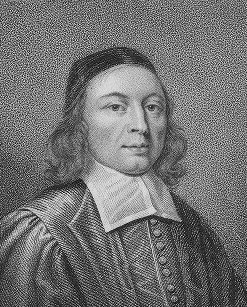
Some preachers are remembered for the crowds they drew. John Flavel is remembered for something quieter: for sermons that went on working long after the preacher had gone home. He spent almost his whole ministry in one Devon seaport, Dartmouth, among fishermen, merchants and sailors. For most of it the law forbade him to preach at all. He preached anyway, in private houses, in the countryside, wherever his people could gather, and he wrote books that ordinary readers went on buying for three centuries. Editions of his writings have appeared more than seven hundred times since 1664. Behind them stands a pastor who knew prison, exile, storm and bereavement at close quarters, and who kept telling his hearers, plainly and warmly, that Christ must be received and not only admired.
A minister’s son from Bromsgrove
He was born in or about 1627 at Bromsgrove in Worcestershire. Other accounts give 1628 or 1630, and the exact year is not known. He was the eldest son of Richard Flavel, a minister remembered as “a painful and eminent minister,” painful meaning in the language of the day painstaking and hard-working. Richard served parishes at Bromsgrove and then in Gloucestershire, and so John grew up in a parsonage among the people a pastor cares for. He was schooled in the neighbourhood and went up young to University College, Oxford, where he gained a good name for ability and hard work.
England in those years was torn by civil war and the arguments that followed it. The Church of England was being reshaped along Presbyterian lines, with congregations overseen by local assemblies of ministers and elders. Flavel came of age inside that world. He was a Puritan, one of the many English Protestants who wanted the church reformed more thoroughly by Scripture. He was a Presbyterian by conviction.
Diptford and Dartmouth
On 27 April 1650 the Devon county committee sent him to Diptford, a parish on the river Avon about five miles from Totnes, to assist its minister, who had grown infirm. That October, after being examined and preaching a trial sermon, he was ordained by the classis, the regional assembly of Presbyterian ministers. When the senior minister died, Flavel succeeded him. He stayed about six years, and the people grew fond of him, not only because he was earnest but because he dealt gently with them over tithes, the church dues every parishioner owed.
In 1656 he accepted a call to St Saviour’s Church in Dartmouth, although Diptford paid much better. Dartmouth was a busy harbour town, and Flavel took its people as he found them. Later he wrote Navigation Spiritualised for sailors and Husbandry Spiritualised for farmers. Both books draw lessons about the soul from the ropes, tides, ploughs and harvests his hearers handled every day.
Many great and stately ships, which spread much sail, and draw much water, perish in the storms, when small barks creep along the shore under the wind, and get safe into their port.
— John Flavel, The Method of Grace, Epistle Dedicatory
Silenced, but not still
When Charles II was restored in 1660, the national church was restored with him, and in 1662 the Act of Uniformity required every minister to accept the Book of Common Prayer in full and to be episcopally ordained. Some two thousand ministers could not do so in good conscience. They were ejected from their churches in what became known as the Great Ejection. Flavel was one of them, and so was his father, who lost his parish at Willersey the same year.
For Richard Flavel worse followed. Older biographies tell how he was later arrested in London at a forbidden meeting for worship and sent with others to Newgate prison during the great plague of 1665. He and his wife caught the disease there. They were released on bail, and both died of it. John had lost his parents to the cost of a conscience they shared.
He went on preaching in private at Dartmouth until the Five Mile Act of 1665 forbade ejected ministers to live within five miles of their former parishes. He moved only as far as the law required, to Slapton, five miles off. There he preached twice every Sunday to anyone who came, and many of his old parishioners walked out to hear him. Devotional accounts add that in these years he preached secretly in woods, sometimes late into the night. They also tell a story from the Salcombe estuary near Kingsbridge: he is said to have preached from a rock known as Salstone, which the high tide covers, and his hearers stayed on it until the rising water drove them back to their boats. These stories come down through later tradition rather than any record from the time, and they should be read as tradition. What is certain is that the silenced minister kept looking for ways to reach his flock.
Storm and shelter
When Charles II’s Declaration of Indulgence in 1672 gave Dissenters a brief liberty, Flavel returned to Dartmouth. When that liberty was withdrawn he kept on preaching there all the same. In the end the danger forced him to leave for London, and he travelled by sea.
Judging that he would be safer at home after all, he went back to Dartmouth. There he met his people at night in his own house, year after year, until 1687, when the penal laws were relaxed and they built a meeting-house for him. Most of his best-known books appeared in these unsettled decades: The Fountain of Life Opened (1672), A Token for Mourners (1674), Divine Conduct, or the Mystery of Providence (1678) and The Method of Grace.
Four marriages and many sorrows
Flavel married four times, and his losses are part of how he came to write so tenderly about grief. His first wife, Jane Randal, died in childbirth while he was still a young minister, and later accounts say the child died with her. His second wife, Elizabeth Morries, also died before him. His third, Ann Downe, bore him sons. His fourth wife was a widow, a daughter of the Rev. George Jeffries, minister of Kingsbridge, and she outlived him. Between these sorrows came the death of his parents in the plague and the long strain of living under the law’s displeasure.
The record does not let us look far into his grief, and it is best not to imagine more than it says. But it seems right to hear something of his own life in A Token for Mourners (1674), a book on Christ’s words to the grieving widow of Nain, “Weep not,” written to comfort a mother mourning her only son, and in the steady theme of all his writing: God’s providence is wise and kind even when it is dark, and it is the Christian’s work to trust it and to watch for it.
The book: The Method of Grace
The Method of Grace was printed around 1680–81. Its full title says that it treats the Holy Spirit’s applying to the souls of men the eternal redemption contrived by the Father and accomplished by the Son. Flavel tells the reader that it is a second part, the companion to an earlier volume on Christ’s own work of redemption, and that readers had been asking for it for years. That earlier volume is usually identified as The Fountain of Life Opened (1672). The first book showed what Christ has done. This one asks how what he has done ever comes to belong to a particular person.
His answer is in the opening sermon, on 1 Corinthians 1:30, and he puts it in a doctor’s terms:
For never was any wound healed by a prepared, but unapplied plaister.
— John Flavel, The Method of Grace, Sermon 1
A plaister, or plaster, was a dressing spread with medicine and laid on a wound. A cure that is prepared but never applied heals nothing. Over thirty-five sermons Flavel follows the Spirit’s work in applying Christ to a person. He covers union with Christ, the preaching of the gospel, faith and receiving Christ, the use of God’s law to awaken conscience, the indwelling Spirit, the new creature, putting sin to death, and following the example of Christ. The last sermons turn to the danger of unbelief and to what he calls the blinding policies of Satan. The best-loved sermon in the book is the one on Song of Songs 5:16, “Yea, he is altogether lovely.”
As all the rivers are gathered into the ocean, which is the congregation or meeting place of all the waters in the world: so Christ is that ocean in which all true delights and pleasures meet.
— John Flavel, The Method of Grace, Sermon 12
He wrote it in a dark season. In his epistle he warns that “our bright sun is going down upon us,” and urges every reader to make sure of a real interest in Christ before the storm breaks. He is modest about his own work. Sermons and books succeed, he says, not by elegant language, and “many may be useful, who cannot be excellent.” Readers who want Puritan theology that searches the heart without crushing it, and that keeps returning to the beauty of Christ, will find this one of the clearest places to begin.
Last labours and a long echo
The same epistle begs God’s people to end their “unbrotherly quarrels and strifes among themselves.” Flavel spent his last weeks working to do exactly that. In 1691 the Presbyterian and Independent (Congregationalist) ministers were trying to unite, and just before his death he served as moderator of a meeting of Dissenting ministers at Topsham in Devon that took up that cause. Soon afterwards, at Exeter, he died suddenly of a stroke on 26 June 1691. He was carried home and buried in Dartmouth churchyard.
Then there is a story told about him, and it has travelled far. Robert Murray M’Cheyne and later writers tell of Luke Short, a Dartmouth lad who heard Flavel preach when he was about fifteen. The sermon was on the text “If any man love not the Lord Jesus Christ, let him be Anathema Maranatha.” Short went to sea, settled in New England, and lived to a great age without faith. At about a hundred years old, the story goes, he recalled that sermon heard some eighty-five years before, and was brought at last to Christ. No record from the time confirms it, and it should be received as a story told about Flavel. It is told because it matches what his hearers believed of him: that a sermon of his could lie buried in a soul for a lifetime and still bear fruit.
What can be confirmed is enough. Flavel was a pastor who stayed close to a seafaring town through ejection, plague, exile and grief, and who wrote for people who would never read a learned book. His works were reprinted on both sides of the Atlantic and have rarely been out of print. He urged his readers to yield themselves to God entirely and to say from the heart, “Lord, whatever I am, I am for thee.” By every account we have, he tried to say it himself.
Questions and Answers
Who was John Flavel?
John Flavel (c. 1627–1691) was an English Puritan and Presbyterian minister who served the seaport of Dartmouth in Devon from 1656 until his death. Ejected in 1662, he kept preaching in secret and wrote popular devotional books, including The Method of Grace, Divine Conduct, or the Mystery of Providence, and A Token for Mourners.
Where and when was John Flavel born?
He was born in or about 1627 at Bromsgrove in Worcestershire, the eldest son of the Rev. Richard Flavel. Some sources give 1628 or 1630, so the exact year is uncertain.
Where was John Flavel educated and where did he first serve?
He studied at University College, Oxford, where he was known for ability and hard work. In 1650 he was sent to assist the minister of Diptford in Devon, was ordained there that October, and served the parish for about six years.
Why did John Flavel move to Dartmouth?
In 1656 he accepted a call to St Saviour’s Church in Dartmouth, a busy harbour town, even though Diptford paid much better. He spent the rest of his ministry among its sailors, merchants and townspeople.
What happened to John Flavel in 1662?
Under the Act of Uniformity of 1662 he was ejected from his church, along with some two thousand other ministers who could not conform in conscience, his father among them. He went on preaching in private, and when the Five Mile Act drove him from Dartmouth he moved to Slapton, five miles away, and preached there twice each Sunday.
How did John Flavel’s father die?
Older biographies say Richard Flavel was arrested at a forbidden meeting for worship in London and sent to Newgate prison during the plague of 1665. He and his wife caught the disease there, were released on bail, and both died of it.
Did John Flavel really preach on a rock in the Salcombe estuary?
Tradition says that in the years of persecution he preached secretly in woods, and from Salstone Rock in the Salcombe estuary, a rock covered at high tide, where his hearers stayed until the rising water sent them back to their boats. These stories come from later accounts, not from records of the time, and are best read as tradition.
Is it true that a storm ended when John Flavel prayed?
Older accounts say that when he was forced to leave for London by sea, the ship met a violent storm near Portland. Flavel gathered those who could be spared to pray, and the wind is said to have changed as soon as the prayer ended.
What is The Method of Grace about?
The Method of Grace, printed around 1680–81, is a series of thirty-five sermons on how the Holy Spirit applies to a person the redemption Christ accomplished. Flavel presents it as the companion to an earlier volume on Christ’s own work, and it covers union with Christ, faith, the new creature, mortification of sin and the danger of unbelief, with a well-loved sermon on Christ as altogether lovely.
How did John Flavel die, and what is the Luke Short story?
Just after moderating a meeting of Dissenting ministers at Topsham that worked toward union between Presbyterians and Independents, he died suddenly of a stroke at Exeter on 26 June 1691 and was buried at Dartmouth. Robert Murray M’Cheyne and later writers tell of Luke Short, who heard Flavel preach at Dartmouth as a youth and is said to have been converted in New England at about a hundred, remembering that sermon. No record from the time confirms the story.